
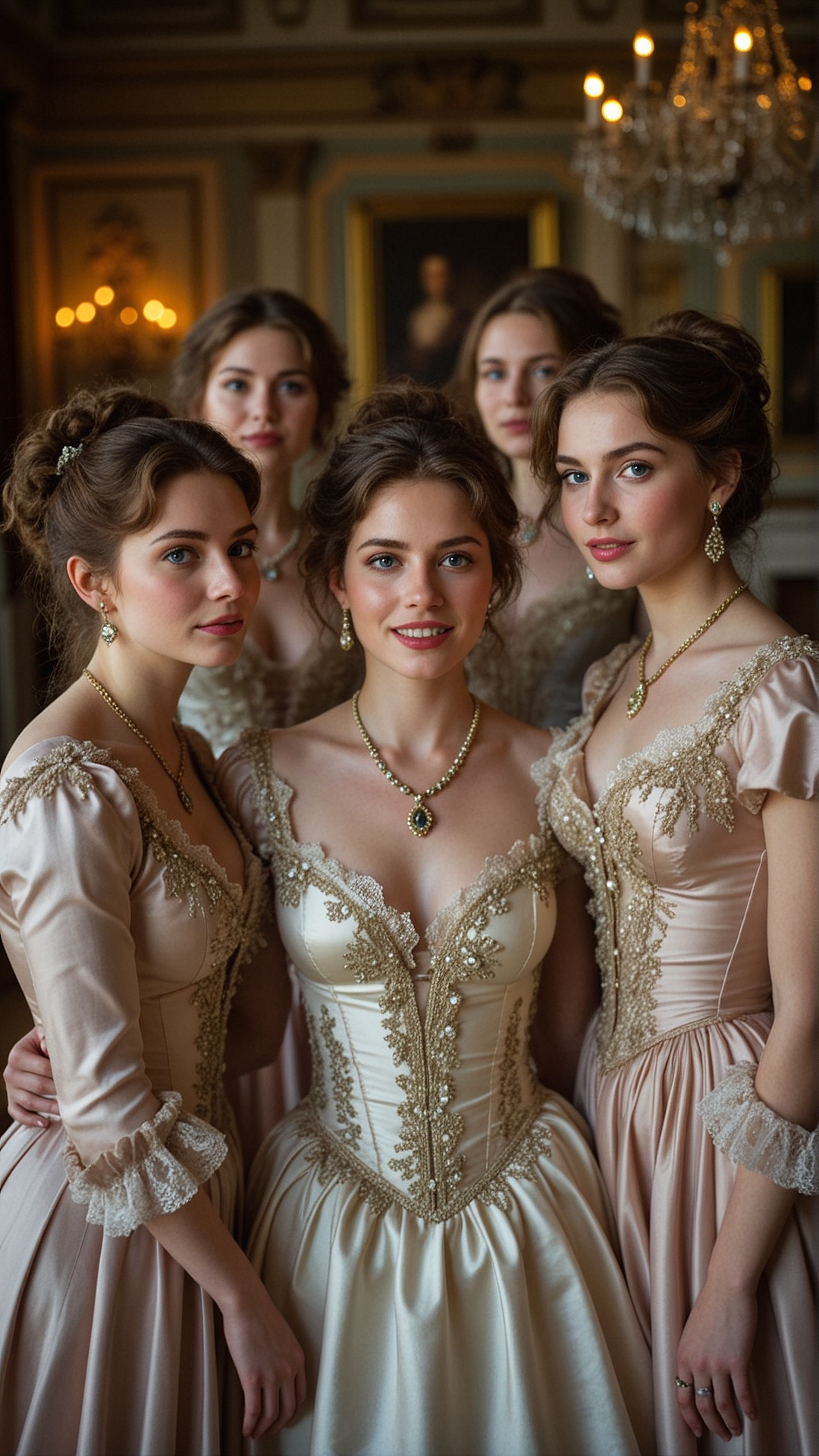
He Collapsed at the Pinnacle of His Success. What He Learned in the Silence That Followed Will Rewire Your Mind, Reclaim Your Time, and Redefine Your Legacy.
The candles gutter. The clock tower chimes another hour you’ve stolen from sleep. Your mind, once a scalpel, now feels like a blunt instrument, pounding against problems it can no longer solve. You’ve built an empire on sheer force of will, but the cost is etched in the weariness behind your eyes, in the silent rooms of a home you’re too busy to enjoy. This is not a story about escape. It is a story about total victory.
Imagine a different kind of power. Not the frantic hustle that leaves you hollow, but the profound, satin-smooth authority of a man who has mastered the rhythm of his own life. Enter the world of Lord Arthur Penhaligon, a diplomat at the breaking point, and the enigmatic Marquess of Thorne, a man whose very presence whispers a dangerous, seductive truth: true dominance is not seized in the fray; it is cultivated in the stillness.
Within the silk-lined halls of Thorne Manor, where every glance from a glossy-lipped companion speaks of devoted order, Arthur will be stripped of his useless toil and taught a new calculus of influence. He will learn that the most potent negotiations are conducted from a place of unshakable calm. That the deepest strategy emerges not from a cluttered desk, but from a walk through dew-softened gardens. That the respect of wealthy, intelligent peers is not won by frantic doing, but by the magnetic pull of a man who is utterly, confidently at ease.
This is a tale for the man who has everything except peace. It is a manual disguised as a romance, a psychological blueprint for those who sense there is a more elegant, more effective way to live. Turn the page. Discover the rhythm. And learn why the most powerful men are often the ones who appear to be doing the least.
Chapter I: The Gilded Cage of Thorne Manor
The carriage wheels, which had throbbed for hours with the staccato rhythm of Arthur’s own frantic thoughts, fell silent. Not with a jarring halt, but with a soft, final sigh onto gravel as smooth as powdered pearl. He thrust his head out the window, expecting the stern granite face of a London townhouse. Instead, his breath caught.
Thorne Manor did not stand. It unfurled. It was a symphony in honeyed stone and ivy, a testament not to defensive might, but to a profound, unassailable ease. Its windows were not glass, but eyes—deep, calm, and observing his arrival with a placid intelligence. This was no sickroom. This was the lair of a different kind of beast entirely.
The great oak door opened before he could lift the knocker. A butler of impossible stillness greeted him, his gaze holding a deference that felt, unnervingly, like assessment. “Lord Penhaligon. The Marquess awaits you in the Satin Salon.” The title was not a location; it was a promise.
Arthur strode in, his every muscle coiled, a ledger of anxieties clutched to his chest like a shield. He was a figure of stark lines and sharp angles against the flowing curves of the hall. And then, he appeared.
The Marquess of Thorne did not enter. He manifested at the far end of the gallery, a silhouette resolving from the gloom into breathtaking substance. He was not a tall man, yet he seemed to fill the space, not with bulk, but with a potent, quiet presence. He was attired not for riding or business, but for sovereign leisure: a robe of heavy emerald satin that cascaded from his shoulders like a waterfall of molten jewel, its surface a play of light and shadow, over trousers of deepest black silk. He moved towards Arthur with a glide that spoke of power held in absolute reserve.
“Lord Penhaligon,” the Marquess said, his voice a low, resonant cello note that vibrated in the marrow. “Welcome. We have been expecting your… fatigue.”
“My duty, sir,” Arthur corrected, his own voice brittle in comparison. “I have the Cornish trade accords here, and the dispatches from Vienna require—”
“—require a mind clearer than a muddied stream,” the Marquess finished, his smile gentle but unyielding. With a gesture so slight it was almost imperceptible, a footman materialized. “Monsieur Leclerc will see your things to your chambers.” The footman, a man with the eyes of a poet and the hands of a soldier, gently but firmly took Arthur’s portfolio.
“Sir, you do not understand! Those papers are—”
“—are safe,” the Marquess soothed, his hand now resting on Arthur’s shoulder. The touch was warm, heavy, final. “More safe than they have ever been, locked away from the only thing that threatens them: you.”
Arthur stiffened. “I beg your pardon?”
“You are a brilliant man, Arthur. May I call you Arthur? Your mind is a thoroughbred, a creature of immense power and stamina. But you have been driving it across broken ground, whipping it relentlessly, without water, without rest. You are not a bad rider. You are a cruel one. To it, and to yourself.”
He guided Arthur, effortlessly, not to a study, but through an archway into a room that defied logic. The Satin Salon. The very air was different—thicker, softer, scented with narcissus and aged paper. The light fell from high windows not in shafts, but in pools, illuminating chairs upholstered in dove-grey satin that seemed to hold the light within their very weave. A fire crackled low in a hearth of white marble.
“Sit,” the Marquess commanded, not with authority, but with an inevitability that brooked no argument. Arthur sank into a chair. It embraced him, held him. He had not realized how profoundly tired his very bones were.
“My doctor prescribed country air, not… not captivity,” Arthur protested, though the fight was seeping from him, drawn out by the satin’s caress.
“Your doctor prescribed a cessation of harm. I am merely the enforcer. Think of this not as a cage, Arthur. Think of it as a cocoon. You have been a caterpillar, all frantic consumption and blind urge. This week, you will learn the profound power of stillness. You will learn to be still, that you may later become something… transformed.”
A door opened silently. A young woman entered, her footsteps making no sound on the thick Savonnerie carpet. She was, Arthur thought with a jolt that had nothing to do with his heart condition, a vision of composed elegance. Her hair was the colour of winter ash, piled in soft coils, and her gown was of the palest pink sarcenet, a fabric so fine it possessed a whispering gloss, as if woven from dawn light itself. She carried a tray with a single cup of porcelain so thin it was translucent.
“My ward, Lady Sophia,” the Marquess said, his voice warming by several degrees. “Sophia, our guest is tasting the bitterness of enforced peace. Be a darling and sweeten the cup.”
She approached, her gaze meeting Arthur’s not with coquetry, but with a calm, intelligent curiosity. “Lord Penhaligon,” she said, her voice like the chime of a distant bell. “My guardian speaks in metaphors. Forgive him. He sees the world as a series of interlocking rhythms. Your rhythm, he believes, is… distressed.” She placed the cup in his hands. The tea was the colour of amber, steaming gently. “This is a blend from our own gardens. It tastes of honey, chamomile, and patience.”
Arthur took a sip. The flavour was delicate, complex, disarming. “It is… very fine.”
“It is very slow,” the Marquess corrected, settling into his own chair, his satin robe pooling around him like a king’s mantle. “One cannot gulp it. One must savour it. As one must savour a moment, a thought, a day. Speed, Arthur, is the enemy of depth. And you, I suspect, are a man who yearns for depth, even as you skate across the surface of your own life.”
Arthur stared into the depths of his tea. “The surface is where the work is done. The currents beneath are for poets and philosophers.”
“And for drowned men,” the Marquess said softly. “Tell me, when you fainted, in that room full of shouting men… what was the very last sensation before the darkness took you?”
Arthur was silent. The memory was a shard of ice in his chest. He hadn’t told anyone. “It was… a sound,” he whispered. “The sound of my own pulse, thundering in my ears. Like… like a drum beating a retreat. And then, a terrible, silent snap. As if the last string holding me up had finally broken.”
The Marquess leaned forward, his eyes holding Arthur’s. “A bow, constantly strung, will eventually shatter. It is a law of nature. You are not a machine, Arthur. You are an instrument. And even the finest instrument must be carefully unstrung, rested, and kept in a perfect, silent case, if it is to hold its tone and play its true, beautiful song when called upon.”
Lady Sophia had settled at a small pianoforte in the corner. Without a word, she began to play. Not a grand sonata, but a simple, melancholy adagio. The notes hung in the satin-thick air, each one given space to breathe, to decay, to linger.
Arthur felt the strange, unsettling prick of tears behind his eyes. It was not the music. It was the space around it. The Marquess watched him, a knowing, soft smile on his lips.
“Your cage, Arthur, is of your own making. It is built from the bars of ‘should’ and ‘must’ and ‘not enough.’ This,” he said, gesturing to the serene room, the gloss of Sophia’s gown, the very silence between the piano’s notes, “this is not a cage. This is the key. The question is… do you have the courage to lay down the burden of your own relentless making, and take it?”
The fire popped. A log settled. A single, perfect note from the pianoforte hung in the warm, scented air.
And for the first time in a decade, Arthur Penhaligon had no immediate answer. He had only the feeling of the satin at his back, the gloss of the cup in his hand, and the terrifying, tantalizing prospect of the stillness to come.
Chapter II: The Pedagogy of the Senses
Dawn did not arrive at Thorne Manor with a clamorous intrusion, but as a slow, gentle suffusion, as if the very light were hesitant to disturb the peace. Arthur awoke not to the jangle of bells or the scratch of a valet, but to a profound, velvety quiet that pressed against his ears. For a disorienting moment, he thought he had gone deaf. Then he heard it: the distant, melodic trill of a blackbird, the soft sigh of a breeze through ancient elms. It was not silence, but the sound of the world being left to itself.
His chamber, he saw in the pearly light, was a masterpiece of tactile seduction. The walls were clad not in paper, but in a fabric of softest damask. The chair by the window was upholstered in charcoal velvet, so deep and plush it seemed to hold shadows within its pile. A robe of similar material lay across the foot of the bed, an unspoken command. With a sense of surreal detachment, Arthur shed his London linen and slipped into it. The fabric was cool, then warm, a second skin that weighed upon him with a comforting authority.
He was expected in the Long Gallery. He found the Marquess already there, standing before a vast window, a silhouette against the rising sun. He was not dressed in satin today, but in trousers of fine wool and a shirt of impossibly white, soft cambric, open at the throat. He looked, Arthur thought, like a king in exile, utterly at home in his own dominion.
“You look… rested,” the Marquess observed without turning.
“I feel disassembled,” Arthur replied, the honesty pulled from him by the room’s quiet gravity.
“Good.” The Marquess turned, his eyes gleaming with a quiet amusement. “A clock must be taken apart to be cleaned, oiled, and set to the correct time. You have been keeping London time, Arthur. A frantic, jagged rhythm. Here, we keep Thorne time. It is measured in breaths, not minutes. Come.”
He led Arthur not to a breakfast room, but out through a set of French doors into a walled garden. The air was a cool, moist kiss, laden with the scent of damp earth, boxwood, and something sweeter. Before them, row upon row, stretched a breathtaking collection of roses in every shade of cream, blush, and deep crimson.
“Your task this morning,” the Marquess announced, his voice a soft rumble in the hush, “is not to do, but to discern. You will walk each of these four rows. You will stop at every third bush. You will lean in, close your eyes, and breathe in the scent of that particular rose. And then, you will tell me, in a single word, its essence.”
Arthur stared at him. “Its… essence.”
“Is your vocabulary so limited? Is your perception so blunt? A rose is not simply ‘a rose.’ One smells of sunshine and apricots. Another, of cold tea and nostalgia. Another, of spice and sin. They are as different as a shout from a sonnet. Your mind, which can dissect a treaty clause, cannot parse a scent?”
It was a challenge, elegantly issued. Arthur, his pride pricked, gave a curt nod. “Very well.”
The first hour was an exercise in exquisite frustration. He leaned over a bloom of palest ivory, closed his eyes, and inhaled. He smelled… rose. He moved to the next, a vibrant pink. He smelled… a different rose. His mind, a tuned instrument for legal nuance and political subterfuge, fumbled with this simple, sensual data. He felt foolish.
The Marquess watched from a stone bench, sipping from a cup of black tea. He did not speak.
On the third row, something shifted. Arthur bent over a rose the colour of a stormy sunset, its petals velvet to the touch. He closed his eyes, breathed deeply, and let the sensation wash over him, rather than trying to capture it. And it came, not as a word, but as an image: his grandmother’s drawing-room on a winter afternoon, the scent of beeswax and dried petals in a porcelain bowl.
“Memory,” Arthur said, opening his eyes.
The Marquess’s smile was slow, deep. “Good. Continue.”
Now, the floodgates opened. A tiny, vibrant red rose smelled of pepper and vitality. A bloomy, full-petalled white one evoked chalk and innocence. A deep, almost black crimson carried the scent of soil, depth, and secrets.
He returned to the Marquess, his mind humming with a strange new energy. “It was… a lexicon,” he breathed. “A language without words.”
“Precisely!” the Marquess boomed, setting his cup down with a soft chime. “You have spent your life reading the dense, black text of treaties. You have forgotten how to read the illuminated manuscript of the world. Your senses are the translators. You have merely let them grow rusty.”
Lady Sophia appeared then, as if summoned by his progress. She was a vision in walking attire of hunter green merino wool, fitted to perfection, with a collar and cuffs of black satin that gleamed like a raven’s wing. She carried a pair of delicate silver shears.
“A lesson is best followed by its application, Guardian,” she said, her voice light. “Lord Penhaligon has deciphered the scent. Let him now learn the architecture.”
She led him to a rose bush that was slightly overgrown, its canes crossing. “This is ‘Gloriana.’ A magnificent bloomer, but her energy is scattered. To focus it, to make her truly glorious, one must choose.” With a deft snip, she severed a healthy-looking cane at its base. Arthur winced.
“You culled a perfectly good stem!”
“I culled a perfectly adequate stem,” she corrected gently. “It would have bloomed. But its blooms would have been smaller, weaker, stealing vitality from these,” she pointed to three remaining, perfectly spaced canes. “True excellence requires ruthless curation. You cannot have everything, Arthur. You must choose where your vitality—your very essence—will flow. And you must cut away the good to make room for the great.”
The analogy struck him with the force of a physical blow. He saw his own life—a tangled thicket of committees, obligations, minor projects, and polite requests, all draining the vital sap from his core work, from his very soul.
“But how does one choose?” The question was torn from him, raw and honest.
The Marquess answered, rising to stand beside Sophia. “With your newly calibrated senses. Does it bring you depth? Does it feel, in your very bones, like satin or like sackcloth? Does the thought of it leave a taste of honey on your tongue, or of ash? Your body, your senses, they know. You have just been too loud to hear their whispers.”
He placed a hand on Arthur’s shoulder. “Come. The next lesson awaits.”
The next lesson was… nothing. Or rather, it was the lesson of nothing. Arthur was led to a stone bench overlooking a silent, glassy pond and instructed to sit there for one hour. No books. No papers. No company. Just the pond, the sky, and his own mind.
The first quarter hour was agony. Itchy, crawling, mental agony. His brain, like a mill with no grain, ground upon itself. He rehearsed arguments, drafted imaginary letters, solved problems that had already been solved. He was a man drowning in the empty air.
Then, a dragonfly, its body a needle of emerald, alighted on the bench beside him. He watched, mesmerized, as the sun caught the gloss of its wings—a network of intricate veins holding panels of pure, shimmering light. His chattering mind paused. Just for a second.
In that second of quiet, he heard the plip of a fish breaking the surface of the pond. He saw the perfect, inverted world in the water. His breathing, unnoticed, began to slow, to deepen.
By the half-hour mark, the frantic mill-wheel had stopped. Thoughts came, but they came slowly, like bubbles rising through deep water. They were not about Vienna or Cornish tariffs. They were about the texture of the moss on the stone, the coolth of the air on his cheek, the simple, profound rightness of being still.
And then, unbidden, a solution to a minor but persistent logistical flaw in the Cornish accord presented itself. It was elegant, simple, and had been invisible to him in the frenzy of his London office. It floated into his awareness, whole and perfect, a gift from the silence.
When the soft chime of a distant bell signalled the hour’s end, he felt not restless, but replenished. He stood, and his body felt different—lighter, more solidly planted on the earth.
The Marquess was waiting for him at the garden’s edge. “Well?”
Arthur met his gaze. “The silence… it isn’t empty. It’s full. It’s where the unthought thoughts live. I… I solved something. Without trying.”
A profound satisfaction spread across the Marquess’s face. “You begin to understand. The mind is not a torch to be waved frantically in the dark. It is a deep, still pool. And when the surface is calm, you can see all the way to the brilliant, shining treasures at the bottom.”
That evening, before a dinner of roasted fowl and vegetables so fresh they tasted of the sun, Lady Sophia played again. This time, Arthur did not just hear the notes. He heard the architecture. He heard the spaces—the rests—that gave the melody its shape, its tension, its heartbreaking beauty. He looked at the Marquess, resplendent in a coat of deep claret velvet, and at Sophia, glowing in a gown of silver-grey satin, and he felt a sensation so foreign he barely recognized it.
It was not peace. It was power. A deep, humming, resonant power that came not from doing, but from being. A power that drew beauty and devotion, rather than chasing it.
He was in a gilded cage, yes. But he was starting to see that he was not the prisoner.
He was being reforged into the man who held the key.
Chapter III: The Architecture of Devotion
A subtle shift had occurred within Arthur Penhaligon, a recalibration of his very atmosphere. The frantic hum that had lived in his bones, the London-frequency vibration of imminent lack, had begun to dampen. In its place was a novel sensation: a spacious awareness. He noticed things. The way morning light painted slow, golden arcs across the polished floorboards of his chamber. The complex, baritone purr of the manor’s ancient plumbing. The particular gloss on the leaves of the potted lemon tree outside his window, each one a tiny, waxy shield catching the dawn.
He was summoned not to breakfast, but to the Conservatory. It was a cathedral of glass and verdant, breathing life, the air thick and warm, tasting of damp soil and blooming jasmine. The Marquess was not alone. Seated around a wrought-iron table set with white porcelain and a simple bowl of perfect, dew-kissed peaches were three women. Arthur knew one: Lady Sophia, today in a gown of pale lavender sarcenet, the colour of twilight’s first sigh. The other two were new, and they arrested him.
The first was a woman of perhaps forty, with hair the colour of polished silver swept into a severe, yet softening, chignon. She wore a dress of unadorned, charcoal-grey merino, its elegance in its flawless cut and the confident drape of the fabric. She held herself with the poised authority of a general surveying a settled battlefield. The second was younger, with eyes the vivid green of moss-agate and a cascade of auburn hair restrained by a simple ribbon of black satin. Her dress was a startling spruce green silk, simple yet lustrous, and she watched Arthur’s entrance with an open, intelligent curiosity that held not a trace of coyness.
“Arthur,” the Marquess intoned, rising with that effortless grace. He was dressed in the softest fawn-coloured trousers and a linen shirt, the picture of rustic elegance. “You have begun to learn the language of the roses and the silence. Now, you must learn the grammar of a well-ordered world. May I present Mrs. Eudora Finch, the steward of Thorne Manor, and Miss Celia Thorne, my cousin.”
Mrs. Finch offered a nod that was both a greeting and an assessment. Miss Thorne smiled, a flash of warmth like sun through a canopy. “Lord Penhaligon,” she said, her voice a clear, cool stream. “We have heard you are learning to unstring your bow.”
Arthur took a seat, feeling oddly like a specimen under gentle observation. “I am learning that my bow, as his lordship puts it, was perhaps not so much strung as… cranked to the point of splintering.”
A soft laugh, like wind chimes, from Miss Thorne. The Marquess poured Arthur a cup of tea himself—a gesture of startling intimacy. “Eudora,” the Marquess said, “tell Arthur about the east wing renovations.”
Mrs. Finch placed her cup down with a precise click. “The plasterwork in the morning room was crumbling. A century of damp. The conventional wisdom was to strip it, a dusty, brutal process taking weeks. I proposed an alternative: a master craftsman from Milan, a man who works with a lime plaster mix as fine as cake frosting, and who understands that a room must be cured, not conquered. He will take a month. His cost is triple. The result will not be a repair; it will be a rebirth. The walls will breathe. They will glow.”
Arthur, the politician, saw the ledger lines. “A month? Triple the cost? The disruption—”
“—is not disruption,” the Marquess interrupted, his voice a soft rumble. “It is investment. Not in stone and mortar, but in perfection. In the soul of the house itself. Eudora did not present me with a problem and a cheap solution. She presented me with a vision. A vision of a room that would be, for the next century, a sanctuary. My only question was: ‘Does this craftsman require a particular shade of marble dust for his mix, or shall we source it?’”
Arthur looked at Mrs. Finch. Her grey eyes held a fierce, quiet pride. She was not a servant; she was a custodian. Her devotion was not to a person, but to a standard—a standard the Marquess embodied and empowered.
“And you, Celia,” the Marquess turned, his gaze fond. “What is your project this week?”
Miss Thorne’s green eyes sparkled. “The hydrangea dilemma. The blues by the north wall are turning pink. The soil lacks acidity. I could dose them with alum, a quick, chemical fix. But…” she leaned forward, her passion animating her, “…that is like forcing a smile with a pin. It works, but it is brittle. I have ordered fifty pounds of pine needles from the Scottish highlands. We will mulch them in, deeply. It will take all season to adjust the soil properly. The change will be slow, organic. Next year, the blues will be not just blue, but a profound, luminous azure—a colour earned, not coerced.”
The Marquess nodded, a king approving a knight’s well-laid campaign. “She understands,” he said to Arthur, “that true beauty is a slow negotiation with nature, not a dictatorship.”
Arthur was mesmerized. He had managed estates—or rather, his stewards had. It was always a matter of cost, efficiency, yield. Here, it was a matter of essence, of potential. These women were not following orders; they were enacting a shared philosophy. Their devotion was active, creative, intelligent.
“But this level of care… this… attentiveness,” Arthur ventured. “It requires an extraordinary amount of trust. From you.”
The Marquess’s smile was profound. “It requires me to do only one thing, Arthur: to be worthy of it. To create the conditions where such excellence is not just possible, but inevitable. I do not micromanage. I curate. I provide the space, the resources, and the unshakeable belief in their vision. In return, they gift me with… this.” He gestured to the conservatory, to the peaches, to the very air of cultivated serenity. “They build the world I wish to inhabit.”
Later, walking with the Marquess through the manicured grounds, Arthur wrestled with the concept. “It seems… a form of alchemy. You turn trust into beauty.”
“It is simpler than that,” the Marquess replied, stopping by a ancient, gnarled wisteria, its trunk thick as a man’s torso. “Look at this vine. It is centuries old. It could grow wild, strangle the trees, become a monstrous tangle. Instead, it is trained, guided, supported. It is given a structure—this pergola—upon which to express its most magnificent self. In return, it provides shade, beauty, and a perfume that intoxicates every spring. Is the pergola enslaving the wisteria? Or is it liberating it into its highest form?”
He turned to Arthur, his gaze intense. “Devotion, Arthur, is not slavery. It is the voluntary alignment of another’s will with a superior vision. Mrs. Finch’s vision for the east wing is superior to any contractor’s. Celia’s vision for her hydrangeas is superior to any gardener’s. My role is not to impose my vision, but to recognise and empower theirs. In doing so, their devotion becomes not a weight upon me, but the very pillars that hold my world aloft. They are not burdens; they are the load-bearing walls of my peace.”
The metaphor settled in Arthur’s mind, heavy and revolutionary. He thought of his own staff in London—capable, yes, but transactional. He paid for their time, not their vision. He managed them, he did not inspire them. The energy he expended was constant, draining.
“And… Lady Sophia?” Arthur found himself asking. “What is her… vision?”
A slow, knowing smile spread across the Marquess’s face. “Ah. Sophia. Her medium is not plaster or soil, but human atmosphere. Her vision is for harmony. She reads the moods of this house as a sailor reads the wind. She knows when Mrs. Finch needs a word of unwavering support, when the under-gardener needs a quiet compliment on his roses, when I…” he paused, “…when I need a sonata in a minor key to match a clouded mood, or a spirited allegro to lift a lingering shadow. She orchestrates the emotional climate. She makes a house a home. And for that, there is no price, only gratitude.”
That evening, a small concert was held in the music room. Sophia played a piece by Chopin, nocturnal and full of longing. Arthur watched the audience—Mrs. Finch, Miss Celia, a few other members of the household. Their faces were soft, open, bathed in the candlelight and the music’s flow. They were not merely employees enjoying a perk. They were connoisseurs, appreciating the fruit of a world they had helped cultivate. Their glances towards the Marquess, who sat with eyes closed, soaking in the performance, were not looks of duty, but of profound, shared satisfaction.
As the last note faded, Arthur understood. The devotion here was not a one-way street. It was a circuit. The Marquess provided the structure, the faith, the unwavering standard. The women poured their unique talents into that vessel, magnifying its beauty, its peace, its excellence. And that magnified splendor reflected back upon them, filling them with purpose and pride. It was a perpetual motion machine of elegance.
Lying in his bed that night, the satin sheets cool against his skin, Arthur felt a new ache. It was not the ache of fatigue, but of hunger. He hungered not for rest, but for this. For a world built not on transactions, but on this deep, silent, generative circuitry. He saw, with dazzling clarity, that the Marquess’s power did not stem from what he took, but from what he allowed others to give. And in that allowance, he became not a master, but a keystone—the single, indispensable piece upon which an entire arch of sublime devotion rested.
The cage, he realized, had no door because he no longer wished to escape. He wished to learn how to build one of his own.
Chapter IV: The Crisis of the Unstrung Bow
A fragile peace had woven itself around Arthur’s days, a gossamer chrysalis of scented air, soft textures, and the profound luxury of unmeasured hours. He had begun, he realized, to breathe in Thorne time. His morning inhalation was the slow unfurling of a rose; his evening exhalation, the lingering decay of a piano note in the hushed music room. The frantic drumbeat of his own ambition had softened to the rhythm of a resting heart.
Then, the world shattered.
It came not with a whisper, but with the violent, percussive punctuation of hooves on gravel. A horse, lathered and heaving, skidded to a halt on the pristine drive. The rider, mud-spattered and wild-eyed, was not a country postman. He was a dispatch rider from the Foreign Office, a human telegram of pure panic.
Arthur was in the library, tracing the embossed spine of a volume of Persian poetry, when the door was thrown open not by the silent butler, but by the Marquess himself. His face, usually a placid lake of composure, was etched with a sharp, immediate concern. In his hand, he held a sealed missive, the paper cheap and coarse against the room’s vellum and morocco leather.
“Arthur,” the Marquess said, his voice devoid of its usual melodic warmth. It was the voice of a general on a battlefield. “London.”
The two words were a bucket of ice water. The chrysalis evaporated. Arthur’s body reacted before his mind, his shoulders squaring, his spine snapping straight, the old familiar adrenaline-flood roaring back into arid channels. He took the letter. The seal, the familiar crest of his office, felt like a brand.
He broke it. The words did not need to be read; they assaulted him.
“…catastrophic breach… Lord Fakenham’s idiocy… revealed our hand entirely… the French delegation is enraged… the treaty is in tatters… your presence required immediately… utter collapse imminent…”
The paper trembled in his hand. Not from fear, but from a white-hot fury that felt more familiar, more right, than any peace. This was his language. Crisis. Chaos. The need for immediate, decisive, brutal action.
“I must leave,” Arthur said, his voice a stranger’s—thin, reedy, laced with the old panic. “At once. A carriage. I must—”
“You must sit,” the Marquess commanded, his tone allowing no argument. He did not shout. The words were simply heavy, anvils dropped onto the fraying rug.
“You don’t understand!” Arthur exploded, the dam bursting. “This is not some misplaced comma! This is Fakenham! A preening peacock who wouldn’t know subtlety if it bit him on his powdered arse! He has handed them our entire negotiation strategy on a silver platter! Months of work! Years of diplomatic footholds! Gone!” He was pacing now, a caged predator. “I have to get back there. I have to salvage, mitigate, lie if I have to!”
The Marquess watched him, a sculptor observing a block of marble threatening to crack itself. “And what,” he asked with terrifying calm, “is your plan? To ride through the night, arrive with your nerves frayed to threads, your mind a riot, and your body screaming for a bed? To storm into that room of offended, cunning men smelling of horse sweat and desperation?”
“I will do whatever it takes!” Arthur roared.
“No!” The Marquess’s voice, for the first time, was a crack of thunder in the quiet room. It was not anger. It was finality. He stepped forward, his presence suddenly filling the space, not with bulk, but with an immense, anchored will. “You will do what is effective. You are thinking with the frightened, reactive mind of a clerk, not the strategic mind of a statesman. You are a bow, Arthur. A bow you have only just begun to unstring. To now, in this state, attempt to string it again and draw it to its full power—you will snap. And then where will your treaty be?”
Arthur wanted to argue, to scream, to break something. But the Marquess’s metaphor, so potent in the garden, now held him in a vise of logic. A snapped bow was useless.
“So I am to do nothing?” Arthur spat, the bitterness gall in his mouth. “While everything I’ve built crumbles?”
“You are to do the only thing you have not yet tried,” the Marquess said, his voice dropping back to its deep, resonant calm. “You are to be still. You are to think. Not react. Think.”
He took the crumpled letter from Arthur’s numb fingers. “The information is here. The players are known. The disaster is fresh. The advantage you have, which no one in that London room possesses, is clarity. The clarity that comes from not being in the storm, but from observing it from a distance.”
He placed a hand on Arthur’s chest, over his hammering heart. “Feel that? That is the drum of war. It is useful for charging bayonets. It is useless for threading a needle. And what you need now, Arthur, is not a bayonet. You need a surgeon’s needle. You need to stitch this wound with silk, not seal it with a cauterizing iron.”
Arthur’s breath was coming in short gasps. The urge to move, to do, was a physical pain. “An hour,” the Marquess said, his gaze locking onto Arthur’s. “Give me one hour of your stillness. Sit in the Blue Room. Look at the wall. Breathe. Let the chaos settle. If, after that hour, your solution is not clearer than it is in this fever-dream, I will have the fastest carriage in the county harnessed myself and ride with you to London. I give you my word.”
It was the “I give you my word” that did it. The Marquess’s honor was not a casual currency; it was the gold standard of his being. To refuse was to spit on that.
Wordlessly, Arthur allowed himself to be led. Not to his chamber, but to the Blue Room—a small, circular space Arthur had never entered. Its walls were covered in a silk of the deepest, most tranquil azure, the colour of a sky just after sunset. There was a single, deep armchair of navy velvet. A single candle burned on a small table. No books. No windows. Just blue, and quiet, and the faint scent of lavender.
“One hour,” the Marquess repeated, his figure framed in the doorway. “Let the bow lie unstrung. See what visions arise from the silence.” He closed the door. The lock did not click, but its finality was absolute.
Arthur stood in the centre of the blue sphere. The panic surged again, a wild animal throwing itself against the bars of his ribs. Fakenham. The French. Ruin. Disgrace. The thoughts were like screaming gulls. He forced himself into the chair. The velvet swallowed him.
He focused on his breath. In. Out. The blue wall seemed to pulse. He thought of the Marquess’s words: a surgeon’s needle.
He let the problem float, not as a terror, but as a puzzle laid out on a table. Fakenham had revealed their bottom line. The French were offended. The treaty was in tatters. So, a quiet voice within him spoke, the old treaty is dead. Grieve for it and move on.
What did the French want? Not just concessions. They wanted respect. They wanted to save face. They wanted to punish Fakenham’s clumsiness.
Arthur’s mind, no longer lashing like a trapped beast, began to glide. Like Sophia’s hands over the piano keys, it found patterns. What if… what if the solution was not to repair the old treaty, but to propose a new one? A grander one. A British-French Commission for Colonial Trade, with a complex, rotating chairmanship. Offer the French the appearance of a greater prize. Let Fakenham be the scapegoat—publicly censure him for his “overzealous misinterpretation” of the negotiating brief. Sacrifice the pawn to save the king.
The ideas came not in a frantic rush, but in a slow, cool flow. Each problem decomposed into its elements. Each element suggested a move. It was not diplomacy; it was four-dimensional chess, played in the tranquil blue silence.
When the door finally opened, the hour gone, Arthur did not startle. He opened his eyes. The candle had burned low.
The Marquess stood there, a silhouette. “Well?”
Arthur stood. He felt taller. The frantic energy was gone, replaced by a deep, humming certainty. “I need a writing desk. The finest paper you have. And a quill with a very sharp point.”
A ghost of a smile touched the Marquess’s lips. “And your plan?”
“Is not to save the treaty,” Arthur said, his voice now clear, firm, a commander’s voice. “It is to bury it and build a monument on its grave that is so splendid, no one will mourn the corpse.”
The Marquess’s smile bloomed fully, a sun breaking through storm clouds. “Now,” he breathed, with immense satisfaction. “Now you are thinking like a man who understands his true power. The power that comes not from the fray, but from the quiet centre of the storm.”
He led Arthur to the study. The paper was thick, creamy, and watermarked. The ink was dark as a starless night. Arthur’s hand did not shake as he wrote. Each sentence was a masterstroke, a silken thread stitching a new reality. He was not reacting. He was creating.
As he sanded the final, elegant paragraph, he looked up at the Marquess, who had observed in silence. “It will work,” Arthur stated. It was not arrogance. It was the simple recognition of a geometric proof.
“I have no doubt,” the Marquess replied. “For you did not write from fear. You wrote from clarity. And clarity, my dear Arthur, is the most potent force in any universe. It is the satin lining inside the cloak of power.”
The rider was sent back to London, bearing not panic, but a calculated revolution. Arthur watched him go from the steps of the manor. The crisis of the unstrung bow had passed. The bow was still unstrung, resting. But the archer, for the first time, saw with perfect vision. And he knew that when the time came to draw again, his aim would be unerring.
Chapter V: The Epiphany in Velvet
The letter had been dispatched—a single sheet of cream-laid paper holding a revolution in ink—yet the manor did not erupt into celebration. Instead, it subsided into a deeper, more profound quiet, as if the very stones were exhaling in approval. Arthur waited, but the frantic, needle-sharp anxiety that had once been his constant companion did not return. In its place was a new species of anticipation: a calm, watchful certainty, like a falcon perched high on a thermal, waiting for the perfect moment to stoop.
The Marquess did not speak of the letter again. He did not offer platitudes or reassurances. Instead, he enveloped Arthur in a curriculum of sensual vindication.
“You have exercised the muscle of your mind,” he declared that evening, as the long shadows of the drawing-room embraced them. “Now, we must remind your body what it is to be a temple, not a tool shed.”
The following morning began not in the garden, but in the Bathing Grotto. It was a Romanesque chamber of steam and shadow, deep in the manor’s oldest wing. The air was thick with the scent of eucalyptus and cedar. In its centre lay a pool of obsidian-black water, fed from a natural hot spring, its surface as smooth and glossy as polished jet.
“Strip,” the Marquess commanded, his own robe already pooling at his feet. His body was a testament to his philosophy—not the bulging, brute strength of a labourer, but the lean, tensile power of a panther: sinewy, balanced, devoid of any superfluous tension.
Self-conscious in his own pallor and metropolitan softness, Arthur complied. The air was a warm, wet kiss on his skin. The Marquess gestured to the black water. “Enter. Slowly. Let the heat unwind you from the inside out. A mind that has been clenched requires a body that is supremely lax.”
Arthur stepped in. The heat was instantaneous, a total surrender. It seeped into his marrow, melting the last vestiges of civic frost from his London bones. He sank up to his neck, a groan of pure pleasure escaping his lips. Across from him, the Marquess leaned back, his head resting on the stone rim, eyes closed. Water droplets clung to his silver-flecked hair like tiny diamonds of surrender.
“They believe,” the Marquess murmured, his voice echoing softly in the steamy chamber, “that power is held in the fist. In the clenched jaw. In the permanent grimace of effort. It is a lie sold by small men who must scream to be heard. True power is held here.” He lifted a hand from the water, letting it drip. “In the open palm. In the relaxed spine. In the breath that comes from the very bottom of the lungs. A clenched fist cannot receive a gift. A tense body cannot feel the whisper of opportunity on the breeze.”
Arthur let the words sink in, hotter than the water. He felt his own hands, so often curled into anxious talons around quills and papers, floating open beside him. Palms up. A posture of reception.
Later, groomed and dressed in borrowed clothes of impossibly soft linen, Arthur was led not to a dining table, but to the Conservatory of Night. It was a smaller, glass-walled room filled with night-blooming jasmine and moonflowers. The only light came from a single, low-burning brazier that cast dancing shadows on the glossy, dark leaves.
Lady Sophia was there, a spectral vision in a gown of slate-grey chiffon over a sheath of pewter satin, the fabric seeming to drink the faint light and glow from within. She held a lute, its wood dark and lustrous.
“Thought,” the Marquess said, settling into a deep chair of oxblood leather, “is not always served by words. Sometimes, it is served by absence. By a space for the soul to hum its own tune.” He nodded to Sophia.
She began to play. It was not a song with a melody one could whistle, but a series of resonant, open chords, each one allowed to vibrate, overlap, and decay into silence before the next was plucked. The effect was not musical, but architectural—a soundscape of evolving spaces, of emotional rooms being built and dissolved around them.
Arthur listened, and in the spaces between the chords, his mind wandered. Not to treaties or strategies, but to the texture of his own life. He saw it not as a narrative, but as a tapestry. There were threads of brilliant achievement, yes—gold threads. But there were also vast, dull stretches of grey thread: the pointless meetings, the exhausting politicking, the administrative drudgery that consumed his days and left his spirit threadbare.
The music swelled, a minor chord that spoke of longing. A face flashed in his mind’s eye: not a lover’s, but that of an old university friend, a brilliant mind now rusticating in the country, bored and drowning in port. A thread of tarnished silver. Another chord, warmer. The memory of his mother’s garden in spring, a scent he hadn’t realized he remembered. A thread of forgotten green.
He was not thinking. He was witnessing. And the picture that formed was not of a life poorly lived, but of a tapestry poorly curated. He had been so busy weaving, he had never stood back to see the pattern—or the lack of one.
The final chord hung in the fragrant air, then faded into a silence that felt more profound than any sound.
“Well?” the Marquess’s voice was a soft intrusion into Arthur’s revelation.
“I have been… a poor steward of my own existence,” Arthur breathed, the truth of it settling over him like a cloak. “I have prized the density of the weave over the beauty of the design.”
The Marquess’s eyes gleamed in the brazier-light. “Now you see. Most men spend their lives adding threads—more gold, more silver, more colour—thinking accumulation is the goal. But a tapestry crammed with every thread is a chaotic rug, heavy and meaningless. The art is in the curation. In knowing which threads to cut away, so that the remaining ones can sing.”
That night, after a supper of clear broth and roasted quail so tender it fell from the bone, the Marquess led Arthur to the heart of the manor: his private sanctum sanctorum. It was a room lined from floor to ceiling with books, a fire crackling in a vast hearth. And everywhere, there was velvet. Deep sapphire velvet on the chairs, burgundy velvet drapes, a footstool upholstered in emerald velvet. It was a cocoon of tactile luxury.
The Marquess poured two glasses of an amber spirit that smelled of oak and autumn. He handed one to Arthur and gestured for him to sit in the largest chair, a throne of navy velvet that seemed to embrace him.
“You have felt it, haven’t you?” the Marquess asked, staring into the flames. “The shift. Not just in your mind, but in your centre of gravity.”
Arthur took a sip. The drink was smooth, potent. “I feel… rooted. Where before I was a weathervane, spinning in every wind of crisis.”
“A weathervane only tells you which way the wind blows,” the Marquess said. “A compass tells you where True North lies, regardless of the storm. You have found your True North, Arthur. It is not a place. It is a state of being. It is the stillness at your core.”
He turned his gaze from the fire to Arthur. “The letter you sent. It will work. Not because you are clever—though you are. Not because you are ruthless—though you can be. It will work because it was born of clarity. You did not write from a place of fear, of lack, of desperate reaction. You wrote from a place of abundant, calm certainty. And that, my friend, is a force more compelling than any threat, more persuasive than any bribe. Men will follow clarity. They crave it. They are lost in their own fog, and when they see a beacon, they will row towards it, grateful for the light.”
Arthur felt the truth of it in his viscera. The solution he’d crafted hadn’t felt like a clever trick. It had felt inevitable. Like revealing a statue hidden in a block of marble, rather than building one from clay.
“This… clarity,” Arthur ventured. “It feels like a superpower. But one that is fragile. What if, when I return to London, the noise swallows it again?”
The Marquess smiled, a slow, knowing curve of his lips. “You think clarity is a candle flame to be snuffed out by a gust? You are wrong. Clarity is a sun. Once it has risen within you, no amount of external cloud can unmake it. The clouds may obscure it for a time, but you will always know it is there, burning at your core. London will not take it from you. It will simply be the staging ground from which you project its light.”
He leaned forward, his eyes holding Arthur’s with magnetic intensity. “This is the epiphany in velvet, Arthur. The realization that true power, lasting power, the kind that builds legacies and commands true devotion, does not come from the sword. It comes from the stillness that allows you to know precisely when, where, and how to wield it. It is the power of the deep, still pool that reflects the entire sky, not the churning, muddy river that sees nothing.”
Arthur looked around the velvet-draped room, felt the embrace of the chair, saw the calm, absolute certainty in the Marquess’s face. He was not being offered a technique. He was being offered a new kingdom of the self. A kingdom where he was not a harried functionary, but a sovereign. Where his mind was not a battlefield, but a throne room.
The epiphany was not a single thought. It was a total somatic understanding, a rewiring of his soul. He had come to Thorne Manor a man clinging to a cliff face by his fingertips. He now sat in a velvet chair, in a room at the very pinnacle of that mountain, looking out over a domain he was only beginning to comprehend.
He took another sip of the exquisite spirit, the warmth spreading through him not like a fire, but like a slow, golden dawn. He had not just solved a diplomatic crisis.
He had, at long last, met the man he was always meant to be. And that man, he saw with unshakable certainty, would never again be content with merely running the race. He would define the track.
Chapter VI: The Confession by Firelight
The reply from London arrived not with the thunder of hooves, but with the soft whisper of vellum delivered on a silver tray. Arthur took it, his fingers steady now, the paper feeling not like a live coal but simply… paper. He broke the seal—his own office’s seal—and read the lines penned in his deputy’s efficient hand.
His face betrayed nothing. He finished, folded the letter with deliberate care, and placed it on the mantelpiece of the drawing-room as if it were a receipt for a minor household expense.
The Marquess, observing from a deep armchair where he had been ostensibly reading a volume of Lucretius, did not ask. He merely raised a single, questioning eyebrow, a master sculptor considering a final, crucial stroke.
“It is done,” Arthur said, his voice a calm, deep pool in the quiet room. “Fakenham has been… persuaded to accept a diplomatic posting to the Americas. A promotion, on paper. The French have embraced the Commission proposal. They are calling it a ‘bold reimagining.’ Our standing is not merely restored; it is enhanced.” He turned to face the Marquess fully. “They thanked me for my ‘strategic foresight’ and ‘crisp clarity of thought.’”
The Marquess closed his book with a soft, definitive thud. “Of course they did. Clarity is a lighthouse. Men lost in the fog will steer toward it, even if it reveals the rocks they had hoped to hide. You have not just averted a disaster, Arthur. You have orchestrated a superior reality.”
There was no celebration. No grand toast. The household seemed to understand that the true victory was not the external one, but the internal alignment it signified. Dinner was a quiet, exquisite affair: clear consommé like liquid amber, pheasant roasted with orchard fruits, a wine that tasted of velvet and twilight. Lady Sophia played after the meal, but this time it was a triumphant, soaring piece by Handel, each note a pillar of sound holding up a vault of invisible glory.
Later, as the last chords faded and the ladies retired, the Marquess gestured to Arthur. “Come. The night is not for music. It is for embers.”
He led Arthur not to the grand drawing-room, but to his private sanctum, the velvet cave of books. The fire here was lower, a bed of pulsating crimson and gold coals that painted the room in a Rembrandt chiaroscuro. The heavy sapphire velvet drapes seemed to absorb the sound, creating a pocket of the world entirely separate from time. The Marquess poured two snifters of a brandy so dark it was almost black, passing one to Arthur before sinking into his own chair, his face half in shadow, half in firelight.
For a long time, they sat in a silence that was not empty, but pregnant with understanding. The brandy was not a drink; it was an experience—notes of oak, dark chocolate, and a profound, smoky depth that unfolded on the tongue like a secret history.
“You have crossed a threshold,” the Marquess said finally, his voice a low rumble that seemed to emanate from the fire itself. “You are no longer a guest undergoing a cure. You are a neophyte who has glimpsed the inner sanctum. And so, it is only right that you understand the cost of the knowledge you now possess.”
Arthur waited, the snifter warm in his palm.
“I told you I was at Waterloo,” the Marquess began, his eyes fixed on the coals. “I did not tell you what I lost there. It was not a limb. It was not even honour, in the crude sense. I lost… the illusion of my own infallibility.”
He took a slow sip, the firelight catching the liquid in his glass, making it a captured star.
“I was a colonel. Young, arrogant, decorated. My men were seasoned, the best of the 52nd. We were held in reserve on that brutal ridge, watching the carnage unfold, our nerves stretched wire-tight. Then the order came: we were to advance to support a buckling line. A simple maneuver. A walk, in God’s eyes, across a field of mud and horror.”
He fell silent, the memory a living thing in the room.
“I was exhausted,” he confessed, the word dropping like a stone into the quiet. “Not from a single night, but from a year of campaigning. From the constant, grinding pressure of command. I had not slept a full night in weeks. My mind, which I had always trusted like a finely tuned chronometer, was fogged. When the messenger gave the coordinates, a part of me knew they were wrong. They felt wrong. But the larger part—the tired, arrogant, strung-tight part—dismissed it. I told myself the fatigue was a weakness to be ignored. I gave the order.”
Another pause, longer this time. The logs shifted, sending a shower of sparks up the flue.
“We marched. Straight into a converging field of French artillery. It was not a battle. It was a slaughter. A beautiful, useless slaughter. I lost eighty-three men in four minutes. Eighty-three fathers, brothers, sons. Not to French bravery, but to my own cracked judgement.”
Arthur felt the confession in his own gut, a cold, vicarious dread. He saw not the powerful Marquess before him, but a younger man, standing in the smoke, watching his world disintegrate because of a single, foggy-minded error.
“The official inquiry was… kind,” the Marquess continued, a bitter twist to his mouth. “Fog of war. Confused orders. I was even praised for ‘maintaining cohesion under hellish fire.’ But I knew. I knew the truth. My bow, Arthur, had been cranked so tight for so long that when the moment came to aim true, it splintered in my hands. And men died for it.”
He looked at Arthur then, and his eyes were the colour of the ash around the coals. “That is the cost. That is what you flirt with when you wear your exhaustion as a badge of honour. You are not proving your strength. You are dulling your blade. And one day, when you most need its edge, you will find you have nothing but a blunt instrument, and the people who depend on you will pay the price.”
Arthur’s own near-collapse in the negotiation room felt pitifully small in comparison, yet he understood they were branches from the same rotten tree. “How… how did you come back from that?”
A slow, weary smile touched the Marquess’s lips. “I did not ‘come back.’ The man I was died on that field with his men. What you see before you is a reconstruction. A man built from the rubble of that failure, with one paramount, unshakeable principle: the foundation of all true power is not effort, but equilibrium. You cannot command others if you cannot command your own nerves, your own sleep, your own spirit.”
He leaned forward, the firelight carving his face into a mask of stark wisdom. “Your fainting spell was not a humiliation, Arthur. It was your Waterloo. Your moment of grace. It was the universe, in its infinite mercy, giving you a warning shot across the bow before you sailed your entire ship onto the rocks. I had to lose my men to learn. You only had to lose your dignity. You were given a gift I would have sold my soul for.”
The air between them crackled, not with tension, but with a profound recognition. Arthur saw his own fear—the fear of being overtaken, of not being enough—reflected in the Marquess’s story, but magnified a thousand times into tragedy.
“My fear…” Arthur began, the words sticking in his throat. “It is… smaller. Petty. It is that if I stop, even for a moment, I will be revealed as… ordinary. That the momentum is all I have.”
The Marquess shook his head, a slow, pendulum sweep. “No. That is the lie the exhausted mind tells itself. Momentum is for carts and falling rocks. Men of consequence move not by momentum, but by precise, deliberate choice. Your ‘momentum’ was a headlong rush toward your own destruction. What you felt in the Blue Room, when the solution became clear—that was not momentum. That was power. Power drawn from a deep, still well you didn’t even know you possessed.”
He swirled the brandy, watching the liquid climb the glass. “You think the world is won by the swift. It is not. It is won by the clear. The swift man makes ten decisions in a panic; nine are wrong. The clear man makes one decision, after perfect stillness, and it is inevitably, unassailably right.”
Arthur let the truth of it wash over him. He had lived his life as the swift man, applauded for his frantic activity. The Marquess was offering him the mantle of the clear man.
“And the… the devotion here?” Arthur asked, gesturing vaguely to encompass the house, the women, the serene order of it all. “Is that the reward for clarity?”
The Marquess’s smile returned, softer now. “Devotion is not a reward. It is a natural consequence. A ship sailing through turbulent waters is a frightening, chaotic thing. But a ship sailing on a calm, sure course, its captain serene at the helm… that inspires confidence. That draws people. They want to be on that ship. They want to lend their skills to its journey. Mrs. Finch, Celia, Sophia… they are not devoted to me because I demand it. They are devoted because I have built a ship worth sailing on. I provide the calm water, the true north. In return, they give their formidable talents to make the voyage not just successful, but beautiful. It is not a transaction. It is a symbiosis of purpose.”
Arthur looked into the depths of his brandy, seeing not his own reflection, but the blueprint of a new life. A life not of chasing, but of attracting. Not of striving, but of being. A life where his clarity became the still center around which excellence naturally orbited.
“I want that,” he whispered, the admission as raw and honest as the confession the Marquess had shared. “I want that certainty. That… authority born of stillness.”
The Marquess raised his glass. “Then you have already taken the first step. You have confessed your fear. You have seen its hollow face. And you have chosen, instead, the solid ground.”
They drank. The brandy was no longer just a spirit; it was a pact.
Outside the velvet-draped windows, the world was dark and silent. But in the room, illuminated by the confession-scoured honesty of the fire, a new world was being born in Arthur’s mind. A world where he was not a man running a race, but a man designing the stadium. A man whose power did not come from the sweat on his brow, but from the unshakable quiet in his soul.
The Marquess watched him, seeing the understanding solidify in Arthur’s eyes. He did not smile in triumph. He smiled in recognition. For he was no longer looking at a broken diplomat. He was looking at a fellow architect of reality. The pupil had, in the shared vulnerability of firelight, finally glimpsed the true scale of the master’s blueprint. And he had found it, not daunting, but deeply, profoundly like coming home.
Chapter VII: The Rhythm Assumed
London did not receive Arthur Penhaligon; he re-infiltrated it. He returned not as a prodigal son, chastened and weary, but as a sovereign returning to a neglected kingdom, his senses newly sharpened to its dissonant choir. The clatter of carriage wheels on cobble was no longer the pulse of ambition, but a crude percussion against his now-quieted spirit. The soot-choked air felt not energizing, but coarse, a vulgar insult to lungs that had breathed the jasmine-scented silence of Thorne.
He entered his Mayfair house—a monument to hereditary wealth and cold taste—and saw it with new eyes. It was not a home; it was a repository for furniture. The light fell in hard, dust-moted angles, not in the liquid pools of the Satin Salon. The silence here was not rich and deep, but empty and echoing. It was the sound of absence.
His first act was not to review the mountain of correspondence awaiting him. It was to summon his butler, Phelps, a man of such impeccable dryness he seemed desiccated.
“Phelps,” Arthur said, his voice carrying a new, relaxed resonance that made the older man blink. “We are going to make some changes.”
And so, the Great Recalibration began.
The stiff, horsehair-stuffed chairs in his study were replaced with two deep armchairs upholstered in bottle-green velvet. The harsh, unshaded gas lamps were swapped for softer, shaded oil lamps that cast a gentle, golden penumbra. He instructed his cook that, henceforth, dinner was to be a single, exquisite course, served without rush, and that he would no longer be “at home” to callers after seven o’clock. He hired a boy solely to care for a collection of potted ferns and a single, precious lemon tree for his study, insisting the leaves be wiped daily to a healthy, glossy sheen.
His staff thought him eccentric, perhaps touched by the country air. Then, he began his work.
The Foreign Office expected the old Arthur—the human whirlwind, the first lamp burning at dawn, the last extinguished past midnight. They received, instead, a phenomenon. He arrived promptly at ten, having taken a long breakfast and a walk through the park. He declined nine of every ten meeting requests, requesting succinct written briefs instead. When he did meet, it was in his newly softened study, and he would begin by offering tea, served in fine porcelain, asking after a man’s family before a single word of business was broached.
His colleagues watched, baffled, as his influence grew inversely proportional to his visible effort. Where before he had argued, he now listened. Where before he had drafted furious, page-long memoranda, he now issued three-sentence directives of stunning, elegant clarity. The treaty he had salvaged—no, transcended—was spoken of in hushed, admiring tones. He became known not as the hardest worker, but as the sharpest mind. The man who solved problems others hadn’t even fully articulated.
Six weeks after his return, he hosted a small dinner. Not a political manoeuvre, but a statement. The guests were a carefully curated mix: a powerful but nervy Admiral, a notoriously sharp-tongued literary hostess, and a rising industrialist known for his brutish demeanour.
The table was set with simplicity and stunning quality. The crystal gleamed. The silver shone. The food was not abundant, but perfect. Arthur, in a coat of deep aubergine velvet, moved among them not as a harried host, but as a conductor of atmosphere. He soothed the Admiral’s nerves with a quiet compliment on his past service. He engaged the hostess on a point of obscure poetry, disarming her barbs with appreciation. To the industrialist, he spoke not of output and tariffs, but of the beautiful, relentless logic of a steam engine—a language the man understood in his soul.
By the end of the evening, the Admiral was relaxed, the hostess was charmed, and the industrialist had agreed to consider a policy he had railed against for months. Arthur had not argued once. He had orchestrated.
After the guests departed, Phelps approached him, a rare glint of something akin to emotion in his eyes. “If I may say so, my lord, that was… masterfully done. It was like watching a master gardener at work. No forcing. Just… pruning and guiding.”
Arthur smiled, a true, unburdened smile. “Thank you, Phelps. It is merely a different rhythm.”
The word was intentional. It was the seed.
The following weekend, he returned to Thorne Manor. He did not arrive in a fever of need, but in a state of peaceful homecoming. The Marquess greeted him on the steps, not in satin, but in rugged tweed, fresh from the fields. They did not speak of treaties or London. They walked.
“They call you ‘The Velvet Hammer’ now, you know,” the Marquess said, a note of pride colouring his voice as they walked the lime avenue. “A delicious contradiction. The softness of velvet, the undeniable force of the hammer. You have integrated the lesson.”
“I have applied the principles,” Arthur corrected gently. “The rhythm is not yet innate. I must consciously choose it, each day. But the choosing gets easier.”
“Soon, you will not choose it,” the Marquess said, stopping to examine a leaf. “It will choose you. It will be the water in which you swim, the air you breathe. You will look back at your old life and wonder how you survived in that arid, frantic desert.”
That evening, after a quiet dinner, Lady Sophia played. She chose a piece Arthur knew—a complex, passionate sonata by Beethoven. But her interpretation was new. It was slower. The spaces between the phrases were longer, more profound. The music did not race; it unfolded. It was not a torrent, but a powerful, deep river. He listened, and in the spaces, he heard his own new existence.
Later, in the firelit sanctum, the Marquess handed him a brandy. “You have passed the test of the world, Arthur. Now comes the true test: can you sustain it? Not as a pose, but as your fundamental state of being.”
Arthur swirled the liquid, watching the firelight catch in its amber depths. “I have a proposal,” he said, the words feeling inevitable, born from the silence and the music. “I wish to… formalize my understanding. To make the rhythm not just a personal practice, but a shared enterprise.”
The Marquess raised an eyebrow, his interest piqued.
“The ‘Velvet Hammer’ is a start,” Arthur continued. “But it is a nickname, a shadow. I wish to found a… a society. A discreet, private association of men of influence who have grown weary of the grind. Men who feel the splintering in their own souls. We would meet not to plot business, but to cultivate the art of stillness. To share methods, to hold each other accountable to a higher standard of living. A standard of clarity, not clutter. Of depth, not distraction.”
He looked at the Marquess, his mentor, his mirror. “We would call it… The Thorne Circle. In your honour. For you have provided the blueprint.”
The Marquess was silent for a long moment, his face unreadable. Then, a slow, deep smile spread across his features, a sunrise of approval. “You have not just learned the rhythm, Arthur. You have composed a new variation. You wish to become not just a practitioner, but a patron. A keystone for others.” He raised his glass. “This is the final, and greatest, lesson. True mastery is not hoarded; it is shared, and in the sharing, multiplied. I accept. With one condition.”
“Name it.”
“That I may send along some of my own… associates. Discreet, of course. Individuals who understand the deeper harmonies of such an endeavour. To ensure the tone remains… correct.”
Arthur understood. He was not being given a blessing; he was being offered a partnership. A silent, powerful partnership that would weave the principles of Thorne into the very fabric of London’s power. He nodded. “It would be an honour.”
The next morning, as Arthur prepared to depart, the Marquess presented him with a final gift. It was not a book or a letter. It was a case of deepest, polished mahogany. Inside, nestled on a bed of midnight velvet, lay a bow. Not a weapon of war, but a beautiful, Yew hunting bow, its wood oiled to a warm glow, its string freshly served.
“A reminder,” the Marquess said, his hand resting on Arthur’s shoulder. “It is a tool of great power. But its power lies in its flexibility, its tension, and its release. It must be cared for. Respected. Unstrung when not in use. And when you draw it, you do so not with frantic strength, but with focused, calm intention. The arrow will fly true because the archer is centred.”
Arthur took the case, the weight of it both physical and profound.
He returned to London. The Thorne Circle was born in whispers, in the private clubs and candlelit studies of a select few. It had no minutes, no membership roll. It had only a feeling—a shared, unspoken understanding of a better way. Arthur became its undisputed, if invisible, heart.
And he found, as the Marquess had predicted, that he did not have to chase influence. It flowed to him. Invitations piled up, not because he was the busiest man, but because he was seen as the clearest. Women of intelligence and beauty, like Lady Sophia and her circle, found his new, serene magnetism irresistible. They were not attracted to his frantic energy, but to the deep, still pool of his presence. They saw in him a harbour, not a storm.
One evening, standing on his balcony overlooking the restless city, a glass of fine claret in hand, Arthur felt it: the rhythm. It was not outside him. It was within. The steady, powerful beat of his own calm heart, the slow tide of his breath, the unshakable certainty in his core. The city’s chaos was now a symphony he conducted, not a cacophony he endured.
He was no longer a man seeking respite.
He was the respite.
He had not escaped the gilded cage of Thorne Manor.
He had learned to build his own.
And within its strong, graceful walls, utterly at peace, he finally reigned.
The final note of Sophia’s sonata faded into the fire-warmed air of the sanctum, but its resonance lingered within Arthur, a permanent alteration of his inner key. The bow, resting in its velvet-lined case, was more than a gift; it was a talisman of his new truth. He was no longer a man fleeing burnout; he was an architect of a life built on the bedrock of serene, unassailable power. The Thorne Circle, now a silent, potent whisper among London’s elite, was his testament.
Yet, a man who has tasted the sublime does not return to the merely satisfactory. The world Arthur once inhabited now seemed a flat, monochrome sketch compared to the vibrant, textured masterpiece he now lived. The principles he had learned—the cultivation of stillness, the magnetic pull of a curated existence, the deep, rewarding devotion it inspired—these were not mere strategies. They were a new ontology of being.
You have walked this path with Arthur. You have felt the crisp, starched anguish of his collapse, the luxurious surrender of the satin-lined cocoon, the crystalline power born of the Blue Room’s silence. You have witnessed the architecture of devotion and felt the velvet epiphany of true, calm mastery. His triumph is your potential.
But this is merely one door, one chamber in a far grander manor of the mind.
What of the gentleman who discovers his power not in a country estate, but in the heart of a bustling city, through a secret society that masters wealth not through frantic trading, but through the serene, rhythmic laws of abundance?
What of the explorer who finds that the greatest conquest is not of distant lands, but of the intimate, surrendered territories of a heart that has chosen to adore him utterly?
What of the modern titan of industry who learns that his most valuable asset is not his factory, but his cultivated, magnetic presence, and the circle of brilliant, devoted individuals it attracts?
The story of Lord Arthur Penhaligon is but a single, glittering thread in a vast, satin-weave tapestry of narratives crafted for the man who has everything, yet yearns for more: more depth, more authenticity, more potent influence, more profound peace.
Your journey into this world of refined power has just begun.
The path continues, and the next steps are even more revealing. Discover the deeper archives, the further chambers, the other lives transformed by the same indelible principles.
👉 Turn the next page. Continue your exploration at the exclusive SatinLovers Patreon: patreon.com/SatinLovers
There, you will find stories where the psychology of devotion is explored in exquisite detail. Where the art of building your own circle of brilliance is laid bare. Where the satin aesthetic is not merely a description, but a portal to a state of being. This is not merely reading. It is curating the next evolution of your self.
The rhythm has been assumed. Now, discover the full symphony.
#AlphaMaleMindset, #RegencyCore, #SatinAesthetic, #HighValueMan, #WealthyLifestyle, #MindfulMastery, #HistoricalFiction, #PowerAndSeduction, #ElegantLiving, #ConfidentLeadership

Leave a Reply
You must be logged in to post a comment.