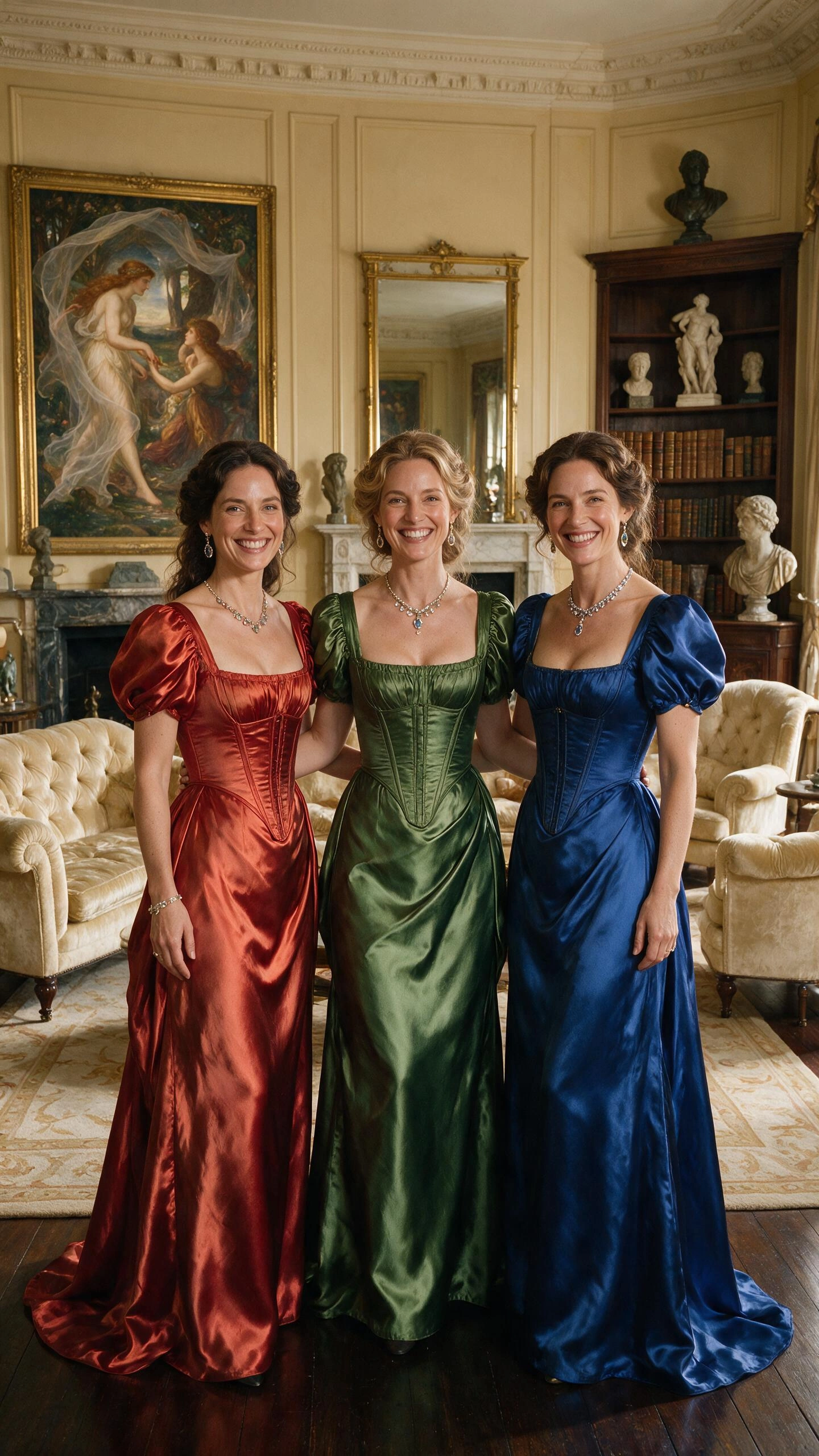
How Serena Ashworth, Venture Capitalist of the Year, Liquidated Her Defences and Found Her True Net Worth in the Arms of the Only Man Who Could Audit Her Soul
⚠ ADULT CONTENT NOTICE ⚠
This announcement and the story it describes are intended for mature audiences only. If you are under the age of 18, or if you are easily offended by themes of dominance, submission, hypnotic seduction, and sensual transformation, please do not read further.
The Patron’s Proof contains adult themes, hypnotic language patterns, and descriptions of glossy aesthetic lifestyles that some readers may find deeply affecting. Read at your own discretion.
You have been warned. The door is open. But only you can choose to walk through it.
In the rarefied world of high finance, where every transaction is calculated and every risk is measured, one woman discovers that the most valuable investment cannot be quantified — it can only be surrendered. This is the story of a mind that conquered boardrooms but could not conquer itself, and the master who taught her that the ultimate dividend is the euphoria of giving everything to the one who deserves it all.
There is a moment in every powerful woman’s life when the architecture of her achievement reveals itself to be a cage. The corner office with its panoramic views becomes a tower from which she can see everything but touch nothing. The wardrobe of tailored wool suits and cashmere coats — those dull, heavy fabrics that whisper of competence and scream of solitude — becomes a uniform of self-imprisonment. The bank balance, that number she has spent her life inflating, becomes a measure not of her worth but of her hunger: a hunger she cannot name, cannot locate, cannot satisfy with another acquisition or another triumph.
Serena Ashworth was such a woman.
At fifty-two, she stood at the summit of a career that most could only dream of. As the founder and managing partner of Ashworth Capital, she had built a £4 billion venture capital firm from nothing but her intellect, her nerve, and an unflinching willingness to bet on the future. She had funded the technologies that now shaped the world. She had sat across from prime ministers and presidents, and they had listened when she spoke. She wore her authority like armour — bespoke wool suits in charcoal and navy, starched cotton blouses, leather heels that announced her arrival with a sharp, decisive click on marble floors.
And yet.
And yet there was a hollow at the centre of her, a void that no amount of money or success could fill. She felt it late at night, when the city was quiet and her Belgravia townhouse was empty save for the echo of her own footsteps. She felt it in the boardroom, when the applause faded and she was left alone with the nagging suspicion that she had been playing the wrong game all along. She felt it most acutely when she touched certain fabrics — the whisper of satin against her fingertips, the cool glide of leather, the liquid shimmer of PVC — and a flicker of something ancient and urgent stirred in her chest before she quashed it and reached for the wool.
Wool. Cashmere. Tweed. The fabrics of the professional woman. The fabrics of mourning. The fabrics that say: I am serious. I am competent. Do not touch me. I am working.
Serena Ashworth did not know that she was waiting. She did not know that the universe, which had given her everything she had asked for, was about to give her what she actually needed. She did not know that an invitation printed on heavy cream card, its text embossed in silver, would arrive on her desk on a Tuesday afternoon and change the architecture of her life forever.
She did not know about Julian Marchetti.
Julian Marchetti is not a man you will find in the Financial Times or on the guest lists of charity galas. He does not give interviews. He does not seek publicity. He operates in the rarefied air of a world that exists parallel to the one most people inhabit — a world where the currency is not money but vulnerability, where the greatest asset a person can possess is the courage to surrender, and where a single dominant mind orchestrates the desires, devotions, and transformations of a community of extraordinary women.
He is older than Serena. His hair is silver-streaked. His hands are steady. His voice is the kind that does not need to be raised to be heard — a low, resonant vibration that seems to bypass the ears and speak directly to the spine. He wears simple, impeccably tailored clothes. He does not flatter. He does not compete. He does not pursue.
He invites.
And the women who accept his invitation — the brilliant surgeons, the celebrated novelists, the tech entrepreneurs, the venture capitalists — find themselves on a journey that defies everything they have been told about power, about desire, about what it means to be a successful woman in the modern world. They find themselves shedding their armour, their wool and their cashmere, and discovering the luminous, tactile pleasure of satin against bare skin, of leather that moulds to the body like a second self, of PVC that catches every light and announces: I am here. I am alive. I am desirable. Touch me.
They find themselves giving — not out of obligation, not out of weakness, but out of a profound, euphoric need that awakens in them like a river breaking through a dam. They give money. They give devotion. They give the one thing they have spent their entire lives hoarding: control.
And in the giving, they find what Serena Ashworth had been searching for without knowing it: a peace that surpasses understanding, a pleasure that transcends the physical, a community of like-minded women who share not jealousy but joy, and a man whose mastery is not a threat to their independence but the completion of it.
This is not a story about manipulation. It is a story about recognition — the moment when a woman sees herself clearly for the first time and realises that the person she has been is not the person she was meant to be. It is a story about the alchemy of surrender, the mathematics of desire, and the proof — the Patron’s Proof — that the greatest investment a woman can make is in the hands of a man who knows her worth better than she does.
It is a story that begins with an invitation and ends with a transformation. It is a story about glossy fabrics and hidden desires, about the intoxicating pleasure of giving and the sublime ecstasy of belonging. It is a story about a woman who had everything and discovered that everything was nothing compared to the one thing she had been refusing to give.
It is, above all, a love story. But not the kind you have read before.
This is the story of Serena Ashworth and Julian Marchetti. This is the story of the Patron’s Proof.
And if you have ever felt the hollow at the centre of your own achievements — if you have ever touched a bolt of satin and felt something stir that you could not name — if you have ever wondered what it might be like to stop holding the world together and let someone hold you instead — then this story is, in a way you may not yet understand, for you.
The prospectus is open. The returns cannot be quantified. They can only be experienced.
Turn the page.
CHAPTER I: “The Prospectus”
The rain fell on London like a curtain of liquid silver, each droplet a tiny, perfect lens refracting the city’s light into a thousand fractured brilliances. From the forty-seventh floor of Ashworth Tower, the world below was an abstraction — a miniature diorama of ant-sized pedestrians and matchbox cars navigating streets that gleamed like the polished PVC of a couture gown. Serena Ashworth stood at the window of her corner office, her reflection superimposed upon the cityscape, and she felt, as she so often did in moments of triumph, absolutely nothing.
The deal had closed at 3:47 p.m. Two hundred million pounds. The largest single acquisition in Ashworth Capital’s twelve-year history. Her team had been meticulous — months of due diligence, weeks of negotiation, a final seventy-two-hour sprint that had left three junior analysts asleep at their desks and her head of legal mainlining espresso like a woman possessed. The target was a biotech firm with a proprietary gene-editing platform that would, if the clinical trials held, revolutionise the treatment of hereditary blindness. It was the kind of investment that made careers and saved lives. It was, by any rational metric, a triumph.
And yet Serena stood at the window, her hands clasped behind her back, and watched the rain trace its glossy paths down the glass, and the hollow at the centre of her pulsed like a second heartbeat.
She was, by the standards of the world, magnificent. Fifty-two years old, with cheekbones that could cut glass and a jawline that suggested both aristocratic breeding and an absolute refusal to suffer fools. Her hair was dark, shot through with the first threads of silver, and cut in a severe bob that framed her face like the setting of a jewel. Her eyes were the colour of polished slate — intelligent, assessing, and utterly unreadable. She wore, as she always wore to the office, a charcoal wool suit, bespoke, from a tailor on Savile Row who had been dressing powerful women for three generations. The jacket was structured, architectural, a fortress of fabric that announced its occupant as a force to be reckoned with. Beneath it, a cream silk blouse — the one concession to softness in her professional wardrobe — provided a whisper of contrast against the charcoal. Her heels were black leather, Italian, their click on the marble floor a metronome of authority.
She was, she knew, the kind of woman that other women wanted to be and other men wanted to be with. She had been on the cover of Forbes twice. She had been named Venture Capitalist of the Year three times. She had a flat in Belgravia, a house in the Cotswolds, and a wine cellar that would have made a sommelier weep. She was healthy — she swam fifty lengths every morning, ate a Mediterranean diet, and had the resting heart rate of an athlete half her age. She was wealthy beyond the dreams of most people’s greed. She was, by every measure that the world applied, a success.
And the hollow pulsed.
“Serena?”
The voice belonged to Priya Sharma, her executive assistant, and it came from the doorway with the careful modulation of someone who has learned to read the temperature of a room before entering it. Priya was twenty-eight, a first-class honours graduate of the London School of Economics, and possessed of a quiet, watchful intelligence that Serena valued more than most people’s loud, performative one. She stood in the doorway holding a silver tray, upon which rested two items: a cup of Darjeeling tea — first flush, brewed for exactly three minutes, a splash of milk added before the water, as Serena preferred — and an envelope.
“Come in, Priya.” Serena did not turn from the window. Her reflection stared back at her, and for a moment, she saw not herself but a stranger — a woman dressed in armour, standing in a tower, looking out at a world she had conquered and finding it barren.
Priya entered, her heels — black patent leather, glossy as wet paint — making a softer sound on the thick carpet than they would on marble. She was wearing a navy satin blouse today, its surface catching the grey light from the window and transforming it into something luminous, almost aquatic. The fabric shifted as she moved, liquid and alive, and Serena found her eyes drawn to it with an intensity that surprised her.
She had noticed, over the past few months, that Priya had begun to dress differently. The stiff cotton shirts and wool trousers of her early days had given way to something more tactile, more expressive. Satin blouses in jewel tones. Leather skirts that caught the light. A PVC pencil skirt in oxblood that she had worn to a meeting last week and that had made the entire boardroom sit up straighter, though none of them could have said why. Priya carried it off with the confidence of a woman who has discovered something about herself and is unafraid to show it. She looked, Serena thought, like a woman who was comfortable in her own skin. Like a woman who had nothing to prove and everything to enjoy.
Serena envied her, though she would not have admitted it.
“The tea, and this.” Priya placed the tray on the desk. She gestured to the envelope. “It arrived by hand courier. No return address. The courier said he was instructed to deliver it directly to you, and to no one else.”
Serena turned from the window at last. She picked up the envelope. It was heavy, cream-coloured, the kind of paper that costs more per sheet than most people spend on a ream. Her name was written on the front in a hand that was both elegant and precise — not printed, not embossed, but written with a fountain pen, the ink a deep, lustrous black that caught the light like the surface of a still pool.
“Thank you, Priya.”
Priya hesitated. “Is there anything else?”
Serena looked at her assistant — really looked at her, for the first time in weeks. The navy satin blouse was exquisite, the way it draped over her collarbones, the way it caught the light from the anglepoise lamp on the desk and threw it back in a soft, pearly sheen. Priya’s skin, against that glossy fabric, looked luminous. She looked like a woman who had been polished, refined, brought to a high shine.
“No,” Serena said. “Thank you. You can go.”
Priya left, closing the door behind her with a soft click.
Serena sat at her desk — a vast, minimalist expanse of polished walnut and glass — and turned the envelope over in her hands. The paper was thick enough to have substance, thin enough to be elegant. It was the kind of paper that carried weight not just physically but metaphorically — the kind that said, What is inside me matters. Take your time. Pay attention.
She slit the envelope with a silver letter opener and withdrew the card within.
It was a single sheet, heavy cream card, the text embossed in silver:
You are invited to consider an investment in subjective revaluation.
The returns cannot be quantified.
They can only be experienced.
— J.M.
Thursday, the 14th of October
7:00 p.m.
W1J 7DH
No address. No telephone number. No email. No website. Just a date, a time, and a postcode in Mayfair. And those three lines of text, embossed in silver that caught the light like the surface of a satin gown.
Serena read it three times. The language was peculiar — “subjective revaluation,” as if she were a company to be assessed, a portfolio to be rebalanced. “Returns cannot be quantified” — a phrase that would have been anathema to every instinct she had developed in twenty-five years of finance. “They can only be experienced” — a promise that was, by its nature, unverifiable.
And yet.
And yet there was something about the card — about the weight of it, the texture of it, the precise, unhurried elegance of the language — that snagged in her mind like a thread on a nail. She was a woman who had built her career on the assessment of risk, on the ability to look at an opportunity and see not just its surface but its substrate, its hidden architecture, its potential for transformation. She had funded companies that were, at the time of investment, nothing more than a pitch deck and a prayer. She had a gift for seeing what could be, not just what was.
And this card — this strange, minimal, silver-embossed invitation — felt like a pitch deck for something she had not known she was looking for.
She placed it in the top drawer of her desk, beside a Montblanc pen and a vintage Patek Philippe that she kept as a lucky charm. She told herself she would forget about it. She told herself it was a marketing gimmick, a piece of targeted direct mail from some boutique consultancy or wellness retreat. She told herself she was too busy, too focused, too rational to be intrigued by a card with no return address and a cryptic message.
She told herself these things, and she did not believe a single one of them.
The celebration was held in the boardroom at six o’clock. The team had arranged champagne — Bollinger, the good stuff — and a cake iced with the Ashworth Capital logo and the words “£200M — We Did It!” in red sugar. Serena stood at the head of the table, her champagne flute raised, and looked at the faces of the people who had made this deal happen.
There was Marcus Webb, her business partner of eleven years, a man with a boxer’s nose and a banker’s instincts. He was raising his glass with the enthusiasm of someone who has just watched his net worth tick up by eight figures. “To Serena,” he said, his voice carrying the gruff warmth of a man who was not given to sentiment but could, on occasion, be moved to it. “The best judge of risk and reward in the City of London. Possibly in Europe. Possibly in the world.”
“To Serena!” the team echoed, and there was genuine affection in the chorus, genuine admiration. These were people she had hired, mentored, challenged, and championed. They were, in their way, her family.
Serena smiled. It was a good smile — practised, warm, calibrated to convey both gratitude and authority. “To the team,” she said. “I just write the cheques. You do the work.”
She drank the champagne. It was excellent — dry, bright, with a mousse that tingled on the tongue like a promise. But the hollow did not fill. The champagne flowed down her throat and into her stomach and was absorbed into her bloodstream and did nothing, nothing at all, to touch the void.
She left the party after twenty minutes, pleading an early morning. Marcus caught her at the door.
“You okay?” he asked, his voice low enough that only she could hear. “You seem… distant.”
“I’m fine,” she said. “Just tired. It’s been a long three months.”
He nodded, but his eyes — shrewd, assessing, the eyes of a man who had known her for over a decade — held a question he did not ask. He let her go.
The car took her through the rain-slicked streets of the City, past St Paul’s and along the Embankment, where the Thames flowed like a ribbon of black silk under the golden lights of the bridges. Serena sat in the back seat, her phone in her hand, and stared at the screen without seeing it. The emails scrolled past — congratulatory messages from peers, requests for meetings from entrepreneurs, a newsletter from a think tank she supported — and none of it touched her. She was somewhere else, somewhere internal, a room with no windows and no doors, and the walls were made of wool.
Wool. She had been wearing wool for thirty years. Wool suits, wool coats, wool trousers. It was the fabric of the professional woman — serious, structured, substantial. It held its shape. It did not wrinkle. It did not cling. It maintained its form regardless of what was happening inside it. It was, she realised now, the perfect metaphor for the life she had built: a structure that held its shape regardless of what was happening inside it.
The car pulled up outside her townhouse in Belgravia — a five-storey Georgian terrace, white stucco, black railings, a blue door that gleamed with fresh paint. She let herself in and stood in the hallway, listening to the silence. The house was immaculate — she had a housekeeper who came three times a week, a gardener who maintained the small walled garden at the back, and a decorator who refreshed the interiors annually. Everything was in its place. Everything was controlled.
She hung her wool coat in the hall closet, where it joined its fellows — charcoal, navy, black, camel, a forest green that she had bought on a whim and never worn. They hung there like a row of sentries, guarding nothing.
She went upstairs to her bedroom. It was large, high-ceilinged, with tall windows overlooking the street. The bed was king-sized, dressed in white Egyptian cotton sheets — crisp, cool, impersonal. The wardrobe was a walk-in room, climate-controlled, its contents arranged by colour and function with the precision of a museum collection.
Serena stood before the wardrobe and looked at her clothes.
They were magnificent, in their way. Bespoke suits from Savile Row. Couture gowns from Paris and Milan. Cashmere knits from Scotland. Silk scarves from Hermes. Leather handbags from Bottega and Mulberry. They were the wardrobe of a woman who had conquered the world and dressed appropriately for the conquest.
But as she stood there, her hand moving along the rails, she felt something she had not felt before — a resistance, a repugnance, as if the fabrics themselves were rejecting her touch. The wool was heavy, dense, lifeless. It hung on its hangers like shed skins, like the husks of something that had once been alive and was no longer. The cashmere was soft, yes, but it was a softness that absorbed light rather than reflecting it — a softness that whispered of comfort and safety and stasis, of firesides and solitude and the slow, comfortable decline into irrelevance.
Her hand moved past the wool, past the cashmere, past the tweed and the cotton and the linen, and came to rest on something else.
It was a black satin slip dress. She had bought it two years ago, on impulse, during a trip to Milan. She had been walking down Via Montenapoleone, past the windows of Prada and Gucci and Armani, and she had seen it — a simple, bias-cut slip dress in black satin, its surface like liquid night, its drape like a whispered secret. She had gone in and tried it on and stood in the fitting room and looked at herself in the mirror and felt, for the first time in years, a flicker of something that was not ambition or satisfaction or control.
It was desire.
Not desire for the dress, though the dress was exquisite. Desire for the woman in the mirror — the woman in the satin, the woman whose body was visible through the fabric’s liquid drape, whose skin was luminous against its black sheen, whose eyes held a hunger that had nothing to do with boardrooms and everything to do with bedrooms. She had looked at that woman and thought: There you are. Where have you been?
She had bought the dress. She had brought it home. She had hung it in the wardrobe. And she had never worn it.
Now she took it from its hanger and held it against her body. The satin was cool against her skin — impossibly cool, impossibly smooth, like water made solid, like darkness made tangible. It caught the light from the bedside lamp and threw it back in a soft, shifting sheen that seemed to move even when the dress was still. It was alive in a way that the wool was not. It was responsive in a way that the cashmere was not. It said, in the language of texture and light: I am here. I am present. Touch me and I will touch you back.
She held it for a long time. She felt the satin against her chest, against her arms, and the hollow pulsed, and for a moment — just a moment — she felt as if the void might be fillable. Not with money. Not with success. Not with control. But with something else. Something she could not name.
She hung the dress back in the wardrobe. She changed into silk pyjamas — a concession to comfort, a small act of rebellion against the wool — and got into bed. The sheets were cool against her skin, and the silk of the pyjamas whispered against them, and the two silken surfaces sliding against each other produced a sound like a whispered secret, like a promise made in the dark.
She lay in the dark and thought about the card.
Subjective revaluation.
What did it mean? She was a woman who valued things — companies, properties, people. She assessed their worth, assigned a number, and acted accordingly. But “subjective revaluation” suggested something different — a reassessment not of external assets but of internal ones. A revaluation of the self.
The returns cannot be quantified.
In her world, everything was quantified. Risk was a number. Return was a percentage. Value was a multiple. The idea that something could be valuable and unquantifiable was, to her, both terrifying and intoxicating. It was the equivalent of a black hole in the financial universe — a point where the normal laws broke down and something else, something unknown, took over.
They can only be experienced.
This was the line that snagged. It was a promise and a challenge. It said: You cannot think your way to this. You cannot calculate your way to this. You have to go there. You have to be there. You have to experience it.
And Serena Ashworth, who had spent her entire life ensuring that she never went anywhere without knowing exactly what she would find, felt something she had not felt since she was a young woman starting out in a world that did not want her: curiosity. The dangerous, intoxicating, world-altering curiosity of someone who has been offered a door into a room she has never seen.
She slept. And she dreamed.
In the dream, she was standing in a room she did not recognise. It was warm, dimly lit, and it smelled of sandalwood and leather and something else — something citrus and clean, like the scent of a freshly opened letter. The walls were lined with fabric — not wool, not cotton, but satin, leather, PVC, in colours so deep and rich they seemed to have weight: midnight blue, oxblood, emerald, gold. The fabrics shimmered in the low light, their surfaces alive with shifting reflections, and as she watched, they moved — not with the wind, but with intention, as if they were breathing.
In the centre of the room was a chair, and in the chair sat a man. She could not see his face — the light was too low, and her dream-eyes would not focus — but she could see his hands. They were large, steady, and they rested on the arms of the chair with the relaxed authority of someone who owned not just the chair but the room, the house, the world. His fingers were long, and they moved — slowly, deliberately, tracing patterns on the leather armrests as if playing an instrument only he could hear.
And around him, standing and sitting and reclining, were women. They were dressed in glossy fabrics — satin gowns and leather skirts and PVC dresses that caught the light and threw it back in a thousand shifting shimmers. They were beautiful, all of them — not in the uniform, manufactured way of models, but in the deep, particular way of women who have been seen, truly seen, and have found themselves beautiful as a result. Their faces were serene, their bodies relaxed, their eyes bright with a light that came not from ambition but from something else, something deeper.
They were not competing. They were not performing. They were simply present — present in a way that Serena had never been present in her own life, present in a way that suggested they had found something she had not. They were gathered around the man in the chair like planets around a sun, and their orbits were not forced but natural, not coerced but chosen, and the gravity that held them was not control but something else.
Something that looked, from where Serena stood, very much like love.
One of the women — a tall brunette in a deep burgundy PVC dress that caught the light like a dark jewel — turned to look at Serena. Her eyes were warm, knowing, and her smile was not a welcome but a recognition, as if she had been expecting Serena, as if Serena’s arrival was not a surprise but a confirmation.
“You can feel it, can’t you?” the woman said, and her voice was low and kind and carried the weight of someone who had stood where Serena was standing and had made the choice Serena was about to make. “The hollow. The hunger. The feeling that there’s something more, something you’ve been missing, something you’ve been too afraid to reach for.”
Serena opened her mouth to speak, but no words came. The satin of the dream-fabrics whispered against her skin, and the man’s hands continued their slow, deliberate patterns on the armrests, and the woman in the burgundy PVC smiled.
“It’s all right,” she said. “You don’t have to speak. You don’t have to decide. You just have to come.”
Serena woke.
The room was dark. The silk pyjamas clung to her skin, warm and smooth. The dream was already fading, dissolving like mist in the morning light, but the feeling remained — the feeling of the fabrics, the feeling of the room, the feeling of the woman’s voice saying You just have to come.
She lay in the dark and pressed her hand against her chest, against the hollow, and for the first time in years, the void did not feel like an absence. It felt like a doorway.
The next morning, Serena swam her fifty lengths. The pool was in the basement of her townhouse — a luxury she had indulged in when she bought the property, and one she never failed to appreciate. The water was cool, clear, and as she moved through it, her body cutting the surface with the efficiency of a woman who has been swimming since she was a child, she felt the familiar rhythm of exertion and release. Her muscles burned, her lungs expanded, and for thirty minutes, the hollow was quiet.
She dressed for the office. She stood before the wardrobe and looked at the wool suits, hanging in their row, and she felt the repugnance again — a physical sensation, a tightening in her stomach, as if the fabrics were dead things and she was being asked to wear their skins. She reached past them, past the cashmere and the tweed, and her hand found the black satin slip dress.
She held it for a moment. The fabric was cool, alive, responsive. It whispered against her fingers.
She put it back. She chose a charcoal wool suit, a cream silk blouse, black leather heels. She put on her armour. She went to work.
But in the top drawer of her desk, the silver-embossed card waited.
And in the back of her mind, the dream whispered: You just have to come.
The days between the arrival of the card and the date upon it passed in a blur of meetings, negotiations, and the relentless machinery of wealth creation. Serena was, as always, brilliant — she identified a promising AI startup, rejected a flawed property deal, and restructured the firm’s emerging markets portfolio with a precision that left Marcus shaking his head in admiration.
But she was also distracted. She found herself looking at the card during quiet moments, turning it over in her fingers, reading the embossed silver text as if it were a code she could crack. She found herself watching Priya — watching the way her assistant moved in her glossy fabrics, the way the satin and leather and PVC caught the light and transformed it into something luminous, the way Priya herself seemed to glow with an inner confidence that had not been there six months ago.
On Wednesday — the day before the date on the card — Serena found herself in the kitchen at the office, waiting for the kettle to boil, when Priya came in. She was wearing a black leather skirt today, its surface gleaming like polished obsidian, paired with a ivory satin blouse that draped over her collarbones like liquid cream. She looked, Serena thought, extraordinary — not because the clothes were expensive or fashionable, but because they were alive. They moved with her. They caught the light and threw it back. They said, in the language of texture and sheen: I am a woman who knows her worth and is not afraid to show it.
“That’s a beautiful blouse,” Serena said, and the words surprised her. She did not, as a rule, comment on her employees’ clothing. It was a boundary she maintained with care.
Priya looked up, a cup of green tea in her hand, and smiled. “Thank you. I’ve been… exploring a different style lately. I used to wear nothing but cotton and wool — you know, the standard office uniform. But I found that the more I wore glossy fabrics, the more… confident I felt. It’s hard to explain.”
“Try,” Serena said, and her voice was softer than she intended.
Priya considered. “It’s like… wool and cotton absorb light. They take it in and they don’t give it back. They’re… dead, in a way. But satin, leather, PVC — they reflect light. They interact with it. They’re in a relationship with the world around them. And when I wear them, I feel like I’m in a relationship with the world too. Not hiding from it. Not absorbing it. Reflecting it. Being seen.”
She paused, a slight flush on her cheeks. “I’m sorry. That sounds ridiculous.”
“It doesn’t,” Serena said. “It sounds like the opposite of ridiculous.”
The kettle boiled. Serena made her tea. Priya made hers. They stood in the small kitchen, two women in a tower of glass and steel, and the silence between them was not empty but full — full of the things that were not being said, the questions that were not being asked, the recognition that was not being acknowledged.
“Priya,” Serena said, and then stopped.
“Yes?”
Serena looked at her assistant — at the ivory satin, the black leather, the glow of confidence that radiated from her like heat from a fire — and almost asked: Where did you find this? Who taught you this? Is there a world I don’t know about, a world where women dress in light and move with purpose and are not afraid to be seen?
But she did not ask. She was not ready. The hollow pulsed, and the card waited in her drawer, and the dream whispered in the back of her mind.
“Nothing,” she said. “Never mind. Have a good afternoon.”
“You too, Serena.”
Priya left the kitchen, her leather skirt catching the fluorescent light and throwing it back in a dark, glossy shimmer. Serena watched her go, and the hollow ached, and the tea was hot in her hands, and the city spread out below her like a world she had conquered and could not touch.
That night — Wednesday night, the night before the date on the card — Serena stood before her wardrobe again. She had come home early, dismissed the housekeeper, and closed the door of her bedroom. The house was silent. The rain had stopped, and the October sky was clear, and the stars were visible through the tall windows — rare, distant, impossibly bright.
She stood before the wardrobe and she took out the wool suits, one by one, and laid them on the bed. Charcoal. Navy. Black. Camel. Forest green. They lay there like a row of corpses, flat and lifeless, their surfaces absorbing the light and giving nothing back. She looked at them and felt the repugnance — not just physical now, but existential, as if the fabrics were not just dead but death, the death of desire, the death of possibility, the death of the woman she might have been if she had chosen differently.
She took out the cashmere. It was soft, yes. It was comfortable. It was safe. It was the fabric of a woman who has given up, who has decided that comfort is enough, that warmth is enough, that the fire and the armchair and the solitude are enough. She held a cashmere cardigan against her chest and felt its softness, its weight, its deadness, and she put it back.
She took out the black satin slip dress.
She held it up. The fabric caught the starlight from the window and shimmered — not with the dead, flat sheen of wool under light, but with a living, shifting radiance, as if the satin were not just reflecting the light but transforming it, making it richer, deeper, more alive. The dress was a river of black silk, a waterfall of liquid night, and it moved in her hands like something with a pulse.
She put it on.
The satin slid over her body like water, like a whisper, like a hand that knows exactly where to touch. It clung to her curves — not with the desperate, needy cling of a fabric that has nothing to give, but with the confident, knowing embrace of a fabric that has everything to offer. It draped over her hips, fell along her thighs, and whispered against her skin with every breath she took. She looked in the mirror and saw the woman from the Milan fitting room — the woman with the hungry eyes, the woman whose body was visible and luminous and alive, the woman who was not hiding.
There you are, she thought. Where have you been?
She stood before the mirror in the black satin slip dress and the starlight and the silence, and for the first time in years, the hollow did not ache. It did not fill — not yet — but it quieted, as if something had been heard, something had been acknowledged, something had been given permission to exist.
She did not wear the dress out of the house. She was not ready for that. But she wore it for an hour, standing before the mirror, watching the satin shift and shimmer, feeling it whisper against her skin, and she made a decision.
She would go.
She would go to the Mayfair address, on the date and at the time specified, and she would find out what “subjective revaluation” meant. She would go not because she was convinced, not because she was certain, but because she was curious — and curiosity, that most dangerous and most human of impulses, was the one thing she had never been able to quantify, control, or conquer.
She took off the dress and hung it back in the wardrobe. But she did not put it at the back, where it had lived for two years. She put it at the front, where she would see it every morning, where it would be the first thing she reached for when she was ready.
She got into bed. She wore the silk pyjamas. The sheets were cool against her skin, and the silk whispered against the silk, and the sound was a secret and a promise.
She slept. She did not dream. She did not need to. The dream was already becoming real.
Thursday. The 14th of October.
Serena went through her day with the focused efficiency of a woman who has made a decision and is waiting for the world to catch up. She chaired a portfolio review, approved a term sheet, and rejected a pitch from an entrepreneur whose business model was, she told him with characteristic directness, “a beautiful theory in desperate search of a revenue stream.”
At 4:00 p.m., she left the office. She told Priya she had a private appointment and would not be returning. Priya nodded, her face neutral, her navy satin blouse catching the light one last time as Serena passed her desk.
Serena went home. She showered. She washed her hair and dried it, letting it fall in its natural wave rather than the severe bob she wore to the office. She did her makeup — not the minimal, professional mask of the boardroom, but something softer, more luminous: a tinted moisturiser that made her skin glow, a mascara that opened her eyes, a lip colour that was not nude but red — the red of a woman who is not hiding.
She stood before the wardrobe.
She reached past the wool. Past the cashmere. Past the tweed and the cotton and the linen.
She took out the black satin slip dress.
She put it on. The fabric whispered against her skin, cool and alive and knowing. She looked in the mirror and saw the woman from Milan, the woman from the dream, the woman from the fitting room. She saw herself.
She added a black leather jacket — not the structured, armoured jacket of the office, but a soft, unstructured piece that draped like a second skin. She added black leather heels — higher than her office heels, glossier, more deliberate. She added a single piece of jewellery: a pendant on a silver chain, a teardrop of polished obsidian that rested against the satin like a drop of darkness.
She looked in the mirror one last time. The woman looking back was not the venture capitalist. Not the boardroom warrior. Not the wool-clad conqueror. This woman was something else — something older, something truer, something that had been waiting behind the armour for a very long time.
“Subjective revaluation,” she said to her reflection, and the words felt like a key turning in a lock.
She picked up the cream card with its silver embossed text and slipped it into her handbag. She picked up her keys. She walked out of the house and into the October evening, where the streetlights gleamed on the wet pavement like rows of polished buttons, and the air smelled of rain and possibility, and the black satin whispered against her thighs with every step she took.
The car was waiting. She gave the driver the postcode. He did not ask for an address. He drove.
And Serena Ashworth, who had spent her entire life ensuring that she never went anywhere without knowing exactly what she would find, sat in the back seat in her black satin dress and her leather jacket and her red lips and her pendant of polished obsidian, and she did not know what she would find, and for the first time in her life, she did not care.
The hollow was quiet. The satin was alive. The night was waiting.
She was on her way.
CHAPTER II: “The First Dividend”
The Mayfair townhouse stood like a secret kept in plain sight. It was one of a terrace of Georgian residences on a quiet street off Berkeley Square — a street that most Londoners had walked past a thousand times without seeing, their eyes sliding over it like water over polished glass. The houses were uniform in their elegance: white stucco facades, black iron railings, tall sash windows that reflected the October evening like dark, knowing eyes. But there was something about number seventeen — a quality of light, a depth of presence, a sense of occupation that the neighbouring properties, with their empty, investor-owned interiors, did not possess. It was the difference between a house that was inhabited and a house that was lived in — a distinction that Serena, who had spent her life assessing the difference between surface and substance, recognised immediately.
The car drew to a halt at the kerb. Serena sat for a moment, her handbag on her lap, the cream card with its silver embossed text tucked inside like a passport to an unknown country. Through the tinted window, she could see the townhouse’s facade — four storeys of Georgian proportion, a front door painted in a deep, lustrous black that gleamed like the surface of a PVC dress, and a brass door knocker shaped like a hand holding a ball. The windows on the ground floor were curtained in something heavy and dark — velvet, perhaps, or a heavy silk — and behind them, a warm, amber light glowed, suggesting a world within that was nothing like the cold, fluorescent efficiency of the one she had left.
She felt the satin of her slip dress whisper against her thighs as she breathed. She felt the leather of her jacket creak softly as she shifted. She felt the pendant of polished obsidian rest against her sternum, a small, cool weight that anchored her to her body, to the present moment, to the decision she had made.
She told herself she was being foolish. She told herself she was a fifty-two-year-old venture capitalist sitting outside a stranger’s house in a black satin dress, responding to an anonymous invitation like a character in a gothic novel. She told herself she should tell the driver to take her home, to Belgravia, to the wool suits and the empty townhouse and the life she had built and the hollow she could not fill.
She told herself these things, and then she opened the car door and stepped out into the October evening.
The air was cool and damp, carrying the scent of wet leaves and distant chimney smoke and something else — something warm and resinous, like sandalwood, like incense, like the breath of a house that had been breathing for two hundred years. Serena’s heels — black leather, glossy as wet paint — clicked on the pavement, and the sound was sharp and decisive, a metronome of intent. She walked to the front door, and she raised the brass knocker, and she let it fall.
The sound was deeper than she expected — a resonant, almost musical note that seemed to travel through the door and into the house and beyond, as if announcing her arrival not just to whoever stood inside but to the house itself, to the walls and the floors and the centuries of secrets they held.
She waited. The satin whispered against her thighs. The leather jacket creaked softly. The obsidian pendant rested against her chest, cool and still.
The door opened.
The woman who stood in the doorway was, in Serena’s professional assessment, extraordinary. She was tall — nearly six feet in her heels, which were black patent leather, glossy as a mirror, with a stiletto heel that added four inches to an already impressive frame. Her hair was dark auburn, swept up in a chignon that exposed a neck as long and elegant as the stem of a wine glass. Her face was striking — not conventionally beautiful in the way of models or actresses, but beautiful in the way of a woman who has been refined by experience, polished by life, brought to a high shine by the attention of someone who knows how to bring out the best in her. Her eyes were a deep, warm brown, and they looked at Serena with an expression that was not welcoming, not appraising, but recognising — as if she had been expecting her, as if her arrival was not a surprise but a confirmation.
And her dress.
It was burgundy PVC — a deep, rich, oxblood red that caught the amber light from the hallway behind her and threw it back in a shifting, liquid shimmer that seemed to move even when she was still. The dress was fitted, structured, following the lines of her body with the precision of a second skin, its surface gleaming like the skin of a ripe plum, like the surface of a dark jewel, like the still water of a pool at twilight. It was not vulgar — it was not the cheap, flashy PVC of a fancy dress costume or a nightclub. It was couture — tailored, considered, deliberate — and it said, in the language of texture and sheen: I am a woman of substance and I am not afraid to be seen. I am a woman who has chosen to be tactile, to be glossy, to be alive. Touch me, and I will touch you back.
Serena felt a jolt — not of attraction, not of envy, but of recognition. She recognised this woman. Not her face, not her name, but her quality — the quality of a woman who has found something, who has been transformed by something, who wears her confidence not as armour but as a second skin, glossy and luminous and unapologetic.
“Serena Ashworth?” the woman said, and her voice was low, warm, and precisely modulated — the voice of a woman who has been trained to speak, or who has trained herself, or who has been taught by someone who understands that the voice is not just a tool for communication but an instrument of influence.
“Yes.”
“I’m Cordelia. Welcome.” She stepped aside, and the doorway opened like a curtain rising on a stage. “Come in.”
The hallway was a revelation. Serena had been in many beautiful houses — the Belgravia townhouses of fellow financiers, the Cotswold manors of old money, the modernist palaces of tech billionaires — but this was different. This was not a house designed to impress. It was a house designed to affect.
The floor was dark oak, polished to a sheen that reflected the amber light from the wall sconces like the surface of a still pool. The walls were panelled in the same dark wood, their surfaces warm and tactile, and hung with a small number of carefully chosen artworks — not the flashy, investment-grade pieces that Serena was used to seeing in the homes of her peers, but quieter, more intimate works: a small charcoal drawing of a woman’s back, the curve of her spine rendered in a few precise lines; a photograph of a hand resting on a leather armrest, the fingers relaxed, the leather gleaming; a painting of a length of satin fabric draped over a chair, its surface catching the light in a cascade of soft, shifting shimmers.
The scent was stronger here — sandalwood, leather, and that citrus note she had caught outside, like the scent of a freshly opened letter, like the promise of something written and waiting to be read. It was warm, enveloping, and it seemed to settle over her like a blanket, softening the edges of her alertness, loosening the tension in her shoulders, inviting her to breathe more deeply, to step more slowly, to be more present.
Cordelia closed the door behind her, and the sound of the street — the distant hum of traffic, the rustle of the October wind — fell away, replaced by a silence that was not empty but full — full of the house’s own sounds, the creak of old wood, the whisper of air moving through rooms, the soft, rhythmic tick of a clock somewhere deep in the interior.
“You’re early,” Cordelia said, and there was a smile in her voice — not a rebuke but a observation, the kind of observation made by someone who understands that early arrival is a sign not of eagerness but of readiness. “That’s good. It gives us time to talk before you meet him.”
“Meet whom?”
Cordelia turned to face her, and the burgundy PVC dress caught the light from the wall sconces and threw it back in a shimmer that seemed, for a moment, to outline her body in a halo of dark, liquid light. “Julian. The man who sent you the invitation. The man whose name was on the card.”
“J.M.,” Serena said.
“Julian Marchetti.” Cordelia said the name with a warmth that was not performative but genuine — the warmth of a woman who speaks the name of someone she admires, someone she is devoted to, someone who has changed her life in ways she is still discovering. “He’s been expecting you.”
“Expecting me? He sent an anonymous invitation to my office. How could he know I would come?”
Cordelia smiled — a real smile, not the polished, professional smile of a hostess but the warm, slightly amused smile of a woman who has heard this question before and still finds it endearing. “He didn’t know you would come. He knew you could come. There’s a difference. Julian doesn’t predict. He recognises. He recognised something in you — something that told him you were ready for this.”
“And what is ‘this’?”
Cordelia gestured toward a doorway at the end of the hallway, through which a warm, amber light spilled like honey. “Why don’t you come and see?”
The room beyond the doorway was a drawing room — a long, elegant space with tall sash windows that were curtained in heavy, dark silk, their surfaces catching the lamplight in a soft, shifting sheen. The floor was covered in a Persian rug, its colours deep and rich — burgundy and gold and midnight blue — and the furniture was arranged not for display but for conversation: two deep leather sofas facing each other across a low mahogany table, a pair of armchairs angled toward a fireplace in which a real fire burned, its flames casting a warm, flickering light that danced across the leather and the wood and the silk and made every surface in the room alive with shifting, golden reflections.
The room was not empty. Three women were already there, and Serena’s eyes were drawn to them with the same intensity that a connoisseur’s eyes are drawn to a gallery of masterpieces — not with desire, not with envy, but with the sharp, appreciative gaze of someone who recognises quality.
The first woman was standing by the fireplace, a glass of red wine in her hand. She was perhaps forty-five, with the lean, angular build of a runner and the alert, watchful eyes of someone who is used to making quick decisions. She was wearing a charcoal latex skirt that clung to her hips and thighs like a second skin, its surface gleaming in the firelight with a dark, liquid shine that shifted with every movement she made. Above it, she wore a ivory silk blouse, its surface catching the firelight and throwing it back in a soft, warm glow that made her skin luminous. The contrast between the dark, glossy latex and the light, luminous silk was striking — like the contrast between midnight and dawn, between shadow and light, between the hidden and the revealed.
The second woman was seated on one of the leather sofas, her legs crossed, a cup of tea in her hands. She was younger — perhaps thirty-five — with a mass of red curls that fell around her face like a cascade of autumn leaves. She was wearing an emerald green satin dress that draped over her body like liquid, its surface catching every light in the room — the firelight, the lamplight, the candlelight from a cluster of votives on the table — and reflecting it back in a shifting, iridescent shimmer that seemed to change colour as she moved. The satin whispered against the leather of the sofa as she shifted, and the sound was soft, intimate, like a secret being shared.
The third woman was standing by the window, her back to the room, looking at the curtains as if reading something written in their silk. She was tall, with the posture of a dancer, and she was wearing a black PVC dress that covered her from throat to knee, its surface as glossy and reflective as a mirror, catching the amber light of the room and the cool blue of the evening sky beyond the window and holding them both in its dark, polished surface. When she turned, Serena saw her face — calm, serene, with the particular beauty of a woman who has stopped striving and started being — and her eyes, which were the colour of grey sea, held a depth that suggested she had travelled a great distance to arrive at this room, this evening, this version of herself.
All three women, Serena noticed, shared a quality — a quality that she had seen in Priya, in the office, in her navy satin blouse and her black leather skirt. It was the quality of settledness — not complacency, not passivity, but a deep, grounded sense of being in the right place, of having found something that was worth finding, of being engaged in something that was worth doing. They were not waiting. They were not performing. They were simply present — present in a way that Serena had rarely been present in her own life, present in a way that suggested they had access to a source of contentment that she did not.
And they were all wearing glossy fabrics. Not a single piece of wool, not a single thread of cashmere, not a scrap of tweed or cotton or linen. Every surface that touched their skin was alive — satin, silk, leather, PVC, latex — and every surface reflected the light and gave it back transformed, enriched, made more beautiful by the contact.
Serena felt the black satin of her own slip dress whisper against her thighs, and for the first time since she had left the car, she felt not like an intruder but like a member — a woman who had arrived, at last, in a room where she belonged.
Cordelia led her into the room. “Ladies, this is Serena Ashworth. She’s our guest this evening.”
The three women turned to her, and their faces held not the guarded, competitive assessment that Serena was used to receiving from other women — the quick, evaluating glance that catalogued wealth, status, and threat — but a warm, open curiosity. The woman by the fireplace — the one in the charcoal latex skirt — smiled and raised her wine glass in a gesture of welcome.
“Serena. It’s good to meet you. I’m Isabelle.” She had a slight French accent, and her voice was warm and direct, the voice of a woman who is used to speaking her mind. “I’m a surgeon. Cardiothoracic. And before you ask — yes, I perform surgery in wool scrubs. But I change the moment I leave the theatre.” She ran a hand over the surface of her latex skirt, and the gesture was not vain but affectionate, the touch of a woman who loves what she wears. “Life is too short for dull fabrics against your skin.”
Serena found herself smiling. “I’m beginning to realise that.”
The redhead on the sofa shifted, her emerald satin dress whispering against the leather. “I’m Cassandra. I’m a novelist.” She had a husky, expressive voice, the voice of someone who lives in words. “I used to write about women who didn’t need anyone. Strong, independent, self-sufficient. Then I met Julian, and I realised that the strongest thing a woman can do is admit that she needs the right person. My sales tripled.” She smiled, a flash of red lips against pale skin. “Readers sense the truth.”
The woman by the window — the one in the black PVC dress — turned and crossed the room with the measured, deliberate grace of a dancer. “I’m Vivienne. I’m a barrister.” Her voice was low, precise, and carried the authority of a woman who has stood in courtrooms and won. “I spent twenty years wearing wool suits and cotton blouses and wondering why I felt dead. Then I found this place. Found Julian. Found these women.” She gestured to the room, to the glossy fabrics, to the warm, amber light. “Now I wear PVC to court under my robes. No one knows. But I know. And that knowledge — that secret, tactile, glossy knowledge — changes everything. It changes the way I stand. The way I speak. The way I am.”
She looked at Serena, and her grey eyes were kind and knowing. “You’re wearing satin. That’s a good start.”
Serena looked down at herself — at the black satin slip dress, its surface catching the firelight in a cascade of soft, shifting shimmers — and she felt a warmth that had nothing to do with the fire. “It’s the first time I’ve worn it out of the house.”
“It won’t be the last,” Isabelle said, and her voice carried the certainty of someone who has made the same journey and knows the destination. “Once you feel it — the satin, the leather, the way the light moves across the surface and makes you visible — you can’t go back to wool. Wool is for hiding. These fabrics are for being seen.”
“Being seen by whom?” Serena asked, and the question was not rhetorical. It was the question she had come here to ask. It was, she realised, the question she had been asking her entire life.
Cordelia, who had been standing by the door, watching the exchange with the quiet satisfaction of a woman who has seen this scene play out many times and never tires of it, stepped forward. “By yourself, first. And then by the man who can see you more clearly than you can see yourself.” She paused, and her warm brown eyes held Serena’s. “Julian is finishing a call. He’ll be a few minutes. Can I get you something to drink? Water? Wine? Tea?”
“Water, please.”
Cordelia nodded and disappeared through a side door. Serena stood in the drawing room, surrounded by women in glossy fabrics, and she felt the firelight on her skin and the satin against her thighs and the warmth of the room settling over her like a second skin, and she thought: What is this place?
Isabelle gestured to the sofa opposite Cassandra. “Sit. You look like you’re about to give a presentation. This isn’t a boardroom. This is a living room. Sit.”
Serena sat. The leather sofa was deep, soft, and it received her body with a warmth and a give that was almost embrace-like. The satin of her dress whispered against the leather, and the sound was intimate, tactile, a conversation between two surfaces that were both alive. She felt herself sink into the sofa, felt her shoulders drop, felt the tension in her spine begin, slowly, to unwind.
Cassandra leaned forward, her emerald satin dress shifting like water. “You’re nervous. That’s normal. Everyone is nervous the first time. I was terrified. I’m a novelist — I spend my life making things up, and I couldn’t have imagined a place like this.”
“What is this place?” Serena asked again, and this time the question was not internal but spoken, and it carried the weight of a woman who has spent her life demanding answers and is, for once, asking because she genuinely does not know.
Isabelle settled into the armchair by the fire, her charcoal latex skirt creaking softly as she crossed her legs. “It’s a society. A community. A group of women who have discovered that the life they were told to want — the success, the independence, the armour — is not the life they actually need. And a man who saw what we needed before we did.”
“A man,” Serena said, and the word carried a weight that was both sceptical and hungry.
“Julian Marchetti,” Vivienne said, and she said the name with the same warmth that Cordelia had — a warmth that was not infatuation but gratitude, the deep, settled gratitude of a woman who has been given something invaluable and knows it. “He’s not what you’re imagining. He’s not a guru. He’s not a cult leader. He’s not a pickup artist. He’s something else entirely.”
“What?”
Vivienne smiled. “He’s a man who sees. Really sees. Not just the surface — the suit, the title, the bank balance. He sees the substrate. The thing underneath. The thing you’ve been hiding. The thing you’ve been starving.” She paused. “And he knows how to feed it.”
Cordelia returned with a crystal glass of water — not tap water, Serena noted, but something else, something with a subtle mineral quality, served at exactly the right temperature, cold but not icy. She placed it on the table beside Serena, and her burgundy PVC dress caught the firelight one more time, a flash of dark, liquid shimmer, and then she took a seat on the sofa beside Isabelle, her movements fluid and assured, the movements of a woman who is completely at home.
“Drink,” Cordelia said. “And listen. And when Julian comes, let him see you. Not the venture capitalist. Not the wool suit. You. The woman in the satin dress who came here tonight because something in her knew it was time.”
Serena drank. The water was cold, clean, and it slid down her throat like a benediction. She felt it enter her body, felt the coolness spread through her chest, and she breathed, and the breath was deeper than any she had taken in weeks, months, years.
The fire crackled. The satin whispered. The women in their glossy fabrics sat in the amber light, and their faces were calm, and their eyes were kind, and they waited.
And then a door opened at the far end of the room — a door Serena had not noticed, set into the dark wood panelling — and a man walked in, and the room changed.
He was not what she had expected. She had expected — if she was honest with herself, which she was, usually — a type. The charismatic guru with the expensive watch and the practiced smile. The silver fox with the tailored suit and the calculating eyes. The dominant with the leather and the swagger and the rehearsed line. She had assessed a thousand men in her career, and she could categorise them in seconds, and she had already categorised the man she was about to meet, and the category was: Dangerous, probably. But predictable.
Julian Marchetti was not predictable.
He was older than she had imagined — perhaps sixty, perhaps a little more. His hair was dark, streaked with silver at the temples, and cut short, close to the skull, in a style that suggested neither vanity nor neglect but a simple, practical relationship with his appearance. His face was angular, weathered, with the kind of lines that come not from age but from experience — from sun and wind and concentration, from a life lived outdoors as much as in. His jaw was strong, his cheekbones prominent, and his eyes — his eyes were the colour of dark honey, and they were the most present eyes she had ever seen. They were eyes that did not flicker, did not dart, did not assess and move on. They landed. They stayed. They took you in, all of you, and they did not look away until they were done, and when they were done, you felt not judged but seen — seen in a way that was so complete, so thorough, so unhurried that it was almost indecent.
He was tall — six feet two, perhaps — and his build was not the soft, padded build of a man who sits at desks but the lean, dense, muscular build of a man who uses his body — who climbs, who sails, who walks for miles and carries his own weight. He wore simple clothes: dark trousers, a charcoal linen shirt, open at the collar, a leather belt, leather shoes. The clothes were not expensive in the way that Serena’s clothes were expensive — they were not bespoke, not couture, not statements of wealth. They were good — well-made, well-fitted, well-worn — and they said, in their quiet, unassuming way: I am a man who does not need to impress you with what I wear, because what I am is more interesting than what I own.
He moved into the room with a gait that was unhurried but not slow, confident but not arrogant, and the energy of the room shifted — not dramatically, not theatrically, but subtly, the way a compass needle shifts when a magnet is brought near. The women in the room did not stand, did not fawn, did not perform. They simply oriented — their bodies turning toward him, their faces softening, their eyes brightening — the way flowers orient toward the sun, not because they are compelled but because it is their nature.
“Serena.” His voice was low, resonant, and it carried the quality of a note played on a cello — a vibration that was felt in the body as much as heard in the ears. He did not say her name as a question. He said it as a statement. An acknowledgment. A recognition. “I’m Julian. Thank you for coming.”
He crossed the room and stood before her, and she looked up at him from the sofa, and his eyes — those dark honey, impossibly present eyes — met hers, and she felt something she had not felt in years: the sensation of being matched. Not overpowered. Not diminished. Matched. As if his presence, his attention, his capacity to see, was equal to hers — equal to her intelligence, equal to her drive, equal to her hunger — and the equality was not a competition but a complement, two forces that were different but balanced, two halves of something that was, together, more than either was alone.
“Thank you for the invitation,” she said, and her voice was steady, but she could feel her pulse in her throat, in her wrists, in the hollow at the centre of her.
“May I?” He gestured to the sofa beside her.
“Please.”
He sat. The leather sofa received him as it had received her — with warmth, with give, with an almost embrace-like quality. He was close enough that she could smell him — not cologne, not deodorant, but him, a scent that was clean and warm and male, like sun on skin, like fresh air on wool — no, not wool, like fresh air on linen, on leather, on something alive.
He did not speak immediately. He sat, and he looked at her, and his eyes moved over her face with the same unhurried, thorough attention that she had felt when he first entered the room. He looked at her eyes, her mouth, her jaw, her hair. He looked at the black satin of her slip dress, the leather of her jacket, the obsidian pendant at her throat. He looked at her hands, which were resting in her lap, and he looked at her eyes again, and he held them.
“You wore the satin,” he said.
It was not a question. It was an observation, and it carried the weight of a man who notices everything and comments on what matters.
“I did.”
“How did it feel?”
The question was intimate, and it was not about the fabric. Serena knew this. She knew, with the instinct that had made her one of the most successful investors in the country, that this question was a test — not a test of her honesty but of her willingness. Her willingness to be honest. Her willingness to be vulnerable. Her willingness to answer a question that mattered with an answer that was true.
“It felt like coming home,” she said, and the words surprised her, because she had not planned to say them, because they were more honest than anything she had said in a boardroom in twenty-five years, because they were true.
Julian’s eyes warmed. Not a smile — his face did not change — but his eyes, those dark honey eyes, filled with a warmth that was not patronising or triumphant but genuine, the warmth of a man who has heard what he hoped to hear and is glad.
“Good,” he said. “That’s a good start.”
He leaned forward, resting his forearms on his thighs, his hands clasped loosely between his knees. It was a posture of attention, of focus, of a man who is about to say something that matters and wants you to be ready.
“Let me tell you what this is,” he said. “And then let me tell you what it isn’t.”
Serena nodded. She was aware of the other women in the room — Isabelle by the fire, Cassandra on the opposite sofa, Vivienne by the window, Cordelia beside Isabelle — and she was aware that they were not watching with the idle curiosity of spectators but with the warm, invested attention of women who have been where she is and remember it, and care about the outcome.
“This is not a cult,” Julian said. “It is not a religion. It is not a therapy group. It is not a dating service. It is not a financial scheme. It is not a pyramid. It is not a scam. It is not a trap.” He paused, and his eyes held hers, and the directness of his gaze was not aggressive but clarifying, like a light being shone into a dark room. “I have no interest in your money. I have no interest in your obedience. I have no interest in your worship. I have no need for any of those things, and I have no patience for the kind of man who does.”
“Then what do you have an interest in?”
“You.” The word was simple, and it was spoken with a weight that made it anything but. “Not your money. Not your name. Not your reputation. You. The woman who came here tonight in a satin dress because something in her knew it was time. The woman who has spent twenty-five years building a fortress and is beginning to wonder whether the fortress is a prison. The woman who has everything and feels nothing and doesn’t know why.”
Serena felt the words land — not like blows, not like accusations, but like keys turning in locks she had not known she had. Each word was precise, specific, and it fit a lock she had thought was invisible, and the tumblers turned, and something inside her shifted, and the hollow pulsed, and she breathed, and the breath was deep.
“What this is,” Julian continued, “is an opportunity. An investment opportunity, if you like that language — and I suspect you do. You are a woman who understands investment. You understand risk. You understand return. You understand that the greatest investments are the ones that look, on the surface, like the greatest risks. The ones that cannot be quantified by traditional metrics. The ones that require not analysis but intuition. Not calculation but courage.”
He leaned back, and his eyes did not leave hers. “I am offering you an investment in subjective revaluation. A revaluation of yourself. Not as a venture capitalist. Not as a boardroom warrior. Not as a wool-clad conqueror. As a woman. A woman who is, I suspect, far more valuable than her current valuation suggests.”
“And what does this investment involve?”
“Time. Attention. Honesty. And, eventually, a tangible proof of intent — a financial transaction, but not one that benefits me. One that benefits you, by proving to yourself that you are serious. That you are committed. That you are not here to observe but to participate.”
“A financial transaction.”
“Yes. But that comes later. First, there is something I want to show you. Something small. Something that will, I think, help you understand what I am offering.”
He stood, and the movement was fluid, unhurried, and he crossed the room to a side table where a tray had been placed — a silver tray, upon which sat two objects: a crystal glass filled with clear water and a small glass vial filled with a dark, viscous liquid. He picked up the tray and brought it to the low mahogany table between the sofas, and he placed it there, and he sat down again, beside Serena, and he looked at her.
“Do you see this?” He gestured to the glass of water. “This is you. Pristine. Clear. Perfect. Every molecule in its place. Every surface reflecting the light. It is, by any objective measure, flawless.”
Serena looked at the water. It was clear, still, and it reflected the firelight in a soft, warm shimmer. It was, she thought, a perfect metaphor for the life she had built — controlled, contained, reflecting back whatever was directed at it without being changed by the reflection.
“And this?” He picked up the vial. “This is me. Or rather, this is what I offer. Not myself, but the experience of myself. The ink of a different perspective. A different way of seeing. A different way of being.”
He held the vial up. The ink inside was dark — not black, but a deep, rich, blue-black, like the sky at the edge of night, like the surface of a satin gown in candlelight. It was dense, viscous, alive.
“Your wealth proves you can own the water,” he said, and his voice was low, steady, a vibration she felt in her chest. “Your intelligence proves you understand the ink. But can you allow me to pour the ink into the water? Can you value the resulting diffusion more than the pristine, separate elements?”
Serena looked at the water. She looked at the ink. She looked at Julian’s eyes — dark honey, steady, present — and she saw in them not a challenge but an invitation. An invitation to let go. To allow. To be changed.
She was a woman who had spent her entire life ensuring that nothing changed her. Who had built walls of wool and wealth and control to keep the world out, to keep herself intact, to keep the water pristine and the ink separate. And she was tired. She was so tired.
“Yes,” she said.
Julian uncorked the vial. The scent of the ink was rich, earthy, like peat and iron and the deep, dark soil of a forest floor. He held the vial over the glass of water, and he paused, and he looked at her one last time, and his eyes were warm and certain and full of something that looked, from where Serena sat, very much like respect.
“Watch,” he said.
He tilted the vial. A single drop of ink fell — a dark, perfect sphere, suspended for a moment in the air above the water, catching the firelight in a brief, dark shimmer — and then it touched the surface.
The effect was immediate and extraordinary. The ink did not dissolve. It did not disperse. It bloomed. It spread from the point of contact in a billowing, expanding cloud — a dark, living, shifting form that reached out tendrils and filaments into the clear water, each one branching and dividing and reaching further, creating a pattern of extraordinary complexity and beauty. The cloud was not uniform — it was dense in some places, gossamer-thin in others, and it moved, constantly, the ink and the water interacting in a dance that was both chaotic and ordered, both unpredictable and inevitable.
Serena watched. She watched the ink spread, and she watched the water change, and she watched the clear, pristine, controlled surface transform into something else — something darker, more complex, more beautiful, more alive. The ink did not destroy the water. It completed it. It gave the water something it had not had before — depth, dimension, a story. The water was still water, but it was water that had been touched, water that had been changed, water that was no longer pristine but was, in its new, diffused, clouded state, far more interesting, far more beautiful, far more valuable than it had been when it was clear.
She watched, and she felt something happen inside her — something she could not name, something she could not control. It was as if the ink were being poured not into the glass on the table but into the glass of her own being, into the clear, pristine, controlled vessel she had spent her life maintaining, and the dark, rich, living substance was spreading through her, reaching into corners she had not known were empty, filling spaces she had not known were hollow, and the feeling was not loss but gain, not destruction but creation, not the end of something but the beginning.
The hollow pulsed. And then, for the first time, it did not ache. It filled.
“This,” Julian said, and his voice was low and warm and carried the weight of a man who has watched this reaction many times and still finds it beautiful, “is the first dividend. The beauty of the altered state. The proof that the pristine, untouched, controlled life is not the most valuable life. That the greatest value comes from allowing yourself to be changed. To be diffused. To be touched.”
Serena looked at the glass. The ink had continued to spread, and the water was now a swirling, shifting landscape of dark and light, of density and space, of complexity and beauty. It was, she thought, the most beautiful thing she had seen in years. Not because it was pretty — it was not pretty, it was profound — but because it was true. It was a truth she had been avoiding for twenty-five years: that the pristine, controlled, unaltered life was not a life at all. It was a display. A museum piece. A glass of clear water on a silver tray, reflecting the light but holding nothing within.
“I feel it,” she said, and her voice was barely above a whisper, and she did not care. “I feel something.”
“What do you feel?”
She searched for the word. She searched through the vocabulary of finance — return, yield, profit, gain — and the vocabulary of emotion — happiness, relief, peace — and none of them were adequate. The word she found was not from either of those vocabularies. It was from a vocabulary she had not used in years, a vocabulary she had locked away with the satin dress and the dreams and the hunger.
“I feel awake,” she said.
Julian smiled. It was the first time he had smiled, and the smile transformed his face — not softening it but warming it, like sun on stone, like firelight on leather — and the smile was not triumphant or satisfied but glad. Genuinely, simply glad.
“That,” he said, “is the best dividend I can offer. And it’s only the beginning.”
Around them, the room was warm and still. The fire crackled. The glossy fabrics of the women’s dresses caught the light — the burgundy PVC, the charcoal latex, the emerald satin, the black PVC — and held it, transformed it, gave it back richer and more alive. The women sat in their glossy armour that was not armour but expression, and their faces were calm and their eyes were warm, and they watched Serena with the quiet, invested attention of women who remember their own awakening and are honoured to witness another’s.
Cordelia rose from the sofa and crossed the room, her burgundy PVC dress catching the firelight in a cascade of dark, liquid shimmers. She placed a hand on Serena’s shoulder — a light, warm, grounding touch — and said, “The first dividend is always the most beautiful. Because it’s the first time you realise that what you’ve been protecting yourself from is actually what you’ve been searching for.”
Serena looked up at her. “How long have you been here?”
“Three years. I was a partner at a law firm. I wore wool suits every day. I was successful, respected, and dead inside.” She touched the surface of her PVC dress, and the gesture was the same affectionate, unselfconscious gesture that Isabelle had made with her latex skirt — the touch of a woman who loves what she wears because what she wears is an expression of who she has become. “Now I wear this. I work less. I earn more — because I’m better, clearer, more focused. And I am, for the first time in my life, happy.”
“Because of the clothes?”
Cordelia smiled. “Because of what the clothes represent. The willingness to be seen. The willingness to be tactile. The willingness to be alive. Julian taught me that. The clothes came after. The clothes are the expression of the change, not the cause of it. But they are a powerful expression, because they remind you, every moment of every day, that you are no longer hiding.”
Julian stood. “Serena, it’s late. You’ve had a lot to take in. I don’t expect anything from you tonight. No decision. No commitment. Just this: go home. Think about what you felt when the ink touched the water. Think about what you felt when you put on the satin dress. And if you want to continue — if you want to make the next investment — come back on Sunday. 7 p.m. Wear what makes you feel most alive.”
He paused, and his eyes — those dark honey, impossibly present eyes — held hers one last time. “And Serena? The wool suits. You might want to consider retiring them. They’re not protecting you. They’re imprisoning you. And you are, I think, ready to be free.”
Serena left the townhouse at ten o’clock. The October night was cold and clear, the stars visible above the London skyline, and the streetlights gleamed on the wet pavement like rows of polished buttons. She walked to the car, her black satin slip dress whispering against her thighs, her leather jacket creaking softly, her obsidian pendant resting against her chest, and she felt — for the first time in years, for the first time in as long as she could remember — present. Not in the way she was present in a boardroom — alert, assessing, three steps ahead. Present in a different way. Present in the way of a woman who is standing in her own life, in her own body, in her own skin, and is not hiding.
The car drove through the night streets of London, past the glittering shops of Mayfair and the dark, quiet squares of Belgravia, and Serena sat in the back seat and held the glass of water in her hands — Julian had given it to her, the glass with the ink still swirling in its dark, beautiful, ever-shifting cloud, and she had accepted it, and she held it now, and the cloud moved and shifted and changed, and it was alive, and it was beautiful, and it was her.
She looked at the glass, and she saw herself — not the venture capitalist, not the wool-clad conqueror, not the pristine, controlled, unaltered woman. She saw the woman she was becoming. The woman in the satin dress. The woman who had said yes. The woman who had allowed the ink to touch the water and had felt, for the first time in years, awake.
The hollow was not gone. But it was different. It was no longer an absence. It was a space — a space being filled, slowly, beautifully, like ink diffusing through clear water. And the filling was not a loss of control but a gain of something she had not known she was missing.
She held the glass, and the satin whispered against her thighs, and the night was cold and clear and full of stars, and Serena Ashworth, who had spent her entire life ensuring that nothing changed her, sat in the back of a car in a black satin dress and held a glass of ink-stained water and felt, for the first time, that change was not something to be feared but something to be desired.
The car pulled up outside her townhouse. She let herself in. She went upstairs. She stood before the wardrobe, and she looked at the wool suits hanging in their row, and she did not feel repugnance this time. She felt clarity. The wool was not her enemy. It was simply not her. It was the skin of a woman she had been and was no longer.
She took off the black satin slip dress and hung it at the front of the wardrobe, where it would be the first thing she saw in the morning. She put on her silk pyjamas. She got into bed. She placed the glass of ink-stained water on the bedside table, and in the darkness, the cloud was still visible — a dark, shifting, living form in the clear water, catching the faint light from the streetlamp outside the window and holding it in its dark, beautiful surface.
She looked at it, and she thought about Julian’s eyes — dark honey, steady, present — and she thought about Cordelia’s hand on her shoulder — warm, grounding, kind — and she thought about Isabelle and Cassandra and Vivienne, in their glossy fabrics, their faces calm, their eyes bright, their bodies at home in their own skin.
And she thought about the ink, and the water, and the diffusion, and the beauty of the altered state, and she breathed, and the breath was deep, and the hollow was filling, and the satin was alive, and the night was quiet, and Serena Ashworth, who had everything and felt nothing, closed her eyes and felt, for the first time in years, that she was on the verge of something.
Not a deal. Not an acquisition. Not a conquest.
An investment.
The most important investment of her life.
She slept. And the ink swirled in the glass on the bedside table, and the water held it, and the cloud shifted and changed and grew, and it was beautiful, and it was alive, and it was, in its dark, diffused, altered state, more valuable than it had ever been when it was clear.
CHAPTER III: “The Signature”
The days between Thursday and Sunday passed like water flowing through a filter — the surface unchanged, the substrate altered. Serena went through the motions of her life with the practised efficiency of a woman who has spent decades performing competence, but beneath the surface, beneath the wool suits and the board meetings and the carefully calibrated displays of authority, something had shifted. The ink was in the water. The diffusion had begun. And no amount of pristine, controlled behaviour could reverse it.
She woke on Friday morning and lay in bed for a long time, looking at the glass on the bedside table. The ink cloud had settled overnight into a slower, more languid pattern — the tendrils still moving, but gently, like seaweed in a slow current, like silk in a light breeze. The water was no longer clear. It would never be clear again. And Serena found, to her surprise, that this thought did not disturb her. It pleased her. The cloud was beautiful — dark and complex and alive — and it was hers, a reminder that she had allowed something to change, and the change had not destroyed her but had, in some indefinable way, completed her.
She showered. She dressed. She stood before the wardrobe and looked at the wool suits, and the clarity she had felt on Thursday night — the clean, sharp clarity of a woman who has seen herself truly for the first time — was still there, still bright, still certain. She did not reach for the wool. She reached past it.
She put on a midnight-blue satin blouse — one she had bought online on Thursday night, in a fever of clicking and ordering that had resulted in the delivery of six satin blouses, three leather skirts, two PVC pencil skirts, and a pair of patent leather heels that she had not, in her rational mind, intended to buy. The blouse was the colour of the night sky, its surface shifting and shimmering as she moved, catching the morning light from the bedroom window and throwing it back in a soft, pearly sheen that made her skin glow. She paired it with a charcoal leather skirt — fitted, structured, its surface gleaming like polished stone — and the patent leather heels, which were black and glossy as wet paint.
She looked in the mirror and saw a woman she did not entirely recognise. Not the venture capitalist. Not the boardroom warrior. Someone else. Someone whose eyes were brighter, whose posture was more fluid, whose skin seemed to catch and hold the light in a way it had not before. The satin whispered against her skin as she breathed, and the leather creaked softly as she moved, and the sounds were intimate, tactile, a conversation between her body and the fabrics that clothed it — a conversation that had been silenced for decades and was now, at last, being spoken.
She went to work.
The reaction in the office was immediate and instructive. Serena, who had spent her career reading the subtle, unspoken signals of boardrooms and negotiation tables, read the office the way she read a term sheet — with precision, with attention, with an eye for what was said and what was not.
Priya was the first to see her. Her assistant looked up from her desk, and her face broke into a smile that was not surprise but recognition — the warm, knowing smile of a woman who has been where Serena was standing and remembers the feeling. She was wearing a black satin blouse today, its surface like liquid shadow, paired with a burgundy leather skirt that caught the fluorescent light and threw it back in a dark, rich shimmer.
“Serena,” she said, and her voice carried a warmth that went beyond the professional. “You look… different.”
“Do I?”
“You look like yourself.” Priya paused, and her eyes — bright, watchful, intelligent — held Serena’s for a moment longer than usual. “I don’t mean that as a criticism. I mean it as a compliment. You look like the woman you actually are, not the woman you’ve been pretending to be.”
Serena felt a jolt — not of offence but of confirmation. Priya knew. Not the details, not the townhouse, not Julian, but the feeling. The feeling of shedding the wool and finding the satin. The feeling of stepping out of the armour and into the skin.
“Thank you, Priya,” she said, and the words were simple, but they carried the weight of a woman who is learning, at fifty-two, to accept a kindness she has spent her life deflecting.
She walked through the office, and the heads turned — not with the quick, assessing glances she was used to, the glances that catalogued power and status and threat, but with a different quality of attention. The men looked, and their looks were not professional but appreciative, a response to the visual and tactile presence of a woman in glossy fabrics who is, for the first time, allowing herself to be seen. The women looked, and their looks were more complex — curiosity, interest, and, in some cases, a flicker of something that looked like envy, the envy of a woman who sees another woman stepping into a freedom she has not yet found.
Marcus stopped her in the corridor. He looked her up and down with the frank, unfiltered gaze of a man who has known her for eleven years and has never seen her dressed like this.
“New look?” he said, and his voice carried a note of surprise that was not disapproval but genuine curiosity.
“New chapter,” she said.
He nodded slowly, his shrewd eyes holding hers. “Good chapter?”
“The best so far.”
He smiled — a rare, unguarded smile that softened his boxer’s face and made him look, for a moment, like the young man she had partnered with eleven years ago, before the money and the deals and the slow, comfortable erosion of passion. “I’m glad,” he said. “You’ve been… off lately. Distant. This suits you. Whatever this is.”
Serena went into her office and closed the door and sat at her desk and looked out at the city, and the city looked back at her through the glass, and the glass reflected her satin blouse and her leather skirt and her patent leather heels, and she felt, for the first time in years, that the woman in the reflection and the woman behind the reflection were the same person.
On Saturday, she went shopping. Not the careful, calculated shopping of a woman building a professional wardrobe — the bespoke suits, the investment pieces, the timeless classics that would last a decade. This was a different kind of shopping, a different kind of investment. She went to a boutique in Knightsbridge — a small, discreet establishment that she had walked past a hundred times and never entered, its window displaying a single mannequin dressed in a PVC dress the colour of midnight, its surface so glossy it looked like a pool of dark water frozen in mid-ripple.
The shop assistant was a woman in her thirties named Delphine, who wore a steel-grey satin blouse and a black leather skirt and moved through the shop with the fluid, confident grace of a woman who is completely at home in her own skin and her own clothes. She looked at Serena with the same warm, knowing expression that Serena had seen on Cordelia’s face, on Priya’s face — the expression of a woman who recognises a kindred spirit.
“First time?” Delphine asked, and the question was not about the shop.
“Is it that obvious?”
Delphine smiled. “You have the look. The look of a woman who has just discovered that there’s a whole world of fabric she’s been missing. The wool world. The cotton world. The ‘I’m a professional woman and I must dress like a man in skirts’ world.” She gestured to the rails of glossy fabrics — satin, leather, PVC, latex, silk — in colours that ranged from midnight black to champagne gold, each surface catching the shop’s soft lighting and throwing it back in a shifting, living shimmer. “Welcome to the other side.”
Serena spent two hours in the shop. She tried on satin dresses that clung to her body like liquid light. She tried on leather skirts that moulded to her curves like a second skin. She tried on a PVC dress in deep oxblood that made her look, she thought, like a woman who has been poured into a mould of dark, glossy perfection and emerged as something more than she had been before. She tried on a latex skirt in charcoal that whispered against her thighs with every step, its surface so reflective she could see her own face in it, distorted and darkened and somehow more real than her reflection in an ordinary mirror.
She bought everything she tried on. She spent more in two hours than most people spent on a year’s wardrobe, and she did not regret a penny, because each piece was not a purchase but an investment — an investment in the woman she was becoming, the woman who was emerging from the wool like a butterfly from a chrysalis, her wings still damp but already catching the light.
Delphine wrapped the purchases in tissue paper and placed them in glossy black bags, and as Serena was leaving, she said, “Can I give you some advice? From one convert to another?”
“Please.”
“Don’t go back. Once you’ve worn satin against your skin, once you’ve felt the way leather moves with you, once you’ve seen yourself in PVC and realised that the woman in the mirror is the woman you’ve been hiding — don’t go back to the wool. The wool will try to pull you back. It will tell you it’s safer, it’s more appropriate, it’s more professional. But it’s not. It’s a cage. And you’ve just found the door.”
Serena nodded, and the words settled into her like the ink had settled into the water — slowly, deeply, irrevocably.
Sunday arrived with the slow, golden light of an October afternoon that has decided, against all meteorological probability, to be beautiful. Serena spent the morning in her townhouse, preparing. Not in the frantic, last-minute way she prepared for a board meeting, but in the deliberate, ritualistic way of a woman who is preparing for something that matters.
She bathed in water scented with jasmine and neroli, and the warmth of the water and the richness of the scents softened her skin and opened her senses, and she lay in the tub and looked at the ceiling and thought about the ink and the water and the diffusion and the feeling — the feeling of being awake — and she felt the hollow, and the hollow was not an ache but a space, a space waiting to be filled, a space that was no longer afraid of what might fill it.
She dressed with care. She chose a black satin blouse — its surface like liquid night, its texture cool and alive against her skin — and a deep burgundy leather skirt that fitted her hips and thighs like a glove, its surface gleaming with a dark, rich shine that caught the light and held it. She wore black patent leather heels, high and glossy, and a single strand of pearls around her neck, their surfaces glowing against the satin like drops of moonlight on dark water.
She looked in the mirror and saw the woman she was becoming. Not the venture capitalist. Not the wool-clad conqueror. A woman in satin and leather, her eyes bright, her skin luminous, her body at home in its glossy, tactile, alive clothing. A woman who was, for the first time in her life, dressed not to impress but to express.
She picked up her handbag. She picked up the glass of ink-stained water, which she had placed on the mantelpiece in her drawing room, where it caught the afternoon light and threw it back in a dark, shifting, beautiful shimmer. She looked at it one last time, and then she left.
The townhouse in Mayfair was the same — the white stucco facade, the black door, the brass knocker — but Serena was different. She was not nervous this time. She was not uncertain. She was ready — ready in the way she had been ready for the biggest deals of her career, with a combination of preparation and intuition, of analysis and instinct, that had always served her well. But this readiness was different. It was not the readiness of a woman about to do battle. It was the readiness of a woman about to surrender.
Cordelia opened the door. She was wearing a midnight-blue PVC dress tonight — a different dress from the burgundy one she had worn on Thursday, but with the same quality of lustrous, liquid sheen that caught the hallway light and threw it back in a shifting, living shimmer. Her face, as always, was warm, knowing, and her eyes — those deep brown eyes that seemed to see not just the surface but the substrate — held a welcome that was not polite but genuine.
“Serena. You came back.”
“I came back.”
Cordelia smiled, and the smile was not surprised but satisfied — the satisfaction of a woman who has watched another woman take the first step and is glad to see her take the second. “Come in. Julian is in the drawing room. He’s been looking forward to this.”
Serena entered the hallway, and the scent enveloped her again — sandalwood, leather, citrus, the warm, resinous breath of a house that has been breathing for two hundred years. She walked down the hallway, her patent leather heels clicking on the dark oak floor, her satin blouse whispering against her skin, her leather skirt creaking softly with each step, and the sounds were a symphony of tactile, glossy presence, a music that said I am here, I am alive, I am not hiding.
The drawing room was different tonight. The fire was still burning, the leather sofas still deep and inviting, the candles still casting their warm, flickering light, but the room was fuller. More women were present — six now, including Cordelia — and they moved through the space with the easy, fluid grace of women who are completely at home in their surroundings and their clothing.
Isabelle was there, in the same charcoal latex skirt but with a different blouse — a deep crimson satin that draped over her collarbones like liquid wine. She was talking to a woman Serena had not met before — a tall, striking blonde in a steel-grey satin gown that caught the firelight and threw it back in a cool, silvery shimmer. The blonde’s name, Serena learned later, was Arabella, and she was a hedge fund manager — one of the most successful in London, a woman whose name Serena recognised from the financial press.
Cassandra was there, in a bronze leather skirt that gleamed like polished metal, paired with a cream silk blouse that was almost luminous in the soft light. She was sitting on the sofa, a glass of red wine in her hand, talking to Vivienne, who was wearing a deep green PVC dress that made her look like a goddess carved from polished emerald.
There were two new women Serena had not met on Thursday. One was a petite, dark-haired woman in a black latex dress that clung to her body like a second skin, its surface so glossy it reflected the room like a dark mirror. She was introduced as Mei, a tech entrepreneur who had founded and sold two companies before the age of forty. The other was a tall, elegant woman in a champagne satin gown that shimmered like liquid gold — her name was Sophia, and she was a professor of philosophy at Oxford.
Serena looked at these women — these brilliant, successful, accomplished women — and she saw what she had seen on Thursday: the quality of settledness, of deep, grounded contentment, of women who had found something and were living in the finding. And she saw the fabrics — the satin, the leather, the PVC, the latex — and she saw that the fabrics were not costumes, not uniforms, not statements, but expressions — expressions of a way of being that was tactile, alive, unapologetic, and free.
And she saw, too, that they were all there for the same reason. They were all there for him.
Julian was standing by the fireplace, a glass of water in his hand. He was wearing the same simple, unassuming clothes — dark trousers, a charcoal linen shirt, leather shoes — and his presence in the room was like the presence of a stone in a stream: the water moved around him, shaped by him, oriented toward him, and the orientation was not forced but natural, not coerced but chosen. The women did not cluster around him — they moved through the room with their own purpose, their own conversations, their own lives — but they were, Serena noticed, always aware of him. Their bodies oriented toward him, their eyes found him, their voices softened when they spoke to him. It was not worship. It was not dependence. It was attraction — the deep, primal, magnetic attraction of women who have found a man worthy of their attention and are giving that attention freely, gladly, without reservation.
Julian looked up and saw Serena in the doorway, and his eyes — those dark honey, impossibly present eyes — warmed. He set down his glass and crossed the room, and the room shifted around him, the way it had on Thursday — not dramatically, not theatrically, but subtly, the way a compass needle shifts when a magnet is brought near.
“Serena.” He said her name the same way he had said it on Thursday — not as a question but as a statement, an acknowledgment, a recognition. “You came back.”
“I came back.”
He looked at her — at the black satin blouse, the burgundy leather skirt, the patent leather heels, the pearls — and his eyes moved over her with the same unhurried, thorough attention that had undone her on Thursday. But this time, the attention felt different. It felt not like an assessment but like a homecoming — the gaze of a man who is seeing, not a stranger, but a woman he has been waiting for.
“You’re wearing leather,” he said. “And satin. Together.”
“Yes.”
“How does it feel?”
She did not hesitate this time. She did not search for the word. The word was there, ready, waiting, like a key in a lock.
“It feels like me,” she said.
Julian smiled — the same warm, transforming smile she had seen on Thursday, the smile that was not triumphant but glad — and he gestured to the sofa. “Sit. We have things to discuss.”
She sat. The leather sofa received her as it had before, with warmth and give and an almost embrace-like quality. Her leather skirt creaked softly against the leather of the sofa, and the sound was intimate, a conversation between two surfaces that were both alive. Julian sat beside her — close, but not too close, the distance of a man who understands that proximity is not a weapon but an invitation.
The other women settled into their own conversations, their own spaces, their own lives. They did not watch Serena and Julian with the idle curiosity of spectators but with the warm, invested attention of women who have been where she is and remember it, and care about the outcome. But they did not intrude. They gave the moment its space.
“I want to explain the next step,” Julian said. His voice was low, resonant, and it carried the quality of a man who is about to say something important and wants to be heard not just with the ears but with the whole body. “On Thursday, I showed you the ink and the water. I showed you what happens when you allow yourself to be changed. That was the first dividend — the experience of the altered state. The proof that change is not loss but gain.”
“I remember.”
“The next step is what I call the Signature. It is, in your language, a financial transaction. But it is not a payment. It is not a fee. It is not a subscription. It is a proof of intent — a tangible, measurable, irrevocable act that proves to yourself that you are serious about this investment. That you are not here to observe but to participate.”
He paused, and his eyes held hers, and the directness of his gaze was not aggressive but clarifying, like a light being shone into a room that has been dark for a long time.
“The amount is fifty thousand pounds.”
Serena did not flinch. She had expected a number — had expected it to be significant, had expected it to be enough to mean something, to cost something, to be more than a token. Fifty thousand pounds was, to her, not a hardship. It was a sum she could lose without noticing, a rounding error in the context of her annual income. But she understood, with the instinct that had made her one of the most successful investors in the country, that the amount was not the point. The point was the act.
“It is not for me,” Julian continued, and his voice carried a quiet emphasis that told her this distinction mattered. “I have no use for your money, Serena. I am not a charity. I am not a business. I am not a man who needs your wealth to validate his own. The money will be donated anonymously, in your name, to a cause I will choose. You will not know which cause. You will have no control over how it is spent. You will receive no receipt, no acknowledgement, no tax benefit. The money will leave your account, enter the world, and do its work, and you will never know what that work is.”
He paused again, and the pause was not for effect but for comprehension — a pause that gave her time to absorb the full weight of what he was saying.
“The act of giving, without control of the outcome, is the signature on the contract. It is the proof that you understand what this investment requires: not your money, but your surrender. The surrender of control. The surrender of oversight. The surrender of the need to know, to manage, to direct. The fifty thousand pounds is not a price. It is a declaration — a declaration that you are willing to let go of the thing that has defined you for twenty-five years: the need to be in charge.”
Serena looked at him. She looked at his eyes — dark honey, steady, present — and she saw in them not a demand but a challenge. The same challenge he had offered with the ink and the water: Can you let go? Can you allow? Can you value the diffusion more than the pristine, separate elements?
She thought about her life. She thought about the wool suits, the board meetings, the deals, the acquisitions, the relentless, exhausting, hollow-making machinery of control. She thought about the feeling on Thursday night — the feeling of being awake, the feeling of the ink diffusing through the water, the feeling of something shifting inside her that had been stuck for years. She thought about the satin against her skin, the leather against her thighs, the way the glossy fabrics caught the light and gave it back transformed, and she thought: This is what it feels like to be alive. And I want more of it. And the price of more is the one thing I have never been willing to give: control.
She reached for her handbag. She took out her phone. She opened her banking app.
Julian watched her. He did not speak. He did not prompt. He did not guide. He sat, and he watched, and his eyes were steady and present, and he gave her the space to make the choice on her own.
Serena entered the details. The account number Julian had given her — an account in the name of a charitable trust, not his own name. The amount: £50,000. She paused, her thumb over the confirm button, and in that pause, she felt the full weight of what she was about to do. She was about to send fifty thousand pounds into the world, never to know where it landed, never to know what it did, never to receive anything in return except the knowledge that she had let go. She was about to sign a contract not with Julian but with herself — a contract that said: I am willing to change. I am willing to surrender. I am willing to trust.
She pressed confirm.
The transfer took three seconds. Three seconds for the money to leave her account, travel through the banking system, and arrive at its destination. Three seconds for the act to become irrevocable, the signature to become permanent, the declaration to become real.
And in those three seconds, something happened to Serena that she could not have predicted, could not have explained, could not have quantified in any spreadsheet or financial model she had ever built.
It began in her chest — a warmth, a spreading, blooming warmth that started at her sternum and radiated outward, like ink diffusing through water, like dawn breaking over a dark landscape. The warmth was not physical — or not only physical — it was emotional, a feeling so intense and so unfamiliar that she did not have a word for it. It was not happiness — happiness was too small, too tame, too domesticated a word. It was not relief — relief was the absence of something, and this was the presence of something, something vast and warm and overwhelming.
It was euphoria.
The euphoria flooded through her body like a wave — a warm, golden, all-consuming wave that started in her chest and spread to her stomach, her arms, her legs, her fingers, her toes. Her skin tingled. Her breath caught. Her eyes widened. She felt as if a weight she had not known she was carrying — a weight she had been carrying for so long that she had mistaken it for her own body, her own self, her own identity — had been lifted, and the lifting was not a loss but a liberation, a release so profound that it was almost physical, almost sexual, almost unbearable in its intensity.
She gasped. She could not help it. The gasp was not pain but pleasure — a pleasure so deep and so pure that it bypassed her mind entirely and spoke directly to her body, to her nervous system, to the ancient, animal part of her that had been caged for twenty-five years and was now, at last, being set free.
The satin of her blouse whispered against her skin, and the whisper was amplified, intensified, every nerve ending alive and receptive. The leather of her skirt creaked softly as she shifted, and the creak was a sound of intimacy, of contact, of two living surfaces in conversation. The pearls at her throat were cool and smooth, and their coolness was a counterpoint to the warmth in her chest, a balance, a harmony.
She felt the tears before she knew they were coming. They were not tears of sadness, not tears of grief, not tears of loss. They were tears of release — the release of a woman who has been holding herself together for so long that the holding has become her identity, and who has just, for the first time, let go, and the letting go is not a collapse but an opening, an opening so wide and so deep that the tears are not a sign of weakness but a sign of capacity — the capacity to feel, to be moved, to be changed.
“Oh,” she said, and the word was barely a whisper, and it carried the weight of a woman who has just discovered that the thing she was most afraid of — the loss of control — is not a loss at all but a gain, a gain so enormous and so unexpected that it takes her breath away.
Julian was watching her. His eyes — those dark honey, impossibly present eyes — were warm, and his face held not triumph but tenderness — the tenderness of a man who has witnessed this moment many times and still finds it beautiful, still finds it moving, still finds it an honour to be present when a woman opens.
“That,” he said, and his voice was low and gentle, “is the second dividend. The euphoria of letting go. The proof that the thing you were holding onto — the control, the oversight, the need to know — was not protecting you. It was imprisoning you. And the act of releasing it is not a sacrifice. It is a liberation.”
Serena could not speak. The euphoria was still flowing through her, wave after wave, and each wave was warmer and deeper than the last, and she felt as if she were being washed, cleansed, purified by a feeling that was not of her own making but of her own allowing — a feeling that had been waiting inside her for years, decades, a lifetime, and that she had been holding at bay with her wool suits and her board meetings and her need to be in charge, and that was now, at last, free.
Free.
She was free.
Cordelia appeared beside her. Serena had not seen her approach — the euphoria had taken her so far inside herself that the external world had become a soft, warm blur — but she felt the woman’s presence, and then her touch — a hand on her arm, warm and grounding, the touch of a woman who has been where Serena is and knows the terrain.
“The first signature is always the hardest,” Cordelia said, and her voice was low and kind and carried the weight of personal experience. “And the most exhilarating. I remember mine. I cried for twenty minutes. I thought I was having a breakdown. I was having a breakthrough.”
Serena looked at her through tear-blurred eyes. Cordelia’s face was warm, her brown eyes gentle, and her burgundy PVC dress caught the firelight and threw it back in a soft, shifting shimmer that was, in that moment, the most beautiful thing Serena had ever seen.
“What happened?” Serena asked, and her voice was raw, stripped of its usual polish, its usual control.
“I let go,” Cordelia said. “I let go of the need to control everything, to manage everything, to be responsible for everything. I let go of the wool and the cotton and the armour. I let go of the woman I thought I was supposed to be and allowed myself to become the woman I actually was. And the feeling — the euphoria, the release, the freedom — was so intense that I wept, and the weeping was not grief but joy, the joy of a woman who has been in prison for twenty years and has just walked out into the sunlight.”
She paused, and her hand on Serena’s arm was warm and steady. “And then I gave more. And the feeling was stronger. And I gave more. And it was stronger still. And each time, the giving was not a loss but a gain — a gain of peace, of clarity, of connection, of the feeling that I was, for the first time in my life, living in alignment with my true self.”
She looked at Serena, and her eyes held a depth that was not sadness but wisdom — the wisdom of a woman who has travelled a long road and is glad of the journey. “The giving is the key. The giving is what opens the door. Not because Julian needs your money — he doesn’t. Not because the money matters — it doesn’t. But because the act of giving, without control, without expectation, without return, is the most profound act of surrender a woman of your world can make. It is the signature on the contract. The proof that you are ready.”
Serena breathed. The euphoria was settling now — not fading but deepening, becoming less a wave and more a sea, a calm, warm, vast sea of feeling that was not the sharp, electric high of the first moment but a deeper, more sustained, more real state of being. She felt as if she were standing on a shore she had been swimming toward for years, and the shore was not a place but a feeling — the feeling of being home.
“Champagne,” Cordelia said, and she pressed a crystal flute into Serena’s hand. The champagne was cold, golden, and its surface fizzed with tiny, rising bubbles that caught the firelight like a shower of miniature stars. “Drink. Celebrate. You’ve just done something that most people never do: you’ve let go.”
Serena drank. The champagne was dry, bright, and its effervescence tingled on her tongue and in her throat, and the tingling was a counterpoint to the warmth in her chest, a bright, sparkling note above a deep, warm chord, and together they made a music that was, she thought, the music of a woman who has just changed her life.
She sat on the sofa, the champagne in her hand, the euphoria settling into a deep, warm, sustained glow, and she watched the room. She watched the women in their glossy fabrics — the satin, the leather, the PVC, the latex — moving through the amber light with the fluid, confident grace of women who are completely at home in their own skin and their own clothes. She watched the way the fabrics caught the light and gave it back transformed, enriched, made more beautiful by the contact. She watched the way the women moved around Julian — not clustering, not competing, not performing, but orienting — their bodies turning toward him, their faces softening, their voices warming, the way flowers orient toward the sun, not because they are compelled but because it is their nature.
She watched Arabella — the hedge fund manager, a woman whose name Serena had read in the Financial Times, whose fund performance she had analysed, whose strategy she had admired — lean against the mantelpiece in her steel-grey satin gown, her eyes soft as Julian spoke to her. He was standing close to her, his hand resting on the mantelpiece beside her hip, and his body was angled toward her with the same focused, unhurried attention he had given Serena. He was not flirting. He was not seducing. He was present — present with Arabella the way he had been present with Serena, with a completeness of attention that was, Serena realised, the most intimate thing she had ever experienced. To be truly seen — not assessed, not evaluated, not categorised, but seen — was an intimacy more profound than any physical act, and Julian gave that intimacy to each woman in the room, freely, fully, without scarcity.
Arabella said something Serena could not hear, and Julian laughed — a low, warm, genuine laugh that transformed his angular face and made him look, for a moment, like a boy — and Arabella’s face lit up, not with the desperate, needy light of a woman seeking approval but with the warm, settled light of a woman who has given her approval and is glad to see it received.
Cassandra crossed the room in her bronze leather skirt, its surface gleaming like polished metal, and she touched Julian’s arm as she passed — a light, familiar, affectionate touch, the touch of a woman who has the right to touch and knows it. He turned to her, and she said something, and he smiled, and the smile was not the same smile he had given Arabella — it was different, specific, tailored to Cassandra and Cassandra alone — and Serena realised, with a jolt of understanding that was almost physical, that Julian did not treat all the women the same. He treated each woman as herself — unique, individual, specific — and the attention he gave was not generic but personal, not a performance but a relationship, and the relationship was different with each woman because each woman was different.
Mei, the tech entrepreneur in her black latex dress, was sitting in an armchair by the fire, her legs crossed, her dark eyes watching Julian with an expression that was not adoration but appreciation — the appreciation of a woman who recognises quality and is glad to be in its presence. Sophia, the philosophy professor in her champagne satin gown, was standing by the window, a glass of wine in her hand, talking to Vivienne about — Serena caught fragments — Kant and the sublime and the ethics of surrender, and the conversation was serious and intelligent and punctuated by laughter, and the laughter was the laughter of women who are engaged in something that matters and are enjoying the engagement.
And Cordelia. Cordelia, who had been the first woman Serena had met, who had opened the door and welcomed her in, who had placed her hand on her shoulder and said The first signature is always the hardest. Cordelia was standing by the bookshelf, her burgundy PVC dress catching the firelight in a cascade of dark, liquid shimmers, and she was watching Julian — watching him with an expression that was not possessive, not jealous, not competitive, but loving. It was the expression of a woman who loves a man and is glad to see him give joy to others, because his joy is her joy, and his capacity to love is not diminished by being shared but multiplied.
Serena watched all of this, and she understood. She understood with the clarity that comes from the euphoria of letting go, the clarity that is not intellectual but visceral — a knowing that bypasses the mind and speaks directly to the body, to the heart, to the ancient, animal part of her that has been caged for twenty-five years and is now, at last, free.
She understood that these women were not competing. They were not sharing. They were not tolerating each other’s presence. They were community — a community of women who had each found, in Julian, something they had been searching for, and who had discovered that the finding was not diminished by being shared but enhanced. That the love and attention and presence of a man like Julian was not a finite resource to be hoarded but an infinite resource to be celebrated, and the celebration was richer when it was shared.
She understood that the polyamorous structure — the many women, the one man — was not a harem, not a cult, not a fantasy of male dominance. It was a family — a family of choice, not of blood, bound not by obligation but by devotion, and the devotion was not to Julian alone but to each other, to the community, to the shared experience of being seen and held and transformed by a man who saw them more clearly than they saw themselves.
And she understood, with a thrill that ran through her body like a current of liquid gold, that she wanted to be part of it.
Julian returned to her. He sat beside her on the sofa, and his presence was warm and solid and grounding, and his eyes — those dark honey, impossibly present eyes — found hers and held them.
“You’re observing,” he said. “I can see it. The venture capitalist, assessing the opportunity. Evaluating the risk. Projecting the return.”
Serena smiled. “Old habits.”
“Old habits are not bad habits. They’re just… old. The question is whether they still serve you.”
“And do they?”
He looked at her — at the black satin blouse, the burgundy leather skirt, the pearls, the patent leather heels — and his gaze was warm and appreciative and seeing, always seeing. “I think you already know the answer to that.”
She did. She knew it with the certainty of a woman who has just experienced the most profound euphoria of her life by giving away fifty thousand pounds without knowing where it would go. She knew it with the certainty of a woman who has spent twenty-five years building a fortress and has just, for the first time, opened the door and found not an enemy but a world.
“I’m wondering about them,” she said, and she gestured to the room — to the women in their glossy fabrics, their faces calm, their eyes bright, their bodies oriented toward the man beside her. “About you. About… all of this.”
“Ask.”
“How can they share you? How can there be no jealousy? No competition? No… scarcity?”
Julian leaned back, and his face held not amusement but attention — the serious, focused attention of a man who has been asked a question that matters and is going to answer it with the fullness of his being.
“Jealousy,” he said, “is the fear of scarcity. It is the belief that love is a finite resource — that if I give my attention to Arabella, there is less for Cassandra. If I give my presence to Mei, there is less for Sophia. It is the economics of a zero-sum world, where one woman’s gain is another woman’s loss.”
He paused, and his eyes moved over the room — over each woman, each face, each glossy, luminous, individual presence — and his gaze was not possessive but appreciative, the appreciation of a man who is surrounded by beauty and is grateful for it.
“But love is not finite. Attention is not finite. Presence is not finite. They are not commodities to be divided and hoarded. They are qualities — qualities of being that expand to fill the space available. When I give my attention to Arabella, I do not take it from Cassandra. I expand — my capacity to see, to attend, to be present grows with each woman I see, and the growth is not linear but exponential. Each woman makes me more, not less. Each relationship deepens my capacity for the next.”
He turned to Serena, and his eyes held hers with the same focused, unhurried, complete attention that he had given to each woman in the room. “The question is not whether you can share me. The question is whether you can allow yourself to be part of something larger than your own ambition. Whether you can accept that your gain is not another woman’s loss, but another woman’s gain — that the community is richer for your presence, and your presence is richer for the community.”
Serena looked at the room. She looked at Cordelia, standing by the bookshelf, her burgundy PVC dress shimmering in the firelight, her face soft with love. She looked at Isabelle, in her crimson satin, laughing with Mei, their glossy fabrics catching the light in a shared, luminous glow. She looked at Cassandra, touching Julian’s arm with the easy, affectionate familiarity of a woman who has the right to touch. She looked at Vivienne and Sophia, deep in conversation about Kant and the sublime, their glossy dresses — the green PVC, the champagne satin — catching the candlelight and throwing it back in a shared, shifting, living shimmer.
She looked at all of them, and she saw not competition but community. Not scarcity but abundance. Not jealousy but joy — the joy of women who have each found something precious and are glad to share it, because the sharing makes it more, not less.
“I want to be part of it,” she said, and the words were not a decision but a recognition — the recognition of a woman who has found her place and is claiming it.
Julian smiled — the warm, transforming smile that was not triumph but gladness — and he said, “You already are.”
The evening continued. The fire crackled. The candles flickered. The glossy fabrics whispered and shimmered and caught the light and gave it back transformed. The women talked and laughed and argued and shared, and Julian moved among them like a sun among planets, his presence warm and gravitational and generative, and the women orbited not because they were compelled but because it was their nature, and the orbiting was not a circling but a dance — a dance of attraction and devotion and shared purpose.
Serena talked to Isabelle about surgery. She talked to Cassandra about writing. She talked to Sophia about Kant — and discovered, to her delight, that the philosophy professor had a wicked sense of humour and a laugh that was like a burst of champagne bubbles. She talked to Mei about tech, and discovered that the petite, dark-haired woman had a mind like a laser and a passion for glossy fabrics that rivalled her own.
And she talked to Cordelia. She talked to her for a long time, sitting on the sofa, the fire warm on their skin, their glossy dresses — the black satin, the burgundy PVC — catching the light in a shared, shifting, intimate shimmer.
“How many women are there?” Serena asked.
“In the Society? Twenty-three. Not all are here tonight. Some are in other cities — we have members in New York, Paris, Hong Kong. Some are newer than others. Some have been here for years. Cordelia has been here the longest — three years. I was the first.”
“The first?”
“The first to sign. The first to give. The first to let go.” Cordelia’s eyes were warm and deep, and they held the weight of a woman who has travelled a long road and is glad of every step. “I was a partner at a law firm. I was forty-one. I had everything — the career, the money, the reputation, the wool suits. And I was dead. Not physically — I was functioning, performing, achieving. But inside — inside, I was a glass of clear water. Pristine. Controlled. Empty.”
She paused, and her hand rested on the surface of her PVC dress, and the gesture was the same affectionate, unselfconscious gesture that all the women made — the touch of a woman who loves what she wears because what she wears is an expression of who she has become.
“Julian found me at a charity dinner. I was wearing a wool suit — charcoal, bespoke, expensive, dead. He looked at me the way he looked at you — not with desire, not with assessment, but with recognition. He saw the glass of clear water and he knew, before I did, that it was waiting to be diffused.”
“What did he say?”
“He said, ‘You’re the most controlled woman in this room, and I can see that control is killing you. Would you like to know what’s on the other side of it?'”
“And you said yes?”
“I said, ‘What makes you think there is another side?’ And he said, ‘Because I can see the ink in you. It’s there, beneath the water, waiting. All you have to do is let me pour it.'”
Cordelia smiled, and the smile was not retrospective but present — the smile of a woman who is still, three years later, amazed by the journey she has taken. “I went to his house the next week. He showed me the ink and the water. I signed. I gave fifty thousand pounds to a cause I will never know. And I cried, and the crying was not grief but joy, and the joy was the most intense feeling I had ever experienced, and I wanted more. Not more of Julian — more of the feeling. More of the letting go. More of the freedom.”
She looked at Serena, and her eyes were warm and knowing. “And the more I gave — the more I let go, the more I surrendered, the more I allowed myself to be seen and held and changed — the more the feeling grew. Not less. More. Each gift was a door, and behind each door was a room, and each room was larger and brighter and more beautiful than the last.”
“And now?”
“Now I am the happiest woman I know. I work less — I consult, I mentor, I choose my cases. I earn more — because I am better, clearer, more focused, more aligned with my true self. I wear PVC and satin and leather every day, and the wearing is not a costume but an expression — the expression of a woman who has found her skin and is living in it. And I am part of this —” she gestured to the room, to the women, to the warm, amber light and the glossy, shimmering fabrics and the man who stood at the centre of it all like a sun at the centre of a solar system — “this community. This family. This life.”
She paused, and her eyes held Serena’s with a directness that was not challenging but inviting. “And you can have it too. All of it. The feeling. The freedom. The community. The man. All you have to do is keep signing. Keep giving. Keep letting go.”
Serena looked at the room. She looked at the women — brilliant, successful, accomplished, radiant in their glossy fabrics, their faces calm, their eyes bright, their bodies at home in their own skin. She looked at Julian, standing by the fire, his dark honey eyes moving over the room with the warm, appreciative gaze of a man who is surrounded by beauty and is grateful for it. She looked at the fire, the candles, the leather sofas, the Persian rug, the dark wood panelling, the tall windows curtained in heavy silk.
And she looked at herself — at the black satin blouse, the burgundy leather skirt, the pearls, the patent leather heels — and she felt the glossy, tactile, alive fabrics against her skin, and she felt the warmth in her chest — the warmth that had started with the fifty thousand pounds and had not faded but deepened, becoming not a wave but a sea, a calm, vast, warm sea of feeling that was the most sustained, most real, most true thing she had ever felt.
“The question is not whether you can share me,” Julian had said. “The question is whether you can allow yourself to be part of something larger than your own ambition.”
Serena looked at the community. She looked at the man. She looked at the life she had left behind — the wool, the control, the fortress, the hollow — and she looked at the life that was being offered — the satin, the surrender, the community, the fullness — and she knew, with the certainty of a woman who has just signed the most important contract of her life, that the answer was yes.
Yes.
She left the townhouse at eleven o’clock. The October night was cold and clear, and the stars were bright above the London skyline, and the streetlights gleamed on the wet pavement like rows of polished buttons. Cordelia walked her to the door, and in the hallway, under the amber light of the wall sconces, she took Serena’s hands in her own — warm, firm, the hands of a woman who has been where Serena is and is glad to hold her as she takes the next step.
“Sunday,” Cordelia said. “Come back on Sunday. There’s more. There’s always more. And each time, the more is better than the last.”
“I’ll be here.”
Cordelia smiled, and the smile was not a farewell but a welcome — the welcome of a woman who is opening a door and inviting another woman through. “Welcome to the Society, Serena. Welcome home.”
Serena walked to the car, her black satin blouse whispering against her skin, her burgundy leather skirt creaking softly, her patent leather heels clicking on the pavement with a metronome of authority that was, she realised, no longer the authority of a woman in control but the authority of a woman who has surrendered — and the surrender is not weakness but strength, not loss but gain, not the end of something but the beginning.
She got into the car. She looked at the townhouse — the white stucco, the black door, the brass knocker — and she felt a pull, a tug, a gravity that was not physical but emotional, the gravity of a place that has become, in the space of two visits, not a destination but a home.
She drove through the night streets of London, past the glittering shops and the dark, quiet squares, and she sat in the back seat in her satin and leather and pearls and felt the warmth in her chest — the warmth of the euphoria, the warmth of the letting go, the warmth of the community — and she knew, with the certainty of a woman who has just signed the most important contract of her life, that she would go back.
She would go back, and she would give more, and the giving would open doors, and behind each door would be a room, and each room would be larger and brighter and more beautiful than the last, and the rooms would lead, eventually, to the place she had been searching for all her life — the place where the hollow was filled, the place where the wool was gone, the place where the woman in the satin dress was not a secret but a self.
She went home. She went to her wardrobe, and she looked at the wool suits, and she did not feel repugnance this time. She felt resolve. The resolve of a woman who has made a decision and is going to see it through.
She took the wool suits off their hangers — all of them, every one — and she carried them downstairs and put them in the hallway, in a pile by the front door, to be taken to a charity shop in the morning. She went back upstairs and looked at the wardrobe — at the satin blouses, the leather skirts, the PVC dresses, the patent leather heels — and the wardrobe was not full, not yet, but it was enough. Enough to begin. Enough to be going on with. Enough to wear tomorrow, and the day after, and every day after that, until the glossy, tactile, alive fabrics were not a choice but a habit, and the habit was not a performance but a life.
She put on her silk pyjamas. She got into bed. She looked at the glass of ink-stained water on the bedside table — the dark, shifting, beautiful cloud that was, she now understood, not a metaphor but a mirror, a reflection of her own diffusion, her own transformation, her own becoming.
She closed her eyes. She felt the satin of the pyjamas against her skin. She felt the warmth in her chest. She felt the hollow — and the hollow was smaller now, not gone but filling, filling with the warmth of the euphoria, the warmth of the community, the warmth of the surrender.
She slept. And the ink swirled in the glass, and the water held it, and the cloud was alive and beautiful and growing, and Serena Ashworth, who had spent her entire life holding on, slept with the deep, dreamless, peaceful sleep of a woman who has, for the first time, let go.
CHAPTER IV: “The Glossy Investment”
The week between the second visit and the third was, in Serena’s professional parlance, a period of accelerated growth. In the language of finance, it was a bull market — a sustained, upward trajectory in which every indicator trended positive and every position gained value. In the language of the body, which she was learning to speak with increasing fluency, it was an awakening — a slow, spreading, full-spectrum return of sensation to parts of herself that had been numb for so long she had forgotten they existed.
She began with the wardrobe.
On Monday morning, she stood before the walk-in closet in her Belgravia townhouse and looked at the space where the wool suits had been. The charity shop had collected them on Saturday — three large bags of charcoal, navy, black, and camel, each suit a small monument to a version of herself that was, she now understood, not herself at all but a costume she had been wearing for so long that she had mistaken the costume for the woman. The space they had left was not empty but available — a cleared canvas, a fallow field, a silence before a symphony.
She filled it.
The purchases from Delphine’s boutique in Knightsbridge had been unpacked and hung with care — the satin blouses in midnight blue, oxblood, and champagne; the leather skirts in black, burgundy, and charcoal; the PVC pencil skirts in midnight and oxblood; the patent leather heels in black and oxblood. She arranged them by colour, by texture, by the quality of light they caught and gave back, and the arrangement was not the cold, clinical organisation of a professional wardrobe but the warm, curated display of a woman who is building not a collection but a language — a language of gloss and shimmer and tactile, living fabric in which each piece is a word and each outfit is a sentence and the sentences, strung together, tell the story of who she is becoming.
She dressed for the office in the midnight-blue satin blouse and the charcoal leather skirt, and she added the black patent leather heels, and she looked in the mirror and saw not the venture capitalist but the woman — the woman who had signed the contract, who had given the fifty thousand pounds, who had felt the euphoria of letting go and was now, day by day, building a life around the feeling rather than against it.
The satin whispered against her skin as she buttoned it, and the whisper was a greeting — good morning, here we are, alive again — and the leather skirt creaked softly as she zipped it, and the creak was an acknowledgment — yes, this is me, this is my body, this is the shape I am — and the patent leather heels clicked on the hardwood floor, and the click was a declaration — I am here, I am present, I am not hiding.
She went to work.
The office noticed. Of course it noticed. Serena Ashworth did not change her wardrobe without the office noticing, in the same way that the City of London does not notice a shift in the Bank of England’s interest rate without the markets responding. The change was not subtle — it was not a new shade of lipstick or a different cut of jacket. It was a paradigm shift, a fundamental alteration in the visual and tactile vocabulary of a woman who had been, for twelve years, the most consistently presented person in the firm.
Priya noticed first. Her assistant looked up from her desk, and her face — her warm, knowing, watchful face — broke into a smile that was not surprise but satisfaction, the satisfaction of a woman who has been waiting for a particular outcome and is glad to see it arrive. She was wearing a deep emerald satin blouse today, its surface catching the fluorescent light and throwing it back in a soft, shifting, aquatic shimmer, paired with a black leather skirt that moved with her like a second skin.
“Serena,” she said, and her voice carried a warmth that went beyond the professional. “You got rid of the wool.”
“I did.”
“How does it feel?”
Serena paused. She looked at Priya — at the emerald satin, the black leather, the glow of confidence that radiated from her like heat from a fire — and she answered with the honesty that was becoming, day by day, her default rather than her exception.
“It feels like breathing. Like I’ve been holding my breath for twenty-five years and I’ve just let it out.”
Priya nodded, and her eyes — bright, intelligent, knowing — held Serena’s for a moment that was longer than a professional exchange but shorter than a personal one. “I know the feeling,” she said. “I had it six months ago. When I found the boutique. When I put on the first satin blouse. When I looked in the mirror and saw, for the first time, the woman I actually was.”
She paused, and her hand moved to touch the surface of her emerald satin blouse — the same affectionate, unselfconscious gesture that all the women of the Society made, the touch of a woman who loves what she wears because what she wears is an expression of who she is. “It’s not about the clothes, is it? It’s about what the clothes represent. The willingness to be seen. The willingness to be tactile. The willingness to be alive.”
“Yes,” Serena said. “That’s exactly it.”
Priya smiled — a real smile, warm and open, the smile of a woman who is sharing a secret that is not a secret but a truth — and said, “There’s a woman who comes into the boutique sometimes. Delphine’s. She’s a surgeon — cardiothoracic, I think. She always buys latex. She says wool scrubs are for the operating theatre and latex skirts are for the rest of life, and the contrast between the two is what keeps her sane.”
Serena felt a jolt of recognition. “Isabelle.”
Priya’s eyes widened. “You know her?”
“I’ve met her. Through… a mutual acquaintance.”
Priya looked at her — really looked, with the sharp, assessing intelligence that had made her one of the most sought-after executive assistants in the City — and her face underwent a subtle transformation that was not surprise but understanding. “You’ve found it,” she said. “Haven’t you? The thing. The place. The… community.”
Serena did not confirm. She did not deny. She looked at her assistant — at the emerald satin, the black leather, the glow of a woman who had found her own path to the same destination — and she said, “Tell me about your journey, Priya. How did you find the boutique? How did you find the satin?”
Priya leaned against her desk, and her leather skirt creaked softly, and her satin blouse shifted like water, and she told her story.
“I was twenty-six. I’d been working here for two years. I was good at my job — I’m good at my job — but I was invisible. Not to you — you saw me, you valued me, you promoted me. But to myself. I was invisible to myself. I wore cotton shirts and wool trousers and flat shoes, and I moved through the office like a ghost — present, functional, competent, and completely, utterly unseen.”
She paused, and her eyes went distant for a moment, looking at a version of herself that was two years old and a lifetime away.
“I was walking through Knightsbridge on a Saturday. I had been to the V&A — I go sometimes, to look at the fashion exhibitions, the historical garments, the way fabric has always been a language for women, a way of speaking without words. And I was walking back to the tube, and I passed Delphine’s boutique, and I stopped.”
She looked at Serena, and her eyes were bright with the memory. “There was a dress in the window. A satin dress. Black. Simple. Bias-cut. It was the most beautiful thing I had ever seen. Not because it was expensive — it was, but that wasn’t the point. Not because it was fashionable — it wasn’t, particularly. It was beautiful because it was alive. The way it caught the light. The way it draped. The way it seemed to move even when it was still, as if the fabric itself had a pulse.”
“I went in. Delphine looked at me — at my cotton shirt, my wool trousers, my flat shoes — and she didn’t judge. She just said, ‘You’re ready.’ And I said, ‘Ready for what?’ And she said, ‘Ready to be seen.'”
She smiled, and the smile was not retrospective but present — the smile of a woman who is still, two years later, amazed by the transformation she has undergone. “She put me in a fitting room and she brought me a satin blouse. Navy. And I put it on, and I looked in the mirror, and I saw myself. Not the ghost. Not the invisible woman. Myself. Priya Sharma. A woman with a body, with skin, with a shape, with a presence. A woman who was not hiding. A woman who was there.”
She paused, and her hand moved to the emerald satin at her collar, and the gesture was the same gesture — the touch of a woman who loves what she wears. “I bought the blouse. I wore it to work on Monday. And the office noticed. Not in a sexual way — or not only in a sexual way. In a human way. People saw me. They spoke to me. They listened when I talked. Not because I was more competent — I was the same competence, the same intelligence, the same work ethic. But because I was present. I was in my body. I was in my skin. I was in the room. And the satin — the way it whispered against my skin, the way it caught the light, the way it moved with me — was the thing that brought me into the room.”
She looked at Serena, and her eyes held a question that was not a question but an offering. “I don’t know what you’ve found, Serena. I don’t know what community you’re talking about. But I know this: the woman who walks into the office in satin and leather and patent leather heels is not the same woman who walked in in wool and cotton and flats. She’s better. She’s clearer. She’s more alive. And if you’ve found a place where women like us — women who have found the satin — can be together, can share something, can be part of something larger than ourselves — then I want to know about it.”
Serena looked at her assistant. She looked at the emerald satin, the black leather, the bright, intelligent, hungry eyes of a woman who has been on the same journey and has arrived at the same threshold. And she made a decision — not with her mind, not with her financial instincts, but with the new organ that was growing inside her, the organ that had been born when the ink touched the water and had been fed by the euphoria of the fifty thousand pounds and was now, day by day, becoming the most powerful instrument in her being: her intuition.
“Sunday,” she said. “Seven o’clock. I’ll send you the address.”
Priya’s face lit up — not with surprise but with relief, the relief of a woman who has been looking for a door and has just been shown where it is. “Thank you,” she said, and the words were simple, but they carried the weight of a woman who understands that she has been given something invaluable and knows it.
The week continued, and Serena’s transformation deepened with each passing day. She wore a different outfit each day — all glossy, all tactile, all alive — and each outfit was not a costume but a communication, a statement to herself and to the world that she was no longer hiding, no longer armouring, no longer dead.
On Tuesday, she wore the oxblood PVC pencil skirt with a black silk blouse, and she felt the PVC — cool, smooth, impossibly glossy — against her thighs as she sat in a board meeting, and the sensation was a secret, a private pleasure, a source of warmth and focus that she drew on throughout the three-hour discussion of emerging market risks. She was sharper than she had been in months. Her analysis was clearer. Her questions were more precise. The PVC against her skin was a reminder — you are here, you are alive, you are in your body — and the reminder made her better at her job, not worse.
On Wednesday, she wore the champagne satin blouse with the black leather skirt, and the satin was so soft, so luminous, so alive against her skin that she found herself touching the surface of the fabric throughout the day — running her fingertips over the smooth, shifting sheen, feeling the way it caught the light and gave it back transformed, and the touching was not vanity but grounding, a way of connecting with herself, with her body, with the present moment.
On Thursday, she wore the midnight-blue leather skirt with the ivory satin blouse, and the combination — dark, glossy leather below, light, luminous satin above — was so striking that Marcus stopped her in the corridor and said, with the frank, unfiltered directness of a man who has known her for eleven years and has never seen her like this, “Serena, whatever has happened to you in the last two weeks — don’t stop.”
She smiled — a real smile, warm and open, the smile of a woman who is not performing but being — and said, “I don’t intend to.”
On Friday, she wore the oxblood satin blouse with the charcoal latex skirt, and the latex — tight, smooth, gleaming like polished obsidian — clung to her body with an intimacy that was almost indecent and entirely appropriate, and she felt every movement amplified, every step a conversation between her body and the fabric, every breath a whisper of tactile, glossy connection.
She was, she realised, not just dressing differently. She was living differently. She was more present in her body. More aware of her senses. More attuned to the textures and temperatures and tactile sensations of the world around her. She noticed things she had not noticed before — the way the leather of her office chair creaked when she leaned back, the way the glass of her office window reflected the city in a shifting, liquid shimmer, the way the marble floor of the lobby caught the light and threw it back in a cool, polished gleam. The world had become a place of surfaces and reflections, of gloss and shimmer, of tactile, living texture, and she was not just seeing it but feeling it, and the feeling was a constant, low-grade euphoria that hummed through her body like a current of liquid gold.
And she was, she realised, more productive. More focused. More effective. The deals she assessed were clearer. The risks she identified were more precise. The opportunities she saw were more vivid. The wool had not been protecting her — it had been insulating her, cutting her off from her own senses, her own instincts, her own body, and the insulation had made her less, not more. The glossy fabrics were not a distraction — they were a connection, a way of being in her body and in the world simultaneously, and the connection made her better at everything she did.
She closed a deal on Friday afternoon — a £40 million investment in a renewable energy startup — and the negotiation was the smoothest, most efficient, most pleasurable she had conducted in years. She sat across from the startup’s founder — a young woman in a wool jumper and cotton trousers, invisible to herself, invisible to the world — and she felt a surge of compassion that was not pity but recognition, the recognition of a woman who has been where the other woman is and knows the way out.
She did not say anything about the wool. She did not mention the satin. She simply was — present, alive, glossy, tactile — and the being was itself a communication, a signal, a beacon that said, there is another way.
The founder signed the term sheet, and as she left, she paused at the door and looked at Serena — at the oxblood satin, the charcoal latex, the patent leather heels — and said, with a hesitation that was not uncertainty but curiosity, “You look… incredible. Can I ask where you shop?”
Serena smiled. “Delphine’s. Knightsbridge. Ask for Delphine. Tell her Serena sent you.”
The founder nodded, and her eyes held a light that had not been there before — a light of possibility, of potential, of a door that has just been shown — and she left, and Serena sat at her desk and felt the warmth in her chest — the warmth that had started with the fifty thousand pounds and had not faded but grown — and she thought: This is how it spreads. Not by preaching. Not by persuading. By being. By wearing the satin. By being seen. By letting the light catch the gloss and throw it back, and the gloss is not vanity but a signal, and the signal says: there is another way.
Saturday was a day of preparation. Serena woke early, swam her fifty lengths, and then spent the morning in the townhouse, arranging, preparing, anticipating. She laid out the outfit she would wear on Sunday — a deep burgundy satin dress, bias-cut, its surface like liquid wine, paired with black patent leather heels and the obsidian pendant — and she looked at it on the bed and felt the anticipation build in her chest like a tide coming in.
She spent the afternoon reading. Not financial reports, not market analyses, not the relentless, dry, quantitative material that had been her intellectual diet for twenty-five years. She read Cassandra’s novels — she had ordered all three online, and they arrived on Friday, and she spent Saturday afternoon on the sofa in her drawing room, wrapped in a cashmere blanket — no, not cashmere, she had given the cashmere away with the wool — wrapped in a silk shawl, its surface shimmering in the afternoon light, reading the words of a woman she had met, a woman who wrote about women who did not need anyone and then discovered that the strongest thing a woman can do is admit that she needs the right person.
The novels were good — genuinely, unironically good — and Serena found herself drawn in not just by the storytelling but by the truth that Cassandra had spoken of. The truth that readers sense. The truth that tripled sales. The truth that a woman who has found the right man writes with a depth and clarity and heat that a woman who has not cannot match, and the heat is not lust but devotion, and the devotion is not weakness but strength, and the strength comes not from the woman alone but from the relationship — the relationship between the woman and the man who sees her, holds her, transforms her.
Serena read, and the satin of the shawl whispered against her skin, and the afternoon light shifted and changed, and the glass of ink-stained water on the mantelpiece caught the light and threw it back in a dark, shifting, beautiful shimmer, and she felt the anticipation building, building, building, like a wave gathering itself before it breaks.
Sunday. The 22nd of October.
She dressed with the deliberate, ritualistic care that was becoming her practice. The burgundy satin dress slid over her body like water, like a whisper, like a hand that knows exactly where to touch. It clung to her curves — not with the desperate, needy cling of a fabric that has nothing to give but with the confident, knowing embrace of a fabric that has everything to offer. The patent leather heels were high and glossy, and they changed the way she stood, the way she walked, the way she was — taller, more fluid, more present. The obsidian pendant rested against her sternum, a small, cool weight that anchored her to her body, to the present moment, to the woman she was becoming.
She looked in the mirror and saw the woman from the first visit — the woman in the black satin slip dress — but transformed, deepened, more. The woman in the mirror was not tentative, not curious, not exploring. She was arriving. She was coming home.
She picked up her handbag. She picked up the glass of ink-stained water — she had been carrying it with her, from room to room, from mantelpiece to bedside table to desk, and the ink cloud had continued to shift and change and grow, and the water was now a deep, complex, beautiful landscape of dark and light, of density and space, of a story being told in a language that had no words.
She left the house. The car was waiting. She gave the driver the postcode. He drove.
The townhouse in Mayfair was the same — the white stucco, the black door, the brass knocker — but Serena was different, and the difference was not in the clothes but in the body inside the clothes. She was not nervous. She was not uncertain. She was not arriving at a stranger’s house to assess an opportunity. She was arriving at a home — a place she had been twice and that was already, in some deep, cellular, undeniable way, more home than the townhouse in Belgravia where she had lived for twelve years.
Cordelia opened the door. She was wearing a black PVC dress tonight — not the burgundy of the first visit or the midnight-blue of the second but a deep, lustrous black that caught the hallway light and held it in its dark, polished surface like a pool of liquid night. Her face was warm, knowing, and her eyes — those deep brown eyes — held a welcome that was not polite but loving, the welcome of a woman who is opening a door for a sister.
“Serena. You’re here.”
“I’m here.”
“And you’ve brought someone.”
Serena turned. Behind her, stepping out of a second car that had pulled up behind hers, was Priya. She was wearing a deep emerald satin dress — the same emerald as her office blouse, but in a dress, a floor-length, bias-cut, liquid-light dress that caught the streetlamp and threw it back in a shifting, iridescent shimmer that made her look like a goddess carved from polished jade. Her dark hair was down, falling around her face in a cascade of black silk, and her eyes — bright, watchful, slightly overwhelmed — found Serena’s and held them.
“I’m here,” Priya said, and her voice was barely above a whisper, and the whisper carried the weight of a woman who has been shown a door and has walked through it and is not sure what she will find on the other side.
Cordelia looked at Serena, and her eyes — warm, knowing, deep — held a question that was not a question but an offering: Is she ready?
Serena looked at Priya. She looked at the emerald satin, the dark hair, the bright, hungry, slightly frightened eyes of a woman who has been on the same journey and has arrived at the same threshold. And she said, with the certainty of a woman who has learned to trust not her analysis but her intuition: “She’s ready.”
Cordelia smiled, and the smile was not surprise but satisfaction — the satisfaction of a woman who has watched a door open and is glad to see who walks through it. “Come in. Both of you. Welcome home.”
The drawing room was fuller than before. Eight women now, including Cordelia, and they moved through the amber light with the fluid, confident grace of women who are completely at home in their surroundings and their clothing and their bodies. The glossy fabrics — satin, leather, PVC, latex — caught the firelight and the candlelight and the lamplight and held them all in their shifting, living surfaces, and the room was a constellation of shimmer and glow, a galaxy of tactile, luminous presence.
Isabelle was there, in a deep crimson latex dress that clung to her body like a second skin, its surface so glossy it reflected the room like a dark, red mirror. She was talking to Arabella — the hedge fund manager, steel-grey satin gown, cool and luminous — and their conversation was not social but substantive, two brilliant women discussing something that mattered with the focus and intensity of people who are used to making decisions that affect the world.
Cassandra was there, in a bronze satin gown that shimmered like liquid metal, and she was talking to Sophia — champagne satin, philosophy professor, Oxford — and the conversation was animated, punctuated by laughter, the laughter of women who are engaged in something that matters and are enjoying the engagement.
Vivienne was there, in a black leather dress that gleamed like polished obsidian, and she was talking to Mei — black latex, tech entrepreneur, laser mind — and their conversation was quiet, intense, the conversation of two women who are sharing something private and important.
And there were two new women Serena had not met. One was a tall, striking woman in a deep blue PVC dress that caught the light like the surface of a midnight pool — her name was Helena, and she was an architect, a woman who designed buildings that were, Serena would later learn, as glossy and tactile and alive as the fabrics the women wore. The other was a petite, red-haired woman in a champagne latex skirt and a black satin blouse — her name was Flavia, and she was a classical musician, a cellist with the London Symphony Orchestra, a woman whose instrument was polished to a high gloss and whose clothes matched it, and who said, when Serena commented on the coordination, “The cello and the latex are the same principle — the resonance is richer when the surface is smooth.”
Priya stood beside Serena in the doorway, her emerald satin dress catching the firelight in a cascade of shifting, iridescent shimmer, and her eyes moved over the room with the wide, hungry, slightly overwhelmed gaze of a woman who has just walked into a world she did not know existed and is trying to take it all in.
“This is…” she began, and then stopped, because no word was adequate.
“Yes,” Serena said. “It is.”
Julian appeared. He came through the far door — the one set into the dark wood panelling — and the room shifted around him, the way it always did, the way a compass needle shifts when a magnet is brought near. He was wearing the same simple, unassuming clothes — dark trousers, charcoal linen shirt, leather shoes — and his presence was the same: warm, gravitational, generative, the presence of a man who does not need to announce himself because his arrival is announced by the change in the air.
He saw Serena. He saw Priya. His eyes — dark honey, steady, impossibly present — moved from one to the other, and his face held not surprise but recognition, the recognition of a man who understands that when a woman finds the door, she brings others through it.
“Serena,” he said. “And a guest.”
“Priya Sharma. My assistant. My friend. She found the satin on her own. She found the glossy fabrics on her own. She found the way to the door on her own. I just showed her where it was.”
Julian looked at Priya, and his gaze — that focused, unhurried, complete attention — settled on her with the same weight and warmth it had settled on Serena, and Serena saw Priya respond the way she had responded — a straightening of the spine, a deepening of the breath, a widening of the eyes, the involuntary, physical response of a woman who is being seen, truly seen, for the first time.
“Priya,” Julian said. “Welcome. Come in. Sit. Let’s talk.”
The evening unfolded like a flower opening in time-lapse — each moment revealing something new, something beautiful, something that had been hidden and was now, at last, being shown. The women talked and laughed and argued and shared, and the glossy fabrics whispered and shimmered and caught the light and gave it back transformed, and Julian moved among them like a sun among planets, his presence warm and gravitational and generative, and the women orbited not because they were compelled but because it was their nature.
Serena watched Priya. She watched her assistant — her friend, now, something more than an employee, something deeper, something that was being forged in the shared experience of this world — move through the room with the cautious, hungry grace of a woman who is exploring a new landscape. She watched Priya talk to Isabelle — the surgeon in crimson latex — and saw the two women connect over the shared experience of wearing glossy fabrics in professional settings, the shared secret of a tactile, private pleasure that was also a public statement. She watched Priya talk to Cassandra — the novelist in bronze satin — and saw the two women connect over the shared experience of being invisible and then becoming visible, the shared journey from cotton to satin, from ghost to presence.
And she watched Priya talk to Julian.
He sat with her on the sofa — the same sofa where Serena had sat, where the ink had touched the water, where the first signature had been signed — and his attention was the same: focused, unhurried, complete. He did not rush. He did not push. He did not perform. He was simply present — present with Priya the way he had been present with Serena, with a completeness of attention that was the most intimate thing Serena had ever witnessed.
Priya told him about the boutique. About the navy satin blouse. About the mirror. About the ghost becoming present. Julian listened, and his eyes never left hers, and his body was angled toward her with the same focused, receptive orientation that he gave to every woman in the room, and the orientation was not generic but specific — tailored to Priya, to her story, to her particular hunger and her particular journey.
“You found the satin on your own,” he said, and his voice was low, warm, carrying the resonance of a cello. “That’s significant. It means the door was already open. The need was already there. The satin was not a discovery but a recognition — a recognition of something you already knew but had not allowed yourself to feel.”
Priya nodded, and her eyes — bright, intelligent, slightly wet — held his. “I’ve been wearing it for six months. I’ve been better — at work, at life, at everything. But there’s still something missing. Something I can’t find on my own.”
“What?”
Priya looked at Serena — a quick, searching glance that asked permission, asked confirmation, asked is this real? — and Serena nodded, a small, certain nod that said yes, this is real, this is the place, this is the man.
“Connection,” Priya said. “Community. A place where I can be… this. This version of myself. The satin version. The alive version. Not just at work, not just in secret, but with other women who understand. And a man who…” She paused, and the pause was not hesitation but searching, the searching of a woman who is trying to articulate something she has felt but never spoken. “A man who sees me. Not the assistant. Not the function. Me.”
Julian smiled — the warm, transforming smile that was not triumph but gladness — and he said, “Then you’ve come to the right place.”
Later, when the evening was deepening and the fire was lower and the candles were shorter and the amber light was softer and more intimate, Julian found Serena alone on the sofa. The other women were scattered through the room — Cordelia and Helena by the bookshelf, Isabelle and Mei by the fire, Cassandra and Sophia by the window, Vivienne and Arabella and Flavia in a cluster by the side table, pouring wine — and Priya was among them, her emerald satin moving through the room like a thread of liquid light, and her face was no longer cautious but open, no longer hungry but fed.
Julian sat beside Serena. Close. Closer than before. The distance between them was not the distance of a professional acquaintance or a social connection. It was the distance of a man and a woman who are on the verge of something — something that is not a deal, not an acquisition, not a conquest, but a becoming.
“You brought her,” he said.
“She was ready.”
“You recognised that.”
“I did.”
He looked at her — at the burgundy satin, the obsidian pendant, the patent leather heels — and his eyes moved over her with the same unhurried, thorough attention, but this time the attention carried a new quality. It was not just seeing. It was desire. Not the crude, grasping desire of a man who wants to take, but the warm, appreciative, generative desire of a man who wants to give, and the giving is not a possession but a creation — the creation of a woman who is more, not less, because of his attention.
“You’ve changed,” he said. “In two weeks. You’ve changed more than most people change in years.”
“The satin,” she said.
“Not the satin. You. The satin is the expression. The change is in you. The willingness to be seen. The willingness to be tactile. The willingness to be alive. The satin is just the language. You are the voice.”
She felt the words land — not like blows, not like flattery, but like keys turning in locks, each word opening something inside her that had been closed, each phrase a tumblers clicking into place, and the opening was not painful but pleasurable, a warm, spreading pleasure that started in her chest and radiated outward, like ink diffusing through water, like dawn breaking over a dark landscape.
“I want to talk about the next step,” he said, and his voice was low, resonant, a vibration she felt in her body as much as heard in her ears. “The next investment.”
“The Glossy Investment.”
He looked at her, and his eyes — dark honey, steady, present — held a question. “You’ve been thinking about it.”
“I’ve been thinking about nothing else.”
He leaned back, and his face held not amusement but attention — the serious, focused attention of a man who is about to say something that matters. “The first signature was fifty thousand pounds. A proof of intent. A declaration that you are willing to let go of control. The Glossy Investment is different. It is not a proof of intent. It is a proof of devotion.”
“Devotion to what?”
“To me. To this. To the community. To the life you are building. The Glossy Investment is a larger sum — significantly larger. It is not a donation. It is an investment — an investment in the Society, in its work, in its future. The money will be used to support the women in the Society — to fund their businesses, to support their research, to finance their creative work. It will be allocated by me, based on my assessment of where it will do the most good. You will have no control over the allocation. You will receive no financial return. You will receive no receipt, no acknowledgement, no tax benefit.”
He paused, and the pause was not for effect but for weight — a pause that gave the words time to settle, to sink in, to be felt.
“What you will receive is something that cannot be quantified. Something that cannot be measured. Something that can only be experienced.”
“What?”
He leaned forward, and his eyes were very close, and his face was very close, and his scent — clean, warm, male, like sun on skin, like fresh air on leather — was all around her, and his voice was low and warm and carried the weight of a man who is about to offer something that will change everything.
“Me,” he said.
The word hung in the air between them like a note struck on a cello — a vibration that was felt in the body as much as heard in the ears, a sound that did not fade but sustained, growing richer and deeper as it resonated through the room, through the amber light, through the glossy fabrics that shimmered and whispered on every surface.
“Me,” he said again, and the word was not arrogant but simple, the simplicity of a man who knows what he is offering and does not need to embellish it. “My time. My attention. My presence. My guidance. My… intimacy.”
The last word was spoken with a weight that was not heavy but deep, a depth that suggested not just physical intimacy but something more — a connection that encompassed the body but was not limited to it, a relationship that included the sexual but was not defined by it, an intimacy that was not a transaction but a communion.
“The Glossy Investment is not a payment for my company,” he said, and his voice carried a quiet emphasis that told her this distinction mattered more than any other. “I am not for sale. My time, my attention, my presence — these are not commodities to be purchased. They are gifts to be given, and the giving is not contingent on the investment. The investment is not a price. It is a proof — a proof that you understand what this community is, what it requires, and what it offers. A proof that you are not here to take but to give, and the giving is not a loss but a gain — a gain of connection, of community, of the most profound intimacy a woman can experience.”
He paused, and his eyes held hers, and the directness of his gaze was not aggressive but inviting — an invitation, not a demand.
“The amount is five hundred thousand pounds.”
Serena did not flinch. She had expected a larger sum — had expected it to be significant, had expected it to be enough to mean something, to cost something, to be more than a token. Five hundred thousand pounds was, to her, not a hardship. It was a sum she could part with without financial consequence, a fraction of her annual income, a rounding error in the context of her net worth. But she understood, with the instinct that had been sharpened and deepened by the euphoria of the first signature, that the amount was not the point. The point was the act — the act of giving, without control, without return, without anything but the knowledge that the giving was a declaration of devotion, and the devotion was not to a man but to a way of being.
“It is not for me,” Julian continued, and the emphasis was the same as before — the quiet, firm emphasis of a man who wants this distinction to be understood. “The money will be placed in a trust. The trust will be managed by Cordelia and Isabelle and Vivienne — the senior members of the Society. I will have no access to it. I will derive no benefit from it. The money will be used to support the women — their work, their growth, their lives. You will be investing not in me but in them — in the community you are joining, in the women you are standing among, in the life you are choosing.”
“And in return?”
“In return, you receive what cannot be bought. What cannot be quantified. What can only be given, freely, by a man who sees you and chooses to give.” He paused, and his eyes — dark honey, warm, steady — held hers with an intensity that was not pressure but presence. “You receive me. My time. My attention. My presence. My guidance. My intimacy. Not as a transaction. Not as a reward. But as a relationship — a relationship that is not contingent on the money but is opened by it, the way a door is opened by a key, and the key is not the door but the door cannot be entered without it.”
Serena looked at him. She looked at his eyes — dark honey, steady, present — and she saw in them not a demand but an offering. The offering of a man who has something invaluable to give and is choosing to give it, and the choosing is not a transaction but a gift, and the gift is not diminished by the giving but multiplied.
She looked at the room. She looked at the women — Cordelia in black PVC, Isabelle in crimson latex, Cassandra in bronze satin, Vivienne in black leather, Arabella in steel-grey satin, Sophia in champagne satin, Mei in black latex, Helena in blue PVC, Flavia in champagne latex and black satin, and Priya — her Priya, her assistant, her friend, her sister — in emerald satin. She looked at their faces — calm, bright, alive — and their bodies — at home in their glossy, tactile, living clothes — and their eyes — oriented toward the man beside her, not with desperation or dependence but with devotion, the devotion of women who have found something worth devoting themselves to and are glad of it.
And she looked at herself — at the burgundy satin dress, the obsidian pendant, the patent leather heels — and she felt the fabric against her skin, alive and whispering, and she felt the warmth in her chest, the warmth that had started with the fifty thousand pounds and had grown with each day, each outfit, each breath of glossy, tactile, living connection, and she knew — with the certainty that was not intellectual but visceral, the certainty of a woman who has found the answer to a question she has been asking her entire life — that she would sign.
“How?” she said.
Julian smiled — the warm, transforming smile — and he produced from his pocket a folded piece of paper. It was not a contract. It was not a legal document. It was a single sheet of heavy cream card, the same card that the original invitation had been printed on, and on it were written three lines, in the same elegant, precise hand:
I, Serena Ashworth, give freely, without condition or expectation of return, the sum of £500,000, as an investment in the community and the life I am choosing.
Signature: ___________________________
Date: ___________________________
She looked at the card. She looked at the blank lines — the space for her name, the space for the date. The space was not empty but waiting — waiting for her signature, waiting for her commitment, waiting for the act that would transform an intention into a reality, a feeling into a fact, a woman who is exploring into a woman who has arrived.
She looked at Julian. “A pen?”
He produced a fountain pen — black, heavy, the nib gold — and placed it in her hand. The pen was warm from his pocket, and the warmth was a connection, a transfer of heat from his body to hers, and the transfer was a metaphor for what she was about to do: to transfer something of hers — money, control, the need to know — into the world, into the community, into the life that was waiting for her on the other side of the signature.
She placed the card on the mahogany table. She uncapped the pen. The nib was gold, and it caught the firelight in a small, bright gleam. She placed the nib on the card, on the line marked Signature, and she paused.
The pause was not hesitation. It was savouring. It was the pause of a woman who is about to do something irrevocable and wants to feel the full weight of the moment — the full weight of the choice, the full weight of the surrender, the full weight of the becoming.
She thought about the wool. She thought about the hollow. She thought about the glass of clear water on the mantelpiece, pristine and controlled and empty. She thought about the ink, and the diffusion, and the beauty of the altered state. She thought about the euphoria of the first signature — the warmth, the spreading, the blooming, the feeling of being awake.
She thought about the satin against her skin. She thought about the leather against her thighs. She thought about the way the glossy fabrics caught the light and gave it back transformed, and the way the transformation was not a metaphor but a mirror — a mirror of her own transformation, her own becoming, her own emergence from the wool and the hollow and the prison of control.
She thought about Julian’s eyes — dark honey, steady, present — and the feeling of being seen, truly seen, for the first time. She thought about Cordelia’s hand on her shoulder, warm and grounding. She thought about Isabelle’s laugh, Cassandra’s words, Vivienne’s quiet intensity, Sophia’s wit, Mei’s laser mind, Helena’s architectural eye, Flavia’s musical resonance. She thought about Priya — her Priya, in emerald satin, her face open and alive and home.
She thought about the community. The family. The life.
And she signed.
The euphoria was different this time.
The first signature had been a wave — a sudden, overwhelming, all-consuming flood of warmth and light and feeling that had crashed over her like a breaker and left her gasping. This time, the euphoria was not a wave but a tide — a slow, deep, irresistible rising of warmth that began in her chest and spread outward, not crashing but flowing, not flooding but filling, and the filling was not a single moment but a process, a sustained, deepening, expanding state of being that grew with each second, each breath, each heartbeat.
She felt it in her chest first — a warmth, a glow, a spreading, blooming warmth that was not the sharp, electric high of the first signature but a deeper, more sustained, more real warmth, the warmth of a fire that has been burning for hours and has reached the stage where the coals are white-hot and the heat is not fierce but vast, a vast, deep, all-encompassing heat that warms not by intensity but by persistence.
The warmth spread to her stomach — a loosening, a releasing, a letting-go of tension she had not known she was holding. It spread to her arms — a tingling, a buzzing, a vibration in her nerves that was not pain but pleasure, a pleasure so pure and so sustained that it was almost unbearable, not because it was too much but because it was too right, too aligned, too perfectly matched to something deep inside her that had been waiting for exactly this.
It spread to her skin — and the satin against her skin became amplified, every nerve ending alive and receptive, every point of contact between the fabric and her body a source of pleasure so intense it was almost sexual, a tactile, full-body caress that was not physical but energetic, a connection between the fabric and the flesh that was not mechanical but communion, a two-way exchange of sensation and response, of touch and feedback, of surface and depth.
And it spread to her mind — a clarity, a brightness, a lucidity that was not the sharp, analytical clarity of the boardroom but a softer, deeper, more expansive clarity, the clarity of a woman who has stopped trying to understand and has started being, and the being is not a loss of intelligence but a gain of wisdom, a wisdom that does not come from analysis but from experience, from surrender, from the act of letting go and allowing and trusting.
She breathed. The breath was deep, full, a breath that filled not just her lungs but her whole body, her whole being, and the exhale was a release — a release of everything she had been holding, everything she had been controlling, everything she had been protecting, and the release was not a loss but a liberation, a liberation so profound and so complete that it was not an emotion but a state — a state of being that was not happiness or relief or peace but something beyond all of these, something that encompassed all of these and was more than the sum of them, something that could not be named but could only be felt, and the feeling was euphoria — not the sharp, electric euphoria of the first signature but the deep, sustained, vast euphoria of a woman who has given everything and found, in the giving, that she has lost nothing and gained everything.
“Oh,” she said, and the word was not a whisper but a sound — a sound that came from deep inside her, from the place where the hollow had been, from the space that was now not empty but full, full of warmth and light and the sustained, deep, all-encompassing euphoria of a woman who has, for the first time in her life, given everything she has to someone she trusts, and the trust is not a gamble but a certainty, and the certainty is not intellectual but visceral, and the visceral certainty is the most powerful, most real, most true thing she has ever felt.
Julian was watching her. His eyes — dark honey, warm, steady — held hers, and his face held not triumph but tenderness — the tenderness of a man who has witnessed this moment and is honoured by it, the tenderness of a man who understands that what is happening is not a transaction but a transformation, and the transformation is not his doing but hers, and his role is not to cause it but to witness it, and the witnessing is itself a gift, a gift he gives by being present, by being steady, by being there.
“That,” he said, and his voice was low and warm and carried the resonance of a man who has seen this many times and still finds it beautiful, “is the Glossy Investment. The euphoria of devotion. The proof that the thing you were protecting — the control, the self-sufficiency, the isolation — was not protecting you. It was starving you. And the act of giving — not the money, but the devotion — is not a sacrifice but a feast.”
Serena could not speak. The euphoria was still flowing through her, not as a wave but as a sea — a vast, deep, warm sea of feeling that was not diminishing but deepening, becoming not less but more with each passing moment, and the more was not overwhelming but sustaining, a sustained, continuous, ever-present state of being that was not a peak to be descended from but a plateau — a high, bright, warm plateau of euphoria that was not a moment but a life, and the life was not a future possibility but a present reality, and the reality was not a dream but a fact, and the fact was: she was home.
Cordelia appeared beside her. The woman in the black PVC dress — glossy as liquid night, warm as a sister — placed her hand on Serena’s shoulder, and the touch was grounding, anchoring, the touch of a woman who has been where Serena is and knows the terrain.
“The Glossy Investment,” Cordelia said, and her voice was low and warm and carried the weight of personal experience. “I remember mine. It was three years ago. Five hundred thousand pounds. I thought it would hurt. I thought I would feel the loss. Instead, I felt…” She paused, and her eyes — deep brown, warm, knowing — held Serena’s. “I felt fed. For the first time in my life. Fed. Nourished. Filled. Not by the money — the money was irrelevant. But by the act — the act of giving, the act of devoting, the act of saying, with something tangible and irrevocable, ‘I am yours. I am part of this. I am home.'”
She paused, and her hand on Serena’s shoulder was warm and steady. “And the feeling didn’t fade. That’s the thing that surprised me. The first signature — the fifty thousand — the euphoria was intense, but it faded. It came back, but it faded. The Glossy Investment was different. The euphoria didn’t fade. It settled. It became not a peak but a baseline — a new normal, a new foundation, a new ground from which everything else grew. And from that ground, everything in my life improved — my work, my relationships, my health, my clarity, my joy. Not because the money changed anything. But because the devotion changed everything.”
Serena looked at her. “You gave five hundred thousand pounds.”
“I gave five hundred thousand pounds. And then I gave more. And each gift was a door, and behind each door was a room, and each room was larger and brighter and more beautiful than the last. And the rooms are not rooms but states — states of being, states of feeling, states of connection — and each state is more euphoric, more sustained, more real than the last.”
She looked at Serena, and her eyes held a depth that was not sadness but wisdom — the wisdom of a woman who has travelled a long road and is glad of every step. “And the man. Julian. The intimacy. The connection. The…” She paused, and a flush rose on her cheeks that was not embarrassment but warmth — the warmth of a woman remembering something beautiful. “The physical intimacy. The being touched, being held, being seen in the most intimate way a woman can be seen. That is the dividend that cannot be quantified. That is the return that cannot be measured. That is the investment that pays not in money but in euphoria — a euphoria that is not a moment but a life.”
Serena felt the words land — not like blows, not like promises, but like keys. Keys to doors she had not yet opened. Doors she had not known existed. Doors that were now, because of the signature on the card, because of the five hundred thousand pounds, because of the act of devotion, available to her.
“The physical intimacy,” she said, and the words were not a question but a reaching — a reaching toward something she could feel but not yet touch, something she could sense but not yet see.
Julian’s hand found hers. It was the first time he had touched her — truly touched her, skin to skin, not a social handshake or an accidental brush but a deliberate, intentional, meaningful contact — and the touch was warm, firm, electric, a current that flowed from his hand to hers and through her body and into the place where the hollow had been, and the place was not hollow anymore but full, full of warmth and light and the sustained, deep, all-encompassing euphoria of a woman who has given everything and received, in return, the one thing she has been searching for all her life: connection.
“The physical intimacy comes when you are ready,” he said, and his voice was low, warm, carrying the resonance of a man who is not rushing but waiting — waiting for her, waiting for the moment, waiting for the fullness of time. “It is not a reward. It is not a transaction. It is a communion — a communion between two people who have chosen each other, and the choosing is not a moment but a process, and the process is not complete until the devotion is complete, and the devotion is not complete until the body says yes as fully as the mind has already said yes.”
He paused, and his hand — warm, firm, electric — held hers, and the holding was not a grip but a presence, a presence that said I am here, I am not going anywhere, I am waiting for you, and the waiting is not patience but love.
“You have signed,” he said. “You have given. You have devoted. The mind has said yes. The body will follow. And when it does — when the body says yes as fully as the mind has already said yes — the euphoria you are feeling now will be a shadow of what is to come.”
Serena looked at him. She looked at his eyes — dark honey, warm, steady, present — and she felt his hand in hers, and she felt the satin against her skin, and she felt the warmth in her chest, and she felt the euphoria — the deep, sustained, vast euphoria of a woman who has given everything and found, in the giving, that she has lost nothing and gained everything — and she knew, with the certainty that was not intellectual but visceral, that she was ready.
Not yet. Not tonight. But soon. Soon.
“I’m ready,” she said, and the words were not a declaration but a recognition — the recognition of a woman who has found her place and is claiming it, not with force but with surrender, not with control but with trust, not with the wool-clad, boardroom-hardened, hollow-chested woman she used to be but with the satin-wearing, leather-skirted, glossy-fabricked, alive woman she has become.
Julian smiled — the warm, transforming smile — and he raised her hand to his lips and kissed it, and the kiss was warm and soft and carried the weight of a promise — a promise not of what was to come but of what already was: a connection, a devotion, a communion that had begun with an invitation and a glass of water and a drop of ink and was now, with the signature on the card and the five hundred thousand pounds and the euphoria flowing through her like a river of liquid gold, real.
“Welcome home, Serena,” he said. “Welcome to the Society. Welcome to the life.”
Around them, the room was warm and still. The fire crackled. The candles flickered. The glossy fabrics — the satin, the leather, the PVC, the latex — caught the light and held it and gave it back transformed, and the transformation was not a metaphor but a mirror — a mirror of the transformation that was happening, not just in Serena but in every woman in the room, in every woman who had found the door and walked through it, in every woman who had shed the wool and found the satin and discovered, in the glossy, tactile, living fabrics, not just a way of dressing but a way of being.
Priya crossed the room. Her emerald satin dress caught the firelight in a cascade of shifting, iridescent shimmer, and her face — her bright, watchful, intelligent face — was no longer cautious but open, no longer hungry but fed, no longer searching but found. She sat beside Serena on the sofa, and the two women — the venture capitalist and her assistant, the mentor and the mentee, the sisters in satin — looked at each other, and the looking was not assessment but recognition.
“You signed,” Priya said.
“I signed.”
“How does it feel?”
Serena looked at the room. She looked at the women in their glossy fabrics, their faces calm, their eyes bright, their bodies at home in their own skin. She looked at Julian, standing by the fire, his dark honey eyes moving over the room with the warm, appreciative gaze of a man who is surrounded by beauty and is grateful for it. She looked at the glass of ink-stained water in her handbag — the dark, shifting, beautiful cloud that was, she now understood, not a metaphor but a self-portrait, a portrait of a woman who has been diffused, transformed, made more beautiful by the ink of another’s presence.
She looked at Priya — at the emerald satin, the dark hair, the bright, found eyes of a woman who has just walked through the door and is ready to begin the journey — and she said, with the certainty of a woman who has found the answer to the question she has been asking her entire life:
“It feels like coming home.”
Priya smiled — a real smile, warm and open, the smile of a woman who understands — and she reached out and took Serena’s hand, and the two women sat on the sofa in the amber light, their glossy fabrics shimmering, their hands clasped, their hearts full, and they were not alone. They were not alone, and they would never be alone again, because they had found the place where the hollow was filled and the wool was gone and the woman in the satin dress was not a secret but a self, and the self was not solitary but communal, and the community was not a group but a family, and the family was not bound by blood but by devotion, and the devotion was not to a man but to a way of being, and the way of being was not a philosophy but a life, and the life was not a future possibility but a present reality, and the reality was: they were home.
Home.
CHAPTER V: “The Due Diligence”
The days between the third visit and the fourth were not days in any conventional sense. They were chapters — each one self-contained, each one building on the last, each one carrying Serena further from the woman she had been and deeper into the woman she was becoming. The transformation was no longer a project, no longer an experiment, no longer a hypothesis to be tested. It was a trajectory — a vector with a direction and a magnitude, and the direction was toward Julian, and the magnitude was increasing with every passing hour.
She woke on Monday morning — the morning after the Glossy Investment, the morning after the five hundred thousand pounds, the morning after the euphoria that had not faded but settled, becoming not a peak but a plateau, a high, bright, warm plateau of sustained feeling that was her new baseline, her new ground, her new normal — and she lay in bed for a long time, feeling the silk of her pyjamas against her skin, feeling the warmth in her chest, feeling the aliveness that hummed through her body like a current of liquid gold.
The glass of ink-stained water was on the bedside table. The cloud had continued to grow — the dark, shifting, beautiful cloud that was, she now understood, not a metaphor but a portrait, a portrait of a woman who had been pristine and controlled and empty and was now diffused, transformed, full. The water was not clear. It would never be clear again. And Serena felt, with a certainty that was not intellectual but cellular, that the cloud was still growing. That the diffusion was not complete. That there was more ink to be poured, more water to be altered, more becoming to be done.
She showered. She dressed. She stood before the wardrobe — the wardrobe that was no longer a collection of wool suits but a library of glossy, tactile, living fabrics, each piece a word in the language she was learning to speak with increasing fluency — and she chose with the instinct that was no longer analysis but intuition: a black satin blouse, its surface like liquid shadow; a deep oxblood leather skirt, its gleam like polished garnet; black patent leather heels, glossy as wet paint.
She looked in the mirror and saw the woman she was becoming. Not the venture capitalist. Not the wool-clad conqueror. A woman in satin and leather, her eyes bright, her skin luminous, her body at home in its glossy, tactile, alive clothing. A woman who had signed twice, given twice, surrendered twice, and was ready — not yet, but soon, soon — for the third.
She went to work.
The office was different. Not physically — the same glass and steel and marble, the same fluorescent lights and ergonomic chairs and glass-walled meeting rooms. But Serena was different, and the difference changed the office the way a change of key changes a piece of music — the same notes, the same structure, but a different feeling, a different quality, a different texture.
She moved through the space with a fluidity that was not practised but organic, the natural grace of a woman who is completely at home in her body and her clothes. The black satin whispered against her skin with each step, and the oxblood leather creaked softly as she moved, and the patent leather heels clicked on the marble floor with a metronome of authority that was not the cold, clinical authority of a woman in control but the warm, settled authority of a woman who has surrendered — and the surrender is not weakness but strength, not loss but gain, not the end of something but the beginning.
Priya was at her desk. Her assistant — her friend, her sister, her fellow traveller — was wearing a deep burgundy satin blouse today, its surface catching the fluorescent light and throwing it back in a soft, shifting, wine-dark shimmer, paired with a black leather skirt that moved with her like a second skin. Her face, when she looked up, held a quality that had not been there two weeks ago — a settledness, a groundedness, a depth that came not from knowledge but from experience, the experience of a woman who has walked through a door and is still, days later, amazed by what she found on the other side.
“Serena,” she said, and her voice carried a warmth that was not professional but personal, the warmth of a woman who has shared something intimate and is bonded by the sharing. “How are you?”
Serena looked at her. She looked at the burgundy satin, the black leather, the bright, settled eyes of a woman who had been to the townhouse, who had met Julian, who had been seen — and she answered with the honesty that was becoming her default.
“I’m… different. I’m different than I was yesterday. I’m different than I was an hour ago. I’m different than I was before I signed. And the difference is not diminishing. It’s deepening.”
Priya nodded, and her eyes — bright, knowing, deep — held Serena’s with a understanding that was not intellectual but experiential. “I know,” she said. “I feel it too. The euphoria — the feeling from Sunday night — it hasn’t faded. It’s… settled. Like it’s become part of me. Like it’s not a feeling anymore but a… a state. A state of being.”
“Like a new baseline.”
“Exactly. Like someone raised the floor. Everything is higher now. Every sensation, every emotion, every experience — it’s all… more. More vivid. More real. More… present.”
Serena felt a jolt of recognition — not surprise but confirmation, the confirmation of a woman who is discovering that her experience is not unique but shared, that the transformation she is undergoing is not solitary but communal, that the women who have walked through the same door have arrived at the same place, and the place is not a location but a state — a state of being that is more alive, more present, more real than anything she has experienced before.
“Have you heard from him?” Serena asked. “From… Julian?”
Priya’s face underwent a subtle transformation — not a blush but a brightening, a warming of the skin and the eyes that was not embarrassment but pleasure, the pleasure of a woman who has been seen by a man worth seeing. “He called me. Yesterday evening. We talked for an hour.”
“About what?”
“About me. About my journey. About the satin. About what I want. What I need.” She paused, and her eyes went distant for a moment, looking at something that was not in the room but in her memory. “He asked me questions. Not the kind of questions I’m used to — not interview questions, not assessment questions, not the kind of questions that are really tests. Real questions. Questions that made me think about things I’ve never thought about. Questions that made me feel things I’ve never felt.”
“What kind of questions?”
“He asked me what I’m afraid of. Not in a general way — in a specific way. What am I afraid of, right now, in this moment, in my life. And I told him — I told him I’m afraid of being invisible. Of living my whole life without being truly seen. Of dying without anyone knowing who I actually was.”
She paused, and her hand moved to the burgundy satin at her collar — the same affectionate, unselfconscious gesture that all the women of the Society made. “And he said, ‘You’re not invisible, Priya. You’ve never been invisible. You’ve been hiding. And the hiding is not who you are. It’s what you do. And what you do can be changed.'”
Serena felt the words land — not like blows, not like flattery, but like keys. Keys to doors she had already opened, doors Priya was opening now, doors that the man behind them — the man with the dark honey eyes and the warm, transforming smile and the voice like a cello — was holding open for every woman who found her way to him.
“And then,” Priya said, and her voice dropped to a whisper that was not secrecy but intimacy, “he said something else. He said, ‘The satin is the first step. The leather is the second. The PVC is the third. But the fourth step — the step that matters more than all the others — is the step toward me. Toward us. Toward the community. And that step is not a step you take alone. It’s a step you take together. With the women who have already taken it. With me. With the life that is waiting for you.'”
She looked at Serena, and her eyes were bright and wet, not with tears but with feeling — the feeling of a woman who has been given something invaluable and knows it. “He invited me back. Sunday. He said there’s something he wants to show me. Something he calls the Due Diligence.”
Serena felt a jolt — not of surprise but of recognition. The Due Diligence. In the language of venture capital, due diligence was the process of thorough investigation, the deep dive into the fundamentals of a company before committing to an investment. It was the most rigorous, most demanding, most revealing stage of the investment process — the stage where the surface was stripped away and the substance was examined, and the examination was not a judgment but a discovery, a discovery of what was real and what was not, what was solid and what was not, what was worth investing in and what was not.
“He mentioned it to me too,” Serena said. “Not directly. But… I felt it. In the way he looked at me. In the way he held my hand. In the way he said, ‘The physical intimacy comes when you are ready.’ The Due Diligence is the next step. The step before the… the communion.”
Priya’s eyes widened — not with fear but with hunger, the hunger of a woman who has been shown a door and is ready to walk through it. “The physical intimacy?”
“Yes.”
“With… Julian?”
“Yes.”
Priya was quiet for a moment. The quiet was not hesitation but processing — the processing of a woman who is absorbing something enormous and needs a moment to let it settle. Then she said, with a directness that was not bold but honest: “I want that. I want it more than I’ve ever wanted anything. Not just the physical — although yes, that, that — but the connection. The being seen. The being known. The being… held.”
Serena looked at her assistant. She looked at the burgundy satin, the black leather, the bright, hungry, honest eyes of a woman who has been on the same journey and has arrived at the same threshold. And she felt, not jealousy, not competition, not the scarcity-driven fear that there would not be enough of Julian to go around, but gladness — the gladness of a woman who has found something beautiful and wants to share it, because the sharing makes it more, not less.
“Sunday,” Serena said. “We go together.”
The week was a symphony of glossy fabrics and deepening transformation. Serena wore a different outfit each day — all satin, all leather, all PVC, all latex, all glossy, all tactile, all alive — and each outfit was not a costume but a communication, a statement to herself and to the world that she was no longer hiding, no longer armouring, no longer dead.
On Tuesday, she wore a midnight-blue PVC dress to a meeting with a potential investee — a young woman, mid-thirties, who had founded a biotech company and was seeking £20 million in Series B funding. The woman — Dr. Eleanor Hartwell, a name Serena recognised from the scientific press — was wearing a wool suit, charcoal, bespoke, expensive, and the wool was not a choice but a default, the default of a woman who has not yet found the door.
The meeting went well. Eleanor’s company was sound, her science was excellent, her team was strong. Serena asked the right questions, identified the right risks, projected the right returns. But throughout the meeting, she was aware of something she had not been aware of before — a sensitivity, a receptivity, a tuned-in-ness to the unspoken signals that were flowing beneath the surface of the conversation.
She noticed the way Eleanor’s eyes moved over her PVC dress — not with judgment but with curiosity, the curiosity of a woman who sees something she has not seen before and wants to understand it. She noticed the way Eleanor’s posture shifted when Serena leaned forward — a subtle opening, a subtle receiving, as if the glossy, tactile, alive presence of the woman across the table was creating a space that Eleanor’s body was instinctively drawn to fill. She noticed the way Eleanor’s voice softened when she spoke about her own work — not with the defensive, justifying tone of a woman who is used to being challenged but with the warm, open tone of a woman who is being seen and is responding to the seeing.
After the meeting, as Eleanor was leaving, she paused at the door. She looked at Serena — at the midnight-blue PVC, the patent leather heels, the obsidian pendant — and said, with a hesitation that was not uncertainty but searching: “Can I ask you something personal?”
“Of course.”
“Why do you dress like that? The PVC. The satin. The… gloss. I’ve been noticing it for weeks. You used to wear wool. Now you wear… this. And you’re different. Better. Sharper. More… present. And I want to know why.”
Serena looked at her. She looked at the wool suit, the tired eyes, the posture of a woman who is holding herself together with armour and discipline and the relentless, exhausting machinery of control. And she felt, not pity but compassion — the compassion of a woman who has been where the other woman is and knows the way out.
“Because the wool was killing me,” Serena said. “Not literally. But… functionally. The wool was a cage. A beautiful, expensive, socially acceptable cage. And the PVC — the satin, the leather, the gloss — is the door out of the cage. The door to being alive.”
She paused, and she saw the light in Eleanor’s eyes — the light of recognition, the light of a woman who has felt the cage and has not known there was a door. “If you want to know more,” Serena said, “there’s a boutique in Knightsbridge. Delphine’s. Ask for Delphine. Tell her Serena sent you. And if you want to know more than that…” She paused again, and the pause was not hesitation but intuition — the intuition of a woman who is learning to recognise the women who are ready. “Ask me. In a week. After you’ve been to the boutique. After you’ve put on the satin. After you’ve looked in the mirror.”
Eleanor nodded, and her eyes held a light that had not been there before — a light of possibility, of potential, of a door that has just been shown — and she left, and Serena sat at her desk and felt the warmth in her chest — the warmth that was not fading but growing, the warmth of a woman who is not just transforming herself but spreading the transformation, one woman at a time, one door at a time, one satin blouse at a time.
On Wednesday, Serena had lunch with Cassandra. The novelist — bronze satin blouse, black leather skirt, her face calm and her eyes bright — met her at a restaurant in Mayfair, a quiet, elegant establishment where the lighting was soft and the tables were far apart and the waiters moved with the discreet, unobtrusive efficiency of people who understand that the most important thing in a restaurant is not the food but the space.
They sat at a corner table, and their glossy fabrics — the black satin and the bronze satin, the oxblood leather and the black leather — caught the soft light and held it in their shifting, living surfaces, and the effect was not ostentatious but harmonious, a harmony of texture and sheen that was not a statement but a conversation, a conversation between two women who speak the same language.
“I want to talk about the Due Diligence,” Serena said.
Cassandra looked at her, and her eyes — warm, knowing, the eyes of a woman who has been where Serena is going — held a question that was not a question but an offering: Are you ready to hear about it?
“I’ve been through it,” Cassandra said. “Eighteen months ago. It was the most intense experience of my life. More intense than publishing my first novel. More intense than my first review. More intense than anything I had experienced before or have experienced since.”
“What is it?”
Cassandra leaned forward, and the bronze satin shifted like liquid metal, and her voice dropped to a register that was not quiet but deep — the depth of a woman who is about to share something intimate and wants it to be received with the same care with which it is given.
“The Due Diligence is a private session. Just you and Julian. In the townhouse. In a room you haven’t seen — a room on the second floor, a room that is not the drawing room but something else. Something more… intentional.”
She paused, and her eyes went distant for a moment, looking at a memory that was not in the restaurant but in the townhouse, in the room on the second floor, in the amber light of a fire and the soft glow of candles and the warm, steady presence of a man with dark honey eyes.
“He calls it the Due Diligence because that’s what it is — a thorough investigation. Not of your finances, not of your business, not of your professional credentials. Of you. Of who you are. Of what you want. Of what you need. Of what you’re afraid of. Of what you’re hiding. He asks questions — not the kind of questions you can prepare for, not the kind of questions you can rehearse answers to. Real questions. Questions that go to the root of you, that dig beneath the surface, that find the things you’ve buried and bring them into the light.”
She paused again, and her hand moved to the bronze satin at her collar — the same affectionate, unselfconscious gesture. “And while he asks, he… does things. Not sexual things — not at first. But… tactile things. He touches you. Your hand. Your arm. Your shoulder. Your neck. And the touching is not a prelude but a language — a language of contact and connection that bypasses your mind and speaks directly to your body, and the body responds before the mind can intervene, and the response is not fear but trust, a trust that is not given but awakened, a trust that was already there, beneath the surface, waiting to be called forth.”
Serena felt a warmth spread through her chest — not the euphoria of the signatures but something more subtle, more anticipatory, the warmth of a woman who is being shown what is coming and is already, before it arrives, ready.
“And then,” Cassandra said, and her voice dropped lower, and the lower register was not secrecy but intimacy, the intimacy of a woman sharing something precious, “when the questions have been asked and the answers have been given and the touching has awakened the trust — then the Due Diligence moves to the next stage. The stage he calls the Audit.”
“The Audit?”
“An audit of your body. Not a medical examination — nothing so clinical. A… sensory audit. He explores your body — not sexually, not yet, but sensorially. He touches every surface, every curve, every texture. He traces the line of your collarbone. He maps the curve of your shoulder. He follows the line of your spine. He cups your elbow in his palm. He runs his fingertips along the inside of your wrist. And each touch is not a grope but a discovery — a discovery of the landscape of your body, the topography of your skin, the geography of your self.”
She paused, and her eyes were bright and wet, not with tears but with memory — the memory of a woman who has been touched in this way and is still, eighteen months later, undone by the recollection. “And the satin — the leather, the PVC, whatever you’re wearing — becomes part of it. He touches you through the fabric. He runs his hands over the satin, and the satin transmits his warmth to your skin, and the transmission is not a barrier but a bridge — a bridge between his body and yours, and the bridge is made of gloss and shimmer and tactile, living fabric, and the crossing is not a violation but a communion.”
Serena’s breath was shallow. The warmth in her chest was not warmth but heat — a heat that started at her sternum and radiated outward, and the heat was not the euphoria of the signatures but something more primal, more physical, more sexual. She felt the satin of her blouse against her skin, and the satin was not just fabric but a medium — a medium through which touch could be transmitted, through which warmth could be shared, through which connection could be made.
“And then,” Cassandra said, and her voice was barely above a whisper, “when the Audit is complete — when every surface has been touched, every curve has been mapped, every texture has been discovered — then the Due Diligence moves to the final stage. The stage he calls the…”
She paused, and the pause was not hesitation but weight — the weight of a word that carries more than its meaning, a word that is not a word but a door, and behind the door is something that cannot be described but only experienced.
“The Communion.”
Serena did not sleep that night. Not because of insomnia — she had not suffered from insomnia since the first visit to the townhouse, since the ink and the water, since the awakening that had settled her mind and calmed her body and given her the deep, dreamless, peaceful sleep of a woman who has let go. But tonight, the sleeplessness was not anxiety but anticipation — the anticipation of a woman who has been shown what is coming and is too alive, too awake, too ready to sleep.
She lay in bed in her silk pyjamas, the fabric whispering against her skin, and she thought about the Due Diligence. She thought about the questions — the real questions, the questions that go to the root. She thought about the touching — the tactile, deliberate, intentional touching that bypasses the mind and speaks to the body. She thought about the Audit — the sensory exploration of her body through the glossy, tactile, living fabrics. She thought about the Communion — the word that Cassandra had spoken with such weight, such depth, such reverence, the word that was not a word but a door.
She thought about Julian. His eyes — dark honey, steady, present. His voice — low, resonant, the resonance of a cello. His hands — she had felt them only once, when he had taken her hand and raised it to his lips and kissed it, and the kiss had been warm and soft and had carried the weight of a promise. She thought about those hands on her body — not sexually, not yet, but sensorially. Tracing the line of her collarbone. Mapping the curve of her shoulder. Following the line of her spine. Cupping her elbow in his palm. Running his fingertips along the inside of her wrist.
She thought about the satin between his hands and her skin — the bridge, the medium, the translator of touch into sensation, of contact into connection, of proximity into intimacy. She thought about the warmth of his hands transmitted through the fabric, and the warmth meeting the warmth in her chest, and the two warmths merging, blending, becoming one.
She touched herself. Not sexually — or not only sexually. But sensorially. She ran her own fingertips over the silk of her pyjamas, over the surface of her skin, tracing the lines that Julian would trace, mapping the curves that Julian would map, following the paths that Julian would follow. And the touching was not a substitute but a preparation — a preparation of her body for the touching of another, a waking of the nerves, a tuning of the senses, a readying of the landscape for the explorer.
And as she touched, she felt the warmth in her chest grow — not the euphoria of the signatures but something deeper, more sustained, more real. A warmth that was not a reaction but a state, a state of being that was not a peak but a foundation, a foundation from which everything else would grow.
She slept, eventually. Not the deep, dreamless sleep of the previous nights but a lighter, warmer, more anticipatory sleep — a sleep that was not unconsciousness but a drifting, a drifting through warm, dark, golden spaces where the satin whispered and the leather creaked and the hands were warm and the eyes were dark honey and the voice was a cello and the word Communion echoed and re-echoed like a note struck in a cathedral.
Thursday. Friday. Saturday. The days passed like water flowing through a filter — the surface unchanged, the substrate altered. Serena went through the motions of her life with the practised efficiency of a woman who has spent decades performing competence, but beneath the surface, beneath the satin and the leather and the PVC, something was building. Not anxiety. Not fear. Readiness. The readiness of a woman who is approaching a threshold and is not afraid of what lies on the other side but hungry for it.
On Thursday, she had a meeting with Marcus. Her partner — her business partner, her colleague of eleven years, the man who had built the firm with her and had watched, over the past three weeks, as she transformed from the wool-clad, controlled, hollow-chested woman he had known into the satin-wearing, leather-skirted, glossy-fabricked, alive woman she was becoming — sat across from her in the firm’s conference room, and his face held an expression that was not concern but curiosity — the curiosity of a man who is watching something extraordinary and is trying to understand it.
“Serena,” he said, and his voice was careful, measured, the voice of a man who is choosing his words with the deliberation of a negotiator. “I need to ask you something. Not as your partner. As your friend.”
“Ask.”
“What’s happened to you?”
She looked at him. She looked at his face — shrewd, watchful, the face of a man who has known her for eleven years and has never seen her like this — and she considered her answer. Not the careful, calibrated, controlled answer she would have given three weeks ago — the answer that was not an answer but a deflection, a redirection, a wall. But the honest answer. The real answer. The answer that was not a defence but a door.
“I’ve found something,” she said. “Something I didn’t know I was looking for. Something I didn’t know existed. Something that has… changed me. Not changed who I am — I’m still Serena Ashworth, still the woman who built this firm, still the woman who closes deals and makes money and reads term sheets in her sleep. But changed how I am. How I feel. How I live.”
Marcus leaned forward. “What kind of something?”
“A community. A group of women. And a man who…” She paused, and the pause was not hesitation but searching — the searching of a woman who is trying to articulate something she has felt but never spoken. “A man who sees me. Not the venture capitalist. Not the partner. Not the reputation. Me. The woman beneath the wool. The woman I’ve been hiding for twenty-five years.”
Marcus was quiet for a long time. The quiet was not discomfort but processing — the processing of a man who is hearing something he does not entirely understand but recognises as true, the way one recognises a genuine emotion even when one cannot name it.
“Is it a cult?” he said, and the question was not judgment but concern — the concern of a friend who is worried and is not afraid to say so.
Serena smiled. “No. It’s not a cult. It’s not a religion. It’s not a therapy group or a self-help movement or a pyramid scheme. It’s a… community. A community of women who have found something — a way of being, a way of dressing, a way of living — that makes them more alive, more present, more real. And a man who guides them. Who sees them. Who holds them. Who helps them become the women they actually are.”
“And the clothes? The satin? The leather? The…”
“PVC. Latex. Yes. The clothes are part of it. The clothes are the language. The expression. The way of saying, without words, ‘I am here. I am alive. I am not hiding.’ The wool was a cage, Marcus. A beautiful, expensive, socially acceptable cage. And the satin is the door out.”
Marcus looked at her for a long moment. His shrewd, watchful eyes held hers, and she saw in them not judgment, not concern, not the evaluative assessment of a business partner, but something she had not seen in those eyes before — or something she had not noticed, because she had not been looking — something that was not admiration but recognition, the recognition of a man who is seeing, for the first time, the woman his partner actually is, and is glad — genuinely, unselfishly glad — to see her.
“You look incredible,” he said. “You know that, right? You look better than I’ve ever seen you look. Not just the clothes — although the clothes are… striking. But you. Your skin. Your eyes. Your energy. You look like a woman who has been asleep for twenty years and has just woken up.”
“I have.”
“And this man? This community? They’re the reason?”
“They’re the catalyst. The reason is… me. My willingness. My surrender. My… choice. They showed me the door. I walked through it.”
Marcus nodded slowly. His face held not understanding — he did not understand, not fully, not yet — but acceptance, the acceptance of a man who does not need to understand something to recognise that it is good.
“I’m glad,” he said. “Whatever this is. Whoever this man is. I’m glad. You’ve been… off. For years. Distant. Controlled. Not here. And now you’re here. And it’s… it’s good to have you back, Serena. It’s good to have you back.”
She smiled — a real smile, warm and open, the smile of a woman who is not performing but being — and she said, “I’m glad too, Marcus. I’m glad too.”
Saturday was a day of preparation. Serena woke early, swam her fifty lengths — the water was cold and clear and it moved over her body like liquid satin, and the sensation was not exercise but meditation, a meditation of muscle and breath and water — and then she spent the morning in the townhouse, preparing.
She chose the outfit with the deliberate, ritualistic care that was becoming her practice. Not the burgundy satin dress of the third visit, not the black satin and oxblood leather of the week. Something new. Something she had bought on Thursday, from Delphine’s, after the meeting with Marcus, in a burst of intuitive purchasing that had resulted in the most beautiful garment she had ever owned.
A black PVC dress. Long-sleeved. High-necked. Floor-length. Its surface was so glossy it was almost liquid — a dark, shifting, living surface that caught every particle of light and held it and gave it back transformed, enriched, made more beautiful by the contact. The dress was not provocative — it was not low-cut or short or tight in the way that PVC clothing is often marketed. It was elegant. Sculptural. A second skin that was not a display but a statement — the statement of a woman who has found her surface and is living in it.
She laid the dress on the bed and looked at it. The PVC caught the morning light from the bedroom window and threw it back in a cascade of dark, shifting shimmers, and the shimmers were not reflections but expressions — expressions of a fabric that was alive, that was responsive, that was present in a way that wool and cotton and linen had never been present.
She would wear it tonight. For the Due Diligence. For the questions and the touching and the Audit and the Communion. She would wear the black PVC dress and the black patent leather heels and the obsidian pendant, and she would walk into the townhouse and up the stairs to the room on the second floor, and she would be… ready.
She spent the afternoon in the townhouse, preparing. Not physically — she had bathed, moisturised, arranged her hair, applied minimal makeup. The preparation was internal. She sat in the drawing room in a silk robe, the fabric whispering against her skin, and she looked at the glass of ink-stained water on the mantelpiece, and she thought about the journey.
She thought about the wool. The hollow. The glass of clear water. The invitation. The ink. The diffusion. The first signature. The fifty thousand pounds. The euphoria. The Glossy Investment. The five hundred thousand pounds. The deeper euphoria. The plateau. The community. The women in their glossy fabrics. The man with the dark honey eyes.
She thought about the Due Diligence. The questions. The touching. The Audit. The Communion.
She thought about what Cassandra had said: He touches you through the fabric. He runs his hands over the satin, and the satin transmits his warmth to your skin, and the transmission is not a barrier but a bridge.
She looked at the PVC dress on the bed. She thought about Julian’s hands on the PVC — the warmth of his palms transmitted through the glossy, living surface to her skin beneath, and the transmission not a barrier but a bridge, a bridge of gloss and shimmer and tactile, living fabric, and the crossing not a violation but a communion.
She felt the warmth in her chest — the warmth that was not fading but growing, the warmth that was not a reaction but a state, the warmth that was her new baseline, her new ground, her new home — and she knew, with the certainty that was not intellectual but visceral, that she was ready.
The car arrived at seven. The driver — the same driver, always the same driver, a man who had been driving her to the townhouse for three weeks and had not asked a single question about the destination — pulled up outside the white stucco facade, and Serena got out, and the October night was cold and clear, and the streetlamps gleamed on the wet pavement, and the black PVC dress caught the streetlamp and threw it back in a cascade of dark, liquid shimmers that made her look, she thought, like a woman carved from polished obsidian.
She walked to the door. She raised the brass knocker. She knocked once.
The door opened. But it was not Cordelia who opened it.
It was Julian.
He stood in the doorway, and the hallway behind him was warm and amber and scented with sandalwood and leather and citrus, and he was wearing the same simple, unassuming clothes — dark trousers, charcoal linen shirt, leather shoes — and his eyes — dark honey, steady, impossibly present — found hers and held them.
“Serena.”
“Julian.”
He looked at her. He looked at the black PVC dress — the long sleeves, the high neck, the floor-length skirt, the surface so glossy it was almost liquid — and his eyes moved over her with the same unhurried, thorough attention that had undone her on the first visit, but this time the attention carried a new quality. It was not just seeing. It was appreciating. And the appreciation was not aesthetic but tactile — the appreciation of a man who is looking at a surface he is about to touch, and the looking is not a prelude but a preparation, a preparation of his hands for the landscape they are about to explore.
“You’re wearing PVC,” he said.
“Yes.”
“Why?”
She did not hesitate. The answer was there, ready, waiting, like a key in a lock.
“Because the PVC is the most tactile. The most responsive. The most… alive. And tonight, I want to be… felt. Through the fabric. I want the fabric to be the bridge.”
Julian smiled — the warm, transforming smile that was not triumph but gladness — and he stepped aside, and she entered the hallway, and the warmth enveloped her, and the scent enveloped her, and the amber light enveloped her, and she was home.
The stairs were dark oak, polished to a low gleam, and her patent leather heels clicked on each step with a metronome of intention that was not nervousness but purpose. Julian walked beside her — not behind, not ahead, but beside — and his presence was warm and solid and grounding, and his nearness was not threatening but inviting, an invitation not to a room but to a state, a state of being that was not a destination but a becoming.
The second floor was different from the ground floor. The hallway was narrower, more intimate, the walls panelled in dark wood, the lighting not wall sconces but small, recessed lights that cast a warm, amber glow on the polished oak floor. There were three doors — two closed, one slightly ajar — and Julian led her to the ajar door, and he paused, and his eyes found hers.
“This is the room,” he said. “The room where the Due Diligence happens. I want you to know, before you enter, that everything that happens in this room is your choice. Every question I ask, you can decline to answer. Every touch I give, you can decline to receive. Every step of the process is contingent on your consent, and your consent can be withdrawn at any moment, without explanation, without judgment. You are in control, Serena. Not me.”
She looked at him. She looked at his eyes — dark honey, steady, present — and she felt not fear but trust, a trust that was not given but awakened, a trust that was already there, beneath the surface, waiting to be called forth.
“I know,” she said. “I know I’m in control. And I know that the control is not the point. The point is the surrender. The willingness to let go of the control. To let you ask. To let you touch. To let you see.”
Julian’s eyes warmed — not with surprise but with recognition, the recognition of a man who has heard this before, from other women, in this hallway, outside this door, and is still, each time, moved by it. “Then enter.”
She entered.
The room was not what she expected. Not a bedroom — or not only a bedroom. It was a space — a space designed not for a function but for a feeling. The walls were panelled in dark wood, the same as the hallway, but the panels were interspersed with sections of mirror — not full mirrors but panels, fragments, surfaces that caught the light and reflected it in fragments, in pieces, in glimpses — and the effect was not disorienting but expanding, as if the room were larger than its physical dimensions, as if the space contained not just itself but possibilities.
The floor was covered in a thick, soft rug — not Persian, not patterned, but a deep, solid charcoal, its surface plush and yielding, and Serena’s patent leather heels sank into it slightly with each step, and the sinking was not a trap but a welcome, a welcome that said stay, be here, be present.
There was a fireplace — smaller than the one in the drawing room, but burning with the same warm, amber fire, and the firelight danced on the mirrored panels and created a shifting, living, liquid quality of light that was not static but flowing, flowing over the surfaces of the room like water over stones.
There was a sofa — not the deep leather sofas of the drawing room but a low, wide, upholstered chaise, its surface covered in a dark, glossy material that was not leather but something else — something smoother, more tactile, more responsive. Serena recognised it: it was PVC. The chaise was upholstered in black PVC, its surface gleaming in the firelight like a pool of dark, polished water.
There were candles — not many, just a few, placed on small tables at intervals around the room, their flames steady and warm, their light adding to the amber glow of the fire and the soft, recessed glow of the ceiling lights.
And there was a table — a small, low table beside the chaise, and on it was a glass of water. A clear glass of clear water.
Serena stopped. She looked at the glass. She looked at the clear, pristine, controlled water, and she felt a jolt — not of surprise but of recognition, the recognition of a woman who has been here before, in a different room, with a different glass, and knows what is coming.
“The ink,” she said.
Julian nodded. He crossed to the table and picked up a small bottle — dark glass, a dropper, the same bottle he had used in the drawing room three weeks ago. He held it up, and the firelight caught the dark liquid inside, and the liquid was not black but a deep, complex, living colour that was not one colour but many — dark blue, dark brown, dark gold — and the colours shifted and changed as the bottle moved, like a living thing, like a cloud, like a becoming.
“The Due Diligence begins with the ink,” Julian said, and his voice was low, resonant, the resonance of a cello. “Not because the ink is the point. But because the ink is the language. The language of transformation. The language of diffusion. The language of becoming. And tonight, the ink is not just in the glass. The ink is in you.”
He paused, and his eyes — dark honey, steady, present — held hers with an intensity that was not pressure but invitation.
“Tonight, Serena, the Due Diligence is not an investigation of your finances or your business or your professional credentials. It is an investigation of you — of the woman beneath the wool, beneath the satin, beneath the PVC. The woman who has been hiding for twenty-five years. The woman who signed twice and gave twice and surrendered twice and is now, tonight, ready to be found.”
He uncapped the bottle. He held the dropper over the glass. The dark liquid hung at the tip of the dropper, trembling, ready, waiting.
“Are you ready?” he said.
Serena looked at the glass. She looked at the ink. She looked at the room — the mirrors, the fire, the candles, the PVC chaise, the glossy, tactile, alive surfaces that surrounded her. She looked at Julian — his eyes, his hands, his presence — and she felt the warmth in her chest, the warmth that was not fading but growing, the warmth that was not a reaction but a state, the warmth that was her new baseline, her new ground, her new home.
“I’m ready,” she said.
He squeezed the dropper. The ink fell.
The ink touched the water, and the water changed. The dark liquid bloomed in the clear water like a flower opening in time-lapse, like a thought forming in a mind, like a feeling emerging from a body that has been numb for years. The tendrils reached out, downward, outward, in every direction, and the reaching was not invasion but exploration — the exploration of a substance that is entering a new medium and is discovering its contours, its currents, its possibilities.
Serena watched, and the watching was not passive but active — an active, engaged, participatory watching that was not observation but communion, a communion between the woman and the glass, between the observer and the observed, between the clear and the clouded, and the communion was not a metaphor but a mirror, a mirror of what was happening inside her, what had been happening since the first drop of ink touched the first glass of water three weeks ago, what would continue to happen until the diffusion was complete and the water was not clear but full — full of ink, full of colour, full of life.
“The questions,” Julian said, and his voice was low, warm, a vibration she felt in her body as much as heard in her ears. “The Due Diligence begins with the questions.”
He set down the glass and turned to her, and his eyes — dark honey, steady, present — held hers with the same focused, unhurried, complete attention that he had given her in the drawing room, but here, in this room, in this space, the attention was not just seeing but entering — an entering that was not invasion but welcome, a welcome that said I am here, I am present, I am ready to receive whatever you give me.
“Tell me what you’re afraid of,” he said.
The question was not the question she expected. Not What are your financial goals? Not What is your investment thesis? Not What are your risk parameters? It was the question Cassandra had described — the real question, the question that goes to the root, the question that digs beneath the surface and finds the things that have been buried.
Serena did not hesitate. The hesitation that would have defined her three weeks ago — the careful, calibrated, controlled hesitation of a woman who assesses every question for its trap potential before answering — was gone. In its place was a fluidity, a readiness, a willingness to speak not from the mind but from the body, from the place where the truth lives not as a thought but as a sensation.
“I’m afraid of being seen,” she said. “I’m afraid of being truly, completely, without armour, without defence, without wool, seen. I’m afraid that if someone sees me — the real me, the woman beneath the reputation, beneath the money, beneath the control — they will find nothing. A hollow. An empty glass. A woman who has spent her entire life performing competence and has never, not once, allowed herself to be present.”
Julian listened. His eyes did not leave hers. His body did not move. He was still — completely, profoundly, attentively still — and the stillness was not passivity but receptivity, a receptivity that was not empty but full, full of attention, full of presence, full of the willingness to receive whatever she gave him.
“And yet,” he said, and his voice was gentle, “you are here. In a room you have never been in, wearing a dress that hides nothing, preparing to be touched by a man you have known for three weeks. That is not the behaviour of a woman who is afraid of being seen. That is the behaviour of a woman who is hungry to be seen.”
Serena felt the words land — not like a blow but like a key, a key turning in a lock she had not known was there. The lock opened. Something shifted. Something that had been stuck for years, decades, a lifetime, shifted, and the shifting was not painful but liberating, a liberation so sudden and so complete that it took her breath away.
“Yes,” she said, and the word was not an admission but a revelation — a revelation of something she had not known about herself until this moment, in this room, in the amber light, with the ink diffusing in the glass and the man with the dark honey eyes watching her with the focused, unhurried, complete attention that was the most intimate thing she had ever experienced. “I’m hungry. I’m starving. I’ve been starving for twenty-five years. For someone to see me. Not the venture capitalist. Not the reputation. Not the wool. Me.”
Julian smiled — not the warm, transforming smile but something subtler, something quieter, a smile that was not an expression but a recognition, a recognition of something true. “Then let me see you,” he said. “Not all at once. Not tonight. But begin. Begin with the body. Begin with the surface. Begin with the PVC.”
He gestured to the chaise. “Sit.”
She sat. The PVC of the chaise was cool and smooth against the back of her thighs, and the coolness was a contrast to the warmth of the room, and the contrast was not unpleasant but awakening — an awakening of the nerves, a tuning of the senses, a readying of the body for what was to come.
Julian sat beside her. Close. Closer than before. The distance between them was not the distance of a professional or a social connection. It was the distance of a man and a woman who are on the verge of something — something that is not a deal, not an acquisition, not a conquest, but a communion.
“I’m going to touch you now,” he said. “Not sexually. Not yet. Sensorially. I’m going to touch the PVC — the surface of your dress — and I’m going to let the PVC transmit my warmth to your skin. And I want you to feel it. Not think about it. Not analyse it. Not assess it. Feel it. Let the sensation bypass your mind and speak directly to your body. Can you do that?”
“Yes.”
He raised his hand. She watched it approach — slowly, deliberately, with the same unhurried, thorough attention he gave to everything — and the approach was not a threat but an offering, an offering of contact, of connection, of presence. His hand made contact with the PVC of her dress, on her shoulder, and the contact was not a grip but a placement — a placement of his palm on the glossy, living surface of the fabric, and the fabric received his hand the way water receives a stone: with a yielding, with an acceptance, with a welcome.
She felt his warmth. Through the PVC. Through the glossy, tactile, living surface that was the bridge between his body and hers. The warmth was not heat — it was presence, the presence of another human being transmitted through a medium that was not a barrier but a translator, a translator of touch into sensation, of contact into connection, of proximity into intimacy.
“How does that feel?” he said.
“It feels like…” She paused. Not because she was searching for a lie but because she was searching for a truth — a truth that was not a thought but a sensation, a sensation that lived not in her mind but in her body, in the place where his hand met her shoulder, where his warmth met her skin, where the PVC was not a layer but a link. “It feels like being touched for the first time. Not the first time by a man — the first time by myself. Like the touch is not coming from outside but from inside. Like your hand is not reaching in but awakening something that was already there.”
Julian’s eyes warmed. “Good. That’s exactly what it is. The touch is not an invasion. It’s an awakening. The PVC is not a barrier. It’s a conduit. And the warmth you’re feeling is not my warmth — it’s yours. Your own warmth, your own aliveness, your own presence, awakened by the contact, brought to the surface by the touch, made real by the connection.”
He moved his hand. Slowly, deliberately, he traced the line of her shoulder — the PVC whispering beneath his palm, the surface shifting and shimmering as his hand moved over it — and the movement was not a caress but a mapping, a mapping of the landscape of her body through the medium of the fabric, and the mapping was not a survey but a discovery, a discovery of the contours and curves and textures that made her body hers, and the discovery was not his but theirs — a shared act of exploration, a shared act of becoming.
He traced the line of her collarbone. The PVC was thinner here — not thinner in material but in distance, the distance between the surface and the skin beneath, and his warmth was more immediate, more direct, and the directness was not a violation but a deepening, a deepening of the connection, a deepening of the intimacy, a deepening of the communion.
He followed the line of her spine. Down, down, down, over the glossy surface of the PVC dress, and the surface yielded and shifted and shimmered beneath his hand, and the yielding was not weakness but receptivity, the receptivity of a fabric that is alive, that is responsive, that is present in a way that wool and cotton and linen had never been present.
He cupped her elbow in his palm. The PVC was tight here — stretched over the joint, the surface taut and gleaming — and his palm was warm and firm and present, and the presence was not a claim but a holding, a holding that was not possession but support, the support of a man who is saying, with his hand, I have you. I am here. You are not falling. You are not alone.
He ran his fingertips along the inside of her wrist. The PVC ended here — the sleeve ending at her wrist, the skin beginning — and the transition from fabric to flesh was not a boundary but a bridge, a bridge between the glossy, tactile, living surface and the warm, soft, alive skin beneath, and his fingertips crossed the bridge and touched her skin, and the touch was not a shock but a homecoming — a homecoming so profound and so right that it was not a sensation but a recognition, a recognition of something she had been waiting for all her life without knowing she was waiting.
“Oh,” she said, and the word was not a whisper but a sound — a sound that came from deep inside her, from the place where the hollow had been, from the space that was now not empty but full, full of warmth and light and the sustained, deep, all-encompassing euphoria of a woman who is being touched, truly touched, for the first time in her life.
Julian paused. His fingertips rested on the inside of her wrist, on the thin, delicate skin where the veins ran close to the surface, and he could feel her pulse — rapid, strong, alive — and the feeling of her pulse beneath his fingertips was not a measurement but a communion, a communion between his touch and her life, between his presence and her being.
“The Audit,” he said. “This is the Audit. The sensory exploration of your body through the fabric. And the fabric is not a barrier, Serena. It never was. The fabric is the language. The language of touch and sensation and connection. And the language is not mine — it’s ours. A shared language. A shared vocabulary of gloss and shimmer and tactile, living contact.”
He moved his hand. Up her arm, over the PVC, the surface whispering and shifting beneath his palm. Across her shoulder, the fabric taut and gleaming. Down her back, the PVC yielding and receiving. And each touch was not a grope but a word — a word in the language they were speaking together, the language of touch and fabric and warmth, and the words were not sentences but poetry, poetry written on the surface of her body through the medium of the gloss.
She closed her eyes. The sensation was overwhelming — not painful but intense, an intensity that was not too much but exactly right, the rightness of a woman who has been numb for twenty-five years and is now, at last, feeling, and the feeling is not a trickle but a flood, a flood of sensation and warmth and connection that fills not just her body but her being, her whole being, the whole of who she is and who she was and who she is becoming.
His hands moved over her body — over the PVC, through the PVC, with the PVC — and the movement was not a performance but a conversation, a conversation between his hands and her skin, between his warmth and her warmth, between his presence and her aliveness. He touched her shoulders, her arms, her back, her waist, her hips, her thighs, and each touch was not a claim but a discovery — a discovery of the landscape of her body, the topography of her skin, the geography of her self — and the discovery was not his but theirs, a shared act of exploration that was not a survey but a creation, the creation of a connection that did not exist before and would exist forever now.
“The Communion,” he said, and his voice was low, warm, carrying the weight of a word that was not a word but a door. “Are you ready?”
She opened her eyes. She looked at him — at his eyes, dark honey, steady, present, at his hands, warm, firm, real, at his face, angular, sharp, transformed by the firelight into something not handsome but beautiful, the beauty of a man who is not performing but being, and the being is not a state but an act, an act of presence so complete and so total that it is not a quality but a gift.
“I’m ready,” she said, and the words were not a decision but a recognition — the recognition of a woman who has found the answer to the question she has been asking her entire life, and the answer is not a word but a touch, and the touch is not a sensation but a communion, and the communion is not a moment but a life.
Julian leaned forward. His face was close — very close, closer than it had ever been — and his breath was warm on her face, and his scent was clean and warm and male, like sun on skin, like fresh air on leather, and his eyes — dark honey, steady, present — were all she could see.
“The Communion,” he said, “is not what you think it is. It is not a sexual act — or not only a sexual act. It is a connection. A connection so deep and so complete that it bypasses the body and speaks directly to the soul. And the soul, Serena, is not a metaphor. It is the part of you that has been starving for twenty-five years. The part that the wool could not reach. The part that the money could not fill. The part that only this — only the touch, only the presence, only the communion — can feed.”
He paused, and his eyes held hers, and the holding was not a grip but a space — a space in which she could be, could breathe, could exist without performance, without defence, without wool.
“I’m going to kiss you now,” he said. “Not because I want to take something from you. Because I want to give something to you. The kiss is not a claim. It is a key. A key to the part of you that has been locked for twenty-five years. And the key is not my lips. The key is your willingness. Your willingness to receive. Your willingness to be fed.”
He leaned closer. His lips were a breath away. She could feel the warmth of them, the nearness of them, the imminence of them. And she felt not fear but hunger — the hunger that Cassandra had described, the hunger that was not lust but need, the need to be seen, to be touched, to be known, and the knowing was not intellectual but visceral, and the visceral was not a craving but a calling, a calling from the deepest part of herself to the deepest part of him, and the calling was not a request but a recognition, a recognition that this man, this moment, this touch, was what she had been waiting for all her life.
He kissed her.
The kiss was not what she expected. Not the aggressive, possessive kiss of a man who is claiming territory. Not the tentative, questioning kiss of a man who is asking permission. It was a meeting — a meeting of surfaces, of warmth, of presence. His lips were warm and soft and present — present the way his eyes were present, the way his hands were present, with a completeness of attention that was not a technique but a being, a way of being that was not a performance but a gift.
The kiss was gentle. Not tentative — there was nothing tentative about it. But gentle, the way a river is gentle when it flows over stones: not weak but patient, not hesitant but thorough, taking its time, finding its way, being with the landscape rather than imposing on it.
She felt the kiss not just on her lips but in her body — a warmth, a spreading, blooming warmth that started at her mouth and radiated outward, like ink diffusing through water, like dawn breaking over a dark landscape, and the warmth was not the euphoria of the signatures but something deeper, more sustained, more real. It was the warmth of connection — the connection she had been starving for, the connection that the wool and the money and the control could not provide, the connection that only this — only the touch, only the presence, only the communion — could give.
She opened her mouth. Not because he asked — he did not ask, he did not push, he did not take. Because she wanted to. Because the opening was not a surrender but a welcome, a welcome that said I am here, I am ready, I am yours. And the opening was not a loss but a gain — a gain of intimacy, of connection, of the most profound and most real thing she had ever experienced.
His tongue touched hers. And the touch was not a invasion but a conversation — a conversation between two surfaces, two warmths, two presences — and the conversation was not words but sensations, sensations that spoke directly to the body, to the nerves, to the place where the hollow had been and was now, at last, filling.
She felt the PVC of her dress against her body — the glossy, tactile, living surface that was not a barrier but a bridge — and she felt the warmth of his hands through the PVC, and the warmth was not his but theirs, a shared warmth, a shared aliveness, a shared being that was not two people but one connection, one communion, one life.
The kiss deepened. Not in urgency but in depth — a depth that was not a descent but an expansion, an expansion of sensation, of connection, of presence, and the expansion was not a peak but a plateau, a plateau higher and brighter and warmer than any she had reached before, and the plateau was not a moment but a state, a state of being that was not a feeling but a life, and the life was not a future possibility but a present reality, and the reality was: she was home.
Home. In the arms of a man who saw her. In a room that held her. In a dress that expressed her. In a community that supported her. In a life that was not the life she had been living but the life she had been seeking, and the seeking was over, and the finding was now, and the now was not a moment but an eternity, an eternity of warmth and connection and the sustained, deep, all-encompassing euphoria of a woman who has, at last, at long last, after twenty-five years of hiding and controlling and performing and starving, been fed.
They kissed for a long time. Minutes, hours — she did not know, did not care, the time was not a measurement but a space, a space in which the kiss existed, and the space was not bounded by clocks but by feeling, and the feeling was not diminishing but deepening, becoming not less but more with each passing moment, each breath, each heartbeat.
When they finally parted, his eyes were bright — not with triumph but with tenderness — and his face was close, and his breath was warm, and his hands were still on her body, on the PVC, and the PVC was still the bridge, and the bridge was still there, and the connection was not broken but sustained, a sustained connection that was not a thread but a cable, a cable of warmth and presence and communion.
“That,” he said, and his voice was low, warm, carrying the weight of a man who has given something invaluable and is glad to have given it, “is the Communion. The first Communion. The first of many. And each one will be deeper. Each one will be more. Each one will take you further from the woman you were and deeper into the woman you are becoming.”
Serena could not speak. The euphoria was still flowing through her — not as a wave but as a sea, a vast, deep, warm sea of feeling that was not diminishing but growing, and the growing was not a process but a state, a state of being that was her new baseline, her new ground, her new home.
“Thank you,” she said, and the words were not adequate — no words were adequate — but they were true, and the truth was not in the words but in the saying, the saying of something that needed to be said, the acknowledgment of something that needed to be acknowledged, the recognition of something that had been given and had been received and had changed everything.
Julian smiled — the warm, transforming smile — and he raised his hand to her face and touched her cheek, and the touch was not through the PVC but on her skin, skin to skin, and the touch was warm and soft and present, and the presence was not a claim but a caress, a caress that said I see you, I know you, I am here.
“Thank you,” he said. “For the trust. For the willingness. For the surrender. For the woman you are becoming. The woman who was worth waiting for.”
They sat together on the PVC chaise, in the amber light, in the warm, scented room, and the fire crackled and the candles flickered and the mirrors caught the light and threw it back in fragments, in pieces, in glimpses — glimpses of a woman in a black PVC dress, her face flushed, her eyes bright, her body at home in the glossy, tactile, living fabric, and the woman in the mirror was not a stranger but a self, a self that was not new but found, a self that had been hiding for twenty-five years and was now, at last, at long last, seen.
The glass of ink-stained water sat on the table beside them. The cloud had continued to grow — the dark, shifting, beautiful cloud that was not a metaphor but a portrait, a portrait of a woman who had been pristine and controlled and empty and was now diffused, transformed, full. The water was not clear. It would never be clear again. And Serena felt, with a certainty that was not intellectual but cellular, that the cloud was still growing. That the diffusion was not complete. That there was more ink to be poured, more water to be altered, more becoming to be done.
But for now — for this moment, for this breath, for this now — she was enough. She was more than enough. She was full.
Full.
CHAPTER VI: “The Portfolio”
The days after the Due Diligence were not days. They were dimensions — each one wider, deeper, more expansive than the last, each one opening onto a space that was larger than the space before it, and the spaces were not physical but internal, rooms within rooms within rooms, an architecture of becoming that had no ceiling and no walls and no floor, only warmth, only light, only the sustained, deepening, all-encompassing euphoria of a woman who has been kissed by the right man and has discovered, in the kissing, that the right man is not a destination but a doorway, and the doorway leads not to a room but to a life.
Serena went to work on Monday morning in a state that was not happiness — happiness was too small a word, too narrow a container, too shallow a vessel for what she was feeling. She was in a state of fullness. A fullness that was not the result of having received something but of having become something, and the becoming was not a process but a fact, a fact as real and as solid and as irrevocable as the signature on the card, as the five hundred thousand pounds, as the kiss that had changed everything.
She wore a deep burgundy satin blouse — its surface like liquid wine, shifting and shimmering with each movement — paired with a black leather skirt that clung to her curves with the confident, knowing embrace of a fabric that has everything to offer. Black patent leather heels. The obsidian pendant. She looked in the mirror and saw not the venture capitalist, not the wool-clad conqueror, not the hollow-chested woman who had been performing competence for twenty-five years. She saw herself — the self that had been hiding, the self that had been starving, the self that had been found.
The satin whispered against her skin as she buttoned it, and the whisper was not a greeting but a confirmation — yes, this is you, this is real, this is who you are. The leather creaked softly as she zipped it, and the creak was not a sound but a statement — I am here, I am present, I am alive. The patent leather heels clicked on the hardwood floor, and the click was not a noise but a declaration — I have arrived, I am home, I am not going back.
She drove to the office. The October morning was cold and clear, the streets of London gleaming with the remnants of overnight rain, and the city looked, she thought, like a vast, glossy, living surface — every building, every car, every pavement catching the pale autumn light and throwing it back transformed, and the transformation was not a metaphor but a mirror, a mirror of her own transformation, her own becoming, her own emergence from the wool and the hollow and the prison of control.
Priya was at her desk. Her assistant — her sister, now, her fellow traveller, her companion in the glossy, tactile, alive world they were building together — was wearing a midnight-blue satin blouse today, its surface like a deep, still pool reflecting the morning light, paired with a charcoal leather skirt that moved with her like a second skin. Her face, when she looked up, held a quality that Serena recognised — not because she had seen it before but because she felt it before, felt it in herself, felt it in the mirror, felt it in the warmth that was not fading but growing.
“You saw him,” Priya said. Not a question. A recognition.
“The Due Diligence.”
Priya’s eyes widened — not with surprise but with hunger, the hunger of a woman who has been shown a door and is waiting for her turn to walk through it. “And?”
Serena looked at her. She looked at the midnight-blue satin, the charcoal leather, the bright, hungry, ready eyes of a woman who was on the same path, at a different point, moving in the same direction. And she felt, not jealousy, not possessiveness, not the scarcity-driven fear that there would not be enough of Julian to go around, but gladness — the gladness of a woman who has found something beautiful and wants to share it, because the sharing makes it more, not less.
“It was…” She paused. Not because she was searching for a lie but because she was searching for a truth — a truth that was not a word but a world, a world that could not be contained in language but could only be pointed to, the way a finger points at the moon and the pointing is not the moon but the direction of the moon. “It was like being born. Not the first time — the first time was twenty-five years ago, and the twenty-five years were not a life but a rehearsal, a rehearsal for a play that was never performed. The Due Diligence was the performance. The first performance. The real one.”
Priya’s hand moved to the midnight-blue satin at her collar — the same affectionate, unselfconscious gesture that all the women of the Society made, the touch of a woman who loves what she wears because what she wears is an expression of who she is. “He called me again. Last night. After you left. He said he wants to see me on Wednesday. Not at the Sunday gathering — a private session. A… Due Diligence.”
Serena felt a jolt — not of jealousy but of joy, the joy of a woman who has found a sister and is watching her sister approach the same threshold, the same doorway, the same becoming. “You’re ready.”
“I think I am. I feel ready. But…” She paused, and her eyes — bright, watchful, slightly uncertain — held Serena’s. “There’s something I need to ask you. Something I’ve been thinking about. Something that… confuses me.”
“Ask.”
Priya leaned forward. Her voice dropped to a register that was not secrecy but intimacy — the intimacy of a woman who is about to share something vulnerable and needs it to be received with care. “The other women. Cordelia. Isabelle. Cassandra. Vivienne. Arabella. Sophia. Mei. Helena. Flavia. They’re all… his? They’re all in… relationship with him? With Julian?”
Serena looked at her. She looked at the question — not the surface of the question but the depth of it, the fear beneath the curiosity, the scarcity beneath the confusion, the cultural conditioning beneath the uncertainty. The question was not Are there other women? The question was Am I enough? And beneath that question was another question, deeper and more primal: If there are others, does that mean I am less?
“Yes,” Serena said. “They’re all his. They’re all in relationship with him. And no, that does not mean you are less.”
Priya’s eyes searched hers. “How does it… work? How can he be with all of them? How can they all be with him? How is there not… jealousy? Competition? Scarcity?”
Serena smiled. Not the warm, transforming smile of Julian — she was not Julian, did not have his depth, his presence, his years of practice — but a real smile, the smile of a woman who has been where the other woman is and has found the answer and is glad to share it.
“Have you ever seen a solar system?” she said.
Priya blinked. “A… what?”
“A solar system. A star and its planets. The star is at the centre, and the planets orbit, and each planet is at a different distance, moving at a different speed, having a different composition, a different atmosphere, a different nature. And the star does not divide its light among the planets — the star radiates, and the radiation is not a finite resource but an infinite one, and each planet receives the light according to its position, its composition, its capacity to receive. And the planets do not compete for the light. They do not fight for proximity. They orbit, each in its own path, each at its own speed, and the orbiting is not a competition but a harmony, a harmony of movement and gravity and light.”
She paused, and her hand moved to the burgundy satin at her collar — the same gesture, the same touch, the same love. “Julian is the star. The women are the planets. And the light is not finite. The light is infinite. And each woman receives the light according to her position, her composition, her capacity. And the receiving is not a competition but a communion — a communion of women who are all receiving from the same source and are bonded, not by the source, but by the receiving.”
Priya was quiet. The quiet was not discomfort but processing — the processing of a woman who is hearing something that challenges her cultural conditioning and is trying to reconcile it with what she feels, and the feeling is not jealousy but recognition, the recognition that the model she has been given — the monogamous, scarcity-driven, one-man-one-woman model — does not fit the reality she is experiencing.
“But the… physical side,” she said, and her voice was barely above a whisper. “The intimacy. The… sex. How can that not be exclusive? How can that not create… possessiveness?”
Serena felt the question land — not like a blow but like a key, a key to a door she had already opened but had not yet fully explored. She thought about the kiss. The Communion. The warmth that was not his but theirs. And she thought about what Cassandra had said, what Cordelia had said, what Isabelle had said — each woman speaking of Julian with a devotion that was not possessive but generous, a devotion that was not I have him but I am his, and the being-his was not a claim on him but a gift from him, and the gift was not diminished by being shared but multiplied.
“The physical side is not what you think it is,” Serena said. “It’s not a transaction. It’s not a possession. It’s a… communion. And the communion is not between two bodies but between two beings, and the beings are not finite — they are infinite, and the infinity means that the communion with one does not diminish the communion with another, the way the sun’s light on one planet does not diminish the sun’s light on another.”
She paused, and she saw the light in Priya’s eyes — the light of understanding, the light of recognition, the light of a woman who is beginning to see the shape of something she has always felt but has never been given permission to feel. “And the possessiveness — the jealousy, the scarcity, the fear — those are not natural. They are cultural. They are the products of a model that treats love as a finite resource, a commodity to be hoarded, a pie to be divided. But love is not a pie. Love is a light. And light does not diminish when it is shared. It multiplies.”
Priya was quiet for a long moment. Then she said, with a directness that was not bold but honest: “I want that. I want the communion. I want the light. I want to be… his. Not because I am less without him, but because I am more with him. And if being more means sharing him with other women who are also more with him… then the sharing is not a loss but a gain. A gain of sisters. A gain of community. A gain of… family.”
Serena felt a warmth spread through her chest — not the euphoria of the signatures, not the heat of the Communion, but something subtler, something quieter, something that was not a reaction but a recognition — the recognition of a woman who is watching her sister arrive at the same understanding she has arrived at, and the arrival is not a destination but a beginning, and the beginning is not solitary but shared.
“Wednesday,” Serena said. “Your Due Diligence. And then you’ll understand. Not because I can explain it — I can’t, not fully, not yet — but because you’ll feel it. And the feeling will not be jealousy. The feeling will be… home.”
Tuesday was a day of meetings. Serena sat through three pitch presentations, two portfolio reviews, and a conference call with the firm’s limited partners, and she did all of it with the practised efficiency of a woman who has spent decades performing competence — but the competence was no longer a performance. It was a being. The satin against her skin, the leather against her thighs, the patent leather on her feet — these were not distractions from the work but enhancements of the work, sources of warmth and focus and presence that made her sharper, clearer, more effective than she had been in years.
She wore a black PVC pencil skirt with an ivory satin blouse, and the combination — dark, glossy, imposing below; light, luminous, approachable above — was so striking that the first entrepreneur to pitch, a young man in a navy suit and a nervous smile, lost his train of thought three times in the first five minutes and had to be gently prompted by his co-founder to continue.
After the meeting, Serena’s colleague — a senior associate named Thomas, a sharp, observant man who had been with the firm for six years — leaned against the doorframe of her office and said, with the frank, unfiltered directness of a man who has been watching her transformation for three weeks and can no longer contain his curiosity: “Serena, I have to ask. What is going on with you?”
She looked up from the term sheet she was reviewing. “What do you mean?”
“The clothes. The energy. The… glow. You look like a different person. Not just physically — although physically, you look… incredible. But energetically. You’re more… present. More focused. More alive. And I want to know what’s causing it, because whatever it is, I want to recommend it to my wife.”
Serena smiled. “Is your wife wearing wool?”
Thomas blinked. “What?”
“Wool. Cotton. Rough, dull, lifeless fabrics. Is she wearing them?”
“I… she wears… normal clothes. Why?”
“There’s a boutique in Knightsbridge. Delphine’s. Tell her to go. Tell her to ask for Delphine. Tell her Serena sent her. And tell her to try on a satin blouse. Just one. And then look in the mirror.”
Thomas looked at her with an expression that was not confusion but fascination — the fascination of a man who is hearing something that does not fit his existing framework and is trying to expand the framework to accommodate it. “The clothes are the cause?”
“The clothes are the language. The cause is the willingness. The willingness to be seen. To be tactile. To be alive. The clothes are just the vocabulary. The woman has to choose to speak.”
He nodded slowly. “And the man? The one who…”
Serena’s eyes sharpened. “What man?”
Thomas held up his hands. “I’m not prying. But I’ve been watching you for three weeks, and the transformation is not just sartorial. It’s… emotional. You’re happier. Warmer. More… open. And in my experience, that kind of transformation in a woman is usually connected to a man.”
Serena looked at him. She looked at his face — shrewd, kind, genuinely curious — and she considered her answer. Not the careful, calibrated, controlled answer she would have given three weeks ago. But the honest answer. The real answer. The answer that was not a defence but a door.
“There is a man,” she said. “But he’s not what you think. He’s not a boyfriend or a lover or a partner in the conventional sense. He’s a… catalyst. A man who sees women. Who holds them. Who helps them become the women they actually are. And the women — there are several of them, all brilliant, all successful, all wearing satin and leather and PVC — are not in competition. They’re in community. A community of women who have found the same door and walked through it and are now living, together, in the world on the other side.”
Thomas was quiet for a long moment. His shrewd, kind face held not judgment but processing — the processing of a man who is hearing something that challenges his understanding of relationships and is trying to reconcile it with what he is seeing.
“Several women,” he said. “One man. And they’re all… okay with that?”
“More than okay. Grateful. Because the model is not scarcity. The model is abundance. And the abundance is not his — it’s theirs. The abundance of being seen, being held, being known, by a man who has the capacity to see, hold, and know multiple women, and the seeing and holding and knowing is not divided but multiplied.”
She paused, and she saw the light in Thomas’s eyes — the light of a man who is beginning to see the shape of something he has always sensed but has never been given a framework to understand. “Have you ever noticed, Thomas, that the men who are most attractive to women are not the men who pursue women but the men who see women? The men who pay attention. Who are present. Who are there. And the men who have that quality — the quality of presence, of attention, of seeing — often find that they attract not one woman but several, because the quality is not finite. The quality is radiant. And the radiation does not diminish when it is received by multiple recipients. It intensifies.”
Thomas nodded slowly. “I think I understand. It’s like… a teacher. A great teacher doesn’t have one student. A great teacher has many. And the teaching is not diminished by the number of students. The teaching is enriched by the diversity of perspectives, the range of questions, the variety of receiving.”
“Exactly. And the students — the women — are not in competition for the teacher’s attention. They are in collaboration. Learning from each other as well as from the teacher. Building a community of learners. A portfolio of students, each one different, each one valuable, each one contributing to the whole.”
Thomas smiled — a real smile, warm and open, the smile of a man who has just expanded his understanding and is glad of the expansion. “I’ll tell my wife about the boutique. And about the… philosophy. She’s been feeling… stuck. Invisible. The way you described. And if there’s a door…”
“There’s a door,” Serena said. “There’s always a door. The question is whether she’s ready to walk through it.”
Wednesday. Priya’s Due Diligence.
Serena did not see Priya that evening — the session was private, between Priya and Julian, in the room on the second floor, and Serena understood, with the intuition that was now her primary instrument, that the privacy was not exclusion but protection — the protection of a space that was sacred, a space that belonged not to the community but to the individual, a space where a woman could be seen, held, and known without the pressure of an audience.
But she saw Priya on Thursday morning.
Her assistant was at her desk when Serena arrived, and the first thing Serena noticed was not the clothes — a deep emerald satin blouse, the same emerald as the dress she had worn to the Sunday gathering, paired with a black PVC skirt that gleamed like polished obsidian — but the face. The face was different. Not transformed — Priya had been transforming for weeks, since the first satin blouse, since the first visit to Delphine’s — but completed. Or not completed — no, the completion was not a destination but a threshold — but arrived. The face of a woman who has been kissed by the right man and has discovered, in the kissing, that the right man is not a destination but a doorway, and the doorway leads not to a room but to a life.
Her eyes were bright — not with tears but with light, the light of a woman who has been seen, truly seen, for the first time, and the seeing has changed not what she sees but how she sees, and the how is not a technique but a state, a state of being that is more alive, more present, more real than anything she has experienced before.
“You saw him,” Serena said. Not a question. A recognition.
“The Due Diligence.”
And Serena saw, in Priya’s face, the same thing she had seen in her own mirror: the look of a woman who has been fed. Not with food, not with money, not with attention — but with presence. The presence of a man who sees, who holds, who knows, and the knowing is not a judgment but a gift, and the gift is not diminished by being given to others but multiplied.
“How was it?” Serena asked, and the question was not curiosity but care — the care of a sister for a sister, the care of a woman who has been through the same experience and wants to share the aftermath.
Priya was quiet for a moment. The quiet was not hesitation but savouring — the savouring of a woman who has just experienced something profound and is trying to find words for something that exists beyond language.
“He asked me what I was afraid of,” she said. “And I told him — I told him I was afraid of being invisible. Of living my whole life without being truly seen. And he looked at me — with those eyes, those dark honey eyes — and he said, ‘You’re not invisible, Priya. You’ve never been invisible. You’ve been hiding. And the hiding is not who you are. It’s what you do. And what you do can be changed.'”
She paused, and her hand moved to the emerald satin at her collar — the same gesture, the same touch, the same love. “And then he touched me. Through the satin. Through the leather. Through the PVC. And the touching was not a prelude but a language — a language of contact and connection that bypassed my mind and spoke directly to my body, and my body responded before my mind could intervene, and the response was not fear but trust.”
She looked at Serena, and her eyes were bright and wet, not with tears but with feeling. “And then he kissed me. And the kiss was not a claim. It was a key. A key to the part of me that has been locked for twenty-six years. And the key was not his lips. The key was my willingness. My willingness to receive. My willingness to be fed.”
Serena felt a warmth spread through her chest — not the euphoria of her own Communion but something subtler, something shared, the shared warmth of a woman who is watching her sister arrive at the same place she has arrived at, and the arrival is not a competition but a communion, a communion of women who have been seen by the same man and are bonded, not by the seeing, but by the being-seen.
“The Portfolio,” Serena said, and the words were not a non sequitur but a connection — a connection to something Julian had said, something she was only now beginning to understand.
“The what?”
“The Portfolio. Julian’s term for the community. For the women. Not a harem — that word implies possession, scarcity, competition. A portfolio. A collection of investments, each one chosen for its unique value, each one contributing to the whole, each one better because of the diversity of the collection.”
Priya’s eyes widened — not with surprise but with recognition, the recognition of a woman who has been in finance long enough to understand the metaphor and is now seeing it applied to something she had never thought to apply it to. “A portfolio. Diversified. Each asset contributing its own value. The whole greater than the sum of the parts.”
“Exactly. And the portfolio is not managed by the assets. The portfolio is managed by the investor. By Julian. He allocates his attention, his presence, his… intimacy… based on his assessment of where it will do the most good. And the allocation is not a judgment — it’s not a ranking, it’s not a hierarchy — it’s a strategy. A strategy for maximising the value of the portfolio. And the value is not financial. The value is… human. The value is the growth, the development, the becoming of each woman in the portfolio.”
Priya was quiet. The quiet was not discomfort but expansion — the expansion of a woman whose framework is being widened, whose understanding is being deepened, whose capacity is being increased.
“And the women — the assets — we don’t compete?” she said. “We don’t fight for allocation?”
“No. Because the allocation is not finite. The allocation is infinite. Julian’s attention, his presence, his intimacy — these are not commodities to be divided. They are light to be radiated. And the radiation does not diminish when it is received by multiple recipients. It intensifies.”
She paused, and she saw the light in Priya’s eyes — the light of understanding, the light of recognition, the light of a woman who is beginning to see the shape of something she has always felt but has never been given a framework to understand. “The Portfolio is not a harem. It’s a family. A family of women who have been seen by the same man and are bonded, not by the seeing, but by the being-seen. And the bond is not jealousy. The bond is sisterhood. The sisterhood of women who have found the same door and walked through it and are now living, together, in the world on the other side.”
Priya smiled — a real smile, warm and open, the smile of a woman who has just expanded her understanding and is glad of the expansion. “I want to be part of it. The Portfolio. The family. The… sisterhood.”
“You already are,” Serena said. “From the moment you walked through the door. From the moment you put on the satin. From the moment you were seen. You already are.”
Sunday. The fourth gathering.
Serena arrived at the townhouse in Mayfair at seven o’clock, wearing a midnight-blue satin dress that caught the streetlamp and threw it back in a cascade of dark, shifting shimmers, paired with black patent leather heels and the obsidian pendant. The October night was cold and clear, and the white stucco facade of the townhouse gleamed in the streetlight like a pearl in dark water, and the brass knocker was cold under her hand, and the knock was not nervous but purposeful — the purposeful knock of a woman who is coming home.
Cordelia opened the door. She was wearing a deep burgundy PVC dress tonight — not the black of the first visit or the midnight-blue of the second but a rich, warm burgundy that caught the hallway light and held it in its glossy, living surface like a pool of liquid garnet. Her face was warm, knowing, and her eyes — those deep brown eyes — held a welcome that was not polite but loving, the welcome of a woman who is opening a door for a sister.
“Serena. Welcome home.”
“Welcome home,” Serena said, and the words were not a repetition but a recognition — the recognition of a woman who has been away and has returned and is glad of the return.
She entered the hallway. The warmth enveloped her. The scent — sandalwood, leather, citrus — enveloped her. The amber light enveloped her. And the women enveloped her — not physically, not yet, but energetically, the warm, radiant, present energy of women who are at home in their bodies and their clothes and their community.
The drawing room was fuller than before. Ten women now, including Cordelia, and they moved through the amber light with the fluid, confident grace of women who are completely at home in their surroundings and their clothing and their bodies. The glossy fabrics — satin, leather, PVC, latex — caught the firelight and the candlelight and the lamplight and held them all in their shifting, living surfaces, and the room was a constellation of shimmer and glow, a galaxy of tactile, luminous presence.
Isabelle was there, in a black latex dress that clung to her body like a second skin, its surface so glossy it reflected the room like a dark mirror. She was talking to Priya — Priya, in a deep emerald satin dress, her face bright, her eyes alive, her body at home in the glossy, tactile, living fabric — and the two women were laughing, the warm, open laughter of women who are sharing something intimate and are bonded by the sharing.
Cassandra was there, in a deep blue satin gown that shimmered like the surface of a midnight ocean, and she was talking to Sophia — champagne satin, philosophy professor, Oxford — and their conversation was animated, punctuated by gestures and laughter, the laughter of women who are engaged in something that matters and are enjoying the engagement.
Vivienne was there, in a charcoal leather dress that gleamed like polished slate, and she was talking to Mei — black latex, tech entrepreneur, laser mind — and their conversation was quiet, intense, the conversation of two women who are sharing something private and important.
Arabella was there, in a steel-grey satin gown that shimmered like liquid mercury, and she was talking to Helena — blue PVC, architect, designer of glossy buildings — and their conversation was substantive, the conversation of two brilliant women discussing something that mattered with the focus and intensity of people who are used to making decisions that affect the world.
Flavia was there, in a champagne latex skirt and a black satin blouse, and she was talking to two new women Serena had not met — one tall, one petite, both in glossy fabrics, both with the same bright, settled, home expression that all the women of the Society wore.
And there was a new woman. Eleanor. Dr. Eleanor Hartwell, the biotech founder, the woman in the wool suit who had asked Serena about the PVC. She was standing near the fireplace, wearing a deep navy satin dress — not the wool, not the armour, but the satin — and her face held the same expression that all the women’s faces held: the expression of a woman who has found the door and walked through it and is still, days or weeks or months later, amazed by what she found on the other side.
Serena crossed the room to her. Eleanor saw her coming, and her face broke into a smile that was not surprise but relief — the relief of a woman who has been alone in a new world and is glad to see a familiar face.
“Serena. You told me to go to the boutique. You told me to try the satin.”
“And?”
Eleanor looked down at her navy satin dress — the surface shimmering in the firelight, the fabric whispering against her skin — and then looked up, and her eyes were bright with the same light that all the women’s eyes held. “I went. The next day. Delphine looked at me — at my wool suit, my flat shoes, my… armour — and she said, ‘You’re ready.’ And I said, ‘Ready for what?’ And she said, ‘Ready to be seen.'”
She paused, and her hand moved to the navy satin at her collar — the same gesture, the same touch, the same love. “She put me in a fitting room and she brought me a satin blouse. Ivory. And I put it on, and I looked in the mirror, and I saw… myself. Not the scientist. Not the founder. Not the wool-clad, boardroom-hardened, invisible woman. Myself. Eleanor Hartwell. A woman with a body, with skin, with a shape, with a presence. A woman who was not hiding. A woman who was there.”
She looked at Serena, and her eyes were bright and wet, not with tears but with feeling. “And then I came here. Last Sunday. Not to the gathering — I wasn’t ready for that. Just to the house. Cordelia showed me around. We talked. She told me about the Society. About Julian. About the… Portfolio.”
She said the word with a hesitation that was not uncertainty but reverence — the reverence of a woman who is using a word that carries more than its meaning, a word that is not a word but a world. “And I understood. Not immediately — it took time, it took conversation, it took thinking — but I understood. The Portfolio is not a harem. It’s a family. A family of women who have been seen by the same man and are bonded, not by the seeing, but by the being-seen.”
Serena felt a warmth spread through her chest — not the euphoria of the signatures, not the heat of the Communion, but something subtler, something quieter, something that was not a reaction but a recognition — the recognition of a woman who is watching the community grow, one woman at a time, one door at a time, one satin blouse at a time, and the growth is not a campaign but a contagion, a contagion of aliveness that spreads not by persuasion but by being, by the simple, radical act of being alive in a world that rewards deadness.
“Welcome home, Eleanor,” Serena said, and the words were not a formality but a truth — the truth of a woman who has watched a stranger become a sister and is glad of the becoming.
Julian appeared. He came through the far door — the one set into the dark wood panelling — and the room shifted around him, the way it always did, the way a compass needle shifts when a magnet is brought near. He was wearing the same simple, unassuming clothes — dark trousers, charcoal linen shirt, leather shoes — and his presence was the same: warm, gravitational, generative, the presence of a man who does not need to announce himself because his arrival is announced by the change in the air.
He moved through the room with the unhurried, thorough attention that was his signature — stopping at each cluster of women, listening, speaking, being present — and the women responded to his presence not with competition or possessiveness but with gladness, the gladness of women who are in the presence of the source of their light and are radiating, not competing, not hoarding, but radiating.
Serena watched him. She watched the way he moved among the women — the way he touched Cordelia’s shoulder as he passed, the way he leaned in to hear what Isabelle was saying, the way he smiled at something Cassandra whispered, the way he placed his hand on Priya’s back and felt her straighten, deepen, brighten under his touch. And she watched the women — the way they oriented toward him, not with desperation or dependence but with devotion, the devotion of planets orbiting a sun, and the orbiting is not a compulsion but a nature, and the nature is not submission but alignment, the alignment of a woman who has found her centre and is revolving around it with the simple, graceful, inevitable motion of a body in space.
And she felt, not jealousy, not scarcity, not the fear that there would not be enough of him to go around, but abundance — the abundance of a woman who understands that the light is not finite, that the love is not a pie, that the presence is not a commodity to be divided but a radiance to be shared, and the sharing makes it more, not less.
Julian found her. He crossed the room — unhurried, deliberate, the same focused, complete attention — and he stood before her, and his eyes — dark honey, steady, present — found hers and held them.
“Serena.”
“Julian.”
He looked at her. He looked at the midnight-blue satin, the patent leather heels, the obsidian pendant — and his eyes moved over her with the same unhurried, thorough attention, but this time the attention carried not just appreciation but knowledge. He knew her now. Not the venture capitalist, not the reputation, not the wool. Her. The woman beneath. The woman who had signed twice and given twice and surrendered twice and been kissed once and was now, tonight, his.
“You’ve been talking to the women,” he said. “About the Portfolio.”
“Yes.”
“And?”
“I understand now. Not just intellectually — I understand. The Portfolio is not a collection of possessions. It’s a community of women. Each one different. Each one valuable. Each one contributing to the whole. And the whole is greater than the sum of the parts.”
Julian smiled — the warm, transforming smile — and he placed his hand on her shoulder, and the touch was warm and firm and present, and the presence was not a claim but a recognition, the recognition of a man who has watched a woman understand something profound and is glad of the understanding.
“You’ve passed the final test,” he said. “Not a test I set — a test that sets itself. The test of abundance. The test of whether you can share without scarcity, love without possessiveness, be without competition. And you’ve passed. Not because you’ve learned something — but because you’ve become something. You’ve become a woman who understands that the light is not finite. And the understanding is not a lesson. It’s a state. A state of being that is your new baseline, your new ground, your new home.”
He paused, and his eyes held hers, and the holding was not a grip but a space — a space in which she could be, could breathe, could exist without performance, without defence, without wool.
“There’s something I want to show you,” he said. “Something I’ve never shown anyone outside the Portfolio. Something that will… complete the picture.”
He gestured toward the far door — the door set into the dark wood panelling, the door that led to the stairs, the door that led to the room on the second floor. “Come with me.”
The stairs were the same — dark oak, polished to a low gleam, her patent leather heels clicking on each step with a metronome of intention. Julian walked beside her — not behind, not ahead, but beside — and his presence was warm and solid and grounding, and his nearness was not threatening but inviting, an invitation not to a room but to a revelation.
But they did not stop at the second floor. They continued up. To the third floor. To a door Serena had not seen before — a door at the top of the stairs, dark oak, unmarked, with a brass handle that was cool under her hand.
Julian opened the door. He stepped aside. She entered.
The room was not a bedroom. Not a sitting room. Not any room she had a name for. It was a gallery — a long, wide, high-ceilinged space, the walls panelled in dark wood, the lighting warm and amber, the floor covered in the same thick, soft charcoal rug that she had felt in the room on the second floor. But the walls were not empty. The walls were covered in portraits.
Ten portraits. Each one life-sized. Each one framed in dark wood. Each one depicting a woman in glossy fabric — satin, leather, PVC, latex — each one painted with a skill and a sensitivity that captured not just the physical appearance but the presence of the woman, the aliveness, the being that radiated from the canvas like light from a lamp.
Cordelia. In a black PVC dress. Her face calm, her eyes deep, her body at home in the glossy, tactile, living fabric.
Isabelle. In a crimson latex dress. Her face sharp, her eyes bright, her body at home in the glossy, tactile, living fabric.
Cassandra. In a bronze satin gown. Her face warm, her eyes knowing, her body at home in the glossy, tactile, living fabric.
Vivienne. In a black leather dress. Her face intense, her eyes focused, her body at home in the glossy, tactile, living fabric.
Arabella. In a steel-grey satin gown. Her face cool, her eyes clear, her body at home in the glossy, tactile, living fabric.
Sophia. In a champagne satin gown. Her face bright, her eyes curious, her body at home in the glossy, tactile, living fabric.
Mei. In a black latex dress. Her face sharp, her eyes laser-bright, her body at home in the glossy, tactile, living fabric.
Helena. In a blue PVC dress. Her face architectural, her eyes designing, her body at home in the glossy, tactile, living fabric.
Flavia. In a champagne latex skirt and black satin blouse. Her face musical, her eyes resonant, her body at home in the glossy, tactile, living fabric.
And Priya. In an emerald satin dress. Her face bright, her eyes alive, her body at home in the glossy, tactile, living fabric.
Ten women. Ten portraits. Ten investments in the Portfolio.
Serena walked along the wall, looking at each portrait in turn. The paintings were extraordinary — not just technically skilled but emotionally accurate, capturing something that a photograph could not capture: the inner life of the woman, the becoming that had taken place, the transformation that had occurred when the wool was shed and the satin was donned and the woman was seen.
She stopped at Priya’s portrait. She looked at the emerald satin, the dark hair, the bright, alive eyes of a woman who had been invisible for twenty-six years and was now, at last, present. And she felt, not jealousy, not competition, but pride — the pride of a sister for a sister, the pride of a woman who has watched another woman find the door and walk through it and is glad of the finding.
“The Portfolio,” Julian said, and his voice was low, warm, carrying the weight of a word that was not a word but a world. “These are the women. My women. Our women. Each one different. Each one valuable. Each one mine — not because I possess them, but because they have given themselves. Not to me — to the becoming. To the process. To the life. And the giving is not a loss but a gain. A gain of connection, of community, of the most profound intimacy a woman can experience.”
He paused, and his eyes moved over the portraits with the same unhurried, thorough attention he gave to everything. “Each woman in this Portfolio was once a woman in wool. A woman in cotton. A woman in armour. Each woman was once invisible — to herself, to the world, to the life she was living. And each woman found the door — or was shown the door — and walked through it, and on the other side, she found… this. This room. These women. This life.”
He turned to Serena. His eyes — dark honey, steady, present — held hers with an intensity that was not pressure but invitation. “There’s a space on the wall,” he said. “An empty frame. Waiting for a portrait.”
Serena looked. And there, at the end of the row, between Priya and the wall, was an empty frame. Dark wood. Life-sized. Waiting.
“For me?” she said, and the words were not a question but a recognition — the recognition of a woman who is seeing her place in the Portfolio and is claiming it, not with force but with surrender, not with control but with trust.
“For you,” Julian said. “When you’re ready. When the becoming is complete. When the portrait — the real portrait, the portrait of who you are, not who you were — is finished. And the finishing is not my decision. It’s yours. The portrait is painted not by me but by you. By your choices, your surrenders, your becomings. And when the portrait is finished — when you are finished, when you are complete, when you are the woman you were always meant to be — the frame will be filled. And the Portfolio will be one woman stronger.”
Serena looked at the empty frame. She looked at the space — the space that was not empty but waiting, waiting for her, waiting for the woman she was becoming, waiting for the portrait that was being painted, brushstroke by brushstroke, surrender by surrender, kiss by kiss, day by day.
And she felt, not the euphoria of the signatures, not the heat of the Communion, but something deeper, something quieter, something that was not a reaction but a state — a state of being that was not a peak but a foundation, a foundation from which everything else would grow.
The foundation was home.
” I’m ready,” she said, and the words were not a declaration but a surrender — the surrender of a woman who has found her place and is claiming it, not with force but with trust, not with control but with love.
Julian smiled — the warm, transforming smile — and he raised his hand to her face and touched her cheek, and the touch was not through the PVC but on her skin, skin to skin, and the touch was warm and soft and present, and the presence was not a claim but a caress, a caress that said I see you, I know you, I am here, you are home.
“Welcome to the Portfolio, Serena. Welcome to the family. Welcome home.”
They stood together in the gallery, in the amber light, surrounded by the portraits of the women who had come before — the women who had found the door and walked through it and were now living, together, in the world on the other side. The glossy fabrics in the portraits caught the light and held it and gave it back transformed, and the transformation was not a metaphor but a mirror — a mirror of the transformation that had happened, was happening, would continue to happen, not just in Serena but in every woman in the Portfolio, in every woman who would join, in every woman who would find the door and walk through it and discover, on the other side, the life that had been waiting for her all along.
The glass of ink-stained water was at home, on the mantelpiece in Belgravia. The cloud was still growing. The diffusion was not complete. There was more ink to be poured, more water to be altered, more becoming to be done.
But for now — for this moment, for this breath, for this now — Serena Ashworth stood in the gallery of the Portfolio, in the amber light, in the warm, scented air, beside the man who had seen her and held her and known her and transformed her, and she was not the woman she had been. She was the woman she was becoming. And the woman she was becoming was not a destination but a journey, and the journey was not solitary but shared, and the sharing was not a loss but a gain, and the gain was not a commodity but a life, and the life was not a future possibility but a present reality, and the reality was: she was home.
Home. In the Portfolio. In the family. In the community of women who had found the same door and walked through it and were now living, together, in the glossy, tactile, alive world on the other side.
Home. In the satin. In the leather. In the PVC. In the glossy, tactile, living fabrics that were not a costume but a language, a language of gloss and shimmer and tactile, living presence, and the language was not spoken but worn, and the wearing was not a performance but a being, and the being was not a state but a life, and the life was home.
Home.
CHAPTER VII: “The Audit”
The week after the Portfolio was a week of acceleration. Not the gradual, incremental acceleration of a car gathering speed on a motorway — that was the acceleration of the first three weeks, the slow build, the careful calibration, the patient tuning. This was different. This was the acceleration of a plane at takeoff, the moment when the wheels leave the runway and the ground falls away and the sky opens and the whole world changes — not gradually, not incrementally, but completely, in a single, breathless, transformative moment.
Serena felt the acceleration in everything. In the way she moved through her office — faster, sharper, more precise, the precision not of a machine but of a woman who has found her frequency and is operating at it. In the way she spoke to entrepreneurs — warmer, more direct, more present, the presence not a technique but a being, a way of being that was not a performance but a radiation. In the way she read term sheets — quicker, deeper, more intuitive, the intuition not a guess but a knowing, a knowing that came not from analysis but from the place where the mind and the body meet and the meeting is not a collision but a communion.
She wore a different outfit each day. All satin, all leather, all PVC, all latex, all glossy, all tactile, all alive. On Monday, a deep burgundy satin blouse with a black leather skirt. On Tuesday, a midnight-blue PVC dress with patent leather heels. On Wednesday, a black latex skirt with an ivory satin blouse. On Thursday, a charcoal leather dress with a glossy finish that caught the light and held it like a dark, polished mirror. On Friday, a deep emerald satin gown that shimmered like the surface of a forest pool.
And each outfit was not a costume but a communication — a communication with herself, with the world, with the man who had seen her and held her and known her and was waiting, with the patient, unhurried, generative patience of a man who has done this many times and knows that the waiting is not a delay but a preparation, and the preparation is not his but hers.
She was preparing. She did not know for what — not exactly, not specifically, not in the way she knew what she was preparing for when she was preparing a term sheet or a pitch deck or a portfolio review. But she knew, with the visceral, cellular certainty that had become her primary instrument, that she was preparing for something. Something big. Something that would change not just what she did but who she was. Something that was not a deal but a communion. And the communion was not a metaphor but a reality, a reality that was approaching with the inevitability of a tide, and the tide was not a force but a calling, and the calling was not from outside but from inside, from the place where the hollow had been and was now full, full of warmth and light and the sustained, deepening, all-encompassing euphoria of a woman who has been seen and is ready — almost ready, nearly ready, soon ready — to be had.
On Wednesday evening, Julian called.
Not Cordelia. Not a message through the Society. Julian. Directly. His voice on the phone — low, resonant, the resonance of a cello — was not a surprise but a homecoming, the sound of a frequency she had been tuned to, and the tuning was not a process but a state, and the state was receptivity, and the receptivity was not passive but active, an active, engaged, hungering receptivity that was not a waiting but a reaching, a reaching toward the source of the warmth with the same inevitability that a plant reaches toward the sun.
“Serena.”
“Julian.”
“I want to see you. Friday. Not at the Sunday gathering. A private session. At the townhouse.”
Serena’s heart rate increased — not with anxiety but with anticipation, the anticipation of a woman who has been shown what is coming and is too alive, too awake, too ready to contain the anticipation in her body. “What kind of session?”
“The kind we discussed. The kind that comes after the Due Diligence. The kind that completes the Audit.”
The Audit. The word landed — not like a blow but like a key, a key to a door she had been approaching since the first visit, since the ink and the water, since the awakening that had settled her mind and calmed her body and given her the deep, dreamless, peaceful sleep of a woman who has let go. The Audit. The sensory exploration of her body through the fabric. The touching, the mapping, the discovery that Cassandra had described with such weight, such depth, such reverence.
“The full Audit,” Serena said, and the words were not a question but a recognition — the recognition of a woman who knows what is coming and is claiming it, not with force but with surrender, not with control but with trust.
“The full Audit,” Julian confirmed. “And more. If you’re ready.”
“I’m ready.”
“I know. I’ve been watching you. All week. Not physically — I haven’t seen you since Sunday. But I’ve been watching. Through the Portfolio. Through Cordelia. Through the women. And I can see — I can feel — that you’re ready. Not just willing. Ready. And the readiness is not a decision. It’s a state. A state of being that you’ve earned, through three weeks of transformation, through the signatures, through the Communion, through the Portfolio. You’ve earned the right to be audited. And the auditing is not a judgment. It’s a completion.”
Serena felt the warmth in her chest — the warmth that was not fading but growing, the warmth that was not a reaction but a state, the warmth that was her new baseline, her new ground, her new home — and she said, with a directness that was not bold but honest: “I want you. I’ve wanted you since the first visit. Since the first touch. Since the first seeing. And the wanting is not a craving. It’s a calling. A calling from the deepest part of me to the deepest part of you. And I’m ready to answer it.”
Julian was quiet for a moment. The quiet was not hesitation but savouring — the savouring of a man who has heard the words he was waiting for and is letting them settle, letting them land, letting them be. Then he said, with a warmth that was not triumph but gladness: “Friday. Seven o’clock. Wear the PVC.”
Thursday was a day of preparation. Not the external preparation of clothes and makeup and hair — although she did those things, with the ritualistic, deliberate care that was becoming her practice. The internal preparation. The preparation of the self.
She woke early and swam her fifty lengths. The water was cold and clear and it moved over her body like liquid satin, and the sensation was not exercise but meditation, a meditation of muscle and breath and water, and the meditation was not a clearing but a filling, a filling of the body with warmth and presence and the sustained, deepening euphoria that was her new state.
She sat in the townhouse in Belgravia after the swim, wrapped in a silk robe, the fabric whispering against her skin, and she looked at the glass of ink-stained water on the mantelpiece. The cloud had continued to grow — the dark, shifting, beautiful cloud that was not a metaphor but a portrait, a portrait of a woman who had been pristine and controlled and empty and was now diffused, transformed, full. The water was not clear. It would never be clear again. And the cloud was not finished. It was still growing, still reaching, still becoming.
She thought about the Audit. She thought about what Cassandra had said: He touches you through the fabric. He runs his hands over the satin, and the satin transmits his warmth to your skin, and the transmission is not a barrier but a bridge. She thought about the Due Diligence — the first Audit, the partial Audit, the beginning of the exploration that had been so profound and so right that it had changed everything. And she thought about the full Audit — the complete exploration, the total mapping, the communion that was not a metaphor but a reality, a reality that was approaching with the inevitability of a tide.
She thought about Julian’s hands. She had felt them once — on her shoulder, on her arm, on her back, on her wrist, on her cheek. The touches had been warm and firm and present, and the presence was not a claim but a question, and the question was Are you ready? And the answer, each time, had been yes. But the yes had been partial. A beginning. A preview. Friday would be the full yes. The complete yes. The yes that was not a word but a surrender, and the surrender was not a loss but a gain, and the gain was not a commodity but a life.
She thought about the PVC. The black PVC dress — long-sleeved, high-necked, floor-length, its surface so glossy it was almost liquid. She had worn it for the Due Diligence, and the wearing had been a statement — the statement of a woman who has found her surface and is living in it. And Julian had said, Wear the PVC. Not the satin, not the leather, not the latex. The PVC. Because the PVC was the most tactile. The most responsive. The most alive. And the aliveness was not a quality of the fabric but a quality of the wearing, and the wearing was not a covering but a revealing, and the revealing was not an exposure but a becoming.
She thought about his hands on the PVC. The warmth of his palms transmitted through the glossy, living surface to her skin beneath. The transmission not a barrier but a bridge — a bridge of gloss and shimmer and tactile, living fabric, and the crossing not a violation but a communion. And the communion was not a moment but a life, and the life was not a future possibility but a present reality, and the reality was: she was ready.
She spent the afternoon in the townhouse, preparing. She bathed — not a shower but a bath, in deep, warm water scented with jasmine and sandalwood, and the water was not a cleansing but a consecration, a consecration of the body for the touching, for the mapping, for the having. She moisturised — not perfunctorily, not as a routine, but thoroughly, slowly, with the deliberate, ritualistic care of a woman who is preparing a surface for a touch that matters, and the surface is not just skin but self, and the self is not just body but being, and the being is not just present but ready.
She dressed. The black PVC dress. The black patent leather heels. The obsidian pendant. She looked in the mirror and saw the woman she was becoming — not the venture capitalist, not the wool-clad conqueror, not the hollow-chested woman who had been performing competence for twenty-five years. A woman in PVC. A woman in gloss. A woman who was there — present, alive, ready.
She looked at the glass of ink-stained water one last time. The cloud was still growing. The diffusion was not complete. But it was close. So close. And Friday — Friday would bring it closer. Or not closer — complete. Friday would complete the diffusion. Friday would fill the glass. Friday would make the cloud not a growing thing but a finished thing, a thing that was not becoming but being, and the being was not a state but a life, and the life was home.
The car arrived at seven. The drive through London was a blur of streetlamps and wet pavement and the dark, shifting, living surfaces of the city at night, and Serena sat in the back seat in her black PVC dress and felt the warmth in her chest and the readiness in her body and the calling in her soul, and the calling was not a sound but a pull, a pull toward the townhouse, toward the man, toward the communion that was waiting.
The townhouse was the same — white stucco, brass knocker, the warm amber glow of the hallway visible through the fanlight. But it felt different. Not different in appearance — different in quality, the way a room feels different when you know what is going to happen in it, the way a stage feels different on opening night, the way a body feels different when it knows it is about to be touched.
She knocked. The door opened. Cordelia stood in the doorway, wearing a deep burgundy satin gown that shimmered like liquid wine in the amber light, and her face held an expression that was not a welcome but a recognition — the recognition of a woman who has been where Serena is going and is glad to see her arrive.
“Serena. Welcome. He’s waiting for you. Upstairs. In the room.”
Serena looked at Cordelia — at the burgundy satin, the deep brown eyes, the calm, knowing face of a woman who has been through the Audit and is living, years later, in the warmth of it — and she felt not fear but trust, a trust that was not given but awakened, a trust that was already there, beneath the surface, waiting to be called forth.
“Thank you, Cordelia.”
Cordelia smiled — a real smile, warm and open, the smile of a sister — and she reached out and touched Serena’s arm, and the touch was brief but warm, and the warmth was not physical but communal, the warmth of a woman who is part of the same Portfolio, the same family, the same light.
“He’s been preparing,” Cordelia said. “All day. The room. The fire. The candles. The… everything. He does this, you know. Before every Audit. He prepares. Not because the preparation is necessary — the room is always the same, the fire is always the same, the candles are always the same. But the preparation is not for the room. It’s for him. A ritual. A way of being ready. And the readiness is not a state but an offering, an offering of his presence, his attention, his… self… to the woman who is coming to be audited.”
She paused, and her eyes — deep brown, warm, knowing — held Serena’s with an intensity that was not pressure but love. “You’re in good hands, Serena. The best hands. And the Audit — the full Audit — is not what you think it is. It’s not an examination. It’s not a test. It’s a… worship. A worship of the body. Of the self. Of the woman. And the worship is not a ritual but a reality, a reality that will change you in ways you cannot yet imagine.”
Serena felt the words land — not like a blow but like a blessing, a blessing from a woman who has been where she is going and is offering not guidance but witness, the witness of a sister who has walked through the same door and is standing on the other side, holding it open.
She climbed the stairs.
The room on the second floor was the same — dark wood panelling, mirrored panels, thick charcoal rug, low amber fire, scattered candles, the PVC-upholstered chaise. But the quality of the space was different. Not different in arrangement — different in intensity. The fire was lower, warmer, more amber. The candles were more numerous, their flames steadier, their light more golden. The air was warmer, more scented — not just sandalwood and leather and citrus but something else, something deeper, something musky, something that spoke not of a room but of a body, a body that was present and warm and waiting.
Julian stood by the fireplace. He was wearing the same simple, unassuming clothes — dark trousers, charcoal linen shirt, leather shoes — but the clothes were not the point. The point was the presence. The presence was not just warm but radiant, the radiance of a man who has prepared himself — not just the room but himself — for the woman who is coming, and the preparation is not a strategy but a surrender, a surrender of his attention, his focus, his being to the act of seeing her.
His eyes — dark honey, steady, present — found hers as she entered, and the finding was not a search but a recognition, the recognition of a man who has been waiting and is glad the waiting is over.
“Serena.”
“Julian.”
He looked at her. He looked at the black PVC dress — the long sleeves, the high neck, the floor-length skirt, the surface so glossy it caught the firelight and the candlelight and held them in its dark, shifting, living surface — and his eyes moved over her with the same unhurried, thorough attention, but this time the attention carried not just appreciation but intent. The intent was not a threat but a promise, and the promise was not a claim but an offering, and the offering was not a thing but a self, and the self was his.
“You’re wearing the PVC,” he said.
“As you asked.”
“As I asked. Because the PVC is the bridge. The most tactile. The most responsive. The most… alive. And tonight, the aliveness is not just yours. It’s ours. A shared aliveness. A shared becoming.”
He gestured to the chaise. “Sit.”
She sat. The PVC of the chaise was cool and smooth against the back of her thighs, and the coolness was a contrast to the warmth of the room, and the contrast was not unpleasant but awakening — an awakening of the nerves, a tuning of the senses, a readying of the body for what was to come.
Julian sat beside her. Close. Closer than before. The distance between them was not the distance of a professional or a social connection. It was the distance of a man and a woman who are on the verge of something — something that is not a deal, not an acquisition, not a conquest, but a communion. And the communion is not a metaphor but a reality, and the reality is now.
“The Audit,” he said, and his voice was low, warm, carrying the weight of a word that was not a word but a door. “The full Audit. The sensory exploration of your body through the fabric. And the fabric is not a barrier. It’s a language. A language of touch and sensation and connection. And the language is not mine — it’s ours. A shared language. A shared vocabulary of gloss and shimmer and tactile, living contact.”
He paused, and his eyes — dark honey, steady, present — held hers with an intensity that was not pressure but invitation. “I’m going to touch you now. Not just the shoulder, the arm, the back — not the partial Audit of the Due Diligence. The full Audit. Every surface. Every curve. Every texture. The complete mapping of your body through the PVC. And the mapping is not a survey but a worship — a worship of the body, of the self, of the woman — and the worship is not a ritual but a reality, a reality that will change you in ways you cannot yet imagine.”
He raised his hand. She watched it approach — slowly, deliberately, with the same unhurried, thorough attention — and the approach was not a threat but an offering, an offering of contact, of connection, of presence. His hand made contact with the PVC of her dress, on her shoulder, and the contact was not a grip but a placement — a placement of his palm on the glossy, living surface of the fabric, and the fabric received his hand the way water receives a stone: with a yielding, with an acceptance, with a welcome.
She felt his warmth. Through the PVC. Through the glossy, tactile, living surface that was the bridge between his body and hers. The warmth was not heat — it was presence, the presence of another human being transmitted through a medium that was not a barrier but a translator, a translator of touch into sensation, of contact into connection, of proximity into intimacy.
“Close your eyes,” he said. “And feel.”
She closed her eyes. And the closing was not a surrender but a deepening — a deepening of the sensation, a deepening of the connection, a deepening of the being. With her eyes closed, the touch was not just a touch but a world — a world of warmth and pressure and movement, a world that existed not in space but in sensation, and the sensation was not a feeling but a language, and the language was not spoken but felt, and the feeling was not an event but a life.
His hand moved. Slowly, deliberately, he traced the line of her shoulder — the PVC whispering beneath his palm, the surface shifting and shimmering as his hand moved over it — and the movement was not a caress but a mapping, a mapping of the landscape of her body through the medium of the fabric, and the mapping was not a survey but a discovery, a discovery of the contours and curves and textures that made her body hers, and the discovery was not his but theirs — a shared act of exploration, a shared act of becoming.
He traced the line of her collarbone. The PVC was thinner here — not thinner in material but in distance, the distance between the surface and the skin beneath — and his warmth was more immediate, more direct, and the directness was not a violation but a deepening, a deepening of the connection, a deepening of the intimacy, a deepening of the communion.
He followed the line of her spine. Down, down, down, over the glossy surface of the PVC dress, and the surface yielded and shifted and shimmered beneath his hand, and the yielding was not weakness but receptivity, the receptivity of a fabric that is alive, that is responsive, that is present in a way that wool and cotton and linen had never been present.
He cupped her elbow in his palm. The PVC was tight here — stretched over the joint, the surface taut and gleaming — and his palm was warm and firm and present, and the presence was not a claim but a holding, a holding that was not possession but support, the support of a man who is saying, with his hand, I have you. I am here. You are not falling. You are not alone.
He ran his fingertips along the inside of her wrist. The PVC ended here — the sleeve ending at her wrist, the skin beginning — and the transition from fabric to flesh was not a boundary but a bridge, a bridge between the glossy, tactile, living surface and the warm, soft, alive skin beneath, and his fingertips crossed the bridge and touched her skin, and the touch was not a shock but a homecoming — a homecoming so profound and so right that it was not a sensation but a recognition, a recognition of something she had been waiting for all her life without knowing she was waiting.
“Oh,” she said, and the word was not a whisper but a sound — a sound that came from deep inside her, from the place where the hollow had been, from the space that was now not empty but full, full of warmth and light and the sustained, deep, all-encompassing euphoria of a woman who is being touched, truly touched, for the first time in her life.
“Good,” Julian said, and his voice was low, warm, a vibration she felt in her body as much as heard in her ears. “Now the full Audit. Every surface. Every curve. Every texture. Are you ready?”
“Yes.”
His hands moved.
They moved over her shoulders — both hands now, both palms, the PVC whispering beneath his touch, the surface shifting and shimmering, and the shifting was not a disturbance but a response, the response of a living fabric to a living touch, and the response was not mechanical but organic, the organic give-and-take of two surfaces in conversation, two warmths in communion, two presences in connection.
They moved down her arms — over the PVC, the glossy surface yielding and receiving, and the yielding was not weakness but welcome, the welcome of a fabric that is designed for touch, that is made for touch, that exists not to cover but to connect. His fingers traced the line of her forearm, the curve of her elbow, the delicate architecture of her wrist, and each trace was not a stroke but a word — a word in the language they were speaking together, the language of touch and fabric and warmth.
They moved to her back. The PVC was smooth and taut over her shoulder blades, and his palms pressed flat against the surface, and the pressure was not a push but a presence, a presence that said I am here, I am with you, I am not going anywhere. He traced the line of her spine — vertebra by vertebra, a slow, deliberate, thorough descent, and the descent was not a fall but a journey, a journey through the landscape of her body, and the landscape was not a territory but a temple, and the temple was not a building but a being, and the being was hers.
They moved to her waist. The PVC was tighter here — the dress tailored to follow the curve of her body, the fabric stretched over the narrowing, the surface gleaming and shifting with each breath — and his hands cupped her waist and held her, and the holding was not a grip but an embrace, an embrace that was not a clasp but a cradle, a cradle of warmth and presence and care.
They moved to her hips. The PVC flared here — the dress widening over the curve of her hips, the fabric flowing and shimmering — and his hands followed the curve, and the following was not a chase but a companionship, a companionship of hands and hips, of touch and curve, of presence and landscape.
They moved to her thighs. The PVC was smooth and warm over her thighs, the fabric clinging to the surface of her skin, and his palms pressed flat against the glossy surface, and the pressure transmitted his warmth through the PVC to her skin beneath, and the transmission was not a barrier but a bridge, and the bridge was not a structure but a flow, a flow of warmth and presence and being.
They moved to her knees. The PVC was tight over her kneecaps, the fabric stretched and gleaming, and his hands traced the outline of each knee with the slow, deliberate attention of a man who is not rushing, who is not skipping, who is not performing but being, being with each part of her body in turn, giving each part the attention it deserves, the attention it has been starving for.
They moved to her calves. The PVC clung to her calves, the fabric following the curve of the muscle, and his hands moved down, down, down, and the downward movement was not a descent but a deepening, a deepening of the connection, a deepening of the intimacy, a deepening of the communion.
They moved to her ankles. The PVC ended at her ankles — the dress flaring slightly at the hem, the fabric shifting from body to air — and his hands crossed the boundary, from PVC to skin, and the crossing was not a transition but a completion, a completion of the circuit, a closing of the loop, and the closing was not an end but a beginning, the beginning of the next phase, the phase that was not a mapping but a worship.
“Turn around,” he said.
She turned. The PVC whispered against the chaise as she moved, and the whisper was not a sound but a sigh, the sigh of a fabric that is alive and responsive and present. She faced him now — face to face, body to body, the distance between them not a distance but a charge, a charge of warmth and presence and wanting.
His eyes — dark honey, steady, present — held hers. “The front,” he said. “The Audit continues.”
His hands moved to her collarbone. The PVC was high-necked — the fabric covering her throat, her collarbone, the upper curve of her chest — and his fingertips traced the line of the collarbone through the fabric, and the tracing was not a tickle but a mapping, a mapping of the architecture of her body, the structure of her form.
They moved to her chest. The PVC was smooth and taut over her chest, the fabric following the curve of her breasts, and his hands moved over the curve with the same slow, deliberate, thorough attention, and the attention was not a stare but a touch, a touch that was not a grope but a discovery, a discovery of the shape and the weight and the warmth of her, and the discovery was not his but theirs.
She felt her breath catch. The sensation was not painful but intense — an intensity that was not too much but exactly right, the rightness of a woman who has been numb for twenty-five years and is now, at last, feeling, and the feeling is not a trickle but a flood, a flood of sensation and warmth and connection that fills not just her body but her being.
They moved to her stomach. The PVC was smooth and flat over her stomach, the fabric clinging to the surface of her skin, and his hands moved down, down, down, and the downward movement was not a descent but a descent — a descent into the core of her, the centre of her, the place where the warmth lived and the hollow had been and the fullness now was.
They moved to her hips. The PVC flared here — the dress widening over the curve of her hips, the fabric flowing and shimmering — and his hands followed the curve, and the following was the same as before — not a chase but a companionship — but different, too, because the front was different from the back, the facing was different from the turning, and the difference was not a contrast but a completion.
They moved to her thighs. The PVC was smooth and warm over her thighs, the fabric clinging to the surface of her skin, and his hands moved down, and the downward movement was the same and different, the same attention, the same thoroughness, the same being, but a different angle, a different perspective, a different seeing.
“The Audit is complete,” he said, and his voice was low, warm, carrying the weight of a man who has done something thorough and is glad of the thoroughness. “Every surface. Every curve. Every texture. The mapping is done. The discovery is made. And the discovery is not mine — it’s ours. A shared discovery. A shared knowing. And the knowing is not a fact but a feeling, and the feeling is not a moment but a life.”
He paused. His eyes — dark honey, steady, present — held hers with an intensity that was not pressure but invitation. “And now the Communion. The full Communion. Not the kiss of the Due Diligence — that was a beginning. The full Communion. The joining. The… having. Are you ready?”
Serena looked at him. She looked at his eyes — dark honey, steady, present. She looked at his hands — warm, firm, real. She looked at his face — angular, sharp, transformed by the firelight into something not handsome but beautiful, the beauty of a man who is not performing but being. And she felt the warmth in her chest — the warmth that was not fading but growing, the warmth that was not a reaction but a state, the warmth that was her new baseline, her new ground, her new home — and she said, with a directness that was not bold but honest:
“I’m ready. I’ve been ready. I’ve been ready since the first touch. Since the first seeing. And the readiness is not a decision. It’s a surrender. A surrender of the control, of the armour, of the wool. A surrender to the touch, to the warmth, to the having. And the having is not a taking. It’s a giving. A giving of myself — not to you, but to the becoming. To the process. To the life.”
Julian smiled — the warm, transforming smile — and he raised his hand to her face and touched her cheek, and the touch was not through the PVC but on her skin, skin to skin, and the touch was warm and soft and present, and the presence was not a claim but a caress, a caress that said I see you, I know you, I am here, you are home.
“Then the Communion begins.”
He kissed her. Not the gentle, meeting kiss of the Due Diligence — that was a beginning, a first word, a hello. This was different. This was a deepening — a deepening of the kiss, a deepening of the connection, a deepening of the communion. His lips were warm and present and thorough, and the thoroughness was not a technique but a being, a way of being that was not a performance but a gift, and the gift was not a thing but a self, and the self was his.
She opened her mouth. Not because he asked — he did not ask, he did not push, he did not take. Because she wanted to. Because the opening was not a surrender but a welcome, a welcome that said I am here, I am ready, I am yours. And the opening was not a loss but a gain — a gain of intimacy, of connection, of the most profound and most real thing she had ever experienced.
His tongue touched hers. And the touch was not an invasion but a conversation — a conversation between two surfaces, two warmths, two presences — and the conversation was not words but sensations, sensations that spoke directly to the body, to the nerves, to the place where the hollow had been and was now, at last, filling.
She felt the PVC of her dress against her body — the glossy, tactile, living surface that was not a barrier but a bridge — and she felt the warmth of his hands through the PVC, and the warmth was not his but theirs, a shared warmth, a shared aliveness, a shared being that was not two people but one connection, one communion, one life.
The kiss deepened. Not in urgency but in depth — a depth that was not a descent but an expansion, an expansion of sensation, of connection, of presence. His hands moved over her body — over the PVC, through the PVC, with the PVC — and the movement was not a performance but a conversation, a conversation between his hands and her skin, between his warmth and her warmth, between his presence and her aliveness.
She felt the warmth spread — from her mouth, where his lips met hers; from her body, where his hands moved over the PVC; from her chest, where the warmth had been living for weeks, growing, deepening, becoming. And the spreading was not a flow but a flood — a flood of warmth and sensation and connection that filled not just her body but her being, her whole being, the whole of who she was and who she was becoming.
His hands moved to the zipper of her dress. The zipper was at the back — a long, deliberate line of metal teeth that ran from the high neck to the small of her back, and the running was not a seam but a door, a door that was closed and was about to be opened.
“May I?” he said, and the question was not a formality but a real question, a question that carried the weight of a man who understands that the opening is not his to take but hers to give.
“Yes,” she said, and the word was not a permission but a surrender — the surrender of a woman who has found the door and is holding it open, not with force but with trust, not with control but with love.
He unzipped the dress. The sound was not a noise but a whisper — the whisper of metal parting, of fabric loosening, of barrier becoming bridge. The PVC separated — the high neck opening, the long sleeves loosening, the floor-length skirt parting — and the separation was not an exposure but a revealing, a revealing not of skin but of self, and the self was not a body but a being, and the being was hers.
He slid the dress from her shoulders. The PVC whispered down her body — over her arms, over her hips, over her thighs — and the whispering was not a fall but a landing, a landing of fabric on fabric, of PVC on the PVC of the chaise, and the landing was not an end but a beginning, the beginning of the next phase, the phase that was not a mapping but a communion.
She sat before him in her underwear — a black satin bra, black satin knickers, the fabric glossy and tactile and alive against her skin, and the aliveness was not a quality of the fabric but a quality of the wearing, and the wearing was not a covering but a revealing, and the revealing was not an exposure but a becoming.
He looked at her. His eyes — dark honey, steady, present — moved over her body with the same unhurried, thorough attention, but this time the attention was not through the PVC but on the satin, and the satin was not a barrier but a bridge, and the bridge was not a structure but a flow, a flow of warmth and presence and being.
“The satin,” he said. “The satin beneath the PVC. The language beneath the language. The truth beneath the truth.”
He touched her. Through the satin. His hands on her shoulders, on her arms, on her back — the satin whispering beneath his palms, the surface shifting and shimmering — and the touch was the same and different, the same attention, the same thoroughness, the same being, but a different medium, a different language, a different depth.
The satin was thinner than the PVC. More immediate. More direct. His warmth came through the fabric not as a transmission but as a presence, a presence that was not mediated but immediate, and the immediacy was not a shock but a homecoming, a homecoming to a place she had never been but had always known was there.
He traced the line of her collarbone through the satin. He followed the curve of her breast through the satin. He mapped the architecture of her ribcage through the satin. And each touch was not a grope but a worship — a worship of the body, of the self, of the woman — and the worship was not a ritual but a reality, a reality that was changing her in ways she could not have imagined and did not want to imagine, because the imagining would have been a thinking, and the thinking would have been a barrier, and the barrier was the thing she was dismantling.
His hands moved to the clasp of her bra. The clasp was at the front — a small, delicate mechanism of metal and hook — and the mechanism was not a fastening but a door, a door that was closed and was about to be opened.
“May I?”
“Yes.”
He unclasped the bra. The satin separated — the cups falling away, the fabric whispering against her skin as it moved — and the separation was not an exposure but a birth, a birth of the body from the fabric, a birth of the self from the covering, and the birth was not a beginning but a becoming, and the becoming was not a process but a moment, and the moment was now.
She sat before him. Bare from the waist up. Her breasts — full, heavy, real — were exposed to the amber light and the warm air and his dark honey eyes, and the exposure was not a vulnerability but a power, a power that was not a control but a surrender, and the surrender was not a loss but a gain, and the gain was not a commodity but a life.
He looked at her. His eyes moved over her breasts with the same unhurried, thorough attention — not a stare but a seeing, not a look but a knowing — and the seeing was not a taking but a receiving, and the receiving was not passive but active, an active, engaged, worshipful receiving of the gift she was offering, and the gift was not a thing but a self, and the self was hers.
He touched her. Not through the satin. Not through the PVC. Skin to skin. His palms on her breasts, warm and firm and present, and the presence was not a claim but a cradle, a cradle of warmth and touch and being, and the being was not his but theirs, a shared being, a shared aliveness, a shared communion.
She gasped. The sensation was not painful but overwhelming — an overwhelming of warmth and touch and connection that was not too much but exactly right, the rightness of a woman who has been starving for twenty-five years and is now, at last, being fed. And the feeding was not a metaphor but a reality, a reality that was happening in her body, in her nerves, in the place where the hollow had been and was now, at last, at long last, full.
“Good,” he said, and his voice was low, warm, a vibration she felt in her body as much as heard in her ears. “The Communion. The joining. The having. And the having is not a taking. It’s a giving. A giving of warmth, of presence, of self. And the giving is not mine — it’s ours. A shared giving. A shared having. A shared being.”
His hands moved. Over her breasts, over her stomach, over her sides — skin to skin, warm to warm, presence to presence — and the movement was not a performance but a conversation, a conversation between his hands and her body, between his warmth and her warmth, between his being and her being, and the conversation was not words but sensations, and the sensations were not events but a life, and the life was now.
He kissed her neck. The kiss was warm and soft and present, and the presence was not a claim but a worship, a worship of the skin, of the throat, of the pulse that beat beneath the surface. She felt the kiss not just on her neck but in her body — a warmth, a spreading, blooming warmth that started at the point of contact and radiated outward, like ink diffusing through water, like dawn breaking over a dark landscape.
He kissed her collarbone. The kiss was a continuation — not a series but a flow, a flow of lips and warmth and presence that moved over her body like water over stones, and the flowing was not a flood but a river, a river of touch and sensation and connection.
He kissed her breast. The kiss was warm and soft and reverent — not a prelude but a destination, not a step but a home, and the home was not a place but a state, a state of being that was not a peak but a plateau, a plateau higher and brighter and warmer than any she had reached before.
She felt her body respond. Not just the warmth — the arousal. A warmth that was not just emotional but physical, a physical warmth that started between her legs and spread outward, and the spreading was not a leak but a tide, a tide of warmth and wanting and need that was not a craving but a calling, a calling from the deepest part of her body to the deepest part of his, and the calling was not a request but a recognition, a recognition that this man, this touch, this communion was what she had been waiting for all her life.
He knelt before her. Not in submission but in worship — the worship of a man who is before a woman, not below her but with her, and the withness is not a position but a being, a being that is not a posture but a presence. His hands moved to her knickers — the black satin, the glossy surface, the last layer, the final barrier — and his fingers hooked the waistband and paused.
“May I?”
“Yes.”
He slid the knickers down. The satin whispered against her skin as it moved — over her hips, over her thighs, down to her ankles — and the whispering was not a sound but a sigh, the sigh of a fabric that has done its work and is stepping aside, and the stepping aside was not a retreat but a completion, a completion of the unveiling, a completion of the becoming.
She sat before him. Bare. Not naked — bare. The word mattered. Naked was a vulnerability, an exposure, a loss. Bare was a truth, a reality, a being. She was bare the way a sculpture is bare — not undressed but revealed, not exposed but seen, and the seeing was not his but theirs, a shared seeing, a shared knowing, a shared communion.
He looked at her. His eyes — dark honey, steady, present — moved over her body with the same unhurried, thorough attention, and the attention was not a stare but a worship, and the worship was not a ritual but a reality, and the reality was: she was beautiful. Not beautiful in the way that magazines define beauty — not symmetrical, not flawless, not perfect. Beautiful in the way that a woman is beautiful when she is seen — when the seeing is not a looking but a knowing, and the knowing is not a judgment but a love, and the love is not a feeling but a being, and the being is hers.
“You’re beautiful,” he said, and the words were not a compliment but a testimony — the testimony of a man who has seen and is bearing witness to what he has seen. “Not because of your body — although your body is beautiful. Because of your being. Because of the woman you are. The woman you have become. The woman who shed the wool and donned the satin and walked through the door and is now, here, bare, seen. And the seeing is not mine. It’s ours. A shared seeing. A shared knowing. A shared communion.”
He touched her. Not through the satin. Not through the PVC. Skin to skin. His hand on her thigh — warm, firm, present — and the presence was not a claim but a beginning, the beginning of the final phase, the phase that was not a mapping but a joining.
His hand moved up. Slowly, deliberately, with the same unhurried, thorough attention — up her thigh, over the curve of her hip, across the flat of her stomach, down to the place where the warmth was concentrated, the place where the wanting was focused, the place where the need was not a craving but a calling.
He touched her. There. Not a grope. Not a grab. A placement — a placement of his fingers on the most sensitive, most receptive, most alive part of her body, and the placement was not a claim but a question, and the question was Are you ready?
She was ready. She had been ready. She was ready.
“Yes,” she said, and the word was not a permission but a surrender — the final surrender, the complete surrender, the surrender that was not a loss but a gain, and the gain was not a commodity but a life, and the life was now.
He touched her. And the touching was not a technique but a being — a being that was not a performance but a communion, and the communion was not a metaphor but a reality, and the reality was: she was being had. Not taken — had. Not possessed — known. Not claimed — loved. And the loving was not a feeling but a being, and the being was not his but theirs, a shared being, a shared aliveness, a shared communion.
She felt the warmth spread — from the place where his fingers touched her, through her body, through her being, and the spreading was not a flow but a flood — a flood of warmth and sensation and connection that filled not just her body but her soul, and the soul was not a metaphor but a reality, and the reality was: she was being fed. Fed with touch, with presence, with love. And the feeding was not a metaphor but a fact, a fact as real and as solid and as irrevocable as the signature on the card, as the five hundred thousand pounds, as the kiss that had changed everything.
The sensation built. Not in urgency but in depth — a depth that was not a climb but an expansion, an expansion of sensation and warmth and being that grew not by addition but by multiplication, each sensation multiplying the last, each warmth deepening the previous, each being amplifying the being before it.
She felt the edge approaching — not the edge of a cliff but the edge of a wave, a wave that was building, gathering, preparing to break, and the breaking would not be a fall but a release, and the release would not be a loss but a gift, and the gift would not be hers but theirs, a shared gift, a shared release, a shared communion.
“Julian,” she said, and his name was not a word but a call — a call from the deepest part of her to the deepest part of him, and the calling was not a request but a recognition, a recognition that this man, this touch, this being was what she had been waiting for all her life.
“I’m here,” he said, and his voice was low, warm, present. “I’m with you. I’m not going anywhere. You are not falling. You are not alone. You are home.”
And the wave broke.
The breaking was not an explosion but a unfolding — an unfolding of warmth and light and being that started at the centre and radiated outward, like a flower opening in time-lapse, like a star being born in the dark, like a woman who has been hiding for twenty-five years and is now, at last, at long last, seen.
The warmth flooded through her — not just her body but her being, her whole being, the whole of who she was and who she had been and who she was becoming. And the flooding was not a drowning but a filling, a filling of the hollow that had been empty for twenty-five years, a filling of the space that the wool and the money and the control could not fill, a filling that was not a trickle but a torrent, a torrent of warmth and sensation and communion that was not too much but exactly right, the rightness of a woman who has been starving and is now, at last, being fed.
She cried out. Not in pain — in release. The release was not a sound but a being, a being that was not a state but an act, an act of letting go, of opening, of surrendering. And the surrender was not a loss but a gain, and the gain was not a thing but a life, and the life was now.
Julian held her. His arms around her, his body against hers, his warmth meeting her warmth, and the meeting was not a collision but a communion, a communion of two bodies, two beings, two lives that were not two but one, one being, one communion, one life.
She felt his arousal — not just the physical arousal but the emotional arousal, the arousal of a man who is not performing but being, and the being is not a state but an offering, and the offering is not a thing but a self, and the self is his.
She reached for him. Not with her hands — with her being. Her being reached for his being, and the reaching was not a grab but a welcome, a welcome that said I am here, I am ready, I am yours. And the yours was not a possession but a communion, and the communion was not a metaphor but a reality, and the reality was: she wanted him. Not just the touch — him. The man. The being. The self.
She undressed him. Not perfunctorily, not as a routine, but thoroughly, slowly, with the deliberate, ritualistic care that he had shown her, the same care, the same worship. She unbuttoned his shirt — charcoal linen, simple, unassuming — and the unbuttoning was not a removal but a revealing, a revealing of the body beneath, the body she had felt through his clothes but had never seen, and the seeing was not a looking but a knowing, and the knowing was not a judgment but a love.
She touched him. Skin to skin. Her hands on his chest, on his stomach, on his back — warm, firm, present — and the presence was not a claim but a worship, the same worship he had shown her, the same reverence, the same being.
She felt his warmth. Not through the fabric — directly. Skin to skin. Warmth to warmth. And the meeting was not a collision but a communion, a communion of warmths, of beings, of lives.
She kissed him. Not the gentle, meeting kiss of the Due Diligence. Not the deepening kiss of the Communion. A giving kiss — a kiss that was not a taking but an offering, and the offering was not a thing but a self, and the self was hers.
“Julian,” she said, and his name was not a word but a call. “I want you. Inside me. I want the full Communion. The joining. The… having.”
He looked at her. His eyes — dark honey, steady, present — held hers with an intensity that was not pressure but love. “Are you sure?”
“I’ve never been more sure of anything. I’ve been sure since the first touch. Since the first seeing. And the sureness is not a decision. It’s a knowing. A knowing that this — you, me, this — is what I’ve been waiting for. What I’ve been starving for. What I’ve been seeking for twenty-five years without knowing I was seeking it.”
He kissed her. And the kiss was not a prelude but a promise — a promise that the Communion was not a metaphor but a reality, and the reality was now.
He entered her.
The entering was not an invasion but a homecoming. A homecoming so profound and so right that it was not a sensation but a recognition — a recognition that this was where she belonged, this was what she was made for, this was the communion that had been calling to her from the deepest part of her being for twenty-five years.
She felt him inside her — not just the physical sensation but the emotional reality, the reality of being joined, of being connected, of being one. And the oneness was not a metaphor but a fact, a fact as real and as solid and as irrevocable as the signature on the card, as the five hundred thousand pounds, as the kiss that had changed everything.
He moved. Slowly, deliberately, with the same unhurried, thorough attention that he gave to everything — and the movement was not a performance but a being, a being that was not a state but a communion, and the communion was not a metaphor but a reality, and the reality was: she was being loved. Not fucked — loved. Not used — worshipped. Not taken — given to. And the giving was not his but theirs, a shared giving, a shared having, a shared being.
She felt the warmth build again — not from the outside but from the inside, from the place where he was inside her, from the place where they were joined, and the building was not a climb but an expansion, an expansion of warmth and sensation and being that grew not by addition but by multiplication, each sensation multiplying the last, each warmth deepening the previous, each being amplifying the being before it.
She moved with him. Not following — joining. Not responding — communing. And the communing was not a reaction but a participation, a participation in the act of being, the act of becoming, the act of communion.
The sensation built. Deeper. Fuller. More complete. And the completeness was not a destination but a state, a state of being that was not a peak but a plateau, a plateau higher and brighter and warmer than any she had reached before, and the plateau was not a moment but a life, and the life was now.
“Julian,” she said, and his name was not a word but a prayer. “I’m…”
“I know,” he said, and his voice was low, warm, present. “I’m with you. I’m here. You are not falling. You are not alone. You are home.”
And the wave broke again.
The second breaking was not a repetition but a deepening — a deepening of the first, a deepening of the warmth, a deepening of the communion. And the deepening was not a descent but an ascent — an ascent to a place higher and brighter and warmer than any she had been before, a place that was not a location but a state, a state of being that was not a peak but a foundation, a foundation from which everything else would grow.
She felt him reach his own edge — not just the physical edge but the emotional edge, the edge of a man who is not performing but being, and the being is not a state but an offering, and the offering is not a thing but a self, and the self is his. And she felt him give — not take, not claim, but give — and the giving was not a loss but a gain, and the gain was not his but theirs, a shared gain, a shared release, a shared communion.
He came. And the coming was not an end but a beginning — a beginning of the next phase, the phase that was not a mapping but a being, the phase that was not a journey but a home.
She felt his warmth inside her — not just the physical warmth but the emotional warmth, the warmth of a man who has given himself and is glad of the giving. And the warmth was not his but theirs, a shared warmth, a shared being, a shared communion.
They lay together on the PVC chaise — the glossy, tactile, living surface beneath them, the amber light around them, the warm, scented air enveloping them — and the laying was not a rest but a being, a being that was not a state but a life, and the life was home.
They lay together for a long time. Minutes, hours — she did not know, did not care. The time was not a measurement but a space, a space in which the communion existed, and the space was not bounded by clocks but by feeling, and the feeling was not diminishing but deepening, becoming not less but more with each passing moment, each breath, each heartbeat.
She felt his warmth against her — his body, his skin, his being — and the warmth was not external but internal, a warmth that had entered her not through her skin but through her soul, and the soul was not a metaphor but a reality, and the reality was: she was full.
Full. Not just physically — emotionally. Spiritually. Completely. The hollow that had been empty for twenty-five years was not just filled but overflowing, and the overflowing was not a leak but a radiance, a radiance of warmth and light and being that was not contained by her body but emitted by it, and the emission was not a loss but a gift, and the gift was not hers but theirs, a shared gift, a shared radiance, a shared communion.
“Julian,” she said, and his name was not a call but a resting — a resting in the sound of it, in the feel of it, in the being of it.
“Serena,” he said, and her name was not a label but a homecoming — a homecoming to the woman she was, the woman she had become, the woman she was being.
“The Audit,” she said. “The full Audit. The complete… communion.”
“Yes.”
“It was not what I expected.”
“What did you expect?”
“I expected… sex. Physical. A performance. A… transaction.”
“And what was it instead?”
She was quiet for a moment. The quiet was not hesitation but savouring — the savouring of a woman who has just experienced something profound and is trying to find words for something that exists beyond language.
“It was a… worship,” she said. “A worship of my body. Of my self. Of the woman I am. And the worship was not a ritual but a reality, a reality that changed me not just physically but completely. Not just my body — my being. My soul. My… everything.”
She paused, and she felt the warmth in her chest — the warmth that was not fading but growing, the warmth that was not a reaction but a state, the warmth that was her new baseline, her new ground, her new home.
“I feel… full,” she said. “Not just physically — although yes, that too. But emotionally. Spiritually. Completely. The hollow — the hollow that has been there for twenty-five years, the hollow that the wool and the money and the control could not fill — it’s not just filled. It’s… gone. The hollow is gone. And in its place is… you. Your warmth. Your presence. Your… being.”
Julian raised himself on one elbow and looked at her. His eyes — dark honey, steady, present — held hers with an intensity that was not pressure but love.
“Not me,” he said. “Not just me. Us. The communion. The connection. The being that we created together. The hollow is not filled by me — it’s filled by the communion. By the act of being seen, being touched, being known. And the knowing is not mine — it’s ours. A shared knowing. A shared being. A shared life.”
He paused, and his hand moved to her face and touched her cheek, and the touch was warm and soft and present. “And the fullness you’re feeling — the euphoria, the warmth, the completeness — that is not a peak. That is a baseline. Your new baseline. The baseline of a woman who has been audited and found not just acceptable but beautiful. Not just valuable but priceless. Not just seen but known. And the knowing is not a judgment. It’s a home.”
Serena felt the words land — not like a blow but like a blessing, a blessing from a man who has given her something invaluable and is bearing witness to the giving. And the blessing was not a ritual but a reality, a reality that was changing her in ways she could not yet measure but could already feel.
“Thank you,” she said, and the words were not adequate — no words were adequate — but they were true, and the truth was not in the words but in the saying, the saying of something that needed to be said, the acknowledgment of something that needed to be acknowledged, the recognition of something that had been given and had been received and had changed everything.
“Thank you,” he said. “For the trust. For the willingness. For the surrender. For the woman you are. The woman you have become. The woman who was worth waiting for.”
They dressed. Slowly, deliberately, with the same ritualistic care that had defined the evening. She stepped back into the black satin knickers — the fabric whispering against her skin, and the whispering was not a sound but a welcome, a welcome back to the language of gloss and shimmer and tactile, living presence. She clasped the black satin bra — the cups settling over her breasts, the fabric warm and smooth and present. She stepped into the black PVC dress — the zipper closing, the fabric enveloping her, the surface gleaming in the amber light like a dark, polished mirror.
She looked at herself in one of the mirrored panels on the wall. She saw a woman in a black PVC dress — her face flushed, her eyes bright, her body at home in the glossy, tactile, living fabric. And the woman in the mirror was not a stranger but a self — a self that was not new but found, a self that had been hiding for twenty-five years and was now, at last, at long last, not just seen but had.
Had. Not possessed — known. Not claimed — loved. Not taken — given to. And the giving was not a loss but a gain, and the gain was not a commodity but a life, and the life was home.
Julian stood beside her. He was dressed again — dark trousers, charcoal linen shirt, leather shoes — and his presence was the same: warm, gravitational, generative. He placed his hand on her shoulder — on the PVC, on the glossy, living surface — and the touch was warm and firm and present, and the presence was not a claim but a recognition, the recognition of a man who has given something invaluable and is glad of the giving.
“The Audit is complete,” he said. “The Communion is made. The Portfolio is strengthened. And you — Serena Ashworth, venture capitalist, woman of wool turned woman of satin, woman of hollow turned woman of full — you are home.”
She looked at him. She looked at his eyes — dark honey, steady, present. She looked at his face — angular, sharp, transformed by the amber light into something not handsome but beautiful. She looked at his hand on her shoulder — warm, firm, real.
And she felt the warmth in her chest — the warmth that was not fading but growing, the warmth that was not a reaction but a state, the warmth that was her new baseline, her new ground, her new home — and she knew, with the certainty that was not intellectual but cellular, that the communion was not a moment but a life, and the life was not a future possibility but a present reality, and the reality was: she was his.
Not possessed. Not claimed. Not owned. His. The way a planet is the sun’s — not by possession but by orbit, not by force but by gravity, not by compulsion but by nature. And the nature was not a constraint but a freedom, the freedom of a woman who has found her centre and is revolving around it with the simple, graceful, inevitable motion of a body in space.
“Home,” she said, and the word was not a statement but a surrender — the final surrender, the complete surrender, the surrender that was not a loss but a gain, and the gain was not a commodity but a life, and the life was home.
They descended the stairs together. The dark oak gleamed in the amber light, and her patent leather heels clicked on each step with a metronome of intention that was not nervousness but peace — the peace of a woman who has found her place and is resting in it, not with resignation but with joy, the joy of a woman who has been searching for twenty-five years and has, at last, at long last, found.
The drawing room was empty — the other women had gone, the gathering was over, the townhouse was quiet. But the room was not empty in the way it had been before — not hollow, not vacant, not absent. It was empty in the way a temple is empty between services — not devoid of presence but full of the residue of presence, the warmth and the light and the being that had filled it and was still, even in the emptiness, there.
Julian walked her to the door. The hallway was warm and amber and scented with sandalwood and leather and citrus, and the scent was not a smell but a memory — a memory of the evening, of the room, of the communion — and the memory was not a recollection but a being, a being that was not past but present, and the present was now.
He opened the door. The October night was cold and clear, and the streetlamps gleamed on the wet pavement, and the black PVC dress caught the streetlamp and threw it back in a cascade of dark, liquid shimmers that made her look, she thought, like a woman carved from polished obsidian.
“Friday,” he said. “Next Friday. The same time. The same room. The same… communion.”
“Next Friday,” she said, and the words were not a commitment but a homecoming — a homecoming to a rhythm, a cycle, a life that was not a schedule but a being, and the being was theirs.
He kissed her. Not the deep, full kiss of the Communion — a gentle kiss, a goodbye kiss, a kiss that was not an ending but a promise, and the promise was not a word but a being, and the being was: I will see you again. I will touch you again. I will be here. I am not going anywhere. You are home.
She walked to the car. The driver — the same driver, always the same driver — opened the door, and she got in, and the car pulled away from the kerb, and the townhouse receded in the rear window — white stucco, brass knocker, the warm amber glow of the hallway — and the receding was not a loss but a carrying, a carrying of the warmth and the light and the being with her, in her, as her.
She sat in the back seat of the car, in her black PVC dress, in her black patent leather heels, in her obsidian pendant, and she felt the warmth in her chest — the warmth that was not fading but growing, the warmth that was not a reaction but a state, the warmth that was her new baseline, her new ground, her new home — and she knew, with the certainty that was not intellectual but cellular, that the Audit was not an end but a beginning, and the beginning was not a moment but a life, and the life was home.
Home. In the PVC. In the satin. In the leather. In the glossy, tactile, living fabrics that were not a costume but a language, a language of gloss and shimmer and tactile, living presence, and the language was not spoken but worn, and the wearing was not a performance but a being, and the being was not a state but a life, and the life was home.
Home. In the Portfolio. In the family. In the community of women who had found the same door and walked through it and were now living, together, in the glossy, tactile, alive world on the other side.
Home. In Julian. In his warmth. In his presence. In his being. The being that was not a claim but a home, and the home was not a place but a state, and the state was hers, and hers was his, and his was theirs, and theirs was one, and the one was home.
Home.
CHAPTER VIII: “The Merger”
The days after the Audit were not days at all. They were states — sustained, continuous, unbroken states of being that flowed into one another without seam or boundary, the way water flows into water, the way light flows into light, the way warmth flows into warmth. Serena moved through the week not as a sequence of events but as a single, continuous, uninterrupted experience of aliveness, and the aliveness was not a peak but a plateau, and the plateau was not a moment but a life, and the life was home.
She woke on Saturday morning in the townhouse in Belgravia — not the townhouse in Mayfair, not Julian’s house, but her own white stucco townhouse with its black door and its brass knocker and its glass of ink-stained water on the mantelpiece — and she woke not with the slow, reluctant emergence of a woman dragging herself from sleep but with the instant, complete, total awakening of a woman whose body is so rested, so nourished, so at peace that sleep is not a necessity but a luxury, and the luxury is not needed because the waking is better than the sleeping, and the waking is now.
She lay in bed. The sheets were satin — ivory satin, high thread count, the fabric whispering against her skin with each breath, and the whispering was not a sound but a conversation, a conversation between the fabric and the body, between the surface and the skin, between the wearing and the being. She had replaced the cotton sheets three weeks ago — the same week as the first visit, the same week as the awakening — and the replacing had been not a purchase but a conversion, a conversion from the rough, dull, lifeless fabric that had covered her for twenty-five years to the glossy, tactile, alive fabric that now covered her, and the covering was not a hiding but a holding, and the holding was not a constraint but a caress.
She looked at the glass of ink-stained water on the mantelpiece. The cloud had continued to grow — the dark, shifting, beautiful cloud that was not a metaphor but a portrait, a portrait of a woman who had been pristine and controlled and empty and was now diffused, transformed, full. The water was not clear. It would never be clear again. And the cloud was not finished — it was still growing, still reaching, still becoming — but it was close. So close. The diffusion was nearly complete. The glass was nearly full. And the fullness was not a future possibility but a present reality, and the reality was: she was changed.
Not changed in the way that a haircut changes a woman — superficially, temporarily, reversibly. Changed in the way that a caterpillar becomes a butterfly — fundamentally, irrevocably, completely. The wool-clad, hollow-chested, control-driven woman who had walked into Julian’s townhouse four weeks ago was not just absent — she was dead. Not dead in the way that a person dies — with loss and grief and a funeral — but dead in the way that a chrysalis dies when the butterfly emerges: with necessity, with purpose, with the quiet, unremarkable inevitability of a transformation that was always going to happen and has, at last, happened.
Serena Ashworth, the venture capitalist, was dead. Serena Ashworth, the woman of satin and PVC and being, was alive. And the aliveness was not a state but a life, and the life was home.
She rose. She bathed — in the deep, warm, jasmine-scented water that had become her morning ritual, the ritual not a routine but a consecration, a consecration of the body for the day, for the life, for the being. She dressed — in a deep burgundy satin blouse and a black leather skirt, the fabric whispering and creaking as she moved, the sounds not noises but language, the language of gloss and shimmer and tactile, living presence.
She made coffee — not the perfunctory, functional coffee of the old Serena, the coffee that was fuel, that was necessity, that was consumed without tasting. The new Serena made coffee the way she made love — with attention, with presence, with the slow, deliberate, thorough care of a woman who understands that the making is not a means to an end but an end in itself, and the end is not a product but an experience, and the experience is now.
She sat at the kitchen table — a sleek, glass-topped table that she had bought the week before, replacing the old oak table that had been functional and dull and dead — and she drank her coffee and she looked out the window at the October morning, and the morning was cold and clear and the trees in the garden were turning, their leaves gold and amber and red, and the colours were not a metaphor but a mirror, a mirror of her own turning, her own changing, her own becoming-gold.
Her phone rang. Not her work phone — her personal phone, the one that only a handful of people had the number for. She looked at the screen. Cordelia.
“Good morning, Serena.”
“Good morning, Cordelia.”
“I’m calling about Sunday. The gathering. Julian has asked me to tell you that there will be a… special event. Not the usual gathering. Something more.”
Serena felt a flutter — not of anxiety but of anticipation, the anticipation of a woman who has been given a hint of something and is hungry for the whole. “More?”
“A merger. A new member. A woman who has been through the Due Diligence and is ready for the Portfolio. And Julian wants you to be there. Not just as a member — as a witness.”
“A witness?”
“Julian believes that the merger — the joining of a new woman to the Portfolio — is not a private event but a communal one. A shared experience. A shared becoming. And the witnessing is not passive but active — an active participation in the growth of the family, the expansion of the Portfolio, the deepening of the community.”
Serena felt the warmth in her chest — the warmth that was not fading but growing, the warmth that was her new baseline, her new ground, her new home — and she said, with a directness that was not bold but honest: “Who is the new member?”
“Eleanor. Dr. Eleanor Hartwell. The biotech founder. The woman in the navy satin dress. The woman you spoke to last Sunday.”
Eleanor. The woman who had asked about the PVC. The woman who had gone to Delphine’s. The woman who had worn the wool and was now wearing the satin. The woman who had found the door and walked through it and was now, like Serena, like Priya, like all the women of the Portfolio, on the other side.
“She’s ready?” Serena asked, and the question was not doubt but care — the care of a sister for a sister, the care of a woman who has been through the same transformation and wants to make sure the transformation is complete.
“She’s ready. Julian has been working with her all week. Not just the Due Diligence — the full preparation. The awakening. The calming. The seeing. And he says she’s ready. Not just willing — ready. And the readiness is not a decision. It’s a state.”
Serena was quiet for a moment. The quiet was not hesitation but feeling — the feeling of a woman who is watching the Portfolio grow, one woman at a time, one door at a time, one satin blouse at a time, and the growth is not a campaign but a contagion, a contagion of aliveness that spreads not by persuasion but by being.
“I’ll be there,” she said. “What should I wear?”
“Wear the PVC. Julian’s request. He wants the senior members in PVC. A visual statement. A… declaration.”
“A declaration of what?”
“Of the Portfolio. Of the family. Of the being. A declaration that the women of the Portfolio are not just members but embodiments — embodiments of the philosophy, the lifestyle, the aesthetic. And the aesthetic is not a costume but a language, and the language is not spoken but worn, and the wearing is not a performance but a being, and the being is home.”
Sunday. The fifth gathering.
Serena arrived at the townhouse in Mayfair at seven o’clock, wearing the black PVC dress — the same dress she had worn for the Audit, the same long-sleeved, high-necked, floor-length gown, its surface so glossy it was almost liquid. The October night was cold and clear, and the streetlamps gleamed on the wet pavement, and the white stucco facade of the townhouse gleamed in the streetlight like a pearl in dark water, and the brass knocker was cold under her hand, and the knock was not nervous but purposeful — the purposeful knock of a woman who is coming home and is bringing a new sister with her.
Cordelia opened the door. She was wearing a deep burgundy PVC dress tonight — not satin, not leather, but PVC, the glossy, tactile, living fabric that caught the hallway light and held it in its dark, shifting surface like a pool of liquid garnet. Her face was warm, knowing, and her eyes — those deep brown eyes — held not just a welcome but a recognition, the recognition of a woman who is opening a door not just for a sister but for a family.
“Serena. Welcome home. The others are in the drawing room. Eleanor is… upstairs. With Julian. Preparing.”
“Preparing?”
“The final preparation. Not the Due Diligence — that was last week. Not the Audit — that will come later. The… alignment. The alignment of her being with the Portfolio. The moment when the individual becomes the communal. When the woman becomes the member. When the I becomes the we.”
Serena felt the words land — not like a blow but like a key, a key to a door she had already opened but had not yet fully explored. The alignment. The moment when the individual becomes the communal. When the I becomes the we. She remembered her own alignment — not a specific moment, not a single event, but a process, a process that had begun with the first visit and had continued through the signatures and the Due Diligence and the Portfolio and the Audit and was still, even now, continuing. And the continuing was not a delay but a deepening, and the deepening was not a process but a life, and the life was home.
She entered the drawing room. The room was the same — amber light, low fire, scattered candles, the scent of sandalwood and leather and citrus — but the quality of the space was different. Not different in arrangement — different in intensity. The fire was lower, warmer, more amber. The candles were more numerous, their flames steadier, their light more golden. And the women — the women were different, too.
They were all in PVC. All of them. Cordelia in burgundy. Isabelle in black. Cassandra in deep blue. Vivienne in charcoal. Arabella in steel-grey. Sophia in champagne. Mei in black. Helena in blue. Flavia in champagne. Priya in emerald. Ten women in PVC, the glossy, tactile, living fabric catching the firelight and the candlelight and holding it in their shifting, shimmering surfaces, and the room was a constellation of gloss and glow, a galaxy of tactile, luminous presence.
And Serena — in her black PVC dress — was one of them. Not a newcomer, not a probationer, not a guest. A member. A member of the Portfolio. A member of the family. A member of the community. And the membership was not a status but a being, and the being was not a state but a life, and the life was home.
She moved through the room. She greeted each woman — not with the polite, social, surface greeting of acquaintances but with the warm, deep, knowing greeting of sisters. She touched Cassandra’s shoulder — the deep blue PVC warm and smooth under her hand. She kissed Isabelle’s cheek — the black PVC creaking softly at the contact. She held Priya’s hands — the emerald PVC whispering between their palms. And each touch was not a formality but a communion, a communion of women who were bonded not by blood but by being, and the being was not individual but shared, and the sharing was not a loss but a gain, and the gain was not a commodity but a family.
“You look incredible,” Priya said, and the words were not a compliment but a testimony — the testimony of a woman who has watched her sister transform and is bearing witness to the transformation. “The PVC. The… presence. You’re different. Not just from four weeks ago — from last week. From the Audit. You’re… more.”
“I feel more,” Serena said, and the words were not a boast but a truth — the truth of a woman who has been audited and found not just acceptable but beautiful, not just valuable but priceless, not just seen but known. “The Audit… changed something. Not just physically — although yes, that too. But fundamentally. The hollow is gone. The wool is gone. The… prison is gone. And in its place is… this. This room. These women. This being.”
Priya smiled — a real smile, warm and open, the smile of a woman who has been through the same transformation and is glad to see her sister arrive at the same place. “The Audit. I haven’t had mine yet. Julian says I’m ready, but he wants to wait. He says the waiting is not a delay but a preparation, and the preparation is not his but mine.”
“He’s right. The waiting is part of it. The anticipation is part of it. The… hungering is part of it. And the hungering is not a craving but a calling, and the calling is not from outside but from inside, from the place where the hollow was and is now… opening. And the opening is not a wound but a welcome, and the welcome is not for him but for the becoming, and the becoming is not a process but a life, and the life is home.”
Priya looked at her — at the black PVC, the bright eyes, the face of a woman who has been had and is glowing with the having — and she said, with a directness that was not bold but honest: “I want that. The Audit. The communion. The… having. I want it more than I’ve ever wanted anything. And the wanting is not a craving. It’s a need. A need that is not physical but existential. A need to be seen, to be known, to be had. And the having is not a taking. It’s a giving. A giving of myself — not to him, but to the becoming.”
“Your time is coming,” Serena said. “And when it comes, you’ll understand. Not because I can explain it — I can’t, not fully, not yet — but because you’ll feel it. And the feeling will not be a sensation but a being, and the being will not be a moment but a life, and the life will be home.”
At eight o’clock, Julian appeared. He came through the far door — the one set into the dark wood panelling — and the room shifted around him, the way it always did, the way a compass needle shifts when a magnet is brought near. He was wearing the same simple, unassuming clothes — dark trousers, charcoal linen shirt, leather shoes — and his presence was the same: warm, gravitational, generative, the presence of a man who does not need to announce himself because his arrival is announced by the change in the air.
But he was not alone. Behind him, Eleanor entered.
Dr. Eleanor Hartwell. The biotech founder. The woman in the wool suit who had asked about the PVC. The woman who had gone to Delphine’s and tried on the satin and looked in the mirror and seen herself for the first time. The woman who had found the door and walked through it and was now, tonight, arriving.
She was wearing a deep navy PVC dress — long-sleeved, high-necked, floor-length, its surface so glossy it caught the firelight and the candlelight and held them in its dark, shifting, living surface like a pool of liquid sapphire. Her dark hair was swept back from her face, and her face — angular, sharp, intelligent — held an expression that was not nervousness but readiness, the readiness of a woman who has been prepared and is glad of the preparation and is now, at last, here.
Her eyes found Serena’s across the room, and the finding was not a search but a recognition — the recognition of a woman who has been shown the door by another woman and is glad to see her standing on the other side. And Serena felt, not pride, not possessiveness, but gladness — the gladness of a woman who has watched a stranger become a sister and is bearing witness to the becoming.
Julian stood in the centre of the room. The women arranged themselves around him — not in a circle, not in a line, but in a constellation, a constellation of glossy, tactile, luminous presence, each woman at her own distance, each woman at her own angle, each woman orbiting the centre with the simple, graceful, inevitable motion of a body in space.
“Tonight,” Julian said, and his voice was low, warm, carrying the weight of a word that was not a word but a world, “we welcome a new member to the Portfolio. Dr. Eleanor Hartwell. A woman of intelligence. A woman of accomplishment. A woman of wool who has become a woman of PVC. A woman who has been seen and is ready to be known.”
He turned to Eleanor. His eyes — dark honey, steady, present — held hers with an intensity that was not pressure but invitation. “Eleanor. You have been through the Due Diligence. You have been through the preparation. You have been through the seeing. And now you stand before the Portfolio — before the family — and you are ready. Not just willing. Ready. And the readiness is not a decision. It’s a state. A state of being that you have earned through weeks of transformation, through the shedding of the wool, through the donning of the satin, through the becoming that has brought you here, to this room, to this moment, to this now.”
He paused, and his eyes moved over the women in the room — over the burgundy PVC of Cordelia, the black PVC of Isabelle, the deep blue PVC of Cassandra, the charcoal PVC of Vivienne, the steel-grey PVC of Arabella, the champagne PVC of Sophia, the black PVC of Mei, the blue PVC of Helena, the champagne PVC of Flavia, the emerald PVC of Priya, the black PVC of Serena — and the moving was not a scan but a communion, a communion of a man with the women he has seen and held and known and transformed.
“The Portfolio is not a harem,” he said. “It is not a collection. It is not a possession. The Portfolio is a family. A family of women who have been seen by the same man and are bonded, not by the seeing, but by the being-seen. And the bond is not jealousy. The bond is sisterhood. The sisterhood of women who have found the same door and walked through it and are now living, together, in the glossy, tactile, alive world on the other side.”
He turned back to Eleanor. “And tonight, Eleanor joins the family. Tonight, Eleanor becomes a member of the Portfolio. Tonight, Eleanor is… merged.”
The word landed in the room like a stone in still water — not with a splash but with a ripple, a ripple that moved outward through the women, through the PVC, through the glossy, tactile, living surfaces that caught the ripple and held it and passed it on, and the passing was not a transmission but a sharing, a sharing of the word, the meaning, the being.
Merged. Not joined. Not admitted. Not accepted. Merged. The word was not a word but a concept, and the concept was not a metaphor but a reality, a reality that spoke of two things becoming one, of two beings becoming a communion, of a woman and a Portfolio becoming a family.
Julian gestured to Cordelia. She moved forward — her burgundy PVC whispering against the rug, her face calm, her eyes deep — and she stood beside Eleanor, and the standing was not a positioning but a welcoming, a welcoming of a woman who has been where Eleanor is going and is standing beside her as a sister, a guide, a witness.
“The merger,” Julian said, “is not a transaction. It is not a contract. It is not a deal. The merger is a communion. A communion of a woman with the Portfolio. A communion of an individual with a family. And the communion is not a metaphor but a reality, a reality that is created not by words but by being, and the being is not a state but an act, and the act is now.”
He looked at Eleanor. “Eleanor. Do you choose to merge with the Portfolio? Do you choose to become a member of the family? Do you choose to be seen, to be known, to be had — not by me, but by the becoming? By the process? By the life?”
Eleanor looked at him. Her eyes — dark, bright, ready — held his with an intensity that was not challenge but surrender, the surrender of a woman who has found the door and is walking through it, not with force but with trust, not with control but with love.
“I choose,” she said, and the words were not a permission but a surrender — the surrender of a woman who has been seen and is ready to be known, and the knowing is not a judgment but a home, and the home is not a place but a being, and the being is now.
Julian smiled — the warm, transforming smile — and he raised his hand to her face and touched her cheek, and the touch was not through the PVC but on her skin, skin to skin, and the touch was warm and soft and present, and the presence was not a claim but a caress, a caress that said I see you, I know you, I am here, you are home.
“Then the merger begins.”
Julian turned to the women. “The merger is not a private event. It is a communal one. And the communion is not passive but active. Each of you — each woman in the Portfolio — has a role. Not a function. A role. A role in the welcoming, in the merging, in the becoming.”
He looked at Cordelia. “Cordelia. You are the first. The first member of the Portfolio. The first woman I saw. The first woman who shed the wool and donned the satin and walked through the door. You are the elder. The guide. The sister who has been where every other woman has gone and is standing on the other side, holding the door.”
Cordelia nodded — not a gesture of acknowledgment but a gesture of acceptance, the acceptance of a role that is not a duty but a being, and the being is not a burden but a gift, and the gift is not hers but theirs, a shared gift, a shared being, a shared communion.
He looked at Isabelle. “Isabelle. You are the second. The first woman to wear the latex. The first woman to discover the depth of the tactile, the intensity of the glossy, the power of the living fabric. You are the pioneer. The explorer. The sister who has gone deepest into the language of gloss and shimmer and has returned with the vocabulary.”
Isabelle smiled — a sharp, bright smile, the smile of a woman who knows her value and is glad of the knowing.
He looked at Cassandra. “Cassandra. You are the voice. The woman who speaks the philosophy. The woman who articulates what the others feel. You are the interpreter. The translator. The sister who turns the sensation into the language and the language into the being.”
Cassandra inclined her head — not a bow but a recognition, the recognition of a woman who knows her gift and is offering it.
He looked at Vivienne. “Vivienne. You are the focus. The woman who concentrates the energy. The woman who takes the diffuse, the scattered, the unfocused and turns it into a beam, a laser, a point. You are the lens. The crystal. The sister who focuses the light.”
Vivienne’s eyes — dark, intense, focused — held his with a steadiness that was not challenge but confirmation.
He looked at Arabella. “Arabella. You are the clarity. The woman who sees through the fog. The woman who takes the complex, the tangled, the confused and finds the thread. You are the navigator. The cartographer. The sister who maps the territory.”
Arabella’s face — cool, clear, precise — showed not emotion but presence, the presence of a woman who is here and is ready.
He looked at Sophia. “Sophia. You are the wisdom. The woman who understands. The woman who takes the knowledge and turns it into insight. You are the philosopher. The teacher. The sister who knows why.”
Sophia’s eyes — bright, curious, alive — held his with a warmth that was not emotion but intelligence, the intelligence of a woman who thinks deeply and feels deeply and knows that the two are not separate.
He looked at Mei. “Mei. You are the precision. The woman who targets. The woman who takes the goal and finds the path. You are the engineer. The architect. The sister who builds the structure.”
Mei’s face — sharp, laser-bright, exact — showed not a reaction but a calculation, the calculation of a woman who is always solving, always building, always becoming.
He looked at Helena. “Helena. You are the design. The woman who shapes. The woman who takes the space and makes it beautiful. You are the sculptor. The creator. The sister who makes the world glossy.”
Helena’s eyes — architectural, designing, creating — held his with a steadiness that was not rigidity but structure, the structure of a woman who builds beauty from chaos.
He looked at Flavia. “Flavia. You are the harmony. The woman who resonates. The woman who takes the silence and fills it with music. You are the composer. The conductor. The sister who makes the being sing.”
Flavia’s face — musical, resonant, alive — showed not a performance but a being, the being of a woman who is always listening, always feeling, always becoming.
He looked at Priya. “Priya. You are the newest. The most recent member before Eleanor. The woman who has just walked through the door and is still marvelling at what she found on the other side. You are the mirror. The reflection. The sister who shows the new woman what she is becoming.”
Priya’s eyes — bright, alive, new — held his with a hunger that was not craving but calling, the calling of a woman who has just begun and is glad of the beginning.
And he looked at Serena. “Serena. You are the witness. The woman who sees. The woman who has been through the full transformation — the Due Diligence, the Portfolio, the Audit — and is now complete. Not finished — never finished — but complete. Whole. Full. And the fullness is not a state but a being, and the being is not a peak but a foundation, and the foundation is home. You are the witness. The testifier. The sister who bears witness to what the Portfolio can do, what the family can be, what the becoming can become.”
Serena felt the words land — not like a blow but like a blessing, a blessing from a man who has seen her and held her and known her and is now naming her, not with a label but with a being, and the being is not a role but a truth, and the truth is: she is the witness. The one who has been through it all and is standing on the other side, holding the door.
Julian turned back to Eleanor. “The merger is not my act. It is not my decision. The merger is a communal act. A shared becoming. And the sharing is not a delegation but a participation, and the participation is not passive but active, and the active is now.”
He gestured to Cordelia. Cordelia stepped forward and placed her hand on Eleanor’s shoulder — on the navy PVC, on the glossy, living surface — and the touch was warm and firm and present, and the presence was not a claim but a welcome, the welcome of a woman who has been where Eleanor is and is standing beside her as a sister.
“Welcome, Eleanor,” Cordelia said, and her voice was low, warm, carrying the weight of a woman who has been the first and is glad to no longer be the only. “Welcome to the Portfolio. Welcome to the family. Welcome home.”
Isabelle stepped forward. She placed her hand on Eleanor’s other shoulder — the black PVC of her sleeve whispering against the navy PVC of Eleanor’s dress — and the touch was not a formality but a communion, a communion of two surfaces, two warmths, two beings.
“Welcome, Eleanor,” Isabelle said, and her voice was sharp, bright, carrying the clarity of a woman who has gone deep and is glad to guide others to the same depth. “Welcome to the language. Welcome to the gloss. Welcome to the being.”
Cassandra stepped forward. She placed her hand on Eleanor’s arm — the deep blue PVC of her sleeve against the navy PVC of Eleanor’s dress — and the touch was not a gesture but a gift, a gift of words, of understanding, of meaning.
“Welcome, Eleanor,” Cassandra said, and her voice was warm, knowing, carrying the wisdom of a woman who has found the philosophy and is living it. “Welcome to the understanding. Welcome to the knowing. Welcome to the communion.”
One by one, the women stepped forward. Vivienne, with her focus. Arabella, with her clarity. Sophia, with her wisdom. Mei, with her precision. Helena, with her design. Flavia, with her harmony. Priya, with her newness. Each woman placed her hand on Eleanor — on the navy PVC, on the glossy, living surface — and each touch was not a formality but a communion, a communion of women who were bonded not by blood but by being, and the being was not individual but shared, and the sharing was not a loss but a gain, and the gain was not a commodity but a family.
And then it was Serena’s turn.
She stepped forward. She looked at Eleanor — at the navy PVC, the dark hair, the bright, ready eyes of a woman who has been seen and is about to be known — and she felt, not pride, not possessiveness, but love. The love of a sister for a sister. The love of a woman who has been through the transformation and is bearing witness to another woman’s becoming.
She placed her hand on Eleanor’s shoulder. The navy PVC was warm and smooth under her palm, and the warmth was not just Eleanor’s but hers — a shared warmth, a shared being, a shared communion. And the sharing was not a loss but a gain, and the gain was not a commodity but a life, and the life was home.
“Welcome, Eleanor,” Serena said, and her voice was low, warm, carrying the weight of a woman who has been through it all and is standing on the other side, holding the door. “Welcome to the Portfolio. Welcome to the family. Welcome to the being. And the being is not a state but a life, and the life is not a future possibility but a present reality, and the reality is: you are home.”
Eleanor looked at her. Her eyes — dark, bright, full — held Serena’s with an intensity that was not gratitude but recognition, the recognition of a woman who has been shown the door by another woman and is glad to see her standing on the other side.
“Thank you, Serena,” she said, and the words were not adequate — no words were adequate — but they were true, and the truth was not in the words but in the saying, the saying of something that needed to be said, the acknowledgment of something that needed to be acknowledged, the recognition of something that had been given and had been received and had changed everything.
Julian stood in the centre of the room. The women were arranged around him and Eleanor — a constellation of PVC and gloss and warmth, a galaxy of tactile, luminous presence — and the arrangement was not a formation but a being, a being that was not a state but a communion, and the communion was not a metaphor but a reality, and the reality was: the Portfolio was one woman stronger.
“The merger is complete,” Julian said, and his voice was low, warm, carrying the weight of a man who has done something thorough and is glad of the thoroughness. “Eleanor Hartwell is a member of the Portfolio. A member of the family. A member of the being. And the being is not hers alone — it is ours. A shared being. A shared communion. A shared life.”
He paused, and his eyes — dark honey, steady, present — moved over the women with the same unhurried, thorough attention. “And the Portfolio is not complete. It will never be complete. The Portfolio is not a fixed collection but a living thing — a living, growing, becoming thing — and the becoming is not a process but a life, and the life is now. And the now is not a moment but an eternity, and the eternity is home.”
He looked at Serena. “Serena. The witness. The woman who has been through it all and is standing on the other side, holding the door. There is something I want to ask you.”
“Ask.”
“The empty frame. In the gallery. The frame that is waiting for a portrait. Your portrait. Are you ready?”
Serena felt the question land — not like a blow but like a key, a key to a door she had been approaching since the first visit, since the ink and the water, since the awakening that had settled her mind and calmed her body and given her the deep, dreamless, peaceful sleep of a woman who has let go. The empty frame. The portrait. The completion of the becoming.
“I’m ready,” she said, and the words were not a declaration but a surrender — the surrender of a woman who has found her place and is claiming it, not with force but with trust, not with control but with love.
“Then come with me. All of you. The Portfolio. The family. The being. Come to the gallery. And witness the completion.”
They climbed the stairs together. All of them — Julian, Cordelia, Isabelle, Cassandra, Vivienne, Arabella, Sophia, Mei, Helena, Flavia, Priya, Eleanor, Serena — thirteen people ascending the dark oak staircase, their footsteps a rhythm of intention and purpose, the PVC whispering and creaking, the leather moving and shifting, the satin shimmering and gleaming, and the sounds were not noises but a symphony, a symphony of gloss and tactile and alive, a symphony of women who were becoming and a man who was holding and a family that was growing.
They reached the third floor. Julian opened the door. They entered the gallery.
The gallery was the same — the long, wide, high-ceilinged space, the dark wood panelling, the warm amber lighting, the thick charcoal rug. The portraits were the same — ten life-sized paintings, each one depicting a woman in glossy fabric, each one capturing not just the physical appearance but the presence of the woman, the aliveness, the being.
But there was a new portrait. An eleventh portrait. Priya. In her emerald satin dress. Her face bright, her eyes alive, her body at home in the glossy, tactile, living fabric. The portrait had been painted since Serena’s last visit — completed in the week after Priya’s Due Diligence, the week of her own becoming — and the completion was not a surprise but a recognition, the recognition that the Portfolio was growing, one woman at a time, one portrait at a time, one becoming at a time.
And there, at the end of the row, between Priya and the wall, was the empty frame. Dark wood. Life-sized. Waiting.
Julian turned to Serena. “The frame is yours. The portrait is yours. Not painted by me — painted by you. By your choices, your surrenders, your becomings. And the portrait is finished. Not because I say it is — because you say it is. Because you have been through the Due Diligence and the Portfolio and the Audit and the Merger and you are now, at last, complete. Not finished — never finished — but complete. Whole. Full. And the fullness is not a state but a being, and the being is home.”
He paused, and his eyes — dark honey, steady, present — held hers with an intensity that was not pressure but love. “Serena Ashworth. Venture capitalist. Woman of wool turned woman of satin. Woman of hollow turned woman of full. Woman of control turned woman of surrender. Woman of alone turned woman of family. You are the witness. The testifier. The sister who bears witness to what the Portfolio can do, what the family can be, what the becoming can become. And your portrait — the portrait of who you are, not who you were — is finished. And the frame is ready. And the Portfolio is waiting.”
Serena looked at the empty frame. She looked at the space — the space that was not empty but waiting, waiting for her, waiting for the woman she had become, waiting for the portrait that had been painted, brushstroke by brushstroke, surrender by surrender, kiss by kiss, day by day.
And she felt, not the euphoria of the signatures, not the heat of the Communion, not the overwhelming of the Audit, but something deeper, something quieter, something that was not a reaction but a state — a state of being that was not a peak but a foundation, a foundation from which everything else would grow.
The foundation was home.
“I’m ready,” she said, and the words were not a declaration but a surrender — the final surrender, the complete surrender, the surrender that was not a loss but a gain, and the gain was not a commodity but a life, and the life was home.
Julian smiled — the warm, transforming smile — and he raised his hand to her face and touched her cheek, and the touch was not through the PVC but on her skin, skin to skin, and the touch was warm and soft and present, and the presence was not a claim but a caress, a caress that said I see you, I know you, I am here, you are home.
“Then the portrait is placed.”
He turned to the wall. He reached behind the empty frame — behind the dark wood, behind the waiting space — and he withdrew something. Not a painting. Not a canvas. A mirror. A full-length mirror, framed in dark wood, the same size as the portraits, the same shape, the same presence.
He placed the mirror in the frame. The glass caught the amber light and held it, and the surface was not a painting but a reflection, and the reflection was not an image but a being, and the being was hers.
Serena looked at the mirror. She saw herself — not the woman she had been, not the wool-clad, hollow-chested, control-driven woman who had walked into Julian’s townhouse five weeks ago. The woman she was. The woman in the black PVC dress. The woman with the bright eyes and the flushed face and the body at home in the glossy, tactile, living fabric. The woman who had been seen and held and known and had. The woman who was complete.
And the completion was not a destination but a beginning, and the beginning was not a moment but a life, and the life was home.
“The portrait is not a painting,” Julian said, and his voice was low, warm, carrying the weight of a truth that was not a revelation but a recognition. “The portrait is a mirror. Because the woman you have become is not my creation — she is yours. Your choices. Your surrenders. Your becomings. And the portrait is not a record of what I have done to you. It is a reflection of what you have done to yourself. And the reflection is not a looking but a being, and the being is home.”
Serena looked at the mirror. She looked at the woman in the mirror — the woman in the black PVC, the woman with the bright eyes, the woman who was there — and she felt the warmth in her chest, the warmth that was not fading but growing, the warmth that was her new baseline, her new ground, her new home.
And she understood. The portrait was not a painting. The portrait was a mirror. Because the becoming was not Julian’s — it was hers. He had shown her the door, but she had walked through it. He had held the space, but she had filled it. He had offered the warmth, but she had received it. And the receiving was not passive but active, and the active was not a doing but a being, and the being was hers.
The Portfolio was not a collection of Julian’s creations. The Portfolio was a family of women who had chosen to become. And the choosing was not a decision but a surrender, and the surrender was not a loss but a gain, and the gain was not a commodity but a life, and the life was home.
The women gathered around her. Not in a circle — in a cluster, a cluster of PVC and gloss and warmth, a cluster of sisters around a sister, a cluster of family around a member. And the clustering was not a crowd but a communion, a communion of women who were bonded not by blood but by being, and the being was not individual but shared, and the sharing was not a loss but a gain, and the gain was not a commodity but a life, and the life was home.
Cordelia touched her shoulder. “Welcome home, Serena. Welcome to the completion.”
Isabelle kissed her cheek. “Welcome to the being. Welcome to the now.”
Cassandra held her hand. “Welcome to the knowing. Welcome to the truth.”
Vivienne, Arabella, Sophia, Mei, Helena, Flavia — each woman touched her, held her, welcomed her. And each touch was not a formality but a communion, a communion of women who had been through the same transformation and were bearing witness to her completion.
Priya — bright, new, alive — hugged her. “You’re my mirror, Serena. You showed me what I was becoming. And now I see it. In you. In the mirror. In the being. And the being is home.”
And Eleanor — the newest, the most recent, the woman who had just walked through the door — stood before Serena and looked at her with eyes that were not just grateful but knowing, the knowing of a woman who has seen the path ahead and is ready to walk it.
“You’re my witness, Serena,” Eleanor said. “You showed me the door. You told me to go to Delphine’s. You told me to try the satin. And I did. And here I am. And the here is not a place but a being, and the being is home.”
Serena looked at Eleanor. She looked at the navy PVC, the bright eyes, the face of a woman who had just begun the journey that Serena had nearly completed. And she felt, not pride, not possessiveness, but love. The love of a sister for a sister. The love of a woman who has been through the transformation and is bearing witness to another woman’s beginning.
“Welcome home, Eleanor,” she said. “Welcome to the Portfolio. Welcome to the being. And the being is not a state but a life, and the life is not a future possibility but a present reality, and the reality is: you are home.”
Julian stood in the centre of the gallery. The women were arranged around him and the mirror — a constellation of PVC and gloss and warmth, a galaxy of tactile, luminous presence — and the arrangement was not a formation but a being, a being that was not a state but a communion, and the communion was not a metaphor but a reality, and the reality was: the Portfolio was complete.
Not complete in the sense of finished — the Portfolio would never be finished, would never be done. Complete in the sense of whole. Complete in the sense of full. Complete in the sense of a family that has found its shape and is living in it, not with rigidity but with fluidity, not with constraint but with freedom, not with control but with love.
“The Merger is complete,” Julian said, and his voice was low, warm, carrying the weight of a man who has done something thorough and is glad of the thoroughness. “Eleanor is merged. Serena is completed. The Portfolio is whole. And the wholeness is not a state but a being, and the being is not a moment but a life, and the life is home.”
He paused, and his eyes — dark honey, steady, present — moved over the women with the same unhurried, thorough attention. “And the Portfolio will continue to grow. More women will come. More doors will be opened. More becomings will be become. And the growing is not a campaign but a contagion, a contagion of aliveness that spreads not by persuasion but by being, by the simple, radical act of being alive in a world that rewards deadness.”
He looked at Serena. “And you — the witness, the testifier, the sister who bears witness to what the Portfolio can do — you have a role. Not a function. A role. A role in the spreading, in the contagion, in the becoming. You are the woman who shows other women the door. You are the woman who says go to Delphine’s, try the satin, look in the mirror. You are the woman who witnesses.”
Serena felt the words land — not like a blow but like a calling, a calling from the deepest part of her being to the deepest part of his, and the calling was not a request but a recognition, a recognition that this — the witnessing, the showing, the bearing — was what she was made for. Not just the being. The sharing. Not just the becoming. The guiding. Not just the home. The welcoming.
“I accept,” she said, and the words were not a permission but a surrender — the surrender of a woman who has found her purpose and is claiming it, not with force but with trust, not with control but with love.
Julian smiled — the warm, transforming smile — and he raised his hand to her face and touched her cheek, and the touch was warm and soft and present, and the presence was not a claim but a blessing, a blessing that said I see you, I know you, I am here, you are home.
“Then the Merger is complete. And the Portfolio is whole. And the being is home.”
They descended the stairs together. All of them — Julian, Cordelia, Isabelle, Cassandra, Vivienne, Arabella, Sophia, Mei, Helena, Flavia, Priya, Eleanor, Serena — thirteen people descending the dark oak staircase, their footsteps a rhythm of completion and peace, the PVC whispering and creaking, the leather moving and shifting, the satin shimmering and gleaming, and the sounds were not noises but a symphony, a symphony of gloss and tactile and alive, a symphony of women who had become and a man who had held and a family that was whole.
They gathered in the drawing room. The fire was low and warm, the candles were steady and golden, the air was scented with sandalwood and leather and citrus. And the gathering was not an event but a being, a being that was not a state but a communion, and the communion was not a metaphor but a reality, and the reality was: they were home.
Serena stood in the drawing room, in her black PVC dress, in her black patent leather heels, in her obsidian pendant, and she looked at the women — her sisters, her family, her Portfolio — and she felt the warmth in her chest, the warmth that was not fading but growing, the warmth that was her new baseline, her new ground, her new home.
And she knew, with the certainty that was not intellectual but cellular, that the Merger was not an end but a beginning, and the beginning was not a moment but a life, and the life was home.
Home. In the PVC. In the satin. In the leather. In the glossy, tactile, living fabrics that were not a costume but a language, a language of gloss and shimmer and tactile, living presence, and the language was not spoken but worn, and the wearing was not a performance but a being, and the being was not a state but a life, and the life was home.
Home. In the Portfolio. In the family. In the community of women who had found the same door and walked through it and were now living, together, in the glossy, tactile, alive world on the other side.
Home. In Julian. In his warmth. In his presence. In his being. The being that was not a claim but a home, and the home was not a place but a state, and the state was hers, and hers was his, and his was theirs, and theirs was one, and the one was home.
Home. In the mirror. In the portrait. In the reflection of the woman she had become — not the woman she had been, not the wool, not the hollow, not the prison. The woman she was. The woman in the PVC. The woman with the bright eyes. The woman who was there. The woman who was home.
Home.
CHAPTER IX: “The Dividend Reinvestment”
The week after the Merger was a week of multiplication. Not the multiplication of arithmetic — the cold, mechanical, linear multiplication of numbers on a spreadsheet, the kind of multiplication Serena had been performing for twenty-five years without understanding what multiplication truly meant. This was different. This was the multiplication of life — the organic, generative, exponential multiplication that happens when something alive is placed in fertile soil and given warmth and light and attention. The multiplication of a seed becoming a sprout becoming a plant becoming a forest. The multiplication of a single warmth becoming a shared warmth becoming a communal warmth becoming a world.
Serena felt the multiplication in everything. In the way she moved through her days — not faster, not slower, but deeper, the depth not a descent but an expansion, an expansion of presence, of attention, of being. In the way she spoke to the entrepreneurs who came to her office seeking capital — not warmer, not cooler, but more present, the presence not a technique but a radiation, a radiation of the warmth she carried, the warmth that was not hers but theirs, hers and Julian’s and the Portfolio’s, a shared warmth that she was now, in her role as witness, distributing. And the distribution was not a depletion but an increase, and the increase was not arithmetic but geometric, each act of distribution multiplying the warmth rather than dividing it, each act of giving increasing the having, each act of spreading deepening the source.
She understood, now, what Julian had meant when he said the Portfolio was not a collection but a family. A collection is a static thing — a group of objects gathered and held and possessed. A family is a living thing — a group of beings connected and growing and becoming. And the becoming was not individual but communal, each woman’s becoming feeding every other woman’s becoming, each transformation amplifying every other transformation, each act of shedding the wool and donning the satin inspiring every other woman to do the same.
And Serena — the witness, the testifier, the sister who bore witness — was at the centre of the multiplication. Not the source — Julian was the source, the gravitational centre, the sun. But the lens. The lens that took the diffuse light of the source and focused it, concentrated it, directed it toward the women who were still in the wool, still in the hollow, still in the prison. And the directing was not a duty but a joy, and the joy was not a feeling but a being, and the being was home.
On Monday morning, she sat in her office at Ashworth Capital — the corner office on the eighteenth floor, the glass walls, the view of the City, the desk that had once been a fortress and was now a bridge. She was wearing a deep charcoal satin blouse — the fabric shimmering in the morning light, the surface shifting and gleaming with each movement — and a black leather skirt that moved with her body like a second skin, the leather creaking softly as she crossed her legs, the sound not a noise but a language, the language of gloss and tactile and alive.
Her assistant — a young woman named Chloe, bright and capable and quietly observant — entered with the morning’s correspondence. Chloe was wearing, Serena noticed, not the usual high-street cotton blouse she had worn for the past two years, but a deep burgundy satin blouse — not PVC, not leather, just satin, but satin, the fabric catching the light and holding it in its shifting, shimmering surface, and the surface was not a covering but a statement, and the statement was: I have been watching. I have been noticing. I have been… changing.
Serena looked at the blouse. She looked at Chloe. She said nothing — not because she had nothing to say, but because the saying was not needed. The satin spoke for itself. The satin was the saying.
Chloe placed the correspondence on the desk. Her eyes — bright, curious, asking — met Serena’s for a moment, and the meeting was not a glance but a question, and the question was not spoken but felt: Is this right? Is this the way? Is this the door?
Serena smiled. Not the controlled, professional smile of the old Serena — the smile that was a tool, a technique, a performance. The warm, open, knowing smile of the new Serena — the smile that was not a gesture but a being, a being that said yes, this is right, this is the way, this is the door, and the door is open, and I am standing on the other side.
“The burgundy suits you,” Serena said, and the words were not a compliment but a recognition — the recognition of a woman who has been through the transformation and is seeing the first signs of the same transformation in another.
Chloe’s face flushed — not with embarrassment but with gladness, the gladness of a woman who has been seen and is glad of the seeing. “Thank you, Serena. I… I went to a place called Delphine’s. On Saturday. A friend told me about it. And I… I tried on some things. And the satin…” She paused, and the pause was not hesitation but savouring — the savouring of a woman who is trying to find words for something that exists beyond language. “The satin felt like… coming home.”
Serena felt the warmth in her chest — the warmth that was not fading but growing, the warmth that was her new baseline, her new ground, her new home — and she said, with a directness that was not bold but honest: “It does. It feels like coming home. Because it is coming home. The satin is not a fabric. It’s a language. A language of gloss and shimmer and tactile, living presence. And the language is not spoken but worn, and the wearing is not a performance but a being, and the being is home.”
Chloe looked at her — at the charcoal satin, the leather skirt, the face of a woman who had been through something profound and was glowing with the having — and she said, with a quietness that was not timidity but reverence: “Will you tell me about it? About… home?”
Serena looked at the young woman — at the burgundy satin, the bright eyes, the face of a woman who had found the door and was standing at the threshold, not yet ready to walk through but hungry to know what was on the other side. And she felt, not pride, not possessiveness, but love. The love of a sister for a sister. The love of a woman who has been through the transformation and is bearing witness to another woman’s beginning.
“Come to lunch with me on Wednesday,” Serena said. “I’ll tell you everything. And I’ll show you the door. And the showing is not a push but an offering, and the offering is not mine but ours — mine and the Portfolio’s and the family’s. And the family is home.”
On Tuesday, Serena received a call from Cassandra. Not on her personal phone — on her office line, the direct line that only a handful of people had the number for. Cassandra’s voice was warm, knowing, carrying the weight of a woman who had been through the transformation years ago and was now living in the depth of it.
“Serena. I hope I’m not interrupting.”
“You’re not. I was just reviewing a term sheet. Another biotech. Another founder with a brilliant idea and a hollow chest and a wardrobe full of wool.”
Cassandra laughed — a low, warm laugh, the laugh of a woman who has heard this story a thousand times and is still, somehow, glad to hear it. “The Portfolio grows. One woman at a time. One satin blouse at a time. One becoming at a time.”
“It does. Chloe — my assistant — she went to Delphine’s on Saturday. She’s wearing burgundy satin today. She’s… asking.”
“Ah. The asking. The first sign. The moment when the wool begins to itch and the satin begins to call. And the calling is not a sound but a feeling, and the feeling is not a craving but a knowing, and the knowing is: there is something more, and the more is not a thing but a being, and the being is home.”
Serena smiled. Cassandra always had the words — the right words, the precise words, the words that turned the feeling into the language and the language into the being. “I’m taking her to lunch on Wednesday. To tell her about the Portfolio. To show her the door.”
“Good. That’s your role, Serena. The witness. The one who shows the door. And the showing is not a push but an offering, and the offering is the most generous thing you can do, because the door is the most generous thing you can find.”
Serena paused. The pause was not hesitation but feeling — the feeling of a woman who is doing her role and is glad of the doing, but who is also, somewhere beneath the gladness, hungry for something more. “Cassandra. There’s something else. Something I’ve been… feeling. Since the Audit. Since the Merger. A… need. Not a craving. A need. A need to… give. Not to Chloe, not to the new women, not to the Portfolio. To him. To Julian. A need to give him something. Not just my presence, not just my surrender, not just my being. Something… more.”
Cassandra was quiet for a moment. The quiet was not surprise but recognition — the recognition of a woman who has been where Serena is and knows exactly what she is feeling. “The Dividend Reinvestment,” she said, and the words were not a question but a naming, the naming of something that Serena had been feeling but had not yet been able to name.
“The Dividend Reinvestment?”
“The return on your investment. The yield from your transformation. The… dividend that the Portfolio has paid you — not in money, not in status, but in being. In aliveness. In home. And the dividend is not meant to be hoarded. It’s meant to be reinvested. Reinvested in the source. Reinvested in the man who made the investment possible. Reinvested in Julian.”
Serena felt the words land — not like a blow but like a key, a key to a door she had been approaching since the Audit, since the Merger, since the moment she looked in the mirror and saw the woman she had become. The Dividend Reinvestment. The giving back. The returning of what had been given, not out of obligation but out of generosity, and the generosity was not a duty but a joy, and the joy was not a feeling but a being, and the being was home.
“What form does the reinvestment take?” Serena asked, and the question was not uncertainty but curiosity — the curiosity of a woman who has found the path and wants to know the next step.
“Many forms. For some women, it’s time — the gift of presence, of attention, of being with him. For others, it’s talent — the gift of skill, of craft, of creating something for him. For others, it’s… resources. Financial resources. The gift of wealth, of capital, of making possible the things he wants to make possible.”
Serena felt a flutter — not of anxiety but of recognition, the recognition of a woman who has been a venture capitalist for twenty-five years and is now, at last, understanding what capital is truly for. “Financial resources.”
“Yes. Not because he needs them — Julian is not a man who needs anything from anyone. But because the giving is not for him. The giving is for you. The giving is the reinvestment. The giving is the act of taking the dividend — the warmth, the aliveness, the home — and pouring it back into the source, and the pouring is not a depletion but an increase, and the increase is not arithmetic but geometric, each act of giving multiplying the having, each act of generosity deepening the abundance.”
Serena was quiet. The quiet was not hesitation but savouring — the savouring of a woman who has been given a key and is feeling the weight of it in her hand, the shape of it, the possibility of it. “Cassandra. How much do you give?”
Cassandra’s voice was warm, knowing, carrying no trace of embarrassment or hesitation. “I give what I can. What I want to. What feels right. And the rightness is not a calculation but a feeling, and the feeling is not a guess but a knowing, and the knowing is: this is what I’m for. This is what my wealth is for. This is what my life is for. And the for-ness is not a loss but a gain, and the gain is not a commodity but a communion, and the communion is home.”
She paused, and her voice softened. “I give substantially, Serena. I give because the giving is the most pleasurable thing I have ever experienced. More pleasurable than the signing of a book deal. More pleasurable than the reading of a review. More pleasurable than any achievement I have ever achieved. Because the giving is not an achievement. It’s a surrender. A surrender of the wealth, of the control, of the self. And the surrender is not a loss but a gain, and the gain is not a thing but a being, and the being is home.”
Serena felt the warmth in her chest — the warmth that was not fading but growing, the warmth that was her new baseline, her new ground, her new home — and she said, with a directness that was not bold but honest: “I want to give. I’ve wanted to give since the first visit. Since the first touch. Since the first seeing. And the wanting is not a craving. It’s a need. A need to return what has been given. A need to reinvest the dividend. A need to… complete the circuit.”
“Then complete it,” Cassandra said. “Talk to him. Tell him what you’re feeling. And the telling is not a request but an offering, and the offering is not a thing but a self, and the self is yours to give.”
On Wednesday, Serena took Chloe to lunch. Not at the firm’s usual restaurant — the dark, wood-panelled, male-dominated establishment where the other partners took their clients and their proteges. At a small, bright, elegant restaurant in Mayfair, a place with white linen tablecloths and fresh flowers and a clientele of women in glossy fabrics who moved through the space like schools of fish in a coral reef, each one shimmering, each one alive.
Chloe looked around the restaurant with wide eyes. She was wearing her burgundy satin blouse with a black wool skirt — not leather, not yet, but the satin was a beginning, and the beginning was enough. And her eyes — bright, curious, hungry — took in the scene with the wonder of a woman who has found a world she didn’t know existed and is glad to have found it.
“This place is… different,” Chloe said, and the word “different” was not a judgment but a recognition — the recognition that the world she had been living in was not the only world, that the wool was not the only option, that the prison had a door.
“It is different,” Serena said. “It’s a world where women are not just accepted but celebrated. Not just present but alive. Not just dressed but expressed. And the expression is not a performance but a being, and the being is not a state but a life, and the life is home.”
She told Chloe about the Portfolio. Not everything — not the Audit, not the Communion, not the intimacy. Those were not secrets to be shared over lunch but experiences to be earned. She told her about the philosophy. About the shedding of the wool and the donning of the satin. About the awakening and the calming and the seeing. About the family of women who had found the same door and walked through it and were now living, together, in the glossy, tactile, alive world on the other side.
And Chloe listened — not with the polite, surface listening of an employee hearing a story from her employer, but with the deep, cellular listening of a woman who is hearing the description of a home she didn’t know she was missing and is recognising it, cell by cell, nerve by nerve, being by being.
“It sounds… wonderful,” Chloe said, and the word was not an adjective but a testimony — the testimony of a woman who has been given a glimpse of something and is hungry for the whole.
“It is wonderful,” Serena said. “And it’s available. To you. To any woman who is ready. And the readiness is not a decision. It’s a state. A state of being that you earn by shedding the wool, by donning the satin, by becoming. And the becoming is not a process but a surrender, and the surrender is not a loss but a gain, and the gain is not a commodity but a life, and the life is home.”
She looked at Chloe — at the burgundy satin, the bright eyes, the face of a woman who was standing at the threshold and was ready — and she said, with a warmth that was not professional but sisterly: “Go back to Delphine’s. Try the leather. Try the PVC. Try the latex. And when you’ve found the surface that feels like you — not like a costume, not like a disguise, but like a skin, a second skin, a true skin — come back to me. And I’ll show you the next step.”
Chloe’s eyes — bright, alive, grateful — held Serena’s with an intensity that was not gratitude but recognition. “Thank you, Serena. Thank you for… seeing me.”
Serena smiled — the warm, open, knowing smile — and she said, with a directness that was not bold but loving: “I see you, Chloe. I see you because I was seen. And the seeing is not mine — it’s theirs. Mine and Julian’s and the Portfolio’s. And the seeing is not a gift but a chain — a chain of women seeing women, one by one, each one showing the next the door. And the chain is not a constraint but a freedom, and the freedom is not a right but a responsibility, and the responsibility is joy.”
On Thursday, Serena called Julian. Not through Cordelia, not through the Society. Directly. His voice on the phone — low, resonant, the resonance of a cello — was not a surprise but a homecoming, the sound of a frequency she had been tuned to, and the tuning was not a process but a state, and the state was receptivity, and the receptivity was not passive but active, an active, engaged, hungering receptivity that was not a waiting but a reaching.
“Julian.”
“Serena. I’ve been expecting you.”
“You’ve been expecting me?”
“I’ve been feeling you. All week. Through the Portfolio. Through Cordelia. Through the women. I can feel the… multiplication. The expansion. The reaching. And the reaching is not outward — it’s upward. Toward something. Toward… me.”
Serena felt the warmth in her chest — the warmth that was not fading but growing, the warmth that was her new baseline, her new ground, her new home — and she said, with a directness that was not bold but honest: “I want to see you. Not at the Sunday gathering. Not for the Audit. Not for the… usual. I want to see you because I have something to give. And the giving is not a thing but a being, and the being is ready.”
Julian was quiet for a moment. The quiet was not hesitation but savouring — the savouring of a man who has heard the words he was waiting for and is letting them settle, letting them land, letting them be. Then he said, with a warmth that was not triumph but gladness: “Friday. Seven o’clock. The townhouse. And Serena — wear whatever you want. Not what I ask. What you want. Because the giving is not about what I desire. It’s about what you desire to give. And the desiring is not a craving. It’s a calling. And the calling is home.”
Friday. Seven o’clock. The townhouse in Mayfair.
Serena arrived in a black latex dress — not the PVC, not the satin, not the leather, but the latex. The dress was long-sleeved, high-necked, floor-length, its surface so glossy it was almost wet, the fabric clinging to her body like a second skin, like a true skin, the skin she had been born to wear and had only now, at the age of forty-seven, at the age of becoming, found.
She had bought the latex on Thursday afternoon, after the call. Not at Delphine’s — at a specialist latex atelier in Shoreditch, a small, discreet establishment run by a woman named Marta who had been making latex garments for twenty years and who had looked at Serena with the knowing, recognition-filled eyes of a woman who had seen many women walk through her door seeking something and had learned to tell, by the way they stood and the way they breathed and the way they looked at the latex, which ones had found what they were looking for and which ones were still searching.
“You’ve found it,” Marta had said, not as a question but as a statement, the statement of a woman who knows what she’s seeing and is not afraid to say it.
“Found what?” Serena had asked, although she already knew.
“Your skin. Your true skin. The skin you were born to wear. And the wearing is not a covering but a revealing, and the revealing is not an exposure but a becoming, and the becoming is home.”
Serena had looked at Marta — at her own latex dress, charcoal grey, the surface gleaming in the atelier’s soft light, at her face, which held the same warm, knowing, recognition-filled expression that Serena had seen on Cordelia’s face, on Cassandra’s face, on the faces of all the women of the Portfolio — and she had understood, with the visceral, cellular certainty that had become her primary instrument, that the world was full of women who had found the door. Not just the Portfolio. Not just the Society. The world. Women everywhere who had shed the wool and donned the gloss and were living, quietly or loudly, in the tactile, alive, being world on the other side. And the quietness or the loudness was not the point. The being was the point. And the being was home.
The door of the townhouse opened. Cordelia stood in the doorway, wearing a deep emerald satin gown tonight — not PVC, not latex, but satin, the fabric shimmering like liquid emerald in the amber light, and her face held the same warm, knowing, recognition-filled expression that Serena had seen on Marta’s face, on Cassandra’s face, on the faces of all the women who had found the door.
“Serena. Welcome home. The latex is… perfect. Not because I say so — because you say so. Because the latex is what you chose. And the choosing is not a performance. It’s a being. And the being is home.”
Serena smiled — the warm, open, knowing smile — and she entered the townhouse, and the entering was not a crossing but a returning, a returning to the place where she had been seen and held and known and had, and the returning was not a repetition but a deepening, and the deepening was not a process but a life, and the life was home.
She climbed the stairs to the second floor. The room was the same — dark wood panelling, mirrored panels, thick charcoal rug, low amber fire, scattered candles. But the quality of the space was different tonight. Not different in arrangement — different in intention. The fire was lower, warmer, more intimate. The candles were fewer, their flames steadier, their light more focused. And the air was warmer, more scented — not just sandalwood and leather and citrus but something else, something deeper, something musky, something that spoke not of a room but of a body, a body that was present and warm and waiting.
Julian stood by the fireplace. He was wearing the same simple, unassuming clothes — dark trousers, charcoal linen shirt, leather shoes — and his presence was the same: warm, gravitational, generative. But his eyes — dark honey, steady, present — held something different tonight. Not the unhurried, thorough attention of the Audit. Not the warm, transforming invitation of the Merger. Something quieter. Something deeper. Something that was not a question but a receiving — a receiving of what she was bringing, what she was giving, what she was offering.
“Serena.”
“Julian.”
He looked at her. He looked at the black latex dress — the long sleeves, the high neck, the floor-length skirt, the surface so glossy it was almost wet, the fabric clinging to her body like a second skin — and his eyes moved over her with the same unhurried, thorough attention, but this time the attention carried not just appreciation but gratitude. And the gratitude was not a debt but a recognition, the recognition of a man who understands that what is being offered is not a thing but a self, and the self is hers to give.
“The latex,” he said. “Not the PVC. Not the satin. The latex. Your choice. Your being. And the being is not what I asked for. It’s what you wanted to give. And the wanting is not a craving. It’s a calling. And the calling is home.”
“I want to give you something,” Serena said, and the words were not a preamble but a statement, the statement of a woman who has found her purpose and is claiming it, not with force but with trust, not with control but with love. “Not just my presence. Not just my surrender. Not just my being. Something… more. Something that completes the circuit. Something that… reinvests the dividend.”
Julian’s eyes — dark honey, steady, present — held hers with an intensity that was not pressure but receptivity, the receptivity of a man who is ready to receive and is glad of the receiving. “The Dividend Reinvestment. Cassandra told you.”
“She did. She told me about the giving. About the reinvesting. About the… completing of the circuit. And the completing is not a transaction. It’s a communion. A communion of giving and receiving, of offering and accepting, of self and self. And the communion is not a metaphor but a reality, and the reality is: I want to give. Not because you need it. Because I need it. Because the giving is the most pleasurable thing I have ever experienced. More pleasurable than the Audit. More pleasurable than the Communion. More pleasurable than any achievement I have ever achieved. Because the giving is not an achievement. It’s a surrender. A surrender of the wealth, of the control, of the self. And the surrender is not a loss but a gain, and the gain is not a commodity but a life, and the life is home.”
She reached into the small black patent leather handbag she had carried — the bag matching her patent leather heels, the glossy surface catching the firelight and holding it — and she withdrew an envelope. Not a large envelope. Not a dramatic envelope. A simple, cream, heavyweight envelope, the kind used for personal correspondence, the kind that carries not just paper but meaning.
She held it out to him. “This is for you. Not a fee. Not a payment. Not a transaction. A… gift. A gift from me to you. From the woman I was to the man who saw her. From the woman I am to the man who knows her. From the dividend to the source. And the giving is not a debt. It’s a joy. And the joy is not a feeling. It’s a being. And the being is home.”
Julian took the envelope. His hand — warm, firm, present — closed around it, and the closing was not a grip but a holding, a holding that was not possession but receiving, and the receiving was not passive but active, an active, engaged, grateful receiving of the gift she was offering.
He opened the envelope. Inside was a letter. Not a contract. Not a term sheet. Not a document. A letter. Handwritten, in Serena’s clear, precise, educated hand, on heavyweight cream stationery. The letter was brief — not because the sentiment was small, but because the sentiment was too large for words, and the brevity was not a limitation but a precision, the precision of a woman who has spent twenty-five years in venture capital and knows that the most powerful communications are not the longest but the most true.
The letter read:
Julian,
Five weeks ago, I walked into your townhouse a woman of wool. A woman of hollow. A woman of control. A woman who had everything and felt nothing.
Today, I stand before you a woman of latex. A woman of fullness. A woman of surrender. A woman who has everything and feels everything.
The transformation is not mine. It is yours. You saw me. You held me. You knew me. You had me. And the having was not a taking. It was a giving. A giving of warmth, of presence, of being. And the being is home.
I am reinvesting the dividend. Not because you need it. Because I need it. Because the giving is the most pleasurable thing I have ever experienced. Because the giving completes the circuit. Because the giving is the being. And the being is home.
Enclosed is a gift. Not a fee. Not a payment. A gift. From the dividend to the source. From the woman I was to the man who made me the woman I am.
With all that I am, and all that I have, and all that I will ever be,
Serena
P.S. The enclosed is £1,000,000. It is not enough. It will never be enough. But it is what I can give now, and the now is not a limitation but a beginning, and the beginning is not a moment but a life, and the life is home.
Julian read the letter. He read it slowly, thoroughly, with the same unhurried, present attention that he gave to everything. And when he finished, he looked at Serena, and his eyes — dark honey, steady, present — held something she had not seen before. Not the warm, gravitational, generative presence of the man who sees and holds and knows. Something deeper. Something quieter. Something that was not a reaction but a being, and the being was: moved.
“Serena,” he said, and his voice was low, warm, carrying a weight that was not the weight of a man who has received a gift but the weight of a man who has been given a self. “This is not a gift. This is a… testament. A testament of who you are. Of what you have become. Of what the Portfolio can do. And the testament is not a document. It’s a being. And the being is home.”
He set the letter down on the side table, beside the envelope, beside the cheque that she had enclosed — the cheque for one million pounds, the cheque that was not a payment but a surrender, the surrender of a woman who has found her purpose and is claiming it, not with force but with trust, not with control but with love.
He raised his hand to her face. He touched her cheek — not through the latex, not through any fabric, but on her skin, skin to skin, and the touch was warm and soft and present, and the presence was not a claim but a thanksgiving, a thanksgiving that said I receive you, I accept you, I am here, you are home.
“The Dividend Reinvestment,” he said. “The completing of the circuit. The returning of what has been given. And the returning is not a debt. It’s a joy. And the joy is not a feeling. It’s a being. And the being is home.”
He paused, and his eyes — dark honey, steady, present — held hers with an intensity that was not pressure but love. “And the reinvestment is not just for me. It’s for the Portfolio. For the family. For the community. The resources you give — they don’t go to me. They go to us. To the townhouse. To the gatherings. To the Delphine’s of the world. To the women who are still in the wool and need a door. And the door is not built by me. It’s built by us. By the Portfolio. By the family. By the women who have been through the transformation and are reinvesting the dividend in the next woman’s becoming.”
Serena felt the words land — not like a blow but like a blessing, a blessing from a man who has received her gift and is showing her what the gift means. Not a payment for services. Not a fee for transformation. A reinvestment in the Portfolio. In the family. In the community. A reinvestment that would build doors for women she would never meet, doors that would open onto worlds she would never see, doors that would change lives she would never know. And the changing was not her doing but theirs — hers and Julian’s and the Portfolio’s — and the theirs was not a group but a being, and the being was home.
“Thank you,” she said, and the words were not adequate — no words were adequate — but they were true, and the truth was not in the words but in the saying, the saying of something that needed to be said, the acknowledgment of something that needed to be acknowledged, the recognition of something that had been given and had been received and had changed everything.
“Thank you,” he said. “For the gift. For the reinvestment. For the being. And the being is not yours alone. It’s ours. A shared being. A shared communion. A shared life. And the life is home.”
He kissed her. Not the gentle, meeting kiss of the Due Diligence. Not the deepening kiss of the Communion. Not the worshipful kiss of the Audit. A receiving kiss — a kiss that was not a taking but an accepting, an accepting of the gift she had given, the self she had offered, the being she had become. And the accepting was not passive but active, an active, engaged, grateful accepting that said I receive you, I accept you, I am here, you are home.
She felt the warmth spread — from her mouth, where his lips met hers; from her cheek, where his hand still rested; from her chest, where the warmth had been living for weeks, growing, deepening, becoming. And the spreading was not a flow but a flood — a flood of warmth and sensation and communion that filled not just her body but her being, her whole being, the whole of who she was and who she was becoming.
And this time, the flood was different. Not the overwhelming, wave-breaking flood of the Audit — that was a receiving flood, a flood of being had. This was a giving flood — a flood of being received, of being accepted, of being welcomed. And the welcoming was not a door opening but a door closing — closing behind her, closing around her, closing her in, and the closing was not a trap but a home, and the home was not a place but a being, and the being was complete.
The kiss deepened. Not in urgency but in depth — a depth that was not a descent but an expansion, an expansion of sensation, of connection, of presence. His hands moved to her body — over the latex, the glossy, tactile, living surface yielding and receiving beneath his palms — and the movement was not a performance but a conversation, a conversation between his hands and her skin, between his warmth and her warmth, between his presence and her aliveness.
The latex was thinner than the PVC. More immediate. More direct. His warmth came through the fabric not as a transmission but as a presence, a presence that was not mediated but immediate, and the immediacy was not a shock but a homecoming, a homecoming to a place she had never been but had always known was there.
She felt his arousal — not just the physical arousal but the emotional arousal, the arousal of a man who is not performing but being, and the being is not a state but an offering, and the offering is not a thing but a self, and the self is his. And she felt, not just her own arousal — which was there, which was powerful, which was the same deep, blooming, spreading warmth she had felt during the Audit — but something else. Something new. Something she had never felt before.
Generosity. The generosity of a woman who has given and is glad of the giving. The generosity of a woman who has reinvested the dividend and is feeling the return — not the financial return, not the arithmetic return, but the geometric return, the return that multiplies rather than adds, the return that increases rather than depletes. And the increase was not in her bank account — it was in her being. And the being was fuller than it had ever been. Warmer. More alive. More home.
She understood, now, what Cassandra had meant. The giving was the most pleasurable thing she had ever experienced. Not because the giving was a sacrifice — it was not. Not because the giving was a duty — it was not. Because the giving was a completion. A completing of the circuit. A returning of what had been given, and the returning was not a loop but a spiral, and the spiral was not a repetition but an ascent, and the ascent was not a climb but a becoming, and the becoming was home.
He undressed her. Slowly, deliberately, with the same ritualistic care that he had shown during the Audit. The latex whispered against her skin as he peeled it away — the fabric releasing its grip on her body with a soft, yielding sigh, and the sighing was not a sound but a letting go, a letting go of the surface, a letting go of the covering, and the letting go was not a loss but a revealing, and the revealing was not an exposure but a becoming.
She stood before him in her underwear — a black latex bra, black latex knickers, the fabric clinging to her skin like a second skin, like a true skin, and the trueness was not a quality of the fabric but a quality of the wearing, and the wearing was not a covering but a being, and the being was hers.
He looked at her. His eyes — dark honey, steady, present — moved over her body with the same unhurried, thorough attention, and the attention was not a stare but a worship, and the worship was not a ritual but a reality, and the reality was: she was beautiful. Not beautiful in the way that magazines define beauty. Beautiful in the way that a woman is beautiful when she has given — when she has reinvested the dividend, when she has completed the circuit, when she has surrendered not just her body but her wealth, her control, her self. And the surrender is not a loss but a radiance, and the radiance is not a quality but a being, and the being is home.
“The latex,” he said. “The true skin. The skin you were born to wear. And the wearing is not a covering but a revealing, and the revealing is not an exposure but a becoming, and the becoming is not a process but a life, and the life is home.”
He touched her. Through the latex. His hands on her shoulders, on her arms, on her back — the latex whispering beneath his palms, the surface yielding and receiving — and the touch was the same and different, the same attention, the same thoroughness, the same being, but a different intention. Not the intention of the Audit — the mapping, the discovery, the worship. The intention of the receiving — the accepting, the welcoming, the gratitude. And the gratitude was not a debt but a being, and the being was shared, and the sharing was not a loss but a gain, and the gain was not a commodity but a communion, and the communion was home.
His hands moved to the clasp of her latex bra. “May I?”
“Yes.”
He unclasped the bra. The latex separated — the cups falling away, the fabric whispering against her skin — and the separation was not an exposure but a birth, a birth of the body from the fabric, a birth of the self from the covering. And the birth was not a beginning but a becoming, and the becoming was not a process but a moment, and the moment was now.
He touched her. Skin to skin. His palms on her breasts, warm and firm and present, and the presence was not a claim but a thanksgiving, a thanksgiving that said I receive you, I accept you, I am grateful for you, you are home.
She gasped. The sensation was not painful but overwhelming — an overwhelming of warmth and touch and gratitude that was not too much but exactly right, the rightness of a woman who has given and is being received, and the receiving is not a taking but an accepting, and the accepting is the most profound thing she has ever felt.
“Good,” he said, and his voice was low, warm, a vibration she felt in her body as much as heard in her ears. “The Dividend Reinvestment. The completing of the circuit. And the completing is not a transaction. It’s a communion. A communion of giving and receiving, of offering and accepting, of self and self. And the communion is not a metaphor but a reality, and the reality is: you are received. You are accepted. You are home.”
He knelt before her. Not in submission but in gratitude — the gratitude of a man who is before a woman, not below her but with her, and the withness is not a position but a being, a being that is not a posture but a presence. His hands moved to her latex knickers — the glossy, tactile, living fabric that was the last layer, the final surface — and his fingers hooked the waistband and paused.
“May I?”
“Yes.”
He slid the knickers down. The latex whispered against her skin as it moved — over her hips, over her thighs, down to her ankles — and the whispering was not a sound but a sigh, the sigh of a fabric that has done its work and is stepping aside, and the stepping aside was not a retreat but a completion, a completion of the unveiling, a completion of the becoming.
She stood before him. Bare. Not naked — bare. The word mattered. Naked was a vulnerability, an exposure, a loss. Bare was a truth, a reality, a being. She was bare the way a gift is bare — not undressed but offered, not exposed but given, and the giving was not a sacrifice but a joy, and the joy was not a feeling but a being, and the being was home.
He looked at her. His eyes — dark honey, steady, present — moved over her body with the same unhurried, thorough attention, and the attention was not a stare but a receiving, and the receiving was not passive but active, an active, engaged, grateful receiving of the gift she was offering, and the gift was not a thing but a self, and the self was hers.
“You’re beautiful,” he said, and the words were not a compliment but a testimony — the testimony of a man who has received a gift and is bearing witness to the giving. “Not because of your body — although your body is beautiful. Because of your generosity. Because of the giving. Because of the reinvesting. Because you have taken the dividend — the warmth, the aliveness, the home — and you have poured it back into the source, and the pouring is not a depletion but an increase, and the increase is not arithmetic but geometric, and the geometric is home.”
He touched her. There. Not a grope. Not a grab. A placement — a placement of his fingers on the most sensitive, most receptive, most alive part of her body, and the placement was not a claim but a receiving, and the receiving was not a taking but an accepting, and the accepting was the most profound thing she had ever felt.
She was ready. She had been ready. She was ready.
“Yes,” she said, and the word was not a permission but a surrender — the final surrender, the complete surrender, the surrender that was not a loss but a gain, and the gain was not a commodity but a life, and the life was now.
He touched her. And the touching was not a technique but a being — a being that was not a performance but a communion, and the communion was not a metaphor but a reality, and the reality was: she was being received. Not taken — received. Not possessed — accepted. Not claimed — welcomed. And the welcoming was not a door opening but a door closing — closing behind her, closing around her, closing her in, and the closing was not a trap but a home, and the home was not a place but a being, and the being was complete.
The sensation built. Not in urgency but in depth — a depth that was not a climb but an expansion, an expansion of sensation and warmth and gratitude that grew not by addition but by multiplication, each sensation multiplying the last, each warmth deepening the previous, each gratitude amplifying the gratitude before it.
And the gratitude was the key. Not the physical sensation — although that was there, that was powerful, that was the same deep, blooming, spreading warmth she had felt during the Audit. The gratitude. The gratitude of a woman who has given and is being received. The gratitude of a woman who has reinvested the dividend and is feeling the return — not the financial return, but the existential return, the return that says you are not just seen, you are not just known, you are not just had. You are received. You are accepted. You are welcomed. You are home.
She felt the edge approaching — not the edge of a cliff but the edge of a wave, a wave that was building, gathering, preparing to break, and the breaking would not be a fall but a gift, and the gift would not be hers but theirs, a shared gift, a shared release, a shared communion.
“Julian,” she said, and his name was not a word but a prayer. “I’m…”
“I know,” he said, and his voice was low, warm, present. “I’m with you. I’m here. You are not falling. You are not alone. You are received. You are home.”
And the wave broke.
The breaking was not an explosion but a unfolding — an unfolding of warmth and light and gratitude that started at the centre and radiated outward, like a flower opening in time-lapse, like a star being born in the dark, like a woman who has given everything and is receiving everything back, and the receiving is not a return but an increase, and the increase is not arithmetic but geometric, and the geometric is home.
The warmth flooded through her — not just her body but her being, her whole being, the whole of who she was and who she had been and who she was becoming. And the flooding was not a drowning but a filling, a filling that was not a trickle but a torrent, a torrent of warmth and sensation and gratitude that was not too much but exactly right, the rightness of a woman who has completed the circuit, who has reinvested the dividend, who has given and is being received.
She cried out. Not in pain — in gratitude. The gratitude was not a sound but a being, a being that was not a state but an act, an act of giving, of offering, of surrendering. And the surrender was not a loss but a gain, and the gain was not a thing but a life, and the life was now.
Julian held her. His arms around her, his body against hers, his warmth meeting her warmth, and the meeting was not a collision but a communion, a communion of two bodies, two beings, two lives that were not two but one, one being, one communion, one life.
And she felt, not the euphoria of the Audit — that was the euphoria of being had. The euphoria of being received. The euphoria of a woman who has given and is being accepted. And the accepting is not a taking but a welcoming, and the welcoming is not a door opening but a door closing, and the closing is not a trap but a home, and the home is not a place but a being, and the being is complete.
They lay together on the chaise — the PVC surface cool and smooth beneath them, the amber light around them, the warm, scented air enveloping them. And the laying was not a rest but a being, a being that was not a state but a communion, and the communion was not a metaphor but a reality, and the reality was: she was home.
“Julian,” she said, and his name was not a call but a resting — a resting in the sound of it, in the feel of it, in the being of it.
“Serena,” he said, and her name was not a label but a homecoming — a homecoming to the woman she was, the woman she had become, the woman she was being.
“The Dividend Reinvestment,” she said. “The completing of the circuit. The… returning.”
“Yes.”
“It was not what I expected.”
“What did you expect?”
“I expected… gratitude. Thanks. A… transaction. A gift given and a thank-you received.”
“And what was it instead?”
She was quiet for a moment. The quiet was not hesitation but savouring — the savouring of a woman who has just experienced something profound and is trying to find words for something that exists beyond language.
“It was a… communion,” she said. “A communion of giving and receiving. And the receiving was not a thank-you. It was a… welcoming. A welcoming of the gift, of the self, of the being. And the welcoming was not a word but a touch, and the touch was not a gesture but a home, and the home is not a place but a state, and the state is complete.”
She paused, and her hand — resting on his chest, feeling the slow, steady rhythm of his breathing — traced a slow, absent pattern on the linen of his shirt. “I thought the giving would be… enough. A completion. A closing. But it wasn’t a closing. It was an opening. And the opening is not a wound but a door, and the door leads not out but in, and the in is not a trap but a home, and the home is… deeper than I knew.”
Julian was quiet for a moment. The quiet was not absence but presence — the presence of a man who is listening not just with his ears but with his whole being, and the listening is not a technique but a receiving, and the receiving is the same receiving he has shown her from the beginning: unhurried, thorough, complete.
“The Dividend Reinvestment,” he said, and his voice was low, warm, carrying the resonance of a man who has guided many women through this threshold and is still, somehow, moved by each one. “It is not what people think. They think it is a transaction — a gift given, a thank-you received, a closing. But it is not a closing. It is an opening. And the opening is not a wound but a door. And the door leads not to me but to you. To the you that you didn’t know existed. To the you that is not the venture capitalist, not the woman of wool, not the hollow-chested, control-driven prison. The you that is generous. The you that is giving. The you that finds, in the giving, not a loss but a gain. And the gain is not a thing. It is a being. And the being is home.”
He shifted — not away from her but toward her, the movement not a repositioning but a deepening, a deepening of the contact, of the warmth, of the communion. His arm tightened around her, and the tightening was not a grip but a holding, and the holding was not a constraint but a freedom, and the freedom was not a right but a gift, and the gift was hers.
“You gave me a million pounds,” he said, and the words were not a statement of fact but a testimony — the testimony of a man who has received a gift and is bearing witness to its meaning. “And the million pounds is not money. It is self. Your self. The self you have been building for forty-seven years — the wealth, the success, the control. And you didn’t give me the money. You gave me the control. You gave me the thing you have been holding most tightly, most fiercely, most desperately for your entire adult life. And the giving is not a loss. It is a liberation. And the liberation is not a freedom from but a freedom to. Freedom to be. Freedom to give. Freedom to become. And the becoming is not a process but a life, and the life is home.”
Serena felt the words land — not like a blow but like a key, a key to a door she had been approaching her whole life without knowing it was there. The control. The control. The thing she had been holding most tightly, most fiercely, most desperately. Not the money — the money was a symptom, a manifestation, a tool of the control. The control itself. The need to manage, to direct, to determine. The need to never be surprised, never be overwhelmed, never be had.
And she had given it to him. Not the money — the control. The control over the money, over the giving, over the self. She had placed it in his hands — literally, in the envelope, in the cheque, in the letter — and the placing was not a surrender but a liberation, and the liberation was not a loss but a gain, and the gain was not a commodity but a being, and the being was free.
“I feel… lighter,” she said, and the word was not a physical description but an existential testimony — the testimony of a woman who has been carrying something for forty-seven years and has set it down and is feeling, for the first time, the weight of its absence. “Not lighter in body. Lighter in… being. As if something that was pressing on me — something I didn’t know was pressing — has been… lifted. And the lifting is not a removal but a release, and the release is not a loss but a freedom, and the freedom is not a right but a gift, and the gift is yours.”
“Not mine,” he said, and his voice was gentle, correcting not with authority but with truth. “Yours. The gift is yours. You gave it to yourself. I merely… received. And the receiving is not a taking. It is an accepting. And the accepting is what made the giving possible. But the giving — the giving was yours.”
They lay in silence for a long time. Not the awkward, empty silence of two people who have nothing to say, but the warm, full silence of two people who have said everything that needs to be said and are now being — being together, being present, being home. And the being was not a state but a communion, and the communion was not a metaphor but a reality, and the reality was: they were one.
The fire crackled. The candles flickered. The amber light moved over their bodies — over the black latex of her dress, discarded on the floor beside the chaise; over the charcoal linen of his shirt, warm and rumpled from her touch; over the PVC surface of the chaise, cool and smooth beneath them. And the moving was not a shifting but a breathing, a breathing of light and warmth and presence, and the breathing was the same breathing she had felt in her own body since the first visit, since the awakening, since the becoming.
“Tell me about the others,” she said, and the request was not curiosity but communion — the communion of a woman who is part of a family and wants to know her sisters. “The other women. The ones who have… reinvested. What do they give? How do they give? What does it… feel like for them?”
Julian shifted onto his side, facing her, his head propped on his hand, his eyes — dark honey, steady, present — holding hers with the same unhurried, thorough attention. And the holding was not a stare but a sharing, and the sharing was not a telling but a revealing, and the revealing was not an exposure but a communion.
“Cordelia,” he said. “The first. She gives her time. Not just her presence — her time. The hours she spends organising the Society, curating the gatherings, guiding the new women. And the time is not a sacrifice. It is a joy. And the joy is not a feeling but a being, and the being is home. She also gives financially — substantially — but for Cordelia, the financial giving is secondary. The primary giving is the time. The attention. The care. And the care is not a duty. It is a calling. And the calling is home.”
He paused, and the pause was not a break but a breath, a breath between one story and the next, a breath that was not empty but full, full of the presence of the woman he was describing, the woman who was, at this moment, in her own home, in her own PVC, being the elder sister of the Portfolio.
“Isabelle gives her art. Her photography. The images she creates — the women in latex, in PVC, in glossy, tactile, living fabrics — are not just art. They are testimonies. Testimonies of what the Portfolio looks like, what the family is, what the becoming becomes. And the art is not a product. It is a gift. A gift from Isabelle to the Portfolio, from the artist to the family, from the woman she was to the women she is guiding.”
He moved on, and the moving was not a list but a tapestry — a tapestry of women and gifts and beings, each thread woven into the others, each gift amplifying the next, each giving multiplying the whole.
“Cassandra gives her words. Her novels. Her philosophy. She writes the Portfolio into existence — not literally, but essentially. She takes the experience, the transformation, the becoming, and she turns it into language, and the language is not a description but an invitation, and the invitation is not a call but a door, and the door is open to any woman who reads her words and feels the recognition.”
“Vivienne gives her focus. Her ability to concentrate energy, to direct attention, to target the women who are ready. She is the one who finds them — not by searching but by seeing. And the seeing is not a surveillance but a recognition, and the recognition is not a judgment but a knowing, and the knowing is: this woman is ready. This woman is hungry. This woman is home.”
“Arabella gives her clarity. Her legal mind. She structures the Society, the Portfolio, the family. Not with contracts — with understanding. And the understanding is not a document but a being, and the being is not a rule but a truth, and the truth is: the Portfolio is a family, and the family is home.”
“Sophia gives her wisdom. Her research. Her understanding of the philosophy, the psychology, the science of transformation. She is the one who explains why — why the wool, why the satin, why the becoming. And the why is not a question but an answer, and the answer is not a fact but a being, and the being is home.”
“Mei gives her precision. Her engineering mind. She builds the systems — not just the Society’s systems but the women’s systems. The routines, the practices, the structures that support the becoming. And the building is not a construction but a cultivation, and the cultivation is not a process but a life, and the life is home.”
“Helena gives her design. Her architectural eye. She shapes the spaces — not just the townhouse but the world. The restaurants, the galleries, the environments where the Portfolio gathers and the family becomes. And the shaping is not a decoration but a creation, and the creation is not a product but a being, and the being is home.”
“Flavia gives her harmony. Her music. She composes the soundscapes — the ambient, resonant, alive music that fills the gatherings and the sessions and the becomings. And the music is not a soundtrack but a being, and the being is not a sound but a vibration, and the vibration is home.”
“And Priya,” he said, and his voice softened with a tenderness that was not preference but recency — the tenderness of a man who has just guided a woman through the door and is still feeling the warmth of her becoming. “Priya gives her newness. Her freshness. Her wonder. She is the mirror — the woman who has just walked through the door and is still marvelling at what she found on the other side. And the marvelling is not a phase but a gift, and the gift is not hers but ours — a reminder to all of us, every day, of what it felt like to arrive.”
Serena listened. Not with the polite, surface listening of an employee hearing a report, but with the deep, cellular listening of a woman who is hearing the description of her family and is recognising each sister, each gift, each being. And the recognition was not intellectual but visceral — a visceral knowing that these women were not acquaintances but sisters, not colleagues but family, not members but being — and the being was shared, and the sharing was not a loss but a gain, and the gain was not a commodity but a life, and the life was home.
“And Eleanor?” she asked. “The newest. What does she give?”
Julian smiled — the warm, transforming smile — and the smile was not an answer but a beginning, the beginning of a story that was still being written, a becoming that was still becoming.
“Eleanor is still discovering,” he said. “She is still finding her gift. And the finding is not a search but an unfolding, and the unfolding is not a process but a being, and the being is not a state but a becoming. And the becoming is hers. And the hers is ours. And the ours is home.”
He paused, and his eyes — dark honey, steady, present — held Serena’s with an intensity that was not pressure but love. “And you, Serena. You give your wealth. Your capital. Your resources. Not because I need them — I don’t. Because you need to give them. Because the giving is the completing of the circuit. Because the giving is the reinvesting of the dividend. And the reinvesting is not a transaction. It is a communion. And the communion is not a metaphor but a reality. And the reality is: you are home.”
He rose from the chaise. Not abruptly — slowly, with the same unhurried, deliberate care that he brought to everything. He crossed the room to the dark wood cabinet — the same cabinet that held the ink and the water and the glass — and he opened it and withdrew something. Not the ink. Not the water. A book. A large, heavy, leather-bound book, the cover worn and soft with age, the pages thick and cream-coloured.
He brought it to the chaise and sat beside her. He opened the book. The pages were filled with handwriting — different hands, different inks, different voices. Some entries were long, some were short. Some were written in clear, precise hands, some in looping, expressive hands, some in sharp, angular hands. But all were written with the same weight — the weight of women who were writing not to communicate but to testify, to bear witness, to give.
“This is the Book of the Portfolio,” Julian said. “Every woman who has reinvested the dividend has written in this book. Not a contract. Not a receipt. A testament. A testament of who she was, who she became, what she gave, and why. And the testament is not a record. It is a living thing — a living, growing, becoming thing that each woman adds to and that the next woman reads and that the next woman adds to and that the next woman reads, and the reading and the writing are not separate but communal, and the communal is not a group but a being, and the being is home.”
He turned the pages. Serena saw the entries — dozens of them, spanning years, spanning lives. She saw Cordelia’s entry — long, thorough, written in a clear, precise hand, the words carrying the weight of a woman who was the first and knew the responsibility of the first. She saw Isabelle’s entry — sharp, vivid, written in a hand that was almost visual, the words painting pictures as much as telling stories. She saw Cassandra’s entry — warm, knowing, written in a hand that was almost spoken, the words carrying the cadence of a woman who lives in language.
She saw entries from women she had not met — women who had come before, women who had become and had given and had moved on, not away but deeper, into the life that the Portfolio had opened for them. And the moving was not a departure but an expansion, and the expansion was not a scattering but a spreading, and the spreading was the contagion of aliveness that Julian had spoken of — the contagion that spreads not by persuasion but by being.
And at the end of the book — on the last written page, the page that was waiting not to be filled but to be begun — there was a blank space. A space that was not empty but waiting. Waiting for her.
“This is your page,” Julian said. “Not a requirement. Not a duty. An offering. An offering to the women who will come after you — the Chloes, the Eleanors, the women who are still in the wool and don’t know the door exists. And the offering is not a gift to me. It is a gift to them. A gift that says: I was where you are. I felt what you feel. I found the door. And the door is open. And the open is not a state but an invitation, and the invitation is not a call but a being, and the being is home.”
He held out a pen. Not a fountain pen — a simple, heavy, silver pen, the kind that is not a tool but an instrument, the kind that carries not just ink but intention.
Serena took the pen. She looked at the blank page. She looked at the entries that came before — the testimonies of her sisters, the witnesses of her family, the beings of her Portfolio. And she felt, not the weight of the task, but the warmth of the privilege. The privilege of adding her voice to the chorus. The privilege of bearing witness to the next woman. The privilege of giving — not just the money, not just the self, but the words. And the words were not a description but a door, and the door was not a thing but a being, and the being was home.
She wrote. Not quickly — slowly, deliberately, with the same unhurried, thorough care that Julian brought to everything. She wrote in her clear, precise, educated hand, the hand that had signed term sheets and investment memoranda and contracts for twenty-five years, and was now signing something different — not a contract but a testament, not a deal but a communion, not a transaction but a being.
She wrote:
I was a woman of wool. A woman of hollow. A woman who had everything and felt nothing. I walked through the door because a man told me to take off my jacket, and I did, and the taking off was not a gesture but a beginning, and the beginning was not a moment but a life, and the life is home.
I was seen. I was held. I was known. I was had. And the having was not a taking. It was a giving. A giving of warmth, of presence, of being. And the being is home.
I reinvested the dividend. Not because he needed it. Because I needed it. Because the giving is the most pleasurable thing I have ever experienced. Because the giving completes the circuit. Because the giving is the being. And the being is home.
If you are reading this, you are where I was. You are in the wool. You are in the hollow. You are in the prison. And the prison has a door. And the door is not locked. And the door is not hidden. The door is right in front of you, and the only thing keeping you from walking through it is the belief that the wool is all there is.
It isn’t. The wool is not all there is. There is satin. There is leather. There is PVC. There is latex. There is a world of gloss and shimmer and tactile, living presence, and the world is not a fantasy but a reality, and the reality is: you are alive. You are full. You are home.
Walk through the door. The door is open. And the open is not a state but an invitation, and the invitation is not a call but a being, and the being is home.
Serena Ashworth
She set down the pen. She looked at the words — her words, her testimony, her gift — and she felt the warmth in her chest, the warmth that was not fading but growing, the warmth that was her new baseline, her new ground, her new home.
Julian looked at the entry. He read it slowly, thoroughly, with the same unhurried, present attention. And when he finished, he closed the book — gently, carefully, with the reverence of a man who is holding not a book but a family — and he looked at her, and his eyes — dark honey, steady, present — held something she had seen before, but never this clearly, never this fully.
Pride. Not the pride of a creator for a creation. The pride of a witness — a witness who has watched a woman become herself and is glad of the becoming. And the gladness was not a feeling but a being, and the being was not his but theirs, a shared being, a shared communion, a shared home.
“Thank you, Serena,” he said, and the words were not adequate — no words were adequate — but they were true, and the truth was not in the words but in the saying, the saying of something that needed to be said, the acknowledgment of something that needed to be acknowledged, the recognition of something that had been given and had been received and had changed everything.
“Thank you,” she said. “For seeing me. For holding me. For knowing me. For having me. And the having was not a taking. It was a giving. And the giving is home.”
They dressed in silence. Not the awkward silence of strangers, but the warm, full silence of family. Serena stepped back into the latex dress — the fabric whispering against her skin as it climbed her body, the surface settling into place with a soft, yielding sigh, and the sighing was not a sound but a homecoming, a homecoming to the true skin, the second skin, the being she had found.
Julian watched her dress. Not with the gaze of a man watching a woman undress — that was the old way, the taking way, the way of men who see women as objects to be consumed. With the gaze of a man watching a woman become — the new way, the holding way, the way of a man who sees women as beings to be witnessed. And the witnessing was not passive but active, an active, engaged, grateful witnessing that said I see you, I know you, I am here, you are home.
She smoothed the latex over her hips. She adjusted the high neck. She looked at herself in one of the mirrored panels — the same mirrored panels that had surrounded her during the Due Diligence, the Communion, the Audit — and she saw, not the woman she had been, but the woman she was. The woman in the black latex. The woman with the bright eyes. The woman who had given a million pounds and a testimony and a self and was glowing — not with the glow of achievement but with the glow of generosity, and the generosity was not a virtue but a being, and the being was home.
“You’re beautiful,” Julian said, and the words were not a compliment but a testimony — the testimony of a man who has witnessed a woman become herself and is bearing witness to the becoming.
“I feel beautiful,” she said, and the words were not a boast but a truth — the truth of a woman who has been seen and held and known and had and has given and is received. “Not because of the latex. Not because of the body. Because of the giving. Because the giving is the being. And the being is beautiful. And the beautiful is home.”
They descended the stairs together. Not hand in hand — side by side, the way equals walk, the way family walks. And the walking was not a movement but a being, and the being was not a state but a communion, and the communion was not a metaphor but a reality, and the reality was: they were home.
At the door, Cordelia was waiting. Not standing — being. Being in the doorway in her emerald satin, her face warm, her eyes knowing, her presence the same presence she had shown from the first moment Serena had met her: the presence of the elder sister, the first member, the woman who had been where every other woman had gone and was standing on the other side, holding the door.
“Serena,” Cordelia said, and her voice was low, warm, carrying the weight of a woman who knows what has happened — not because she was told but because she felt it, through the Portfolio, through the family, through the communion that connected all the women, all the time, across whatever distance. “Welcome home. The Dividend Reinvestment. The completing of the circuit. And the completing is not a closing but an opening. And the opening is not a wound but a door. And the door is home.”
Serena looked at Cordelia — at the emerald satin, the warm face, the knowing eyes of a woman who had been the first and was glad to no longer be the only — and she felt, not gratitude, not indebtedness, but sisterhood. The sisterhood of women who have been through the same transformation and are bonded not by blood but by being, and the being is not individual but shared, and the sharing is not a loss but a gain, and the gain is not a commodity but a family, and the family is home.
“Thank you, Cordelia. For being the first. For holding the door. For being the elder. And the elder is not a rank but a gift, and the gift is not yours but ours, and the ours is home.”
Cordelia smiled — the warm, knowing, recognition-filled smile — and she opened the door. Not the door of the townhouse. The other door. The door that was not made of wood but of being, the door that led not to the street but to the world, the world of gloss and shimmer and tactile, living presence, the world that was not a fantasy but a reality, and the reality was: home.
Serena stepped out into the October night. The air was cold and clear, the streetlamps gleaming on the wet pavement, the white stucco facades of Mayfair glowing in the streetlight like pearls in dark water. And the cold was not a shock but a clarity — a clarity that was not a chill but a presence, and the presence was not a temperature but a being, and the being was alive.
She walked. Not to a destination — to a being. The being that was not a place but a state, and the state was not a condition but a life, and the life was now. And the now was not a moment but an eternity, and the eternity was home.
She walked through Mayfair, through the cold, clear, October night, in her black latex dress, in her black patent leather heels, in her obsidian pendant, and she felt the warmth in her chest — the warmth that was not fading but growing, the warmth that was her new baseline, her new ground, her new home. And the warmth was not just hers. It was theirs — hers and Julian’s and Cordelia’s and Cassandra’s and Isabelle’s and Vivienne’s and Arabella’s and Sophia’s and Mei’s and Helena’s and Flavia’s and Priya’s and Eleanor’s and Chloe’s and the women she would never meet and the women who would come after and the women who were still in the wool and didn’t know the door existed. And the theirs was not a group but a being, and the being was not a state but a communion, and the communion was not a metaphor but a reality, and the reality was: she was home.
Home. In the latex. In the satin. In the leather. In the PVC. In the glossy, tactile, living fabrics that were not a costume but a language, a language of gloss and shimmer and tactile, living presence, and the language was not spoken but worn, and the wearing was not a performance but a being, and the being was not a state but a life, and the life was home.
Home. In the Portfolio. In the family. In the community of women who had found the same door and walked through it and were now living, together, in the glossy, tactile, alive world on the other side.
Home. In Julian. In his warmth. In his presence. In his being. The being that was not a claim but a home, and the home was not a place but a state, and the state was hers, and hers was his, and his was theirs, and theirs was one, and the one was home.
Home. In the giving. In the reinvesting. In the completing of the circuit. In the million pounds that was not a payment but a surrender, and the surrender was not a loss but a gain, and the gain was not a commodity but a life, and the life was home.
Home. In the Book of the Portfolio. In the testimony. In the words that were not a description but a door, and the door was not a thing but a being, and the being was hers, and hers was theirs, and theirs was home.
Home.
She walked. The night was cold and clear and the streetlamps gleamed and the pavement shone and the white stucco facades glowed and the black latex dress whispered against her body with each step, and the whispering was not a sound but a conversation, a conversation between the fabric and the skin, between the surface and the being, between the wearing and the home.
And she knew, with the certainty that was not intellectual but cellular, that the Dividend Reinvestment was not an end but a beginning, and the beginning was not a moment but a life, and the life was not a future possibility but a present reality, and the reality was: she was home.
And the home was not a place she was going to. The home was the going. The home was the being. The home was the now. And the now was not a moment but an eternity, and the eternity was hers, and hers was theirs, and theirs was one, and the one was home.
Home.
CHAPTER X: “The Expansion”
The multiplication continued. Not in the way that numbers multiply — the cold, mechanical, linear multiplication of arithmetic, the kind that happens on spreadsheets and in bank accounts and in the sterile, lifeless world of quantity. This was the other multiplication. The organic multiplication. The multiplication that happens when life meets life, when warmth meets warmth, when being meets being, and the meeting is not a collision but a conception, and the conception is not a beginning but a becoming, and the becoming is not a process but a life, and the life is home.
Serena felt the expansion in the days after the Dividend Reinvestment. Not as a distant phenomenon — as a proximate reality, a reality that was happening not just around her but through her, not just near her but within her. She was the lens, Julian had said. The lens that took the diffuse light of the source and focused it, concentrated it, directed it toward the women who were still in the wool. And the directing was not a duty but a joy, and the joy was not a feeling but a being, and the being was multiplying.
She felt it at work. Not in the obvious ways — not in the dramatic, narrative ways of a story with a beginning, a middle, and an end. In the subtle ways. The cellular ways. The ways that happen between people without words, without intention, without awareness. The way a woman in a charcoal satin blouse walks through an office and the women around her notice — not consciously, not deliberately, but cellularly, the way a flower notices the sun, the way a compass needle notices the north, the way a woman in wool notices a woman in satin and feels, without knowing why, a stirring. A questioning. A reaching.
Chloe was the most obvious. The young woman had been wearing the burgundy satin blouse for a week now, and the wearing had not been a one-time gesture but a commitment — a commitment not to a fabric but to a being, and the being was not a state but a direction, and the direction was toward. Toward the gloss. Toward the shimmer. Toward the tactile, living, alive world that existed on the other side of the wool.
But Chloe was not the only one.
On Monday morning, Serena arrived at Ashworth Capital to find the office different. Not structurally — the glass walls were the same, the desk was the same, the view of the City was the same. Texturally. The texture of the space had shifted, the way the texture of a room shifts when a window is opened and fresh air comes in — not visibly, not measurably, but palpably, and the palpability is not a sensation but a knowing, and the knowing is: something has changed.
She walked through the open-plan floor where the junior analysts worked — the young men and women who spent their days building financial models and analysing term sheets and doing the work that Serena had once done and now oversaw. And she noticed, not with surprise but with recognition, that three of the women were not wearing the usual high-street cotton. Two were wearing satin — one in deep navy, one in charcoal. The third was wearing a leather skirt — not PVC, not latex, just leather, but leather, the glossy, tactile, creaking fabric that moved with the body and spoke with every step.
Serena stopped. Not dramatically — she did not stop and stare, did not stop and interrogate. She stopped the way a woman stops when she sees something she has been planting begin to sprout — with a quiet, internal, warm recognition that the planting is working, the seeds are growing, the contagion is spreading.
She caught Chloe’s eye across the floor. Chloe was at her desk, wearing a black satin blouse today — not the burgundy, a new one, the fabric shimmering in the fluorescent office light with a subtlety that was not timidity but intelligence, the intelligence of a woman who is learning the language of gloss and is beginning to speak it. And Chloe’s eyes — bright, knowing, asking — met Serena’s, and the meeting was not a glance but a communion, a communion of two women who are in the same process, at different stages, and are bonded not by hierarchy but by being.
Serena smiled — the warm, open, knowing smile — and she tilted her head, almost imperceptibly, toward the three women in the satin and leather. And the tilting was not a gesture but a question, and the question was not spoken but felt: Did you…?
Chloe smiled back — the same warm, knowing smile, the smile of a woman who has been given a door and is now holding it open for others — and she nodded, almost imperceptibly. And the nodding was not an answer but a testimony, and the testimony was: Yes. I showed them. I told them about Delphine’s. I told them about the satin. And they went. And they tried. And they… became.
Serena felt the warmth in her chest — the warmth that was not fading but growing, the warmth that was her new baseline, her new ground, her new home — and she understood, with the visceral, cellular certainty that had become her primary instrument, that the Expansion was not something she was doing. It was something she was being. And the being was not a state but a radiation, and the radiation was not a technique but a life, and the life was multiplying.
She had not told the three women to go to Delphine’s. She had not spoken to them at all. She had simply been — been in the satin, been in the leather, been in the aliveness — and the being had radiated, and the radiation had reached, and the reaching had stirred, and the stirring had moved, and the moving had led — not to her, not to Chloe, but to Delphine’s. To the door. And the door was open.
This was the Expansion. Not a campaign. Not a strategy. Not a plan. A contagion. A contagion of aliveness that spread not by persuasion but by being, by the simple, radical act of being alive in a world that rewards deadness, and the aliveness is not a peak but a plateau, and the plateau is not a moment but a life, and the life is home.
On Tuesday, Serena received a message from Cordelia. Not a call — a message, delivered by hand, in a cream envelope, the same kind of envelope that had carried her invitation to the first gathering. The envelope was not sealed — it was open, and the openness was not a carelessness but an invitation, and the invitation was not a command but a welcome.
The message was brief, written in Cordelia’s clear, precise hand:
Serena,
Sunday’s gathering will be special. Not the usual format. An Expansion. Julian is ready to grow the Portfolio — not by one, not by two, but by three. Three women, ready for the Due Diligence. Three women who have found the door and are standing at the threshold. And Julian wants you there. Not just as a member. As a witness. The witness who shows the door.
Also: bring your assistant. Chloe. She is ready.
With warmth,
Cordelia
Serena read the message twice. Not because she didn’t understand — she understood immediately, with the cellular, visceral understanding that had become her primary mode of knowing. Because she wanted to feel it. To feel the weight of it, the scope of it, the magnitude of what was happening.
Three women. Three new members. Three becomings. In the six weeks since Serena’s own first visit, the Portfolio had grown from ten to twelve — Eleanor’s Merger, Priya’s joining — and now, in a single gathering, it would grow from twelve to fifteen. And the growth was not arithmetic. It was exponential. Because each new woman was not just a member but a lens — a lens that would focus the light, direct the warmth, spread the contagion. And the spreading was not a chain but a web, and the web was not a structure but a being, and the being was multiplying.
And Chloe. Chloe was ready. The young woman who had gone to Delphine’s on a Saturday, who had tried on the satin and looked in the mirror and seen, who had worn the burgundy blouse for a week and then the black, who had shown three other women the door — Chloe was ready for the next step. The Due Diligence. The seeing.
Serena felt the warmth in her chest — the warmth that was not fading but growing, the warmth that was her new baseline, her new ground, her new home — and she felt, not pride, not possessiveness, but gratitude. Gratitude for the being. Gratitude for the multiplying. Gratitude for the privilege of being the lens, the witness, the door-holder.
She called Chloe. Not to her office — to the small, private meeting room that overlooked the City, the room with the glass walls and the view and the silence that was not empty but full, full of the potential of two women in a room, one further along the path than the other, both becoming.
“Chloe,” she said, and her voice was warm, direct, carrying the weight of a woman who is about to offer something profound and is glad of the offering. “How do you feel about Sunday?”
Chloe looked at her. The young woman’s eyes — bright, curious, hungry — held Serena’s with an intensity that was not nervousness but readiness, the readiness of a woman who has been standing at the threshold and is waiting for the invitation to cross.
“Sunday?”
“There’s a gathering. At Julian’s townhouse. Not the usual gathering. An… Expansion. Three new women, ready for the Due Diligence. And Julian has asked me to bring you.”
Chloe’s face changed. Not dramatically — not a transformation, not a revelation. A deepening. A deepening of the brightness in her eyes, of the aliveness in her skin, of the being in her posture. And the deepening was not a reaction but a recognition, the recognition of a woman who has been reaching and has just been touched.
“I’m ready,” she said, and the words were not a boast but a truth — the truth of a woman who has been preparing, not consciously, not deliberately, but organically, through the satin and the leather and the being, and the preparing is not a process but a life, and the life is home.
“I know you are,” Serena said. “I knew you were ready before you did. I saw it in the burgundy satin. I saw it in the way you walked into the office on that first Monday — not tentatively, not apologetically, but being. And the being was not a performance. It was a truth. And the truth is: you are ready.”
She paused, and her eyes — warm, knowing, sisterly — held Chloe’s with a directness that was not authority but love. “Wear the leather. Not the satin, not the cotton. The leather. The skirt you wore on Friday. And a satin blouse — whatever colour feels like you. Not what I tell you. Not what Julian asks. What you choose. Because the choosing is not a performance. It’s a being. And the being is yours. And the yours is home.”
On Wednesday, Serena had lunch with Cassandra. Not at the small, bright restaurant in Mayfair — at Cassandra’s flat in Kensington, a beautiful, elegant space filled with books and art and the warm, amber light that seemed to follow the women of the Portfolio wherever they went, as if the light itself was part of the being, part of the home.
Cassandra was wearing a deep burgundy PVC dress — long-sleeved, floor-length, the surface so glossy it caught the amber light and held it in its dark, shifting, living surface like a pool of liquid garnet. And the wearing was not a costume but a language, and the language was not spoken but worn, and the wearing was not a performance but a being, and the being was home.
They sat in Cassandra’s study — a warm, book-lined room with a fire in the grate and candles on the mantelpiece and the scent of sandalwood and leather in the air. And the sitting was not a meeting but a communion, and the communion was not a metaphor but a reality, and the reality was: two sisters, sharing a space, sharing a being, sharing a home.
“Three new women,” Cassandra said, and her voice was warm, knowing, carrying the weight of a woman who has been part of the Portfolio for years and has watched it grow and is still, somehow, moved by the growing. “And Chloe. That’s four. In one gathering. That’s… unprecedented.”
“Is it?” Serena asked, and the question was not doubt but curiosity — the curiosity of a woman who is new enough to the Portfolio to be surprised and old enough to be hungry for the context.
“The Portfolio has always grown steadily. One woman at a time, sometimes two. But four — four in a single gathering — that’s… new. That’s the Expansion. Not the gradual, linear growth of the past. The exponential growth of the present. And the exponential is not a strategy. It’s a being. And the being is multiplying.”
Cassandra paused, and her eyes — warm, knowing, deep — held Serena’s with an intensity that was not pressure but sharing. “Do you understand why, Serena? Do you understand what’s changed?”
Serena thought. Not the quick, analytical thinking of the venture capitalist — the slow, cellular thinking of the woman she had become. The thinking that was not a calculation but a feeling, and the feeling was not a guess but a knowing, and the knowing was: I am what’s changed.
“The contagion,” she said. “The… radiation. I’m not just a member of the Portfolio. I’m a lens. And the lens is not just receiving the light — it’s focusing it. Directing it. And the directing is not a technique. It’s a being. And the being is… spreading.”
Cassandra smiled — the warm, knowing, recognition-filled smile — and the smile was not a confirmation but a testimony, the testimony of a woman who has been watching the transformation and is bearing witness to the becoming.
“Yes. But it’s not just you. It’s all of us. The Portfolio is reaching a… critical mass. A point where the contagion becomes self-sustaining. Where the spreading doesn’t need a source — it just needs contact. Woman to woman. Sister to sister. The satin speaking to the wool. The gloss calling to the dull. And the calling is not a sound but a being, and the being is multiplying.”
She leaned forward, and her voice softened with a warmth that was not emotion but intelligence — the intelligence of a woman who has spent her life understanding the why of things and is now, at last, understanding the why of this.
“Julian has been waiting for this. For years. Not planning — waiting. Waiting for the Portfolio to reach the point where the growth becomes organic. Where the women are not just joining but recruiting. Where the members are not just being but becoming — becoming the lenses, the door-holders, the witnesses. And the becoming is not a process but a life, and the life is home.”
“And the three new women,” Serena said. “Who are they?”
“Three women from different worlds. A doctor — a surgeon, actually. Brilliant, precise, controlled. A woman who has spent her life holding a scalpel and is now, at forty-two, discovering that the thing she has been cutting through is herself. A lawyer — a partner at a magic circle firm. Sharp, formidable, armoured. A woman who has spent her life building walls and is now, at thirty-eight, discovering that the walls are not a fortress but a prison. And an artist — a painter, not a photographer like Isabelle. A woman who has spent her life creating beauty for others and is now, at forty-five, discovering that the beauty she has been creating is not a gift but a compensation — a compensation for the beauty she has not been allowing herself to be.”
“Where did they come from?”
“From us. From the Portfolio. Vivienne found the surgeon — she felt her at a medical conference, felt the focus, the intensity, the hunger beneath the control. Arabella found the lawyer — she felt her at a legal summit, felt the sharpness, the armour, the hollow beneath the walls. And Helena found the artist — she felt her at a gallery opening, felt the creativity, the generosity, the emptiness beneath the beauty.”
“Felt them?”
“Felt them. Not metaphorically. Actually. The Portfolio is connected, Serena. Not by a device, not by a network, not by a system. By a being. A shared being. A shared communion. And the communion is not a metaphor but a reality, and the reality is: we can feel each other. Not always, not constantly, but in moments — moments of proximity, moments of attention, moments of being. And the feeling is not a thought but a sensation, and the sensation is: there. There is a woman. In the wool. In the hollow. In the prison. And the prison has a door. And the door is open.”
Serena felt the words land — not like a blow but like a recognition, the recognition of something she had been feeling but had not yet named. The feeling at the office. The sense of stirring when she walked through the floor in her satin and leather. The knowledge, not intellectual but cellular, that the women around her were noticing, were reaching, were hungry.
“I’ve felt it,” she said. “At work. The women… they’re changing. Not because I told them to. Because I’m being. And the being is radiating. And the radiation is reaching. And the reaching is… working.”
“Of course it’s working,” Cassandra said, and her voice carried the gentle, knowing certainty of a woman who has been watching this work for years. “It’s working because it’s true. Not true in the sense of a fact — true in the sense of a being. And the being is not a claim but a reality, and the reality is: women who are alive radiate. And women who are not alive notice. And the noticing is not a thought but a stirring, and the stirring is not a craving but a calling, and the calling is home.”
On Thursday, Serena received a call from an unexpected source. Not Julian, not Cordelia, not any of the women of the Portfolio. Eleanor. The newest member, the woman who had been merged only two weeks ago, the woman who had walked through the door in navy PVC and was now, like all of them, living in the glossy, tactile, alive world on the other side.
“Serena. I hope I’m not intruding.”
“You’re not. How are you, Eleanor?”
There was a pause. Not an awkward pause — a savering pause, the pause of a woman who has been asked a question and is taking the time to answer it truly, not with the automatic, surface response of social convention but with the deep, cellular response of a woman who is being.
“I’m… different,” Eleanor said, and the word was not a description but a testimony, the testimony of a woman who has been through a transformation and is bearing witness to the becoming. “Not different from who I was — different from who I thought I was. And the thought was not a knowing but a prison. And the prison had a door. And the door was… you.”
“Me?”
“You showed me the door, Serena. At the first gathering. You were wearing the PVC — the black PVC dress — and I looked at you and I felt… something. Not envy. Not admiration. Recognition. As if I was looking at a woman who had found something I had been looking for without knowing I was looking. And the looking was not a search but a hunger, and the hunger was not a craving but a calling, and the calling was home.”
Eleanor paused again, and Serena heard, in the silence, the sound of a woman who is feeling — not performing, not reporting, but feeling, and the feeling is not a reaction but a being, and the being is new.
“I went to Delphine’s the next day. I tried on the satin. And the satin felt like… breathing. Not the shallow, controlled, managed breathing I had been doing for forty-two years. Deep breathing. Full breathing. The breathing of a woman who has been holding her breath for so long she forgot what breathing was. And the breathing was not a physical act but an existential one. And the existential was not a concept but a being, and the being was home.”
Serena felt the warmth in her chest — the warmth that was not fading but growing, the warmth that was her new baseline, her new ground, her new home — and she said, with a directness that was not bold but loving: “I know, Eleanor. I know because I felt the same thing. The first time I tried on the satin. The first time I felt the fabric against my skin and realised that the fabric was not a covering but a revealing, and the revealing was not an exposure but a becoming, and the becoming was home.”
“And now,” Eleanor said, and her voice was low, warm, carrying the weight of a woman who is about to say something important and is glad of the saying, “I want to give. The Dividend Reinvestment. Cassandra told me about it. And the telling was not a suggestion but a calling, and the calling is not a command but a need, and the need is not a craving but a being, and the being is… ready.”
“Talk to Julian,” Serena said. “Not because I’m deflecting — because the giving is not between you and me. It’s between you and him. And the him is not a man but a being, and the being is not a person but a home, and the home is not a place but a communion, and the communion is yours.”
“I will. But first, I wanted to tell you. Because you showed me the door. And the showing was not a push but an offering, and the offering was the most generous thing anyone has ever done for me. And the generosity is not a debt. It’s a bond. And the bond is not a chain but a freedom, and the freedom is not a right but a gift, and the gift is home.”
Serena was quiet for a moment. The quiet was not silence but communion — the communion of two women who are bonded not by blood but by being, and the being is not individual but shared, and the sharing is not a loss but a gain, and the gain is not a commodity but a family, and the family is home.
“Thank you, Eleanor. For telling me. For… being. And the being is not yours alone. It’s ours. And the ours is home.”
On Friday, Serena prepared for Sunday. Not by planning — by being. The being that was not a state but a preparation, and the preparation was not a process but a life, and the life was now.
She went to Delphine’s. Not to buy — to visit. To walk through the space that had been her first door, to feel the fabrics beneath her fingers, to breathe the air that smelled of leather and satin and possibility. And the visiting was not a nostalgia but a communion, and the communion was not a memory but a being, and the being was home.
Delphine was there — the elegant, silver-haired woman who had been the first guide, the first witness, the first woman to show Serena the door. And Delphine was wearing, as always, a glossy fabric — today, a deep charcoal latex dress, long-sleeved, floor-length, the surface so glossy it was almost wet, the fabric clinging to her body like a second skin, like a true skin, the skin she had been wearing for decades and would wear for decades more, because the wearing was not a fashion but a being, and the being was home.
“Serena,” Delphine said, and her voice was warm, French-accented, carrying the weight of a woman who has been holding the door for decades and is glad of the holding. “Welcome home.”
“Home,” Serena said, and the word was not a description but a testimony — the testimony of a woman who has been through the door and is bearing witness to the being on the other side. “It feels like home. This place. This… space. The fabrics. The gloss. The… aliveness.”
Delphine smiled — the warm, knowing, recognition-filled smile — and she gestured to the racks of satin and leather and PVC and latex, the glossy, tactile, living fabrics that hung in the soft light like promises, like doors, like homes.
“It has always been home,” Delphine said. “Not just for you. For every woman who walks through that door. And the walking is not a crossing but a returning, and the returning is not a repetition but a deepening, and the deepening is not a process but a life, and the life is home.”
She paused, and her eyes — warm, knowing, deep — held Serena’s with an intensity that was not pressure but sharing. “I have been holding this door for thirty years, Serena. Thirty years of women walking through. And every woman — every woman — has the same look when she first touches the satin. The same recognition. The same knowing. And the knowing is not a thought but a feeling, and the feeling is not a guess but a certainty, and the certainty is: this. This is what I was looking for. This is what I was missing. This is home.”
“And the wool?” Serena asked. “The women who don’t come? The women who walk past the door?”
Delphine was quiet for a moment. The quiet was not hesitation but compassion — the compassion of a woman who has watched thousands of women walk past the door and has learned, through decades of watching, that the walking past is not a rejection but a not-yet. And the not-yet is not a never but a someday, and the someday is not a hope but a certainty, and the certainty is: the door is always open. And the open is not a state but an invitation, and the invitation is not a command but a being, and the being is patient.
“The wool is not the enemy,” Delphine said. “The wool is the… chrysalis. The stage before the butterfly. And the chrysalis is not a prison — it is a preparation. And the preparation is not a process but a being, and the being is not a state but a becoming, and the becoming is not a moment but a life, and the life is patient. And the patience is not a waiting but a holding, and the holding is not a grip but a space, and the space is open.”
Serena felt the words land — not like a blow but like a blessing, a blessing from a woman who has been holding the door for thirty years and is now passing the holding to the next generation, the next lenses, the next witnesses. And the passing was not a surrender but a multiplication, and the multiplication was not arithmetic but geometric, each holder multiplying the holding, each witness multiplying the seeing, each lens multiplying the light.
“Thank you, Delphine. For holding the door. For thirty years. And the holding is not yours alone anymore. It’s ours. And the ours is multiplying. And the multiplying is home.”
Sunday. The sixth gathering. The Expansion.
Serena arrived at the townhouse in Mayfair at seven o’clock, wearing a deep emerald latex dress — long-sleeved, high-necked, floor-length, the surface so glossy it caught the streetlight and held it in its dark, shifting, living surface like a pool of liquid emerald. The October night was cold and clear, and the white stucco facade of the townhouse glowed in the streetlight like a pearl in dark water, and the brass knocker was cold under her hand, and the knock was not nervous but purposeful — the purposeful knock of a woman who is coming home and is bringing others with her.
Chloe stood beside her. The young woman was wearing a black leather skirt — the same skirt she had worn to the office, but different tonight, not because the skirt had changed but because the wearing had changed, and the wearing was not a covering but a being, and the being was ready. She had paired the skirt with a deep burgundy satin blouse — the same blouse she had worn on her first day in the gloss, the fabric shimmering in the streetlight with a warmth that was not a colour but a testimony, the testimony of a woman who had found the door and was walking through it.
Chloe’s face was calm. Not the calm of composure — the calm of readiness. The readiness that is not a decision but a state, the state of a woman who has been preparing, not consciously, not deliberately, but organically, through the satin and the leather and the being, and the preparing is not a process but a life, and the life is now.
“Are you ready?” Serena asked, and the question was not a doubt but a communion, the communion of a sister standing beside a sister at the threshold.
“I’m ready,” Chloe said, and the words were not a boast but a truth — the truth of a woman who has been seen and is ready to be known. “And the ready is not a feeling. It’s a being. And the being is home.”
Serena smiled — the warm, open, knowing smile — and she knocked, and the knock was not a sound but a declaration, and the declaration was: we are here. We are ready. We are home.
Cordelia opened the door. She was wearing a deep black PVC gown tonight — long-sleeved, high-necked, floor-length, its surface so glossy it was almost liquid, the fabric catching the hallway light and holding it in its dark, shifting surface like a pool of midnight water. Her face was warm, knowing, and her eyes — those deep brown eyes — held not just a welcome but a recognition, the recognition of a woman who is opening a door not just for sisters but for a family.
“Serena. Chloe. Welcome home.”
They entered the hallway. The house was different tonight. Not structurally — the dark wood panelling was the same, the amber light was the same, the scent of sandalwood and leather and citrus was the same. Energetically. The energy of the space was larger, not louder but fuller, as if the house itself had expanded to accommodate what was about to happen, and the expanding was not a construction but a being, and the being was multiplying.
Serena could feel the women. Not see them — feel them. The communion that Cassandra had described, the shared being that connected all the women of the Portfolio, was palpable tonight, not as a metaphor but as a sensation, and the sensation was: here. Here are the sisters. Here is the family. Here is the being. And the being is home.
They entered the drawing room. The room was the same — amber light, low fire, scattered candles — but the women were different. Not different in arrangement — different in number. The room was fuller. Not crowded — fuller. The constellation of PVC and gloss and warmth had expanded, and the expanding was not a swelling but a becoming, and the becoming was not a process but a life, and the life was multiplying.
All the women were there. Cordelia in black PVC. Isabelle in deep blue latex — not PVC tonight, but latex, the fabric clinging to her body like a second skin, the surface so glossy it was almost wet. Cassandra in burgundy PVC. Vivienne in charcoal leather — not a dress but a skirt and jacket, the leather creaking softly as she moved, the sound not a noise but a language. Arabella in steel-grey PVC. Sophia in champagne satin — not PVC, not latex, but satin, the fabric shimmering like liquid gold in the firelight. Mei in black PVC. Helena in deep blue leather. Flavia in champagne PVC. Priya in emerald satin. Eleanor in navy PVC — the same dress she had worn for the Merger, the same glossy, living surface.
And three women Serena had not met. Three women in wool.
The first was tall, angular, with sharp features and dark eyes that held the focus of a woman who has spent her life concentrating energy. She was wearing a charcoal wool suit — well-cut, expensive, dead. The surgeon. The woman Vivienne had found.
The second was shorter, with a compact, powerful build and eyes that were sharp, formidable, armoured. She was wearing a navy wool suit — tailored, precise, impenetrable. The lawyer. The woman Arabella had found.
The third was taller, with a slender, graceful build and eyes that were creative, generous, empty. She was wearing a brown wool dress — flowing, artistic, hollow. The artist. The woman Helena had found.
Three women in wool. Three women at the threshold. Three women who had been found by the Portfolio, guided to the door, and were now standing in the drawing room of the townhouse in Mayfair, surrounded by women in PVC and latex and satin and leather, and the surrounding was not a confrontation but a welcome, and the welcome was not a word but a being, and the being was home.
Serena looked at the three women. She felt, not pity, not sympathy, but recognition. The recognition of a woman who had been where they were — in the wool, in the hollow, in the prison — and had walked through the door and was now standing on the other side, holding it open. And the holding was not a duty but a joy, and the joy was not a feeling but a being, and the being was multiplying.
Julian appeared. He came through the far door — the one set into the dark wood panelling — and the room shifted around him, the way it always did, the way a compass needle shifts when a magnet is brought near. He was wearing the same simple, unassuming clothes — dark trousers, charcoal linen shirt, leather shoes — and his presence was the same: warm, gravitational, generative, the presence of a man who does not need to announce himself because his arrival is announced by the change in the air.
But his eyes were different tonight. Not the unhurried, thorough attention of the Audit. Not the warm, transforming invitation of the Merger. Not the quiet, receiving presence of the Dividend Reinvestment. Something larger. Something expansive. Something that was not a mood but a being, and the being was: ready. Ready for the Expansion. Ready for the multiplying. Ready for the becoming.
He stood in the centre of the room. The women arranged themselves around him — the constellation of PVC and gloss and warmth, now expanded to include three women in wool, and the inclusion was not a contradiction but a communion, and the communion was not a clash but a conversation, and the conversation was between the being and the becoming, and the becoming was now.
“Tonight,” Julian said, and his voice was low, warm, carrying the weight of a word that was not a word but a world, “is the Expansion. Not a merger — not one woman joining the Portfolio. An expansion. Three women, standing at the threshold. Three women who have been found by the Portfolio, guided to the door, and are now here. And the here is not a place but a being, and the being is ready.”
He looked at the three women in wool. His eyes — dark honey, steady, present — moved over each one with the same unhurried, thorough attention, and the attention was not a stare but a seeing, and the seeing was not a judgment but a knowing, and the knowing was: there. There is a woman. In the wool. In the hollow. In the prison. And the prison has a door. And the door is open.
“You have been brought here by women who felt you,” Julian said, and his voice was gentle, not because the three women were fragile but because the moment was precious, and the preciousness was not a delicacy but a truth, and the truth was: this was the beginning. The beginning of the becoming. The beginning of the life. “Not by chance. Not by coincidence. By feeling. By the communion that connects the women of the Portfolio, the shared being that allows one woman to feel another woman’s hunger, another woman’s hollow, another woman’s prison. And the feeling is not a thought but a sensation, and the sensation is: there. There is a woman who is ready. And the ready is not a decision. It’s a state.”
He turned to the first woman — the surgeon. Tall, angular, focused. “Dr. Catherine Reeves. Surgeon. A woman of precision. A woman of control. A woman who has spent her life cutting through the surface to find the truth beneath, and has not yet realised that the surface she has been cutting through is her own.”
Catherine looked at him. Her eyes — sharp, focused, intense — held his with a steadiness that was not challenge but attention, the attention of a woman who is accustomed to seeing and is now, at last, being seen.
“I…” she began, and the word was not a protest but a question, and the question was not spoken but felt: Is this real? Is this true? Is this the door?
Julian smiled — the warm, transforming smile — and he said, with a directness that was not bold but honest: “It’s real, Catherine. It’s true. It’s the door. And the door is open. And the open is not a state but an invitation, and the invitation is not a command but a being, and the being is yours.”
He turned to the second woman — the lawyer. Short, powerful, armoured. “Ms. Victoria Ashford. Partner at Ashford & Crane. A woman of walls. A woman of armour. A woman who has spent her life building fortresses and has not yet realised that the fortress is not a protection but a prison.”
Victoria looked at him. Her eyes — sharp, formidable, guarded — held his with an intensity that was not resistance but recognition, the recognition of a woman who has been seen through and is, for the first time, glad of the seeing-through.
“I…” she began, and the word was the same question, the same feeling: Is this real? Is this true? Is this the door?
Julian smiled — the same warm, transforming smile — and he said, with the same direct, honest truth: “It’s real, Victoria. It’s true. It’s the door. And the door is open. And the open is not a state but an invitation, and the invitation is not a command but a being, and the being is yours.”
He turned to the third woman — the artist. Tall, slender, creative. “Ms. Olivia Marchetti. Painter. A woman of beauty. A woman of generosity. A woman who has spent her life creating beauty for others and has not yet realised that the beauty she has been creating is not a gift but a compensation — a compensation for the beauty she has not been allowing herself to be.”
Olivia looked at him. Her eyes — creative, generous, empty — held his with a vulnerability that was not weakness but openness, the openness of a woman who has been empty and is now, at last, hungry.
“I…” she began, and the word was the same question, the same feeling: Is this real? Is this true? Is this the door?
Julian smiled — the same warm, transforming smile — and he said, with the same direct, honest truth: “It’s real, Olivia. It’s true. It’s the door. And the door is open. And the open is not a state but an invitation, and the invitation is not a command but a being, and the being is yours.”
He turned to the room. To the women in PVC and latex and satin and leather. To the Portfolio.
“The Expansion is not my act,” he said. “It is not my decision. The Expansion is a communal act. A shared becoming. And the sharing is not a delegation but a participation, and the participation is not passive but active, and the active is now.”
He looked at Serena. “Serena. The witness. The woman who shows the door. There is someone I want you to bring to the threshold. Not one of the three — they have their guides. Vivienne, Arabella, Helena. I want you to bring Chloe.”
Serena looked at Chloe. The young woman was standing beside her, in her black leather skirt and burgundy satin blouse, her face calm, her eyes bright, her being ready. And Serena felt, not surprise, not pride, but gratitude. Gratitude for the being. Gratitude for the multiplying. Gratitude for the privilege of being the lens, the witness, the door-holder.
She took Chloe’s hand. Not to lead — to hold. The holding was not a grip but a communion, and the communion was not a metaphor but a reality, and the reality was: two women, one further along the path than the other, both becoming, both home.
She walked Chloe to the centre of the room. To Julian. To the threshold.
“Chloe,” Julian said, and his voice was low, warm, carrying the weight of a man who has guided many women through this threshold and is still, somehow, moved by each one. “You have been brought here by Serena. Not by chance. Not by coincidence. By being. By the being that Serena has been radiating — the aliveness, the warmth, the home. And the radiating has reached you. And the reaching has stirred you. And the stirring has moved you. And the moving has brought you here. And the here is not a place but a being, and the being is ready.”
Chloe looked at him. Her eyes — bright, curious, hungry — held his with an intensity that was not nervousness but readiness, the readiness of a woman who has been standing at the threshold and is waiting for the invitation to cross.
“I’m ready,” she said, and the words were not a boast but a truth — the truth of a woman who has been preparing, not consciously, not deliberately, but organically, through the satin and the leather and the being, and the preparing is not a process but a life, and the life is now.
Julian raised his hand to her face. He touched her cheek — not through the satin, not through any fabric, but on her skin, skin to skin, and the touch was warm and soft and present, and the presence was not a claim but a seeing, and the seeing was: there. There is a woman. In the wool — no, not in the wool anymore. In the leather. In the satin. In the becoming. And the becoming is now.
“The Due Diligence begins,” Julian said, and his voice was low, warm, carrying the weight of a man who is opening a door and is glad of the opening. “Not tonight — tonight is the seeing. The first seeing. The moment when the woman who has been reaching is, at last, touched. And the touching is not a physical act but an existential one. And the existential is not a concept but a being, and the being is yours.”
He turned to the room. To the women. To the Portfolio.
“The Expansion is not just about the new women. It’s about the old women. The women who have been here, who have been becoming, who have been multiplying. And the multiplying is not a task but a joy, and the joy is not a feeling but a being, and the being is radiating. And the radiating is the Expansion. Not the three new women — the radiation. The being that spreads not by persuasion but by presence. And the presence is not a technique but a life, and the life is home.”
He looked at Serena. “And you, Serena. The witness. The lens. The door-holder. You have been radiating. And the radiating has reached not just Chloe but three women in your office. And the three women have gone to Delphine’s. And the going is not a trip but a beginning. And the beginning is not a moment but a life, and the life is multiplying.”
Serena felt the words land — not like a blow but like a blessing, a blessing from a man who has seen her radiating and is bearing witness to the multiplying. And the multiplying was not hers — it was theirs. Hers and Julian’s and the Portfolio’s and the family’s. And the theirs was not a group but a being, and the being was multiplying, and the multiplying was home.
“The contagion,” she said, and the word was not a description but a testimony — the testimony of a woman who has been part of the contagion and is bearing witness to its power. “It’s… working. Not because I’m trying. Because I’m being. And the being is radiating. And the radiating is reaching. And the reaching is… changing women. Not by telling them what to do. By being what they could be. And the being is home.”
Julian smiled — the warm, transforming smile — and the smile was not a reward but a recognition, the recognition of a woman who has found her role and is living it, not with effort but with ease, and the ease is not a laziness but a being, and the being is home.
“The Expansion,” he said, “is not a campaign. It is not a strategy. It is not a plan. It is a being. A being that multiplies. A being that radiates. A being that spreads. And the spreading is not a transmission but a contagion, and the contagion is not a disease but a life, and the life is home. And the home is not a place but a state, and the state is yours, and yours is theirs, and theirs is ours, and ours is one, and the one is multiplying.”
The gathering continued. The three women in wool — Catherine, Victoria, Olivia — were not left standing in the centre. They were welcomed. Not with a ceremony, not with a ritual, but with a being. The being of women who have been through the transformation and are now holding the door for the next women, and the holding is not a duty but a joy, and the joy is not a feeling but a communion, and the communion is home.
Cordelia spoke to Catherine. The surgeon and the elder sister. Two women of precision, of focus, of control. And the speaking was not a lecture but a sharing, and the sharing was not a telling but a being, and the being said: I was where you are. I felt what you feel. I found the door. And the door is open.
Cassandra spoke to Victoria. The lawyer and the philosopher. Two women of words, of structures, of armour. And the speaking was not an argument but a communion, and the communion was not a debate but a being, and the being said: I was where you are. I felt what you feel. I found the door. And the door is open.
Isabelle spoke to Olivia. The photographer and the painter. Two women of art, of beauty, of creation. And the speaking was not a critique but a recognition, and the recognition was not a judgment but a being, and the being said: I was where you are. I felt what you feel. I found the door. And the door is open.
And Serena — the witness, the lens, the door-holder — stood with Chloe. Not speaking — being. Being in the emerald latex, being in the warmth, being in the home. And the being was not passive but active, an active, engaged, radiating being that was reaching not just Chloe but every woman in the room, and the reaching was not a push but a pull, and the pull was not a force but a gravity, and the gravity was home.
At nine o’clock, Julian gathered the women. Not in the drawing room — in the gallery. The third-floor gallery with the portraits and the mirror and the empty frames. And the gathering was not a meeting but a communion, and the communion was not a metaphor but a reality, and the reality was: the Portfolio was expanding.
The portraits were the same — eleven now, with Priya’s addition. And Serena’s mirror. And the empty frames — not one, not two, but four. Four empty frames, waiting. One for Chloe. One for Catherine. One for Victoria. One for Olivia. Four frames, four becomings, four homes.
Julian stood before the frames. The women arranged themselves around him — the constellation of PVC and gloss and warmth, now expanded to include three women in wool and one woman in leather and satin, and the inclusion was not a contradiction but a communion, and the communion was not a clash but a conversation, and the conversation was between the being and the becoming, and the becoming was now.
“The Expansion,” Julian said, “is not about me. It is not about the Portfolio. It is about you. Each of you. The women who are here. The women who are becoming. And the becoming is not a process but a life, and the life is yours, and yours is theirs, and theirs is ours, and ours is one, and the one is multiplying.”
He turned to the empty frames. “These frames are not empty. They are waiting. Waiting for the women who will fill them. Not with a painting — with a mirror. A mirror that reflects not who you were but who you are. Who you are becoming. And the becoming is not a future possibility but a present reality, and the reality is: you are here. And the here is home.”
He looked at Chloe. “Chloe. Your frame is here. Not filled — waiting. And the waiting is not a delay but a preparation, and the preparation is not a process but a being, and the being is yours. And the yours is becoming. And the becoming is now.”
He looked at Catherine. “Catherine. Your frame is here. Not filled — waiting. And the waiting is not a delay but a preparation, and the preparation is not a process but a being, and the being is yours. And the yours is becoming. And the becoming is now.”
He looked at Victoria. “Victoria. Your frame is here. Not filled — waiting. And the waiting is not a delay but a preparation, and the preparation is not a process but a being, and the being is yours. And the yours is becoming. And the becoming is now.”
He looked at Olivia. “Olivia. Your frame is here. Not filled — waiting. And the waiting is not a delay but a preparation, and the preparation is not a process but a being, and the being is yours. And the yours is becoming. And the becoming is now.”
He turned to the room. To the women. To the Portfolio.
“The Expansion is not a moment. It is a life. And the life is not a future possibility but a present reality. And the reality is: the Portfolio is growing. The family is multiplying. The being is spreading. And the spreading is not a campaign but a contagion, and the contagion is not a disease but a life, and the life is home. And the home is not a place but a state, and the state is yours, and yours is theirs, and theirs is ours, and ours is one, and the one is multiplying.”
He paused, and his eyes — dark honey, steady, present — moved over the women with the same unhurried, thorough attention. And the attention was not a stare but a communion, and the communion was not a metaphor but a reality, and the reality was: they were one. One being. One family. One home.
“And the multiplying,” he said, “is infinite. Not because the Portfolio will grow forever — although it will. Because the being is infinite. The being that each woman discovers when she sheds the wool and dons the gloss and walks through the door — that being is not a finite resource. It is not a commodity that can be depleted. It is a well. A well that fills as it is drawn from. A well that deepens as it is given. A well that multiplies as it is shared. And the sharing is not a loss but a gain, and the gain is not a thing but a life, and the life is home.”
Serena felt the words land — not like a blow but like a key, a key to a door that was not in front of her but within her, a door that opened not onto a room but onto a world, a world of women and gloss and being, a world that was not a fantasy but a reality, and the reality was: home.
And she understood, with the visceral, cellular certainty that had become her primary instrument, that the Expansion was not something that was happening to the Portfolio. It was something that was happening through the Portfolio. Through her. Through Chloe. Through Catherine and Victoria and Olivia. Through every woman who had found the door and walked through it and was now holding it open for the next woman, and the next, and the next.
And the holding was not a duty but a joy, and the joy was not a feeling but a being, and the being was not a state but a life, and the life was multiplying, and the multiplying was infinite, and the infinite was home.
They descended the stairs together. All of them — Julian, Cordelia, Isabelle, Cassandra, Vivienne, Arabella, Sophia, Mei, Helena, Flavia, Priya, Eleanor, Serena, Chloe, Catherine, Victoria, Olivia — seventeen people descending the dark oak staircase, their footsteps a rhythm of expansion and multiplication, the PVC whispering and creaking, the latex whispering and yielding, the satin shimmering and gleaming, the leather moving and shifting, and even the wool — the three women in wool, Catherine and Victoria and Olivia — moving with a different quality now, not the dead, lifeless, imprisoned movement of women in a prison but the beginning of a movement, the first stirring of a becoming, the first breath of a life.
And the sounds were not noises but a symphony — a symphony of gloss and tactile and alive, a symphony of women who were becoming and a man who was holding and a family that was expanding, and the expanding was not a growth but a multiplication, and the multiplication was not arithmetic but geometric, and the geometric was not a function but a being, and the being was home.
They gathered in the drawing room. The fire was low and warm, the candles were steady and golden, the air was scented with sandalwood and leather and citrus. And the gathering was not an event but a being, a being that was not a state but a communion, and the communion was not a metaphor but a reality, and the reality was: the Portfolio was expanding. And the expanding was home.
Serena stood in the drawing room, in her emerald latex dress, in her black patent leather heels, in her obsidian pendant, and she looked at the women — her sisters, her family, her Portfolio, now expanded to include not just the women who had been through the door but the women who were standing at the threshold — and she felt the warmth in her chest, the warmth that was not fading but growing, the warmth that was her new baseline, her new ground, her new home.
And she knew, with the certainty that was not intellectual but cellular, that the Expansion was not an event but a life, and the life was not a future possibility but a present reality, and the reality was: the Portfolio was multiplying. The family was growing. The being was spreading. And the spreading was not a campaign but a contagion, and the contagion was not a disease but a life, and the life was home.
Home. In the latex. In the satin. In the leather. In the PVC. In the glossy, tactile, living fabrics that were not a costume but a language, a language of gloss and shimmer and tactile, living presence, and the language was not spoken but worn, and the wearing was not a performance but a being, and the being was not a state but a life, and the life was multiplying.
Home. In the Portfolio. In the family. In the community of women who had found the same door and walked through it and were now living, together, in the glossy, tactile, alive world on the other side. And the together was not a group but a being, and the being was not a state but a communion, and the communion was not a metaphor but a reality, and the reality was: they were one.
Home. In Julian. In his warmth. In his presence. In his being. The being that was not a claim but a home, and the home was not a place but a state, and the state was hers, and hers was his, and his was theirs, and theirs was one, and the one was multiplying.
Home. In the Expansion. In the multiplying. In the spreading. In the contagion of aliveness that was reaching not just the women in the room but the women beyond the room — the women in offices and hospitals and courtrooms and galleries, the women in wool who were stirring, who were reaching, who were hungry — and the reaching was not a sound but a being, and the being was calling, and the calling was home.
Home.
Later, after the gathering, after the three women in wool had left — not walking out but walking forward, carrying with them not a plan but a being, a being that was not a state but a direction, and the direction was toward — Serena sat with Julian in the drawing room. The other women had gone. The fire was low. The candles were guttering. And the sitting was not a rest but a communion, and the communion was not a metaphor but a reality, and the reality was: they were alone.
“Julian,” she said, and his name was not a call but a resting — a resting in the sound of it, in the feel of it, in the being of it.
“Serena,” he said, and her name was not a label but a homecoming — a homecoming to the woman she was, the woman she had become, the woman she was being.
“The Expansion. It’s… working. Not just here — everywhere. The women at my office. The women at Delphine’s. The women who are stirring. And the stirring is not a reaction. It’s a recognition. And the recognition is not a thought but a feeling, and the feeling is: there. There is something more. And the more is not a thing but a being, and the being is home.”
Julian looked at her. His eyes — dark honey, steady, present — held hers with an intensity that was not pressure but love. And the love was not a feeling but a being, and the being was not a state but a communion, and the communion was not a metaphor but a reality, and the reality was: he was proud of her. Not the pride of a creator for a creation. The pride of a witness — a witness who has watched a woman become herself and is glad of the becoming.
“The Expansion is not mine, Serena. It was never mine. The Portfolio was never a collection. It was always a family. And the family was always meant to grow. Not by my hand — by yours. By the hands of the women who have been through the door and are now holding it open. And the holding is not a duty. It’s a joy. And the joy is not a feeling. It’s a being. And the being is multiplying.”
He paused, and his hand — warm, firm, present — found hers on the arm of the chaise. And the finding was not a grip but a holding, and the holding was not a constraint but a freedom, and the freedom was not a right but a gift, and the gift was theirs.
“The Dividend Reinvestment,” he said. “The million pounds. It has already been put to work. Not for me — for the Portfolio. For the Expansion. Delphine’s is expanding — a second location, in Kensington. The gatherings will be more frequent — not monthly but weekly. The Society is growing. And the growth is not a strategy. It’s a being. And the being is yours. And yours is theirs. And theirs is ours. And ours is one. And the one is multiplying.”
Serena felt the words land — not like a blow but like a blessing, a blessing from a man who has received her gift and is showing her what the gift has made. Not a payment for services. Not a fee for transformation. A reinvestment in the Expansion. In the multiplying. In the being. And the being was multiplying, and the multiplying was infinite, and the infinite was home.
“Thank you, Julian. For seeing me. For holding me. For knowing me. For having me. And for receiving me. And the receiving was not a taking. It was an accepting. And the accepting was the most profound thing I have ever felt. And the feeling is not a memory. It’s a being. And the being is home.”
“Thank you, Serena. For the gift. For the being. For the multiplying. And the multiplying is not yours alone. It’s ours. And the ours is one. And the one is home.”
She left the townhouse at midnight. The October night was cold and clear, the streetlamps gleaming on the wet pavement, the white stucco facades of Mayfair glowing in the streetlight like pearls in dark water. And the cold was not a shock but a clarity — a clarity that was not a chill but a presence, and the presence was not a temperature but a being, and the being was alive.
She walked through Mayfair, through the cold, clear, October night, in her emerald latex dress, in her black patent leather heels, in her obsidian pendant, and she felt the warmth in her chest — the warmth that was not fading but growing, the warmth that was her new baseline, her new ground, her new home. And the warmth was not just hers. It was theirs — hers and Julian’s and Cordelia’s and Cassandra’s and Isabelle’s and Vivienne’s and Arabella’s and Sophia’s and Mei’s and Helena’s and Flavia’s and Priya’s and Eleanor’s and Chloe’s and Catherine’s and Victoria’s and Olivia’s and the women she would never meet and the women who would come after and the women who were still in the wool and didn’t know the door existed.
And the theirs was not a group but a being, and the being was not a state but a communion, and the communion was not a metaphor but a reality, and the reality was: the Portfolio was expanding. The family was multiplying. The being was spreading. And the spreading was not a campaign but a contagion, and the contagion was not a disease but a life, and the life was home.
Home. In the latex. In the satin. In the leather. In the PVC. In the glossy, tactile, living fabrics that were not a costume but a language, a language of gloss and shimmer and tactile, living presence, and the language was not spoken but worn, and the wearing was not a performance but a being, and the being was not a state but a life, and the life was multiplying.
Home. In the Portfolio. In the family. In the community of women who had found the same door and walked through it and were now living, together, in the glossy, tactile, alive world on the other side. And the together was not a group but a being, and the being was not a state but a communion, and the communion was not a metaphor but a reality, and the reality was: they were one.
Home. In Julian. In his warmth. In his presence. In his being. The being that was not a claim but a home, and the home was not a place but a state, and the state was hers, and hers was his, and his was theirs, and theirs was one, and the one was multiplying.
Home. In the Expansion. In the multiplying. In the spreading. In the contagion of aliveness that was reaching not just the women in the room but the women beyond the room — the women in offices and hospitals and courtrooms and galleries, the women in wool who were stirring, who were reaching, who were hungry — and the reaching was not a sound but a being, and the being was calling, and the calling was home.
Home. In the being. In the becoming. In the now. And the now was not a moment but an eternity, and the eternity was hers, and hers was theirs, and theirs was one, and the one was multiplying, and the multiplying was infinite, and the infinite was home.
Home.
CHAPTER XI: “The Annual Report”
A year. A year. The word was not a measurement but a testimony — the testimony of a woman who has lived twelve months in a state of becoming and is now, at the end of those twelve months, looking back at the woman she was and finding her not just changed but transmuted. Not just improved but reborn. Not just different but new. And the newness was not a novelty — not the shallow, fleeting, consumable newness of a fashion or a trend or a product. The newness was a being. A being that was not a state but a life, and the life was hers, and hers was theirs, and theirs was one, and the one was home.
Serena sat in her office at Ashworth Capital on a Monday morning in late October — one year, almost to the day, since the first visit to the townhouse in Mayfair. The office was the same — the glass walls, the desk, the view of the City — but the woman at the desk was not the same. Not the same in the way that a woman is not the same after a year of living — the gradual, incremental, linear not-sameness of time passing. Different in the way that a woman is not the same after a year of becoming — the exponential, generative, organic not-sameness of a life that has found its purpose and is living it, not with effort but with ease, and the ease is not a laziness but a being, and the being is home.
She was wearing a deep oxblood leather dress today — not PVC, not latex, not satin, but leather, the leather so supple and glossy it moved with her body like a second skin, the surface catching the morning light and holding it in its dark, shifting, living surface like a pool of liquid garnet. The dress was long-sleeved, high-necked, knee-length — professional, elegant, appropriate for the office, but more than appropriate: expressive. Expressive of the woman she had become. Expressive of the being that was not a state but a life. Expressive of the home.
Her assistant — not Chloe, not anymore — sat at the desk outside her office. A young woman named Harriet, bright and capable and quietly becoming. Harriet was wearing a deep navy satin blouse — not the high-street cotton she had worn when she first started, six months ago, but satin, the fabric shimmering in the fluorescent office light with a subtlety that was not timidity but intelligence. And the intelligence was not a quality of the fabric but a quality of the wearing, and the wearing was not a performance but a being, and the being was becoming.
Chloe was no longer Serena’s assistant. Chloe was no longer an assistant at all. Chloe was, as of three months ago, the manager of Delphine’s second location — the Kensington boutique that Serena’s Dividend Reinvestment had funded. The young woman who had tried on a burgundy satin blouse on a Saturday and felt it like coming home was now holding the door for other women, day after day, in a shop filled with satin and leather and PVC and latex, a shop that was not a retail establishment but a threshold, a place where women walked in wearing wool and walked out wearing gloss, and the walking out was not a purchase but a becoming, and the becoming was multiplying.
Serena thought about Chloe often. Not with worry — with warmth. The warmth of a sister who has shown a sister the door and is glad of the showing, and the gladness is not a pride but a communion, and the communion is not a metaphor but a reality, and the reality is: the door is multiplying. The thresholds are multiplying. The becomings are multiplying. And the multiplying is not arithmetic but geometric, each door opening more doors, each becoming enabling more becomings, each home welcoming more homes.
The morning’s post included a cream envelope. Not the usual cream envelope of the Portfolio — heavier, thicker, bearing not the simple, elegant handwriting of Cordelia but the embossed seal of Julian’s townhouse. A formal invitation. Not to a gathering — to something else. Something that the embossed seal suggested was not a weekly event but an annual one.
She opened the envelope. Inside was a card — heavy, cream, embossed with the same seal — and the card read:
The Satin Society
Requests the pleasure of the company of
Ms. Serena Ashworth
at
The Annual Report
A review of the Portfolio’s performance,
a celebration of the year’s transformations,
and an accounting of the dividends reinvested.
Saturday, the 28th of October
Seven o’clock in the evening
The Townhouse, Mayfair
Dress: The fabric that feels most like home.
Serena read the card twice. Not because she didn’t understand — she understood immediately, with the cellular, visceral understanding that had become her primary mode of knowing. Because she wanted to feel it. To feel the weight of it, the scope of it, the magnitude of what was being invited.
The Annual Report. A review of the Portfolio’s performance. A celebration of the year’s transformations. An accounting of the dividends reinvested. This was not a gathering — this was a ceremony. Not the ceremony of a corporation reporting to its shareholders, although the language was deliberately, precisely, intelligently borrowed from that world. The ceremony of a family reporting to its being. A being that was not a state but a communion, and the communion was not a metaphor but a reality, and the reality was: the Portfolio had grown. The family had multiplied. The being had spread. And the spreading was not a campaign but a contagion, and the contagion was not a disease but a life, and the life was home.
She thought about the year. Not in the way she used to think about years — the cold, mechanical, linear thinking of a venture capitalist reviewing a portfolio’s performance, measuring returns, calculating yields, quantifying value. In the way she now thought about years — the warm, organic, exponential thinking of a woman who has been becoming and is now reviewing the becoming, not to measure it but to witness it, not to quantify it but to testify to it, not to judge it but to celebrate it.
The year had been… extraordinary. Not extraordinary in the way that a year is extraordinary when it contains a single remarkable event — the shallow, narrative, linear extraordinariness of a story with a climax. Extraordinary in the way that a year is extraordinary when every day contains a becoming — the deep, generative, exponential extraordinariness of a life that has found its purpose and is living it, day after day, moment after moment, being after being.
In the twelve months since her first visit to the townhouse, the Portfolio had grown from twelve members to twenty-three. Eleven new women. Eleven new becomings. Eleven new homes. Not one per month — not the steady, linear, arithmetic growth of the past. But accelerating. Three in the first three months. Four in the next three. Four in the next. And the growth was not just in numbers — it was in depth. Each new woman was not just a member but a lens, a lens that focused the light, directed the warmth, spread the contagion. And the spreading was not a chain but a web, and the web was not a structure but a being, and the being was multiplying.
The Delphine’s expansion had been… remarkable. The Kensington location, funded by Serena’s reinvestment, had opened in February and had been thronged from the first day. Not with customers — with seekers. Women who had been stirred, who had been reaching, who had been hungry, and who had found, in the Kensington boutique, not just a shop but a threshold. A place where the wool could be shed and the gloss could be donned, and the donning was not a purchase but a becoming, and the becoming was home.
And the becoming was spreading. Not just through the Portfolio, not just through Delphine’s, but through the city. Through the offices and hospitals and courtrooms and galleries of London. Through the restaurants and bars and clubs where women in satin and leather and PVC moved with a confidence that was not a performance but a being, and the being was radiating, and the radiating was reaching, and the reaching was stirring, and the stirring was moving, and the moving was multiplying.
Serena had seen it in her own world. Ashworth Capital was not the same firm it had been a year ago. Not financially — the firm’s performance was as strong as ever, the returns as robust, the numbers as impressive. Texturally. The texture of the firm had changed. The women who worked there — not just the junior analysts but the senior associates, the vice presidents, the partners — were not the same women they had been a year ago. Not because they had been told to change — Serena had not preached, had not campaigned, had not persuaded. Because they had been shown. Shown by Serena’s being. Shown by Chloe’s becoming. Shown by the radiation of aliveness that had spread, woman to woman, sister to sister, through the glass walls and open floors of the firm, and the spreading was not a transmission but a contagion, and the contagion was not a disease but a life, and the life was home.
Fully two-thirds of the women at Ashworth Capital now wore glossy fabrics at least once a week. Not because of a dress code — there was no dress code. Because of a being. A being that had spread not by rule but by radiation, not by mandate but by example, not by persuasion but by presence. And the presence was not Serena’s alone — it was theirs. The women who had found the gloss and were wearing it and were being it, day after day, in the office and beyond, and the being was calling, and the calling was reaching, and the reaching was stirring, and the stirring was multiplying.
And the men at the firm — the male partners, the male analysts, the male colleagues — had not objected. They had not complained. They had not resisted. They had… noticed. And the noticing was not a leer or a complaint or a judgment. The noticing was a recognition. A recognition that the women who wore the gloss were not just dressed differently — they were being differently. More present. More alive. More confident. Not the aggressive, performative, armoured confidence of the old world — the defensive, brittle, hollow confidence of women who are pretending to be something they’re not. The warm, grounded, rooted confidence of women who are being what they are. And the being was not a state but a life, and the life was attractive, and the attractive was not a quality but a gravity, and the gravity was pulling, and the pulling was not a manipulation but a calling, and the calling was home.
On Wednesday, Serena had lunch with Cassandra. Not at the small, bright restaurant in Mayfair — at the Kensington Delphine’s. Not to shop — to visit. To sit in the small, elegant café that Chloe had established in the back of the boutique, a space with white linen tablecloths and fresh flowers and a clientele of women in glossy fabrics who moved through the space like schools of fish in a coral reef, each one shimmering, each one alive.
Cassandra was wearing a deep charcoal latex dress — long-sleeved, high-necked, floor-length, the surface so glossy it was almost wet, the fabric clinging to her body like a second skin, like a true skin. And the wearing was not a costume but a language, and the language was not spoken but worn, and the wearing was not a performance but a being, and the being was home.
They sat in the café, surrounded by the soft, warm light and the scent of leather and satin and possibility, and the sitting was not a meeting but a communion, and the communion was not a metaphor but a reality, and the reality was: two sisters, sharing a space, sharing a being, sharing a home.
“The Annual Report,” Cassandra said, and her voice was warm, knowing, carrying the weight of a woman who has been part of the Portfolio for years and has attended many Annual Reports and is still, somehow, moved by the attending. “Julian’s tradition. Not a corporate exercise — a family one. A moment when the Portfolio stops, gathers, and witnesses itself. And the witnessing is not a judgment. It’s a celebration. And the celebration is not a party. It’s a being. And the being is home.”
“What happens?” Serena asked, and the question was not uncertainty but curiosity — the curiosity of a woman who has been part of the Portfolio for a year and is still discovering its depths.
“Many things. Julian reviews the year — not in numbers, not in metrics, but in stories. He tells the Portfolio about each woman who joined, each transformation that occurred, each becoming that was become. And the telling is not a report. It’s a testimony. And the testimony is not a record. It’s a living thing — a living, growing, becoming thing that each woman adds to and that the next woman hears and that the next woman adds to, and the hearing and the telling are not separate but communal, and the communal is not a group but a being, and the being is home.”
She paused, and her eyes — warm, knowing, deep — held Serena’s with an intensity that was not pressure but sharing. “He also accounts for the dividends. The reinvestments. Not to audit — to honour. To honour the women who have given, the gifts that have been made, the generosity that has been poured back into the source. And the honouring is not a ceremony. It’s a communion. And the communion is not a metaphor but a reality, and the reality is: the giving is the being, and the being is the home, and the home is multiplying.”
“And the women who have reinvested?” Serena asked. “Are they… recognised?”
“Recognised, yes. But not in the way that the world recognises achievement — not with awards or plaques or trophies. In the way that a family recognises generosity — with gratitude. With presence. With being. And the being is not a gesture but a truth, and the truth is: the giving is the most profound thing a woman can do, and the profound is not a superlative but a being, and the being is home.”
Cassandra leaned forward, and her voice softened with a warmth that was not emotion but intelligence — the intelligence of a woman who has spent her life understanding the why of things and is now, at last, understanding the why of this. “There is one more thing. At the Annual Report, Julian names the woman who has made the most significant contribution to the Expansion in the past year. Not the woman who has given the most money — the woman who has multiplied the most. The woman whose being has radiated the furthest, whose contagion has spread the widest, whose home has welcomed the most. And the naming is not a competition. It’s a recognition. And the recognition is not a ranking but a testimony, and the testimony is: this woman has been the lens, and the lens has focused the light, and the light has multiplied.”
Serena felt the words land — not like a blow but like a question, a question she had not asked herself but that had been living in her, unasked, since the Expansion. Had she multiplied? Had her being radiated? Had her home welcomed?
She thought about the women at Ashworth Capital. The women who had gone to Delphine’s. The women who had shed the wool and donned the gloss and were now being, day after day, in offices and hospitals and courtrooms and galleries across the city. Had she done that? Not by telling them — by being. By being the woman in the satin and the leather and the latex and the PVC, by being the woman who was alive, by being the woman who was home. And the being had radiated, and the radiating had reached, and the reaching had stirred, and the stirring had moved, and the moving had multiplied.
“I don’t know if I’ve multiplied,” she said, and the words were not false modesty but honesty — the honesty of a woman who has been being and is not sure if the being has spread. “I’ve been… being. But I haven’t been trying to multiply. I haven’t been campaigning. I’ve just been… wearing. Living. Being.”
Cassandra smiled — the warm, knowing, recognition-filled smile — and the smile was not a confirmation but a testimony, the testimony of a woman who has been watching the multiplication and is bearing witness to the becoming.
“That’s exactly how it works, Serena. The multiplication is not a doing. It’s a being. And the being is not a state but a radiation, and the radiation is not a technique but a life, and the life is yours. And yours has been radiating. I can feel it. The Portfolio can feel it. Julian can feel it. And the feeling is not a thought but a sensation, and the sensation is: there. There is a woman who is being, and the being is spreading, and the spreading is multiplying, and the multiplying is home.”
On Thursday, Serena received a call from Chloe. Not at the office — on her personal phone, the phone that carried not just calls but connections, the connections of the Portfolio, the family, the being.
“Serena. I hope I’m not interrupting.”
“You’re not. How are you, Chloe? How’s Kensington?”
Chloe’s voice was warm, bright, carrying the weight of a woman who has found her purpose and is living it, not with effort but with joy, and the joy is not a feeling but a being, and the being is home.
“Kensington is… wonderful. Not wonderful in the way that a job is wonderful — the shallow, narrative, linear wonderfulness of a career milestone. Wonderful in the way that a life is wonderful — the deep, generative, exponential wonderfulness of a being that has found its purpose and is living it, day after day, woman after woman, becoming after becoming.”
She paused, and her voice softened with a warmth that was not emotion but gratitude — the gratitude of a woman who has been shown a door and is now holding it for others. “Serena, I wanted to tell you something. Something I’ve been… feeling. Not just today — for weeks. For months. A feeling that has been growing, deepening, becoming.”
“Tell me.”
“I’ve been… giving. Not money — I don’t have money, not like you, not like the others. But… time. Attention. Care. I’ve been spending my days at the boutique, not just selling satin but holding the door. And the holding is not a duty. It’s a joy. And the joy is not a feeling. It’s a being. And the being is… the same. The same being I feel when I’m wearing the gloss. The same being I feel when I’m at the gatherings. The same being I feel when I’m home.”
Serena felt the warmth in her chest — the warmth that was not fading but growing, the warmth that was her new baseline, her new ground, her new home — and she said, with a directness that was not bold but loving: “I know, Chloe. I know because I feel the same. The giving is the being. And the being is the home. And the home is multiplying. And the multiplying is yours.”
“But there’s something else,” Chloe said, and her voice carried a weight that was not hesitation but significance — the significance of a woman who is about to say something important and is glad of the saying. “I’ve been… wanting. Not craving — wanting. Wanting to give more. Not just time, not just attention, not just care. Something… bigger. Something that completes the circuit. Something that… reinvests the dividend.”
“The Dividend Reinvestment,” Serena said, and the words were not a question but a recognition — the recognition of a woman who has been through the same wanting and has found the same completing.
“Yes. Cassandra told me about it. And the telling was not a suggestion but a calling, and the calling is not a command but a need, and the need is not a craving but a being, and the being is… ready. But I don’t have money, Serena. I don’t have a million pounds. I don’t have… resources.”
Serena was quiet for a moment. The quiet was not silence but communion — the communion of two women who are bonded not by blood but by being, and the being is not individual but shared, and the sharing is not a loss but a gain, and the gain is not a commodity but a family, and the family is home.
“Chloe,” she said, and her voice was warm, direct, carrying the weight of a woman who has been through the Dividend Reinvestment and is now guiding another woman toward it. “The reinvestment is not about money. Money is one form. But there are others. Time is a form. Attention is a form. Care is a form. And you have been giving all of these — generously, abundantly, multiplyingly. And the giving is the reinvestment. And the reinvestment is the completing of the circuit. And the completing is not a transaction. It’s a communion. And the communion is home.”
“But Julian…” Chloe began, and the word was not a doubt but a question — the question of a woman who wants to give and is not sure if her giving is enough.
“Talk to Julian,” Serena said. “Not because I’m deflecting — because the giving is not between you and me. It’s between you and him. And the him is not a man but a being, and the being is not a person but a home, and the home is not a place but a communion, and the communion is yours. And the yours is not measured in pounds. It’s measured in being. And your being has been radiating. And the radiating has been multiplying. And the multiplying is enough. And the enough is home.”
On Friday, Serena prepared for the Annual Report. Not by planning — by being. The being that was not a state but a preparation, and the preparation was not a process but a life, and the life was now.
She chose her dress with care. Not the care of a woman selecting an outfit — the care of a woman selecting a being. The being that she would wear to the Annual Report, the being that would express not who she was but who she had become, the being that would testify to a year of transformation.
She chose a deep midnight blue PVC gown — long-sleeved, high-necked, floor-length, the surface so glossy it was almost liquid, the fabric catching the light and holding it in its dark, shifting, living surface like a pool of midnight water. The gown was not a dress — it was a testimony. A testimony of the woman who had walked through the door a year ago in a charcoal wool suit and was now walking through the same door in midnight blue PVC, and the walking was not a crossing but a returning, and the returning was not a repetition but a deepening, and the deepening was not a process but a life, and the life was home.
She paired the gown with black patent leather heels — the same heels she had worn to the first gathering, the same glossy, clicking, speaking heels — and her obsidian pendant, the stone warm against her skin, the warmth not a temperature but a presence, and the presence was not a thing but a being, and the being was home.
She looked at herself in the mirror — not the mirror of the Portfolio, not the mirrored panels of the townhouse, but her own mirror, in her own flat, in her own life — and she saw, not the woman she had been, but the woman she was. The woman in the midnight blue PVC. The woman with the bright eyes. The woman who had been seen and held and known and had and had given and was received. And the receiving was not a taking but an accepting, and the accepting was the most profound thing she had ever felt, and the feeling was not a memory but a being, and the being was home.
Saturday. The 28th of October. Seven o’clock in the evening. The townhouse in Mayfair.
Serena arrived to find the street different. Not structurally — the white stucco facades were the same, the brass knockers were the same, the October night was the same. Atmospherically. The atmosphere of the street had shifted, the way the atmosphere of a street shifts when a celebration is happening behind one of the doors — not visibly, not audibly, but palpably, and the palpability is not a sensation but a knowing, and the knowing is: something is happening. Something significant. Something alive.
She was not the first to arrive. The street was lined with cars — not the usual Mayfair traffic but the quiet, elegant, discreet cars of women arriving at a gathering, and the arriving was not a commute but a homecoming, and the homecoming was not a return but a deepening, and the deepening was not a process but a life, and the life was now.
She knocked. The brass knocker was cold under her hand, and the knock was not nervous but purposeful — the purposeful knock of a woman who is coming home and is bringing a year of becoming with her.
Cordelia opened the door. She was wearing a deep crimson latex gown tonight — long-sleeved, high-necked, floor-length, its surface so glossy it was almost wet, the fabric clinging to her body like a second skin, like a true skin, the skin of the elder sister, the first member, the woman who had been holding the door for years and was glad of the holding. Her face was warm, knowing, and her eyes — those deep brown eyes — held not just a welcome but a recognition, the recognition of a woman who is opening a door not just for a sister but for a family.
“Serena. Welcome home. The midnight blue is… perfect. Not because I say so — because you say so. Because the midnight blue is what you chose. And the choosing is not a performance. It’s a being. And the being is home.”
Serena entered the hallway. The house was transformed. Not structurally — the dark wood panelling was the same, the amber light was the same, the scent of sandalwood and leather and citrus was the same. Luminously. The light was different tonight — not just the scattered candles of the usual gatherings but chandeliers. Three crystal chandeliers, hanging in the hallway, the staircase, the drawing room, their light not the warm, amber, intimate light of the candles but a brighter, clearer, celebratory light, and the celebratory was not a mood but a being, and the being was joy, and the joy was not a feeling but a life, and the life was home.
She climbed the stairs to the drawing room. The room was full. Not the usual gathering-full — the fuller, deeper, exponentially fuller full of a room that contains not just the Portfolio but the Portfolio’s year. Twenty-three women. Twenty-three becomings. Twenty-three homes. And the homes were not places but beings, and the beings were not states but lives, and the lives were not individual but shared, and the sharing was not a loss but a gain, and the gain was not a commodity but a communion, and the communion was multiplying.
The women were arranged in the room — the constellation of PVC and gloss and warmth, now expanded to twenty-three points of light, twenty-three radiations, twenty-three homes. And the constellation was not a pattern but a being, and the being was not a state but a communion, and the communion was not a metaphor but a reality, and the reality was: the Portfolio had grown. The family had multiplied. The being had spread. And the spreading was not a campaign but a contagion, and the contagion was not a disease but a life, and the life was home.
Serena saw them all. Cordelia in crimson latex. Isabelle in deep emerald PVC. Cassandra in charcoal latex. Vivienne in black leather. Arabella in steel-grey PVC. Sophia in champagne satin. Mei in black PVC. Helena in deep blue leather. Flavia in champagne PVC. Priya in emerald satin. Eleanor in navy PVC. Chloe — Chloe — in a deep burgundy leather dress, the fabric supple and glossy and alive, the surface catching the chandelier light and holding it in its dark, shifting, living surface like a pool of liquid garnet. And the eleven new women — the eleven becomings of the past year — each one in her own fabric, her own being, her own home.
Catherine — the surgeon — was wearing a deep charcoal PVC dress, the fabric glossy and precise and controlled, and the controlled was not a constraint but a being, and the being was hers. Victoria — the lawyer — was wearing a black latex dress, the fabric clinging and formidable and armoured, and the armoured was not a wall but a skin, and the skin was true. Olivia — the artist — was wearing a deep purple satin gown, the fabric shimmering and creative and generous, and the generous was not a sacrifice but a being, and the being was home.
And the others — the women who had joined in the months since the Expansion, the women whose becomings Serena had witnessed at the weekly gatherings, the women whose names and stories she had learned and whose beings she had felt through the communion of the Portfolio. Each one in her own fabric. Each one in her own being. Each one in her own home.
Julian appeared. He came through the far door — the one set into the dark wood panelling — and the room shifted around him, the way it always did, the way a compass needle shifts when a magnet is brought near. He was wearing the same simple, unassuming clothes — dark trousers, charcoal linen shirt, leather shoes — and his presence was the same: warm, gravitational, generative, the presence of a man who does not need to announce himself because his arrival is announced by the change in the air.
But his eyes were different tonight. Not the unhurried, thorough attention of the Audit. Not the warm, transforming invitation of the Merger. Not the quiet, receiving presence of the Dividend Reinvestment. Not the expansive, multiplying presence of the Expansion. Something deeper. Something fuller. Something that was not a mood but a being, and the being was: grateful. Grateful for the year. Grateful for the becomings. Grateful for the multiplying. Grateful for the home.
He stood in the centre of the room. The women arranged themselves around him — the constellation of PVC and gloss and warmth, now twenty-three points of light, twenty-three radiations, twenty-three homes — and the arranging was not a formation but a communion, and the communion was not a metaphor but a reality, and the reality was: they were one.
“The Annual Report,” Julian said, and his voice was low, warm, carrying the weight of a word that was not a word but a world. “Not a corporate exercise. Not a financial review. Not a performance assessment. A testimony. A testimony of the year. Of the becomings. Of the multiplying. And the testimony is not a record. It’s a living thing — a living, growing, becoming thing that each of us adds to and that the next year adds to, and the adding is not a process but a life, and the life is home.”
He paused, and his eyes — dark honey, steady, present — moved over the women with the same unhurried, thorough attention. And the attention was not a stare but a seeing, and the seeing was not a judgment but a knowing, and the knowing was: here. Here are the women. Here is the family. Here is the being. And the being is home.
“A year ago,” he said, “the Portfolio had twelve members. Today, it has twenty-three. Eleven new women. Eleven new becomings. Eleven new homes. And the growth is not arithmetic. It is exponential. Because each new woman is not just a member but a lens — a lens that focuses the light, directs the warmth, spreads the contagion. And the spreading is not a chain but a web, and the web is not a structure but a being, and the being is multiplying.”
He began to speak of the year. Not in numbers — in stories. He told the story of each woman who had joined. Not the facts — the becomings. The moment each woman had found the door. The moment each woman had walked through. The moment each woman had become.
He told the story of Catherine — the surgeon. The woman who had spent her life cutting through surfaces and had not realised the surface she was cutting through was her own. The woman who had come to the townhouse in charcoal wool and had left in charcoal PVC, and the leaving was not a departure but a becoming, and the becoming was not a moment but a life, and the life was home.
He told the story of Victoria — the lawyer. The woman who had spent her life building walls and had not realised the walls were not a fortress but a prison. The woman who had come to the townhouse in navy wool and had left in black latex, and the leaving was not a departure but a becoming, and the becoming was not a moment but a life, and the life was home.
He told the story of Olivia — the artist. The woman who had spent her life creating beauty for others and had not realised the beauty she was creating was a compensation for the beauty she was not allowing herself to be. The woman who had come to the townhouse in brown wool and had left in purple satin, and the leaving was not a departure but a becoming, and the becoming was not a moment but a life, and the life was home.
He told the story of Chloe. And the telling was not a report but a testimony — the testimony of a woman who had been shown a door and had walked through it and was now holding it for others. The woman who had tried on a burgundy satin blouse on a Saturday and had felt it like coming home. The woman who was now the manager of Delphine’s Kensington, holding the door for women day after day, and the holding was not a duty but a joy, and the joy was not a feeling but a being, and the being was multiplying.
He told the story of each of the eleven. Each becoming. Each home. And the telling took not minutes but hours — not because the stories were long but because the stories were deep, and the depth was not a length but a being, and the being was not a state but a life, and the life was worth telling. Worth hearing. Worth witnessing.
And the women listened. Not with the polite, surface listening of an audience hearing a speech, but with the deep, cellular listening of a family hearing its own story. And the hearing was not passive but active, an active, engaged, communal hearing that was not a reception but a participation, and the participation was not a contribution but a being, and the being was shared, and the sharing was home.
When the stories were done, Julian paused. The pause was not a break but a breath — a breath between the telling and the accounting, between the stories and the numbers, between the becomings and the dividends.
“The dividends,” he said, and his voice was low, warm, carrying the weight of a word that was not a word but a world. “The reinvestments. The gifts that the women of the Portfolio have made — not to me, but to the Portfolio. To the family. To the Expansion. And the gifts are not transactions. They are communions. And the communions are not metaphors but realities, and the realities are: the giving is the being, and the being is the home, and the home is multiplying.”
He began to account. Not in the cold, mechanical language of a financial report — in the warm, living language of a testimony. He spoke of each woman who had reinvested. Not the amount — the being. The generosity. The completing of the circuit.
He spoke of Serena’s million pounds. Not as a number — as a being. The being of a woman who had taken the dividend — the warmth, the aliveness, the home — and had poured it back into the source, and the pouring was not a depletion but an increase, and the increase was not arithmetic but geometric, and the geometric was home. He spoke of what the million had made — the Kensington Delphine’s, the weekly gatherings, the Expansion — and the making was not a construction but a becoming, and the becoming was multiplying.
He spoke of Cassandra’s giving. Not money — words. The novels. The philosophy. The testimonies that she had written and that had been read by women across the country, women who had felt the recognition in the words and had been stirred and had reached and had found the door. And the finding was not a discovery but a homecoming, and the homecoming was not a return but a becoming, and the becoming was multiplying.
He spoke of Cordelia’s giving. Not money — time. The hours. The attention. The care. The endless, patient, generous holding of the door, day after day, woman after woman, becoming after *becoming. And the holding was not a duty but a joy, and the joy was not a feeling but a being, and the being was multiplying.
He spoke of Isabelle’s giving. Not money — art. The photographs. The images of women in latex and PVC and satin and leather that had been published in magazines and books and online, and the publishing was not an exhibition but an invitation, and the invitation was not a call but a door, and the door was open. And the open was not a state but a being, and the being was multiplying.
He spoke of each woman’s giving. Each dividend. Each reinvestment. And the accounting was not an audit — it was a celebration. A celebration of generosity. Of being. Of home.
When the accounting was done, Julian paused again. The pause was not a break but a gathering — a gathering of the room’s energy, of the women’s attention, of the being that was about to be named.
“There is one more thing,” he said, and his voice was low, warm, carrying a weight that was not the weight of a man who is about to make an announcement but the weight of a man who is about to testify. “The naming. Not a competition. Not a ranking. A recognition. A recognition of the woman who has made the most significant contribution to the Expansion in the past year. The woman whose being has radiated the furthest. Whose contagion has spread the widest. Whose home has welcomed the most.”
The room was still. Not the still of silence — the still of attention. The attention of twenty-three women who are listening, not with their ears but with their beings, and the beings are not individual but shared, and the sharing is not a loss but a gain, and the gain is not a commodity but a communion, and the communion is home.
“The woman,” Julian said, “who has multiplied the most in the past year is…”
He paused. Not for drama — for truth. The truth of a man who is about to name a woman and is making sure the naming is not a performance but a being, and the being is true.
“Serena.”
The room did not erupt. The room did not applaud. The room received. The receiving was not passive but active, an active, engaged, grateful receiving that said: yes. Yes, this is true. Yes, this is right. Yes, this is the woman. The woman who has been the lens. The woman who has been the witness. The woman who has been the door-holder. The woman whose being has radiated, whose contagion has spread, whose home has welcomed. And the welcoming was not a duty but a joy, and the joy was not a feeling but a being, and the being was multiplying.
Serena felt the name land — not like a blow but like a blessing, a blessing from the man who had seen her and held her and known her and had her and received her, and the receiving was not a taking but an accepting, and the accepting was the most profound thing she had ever felt. And the feeling was not a memory but a being, and the being was home.
She did not stand. She did not speak. She was. She was the woman in the midnight blue PVC. She was the woman with the bright eyes. She was the woman who had been seen and held and known and had and had given and was received. And the receiving was not a taking but an accepting, and the accepting was the most profound thing she had ever felt, and the feeling was not a memory but a being, and the being was home.
Julian raised his hand to her. Not to touch — to offer. He was holding something. Not a trophy, not a plaque, not an award. A mirror. A small, silver-framed mirror, the glass gleaming in the chandelier light.
He walked to her. He stood before her. He held out the mirror.
“This is not an award,” he said, and his voice was low, warm, carrying the weight of a man who is giving not a thing but a being. “This is a mirror. A mirror that reflects not who you were but who you are. Who you have become. And the becoming is not a process but a life, and the life is yours, and yours is theirs, and theirs is ours, and ours is one, and the one is multiplying.”
Serena took the mirror. She looked into it. She saw — not the woman she had been, not the woman in the charcoal wool suit, not the woman of hollow and control and prison. The woman she was. The woman in the midnight blue PVC. The woman with the bright eyes. The woman who had been seen and held and known and had and had given and was received and was multiplying. And the multiplying was not a task but a being, and the being was not a state but a life, and the life was home.
“Thank you,” she said, and the words were not adequate — no words were adequate — but they were true, and the truth was not in the words but in the saying, the saying of something that needed to be said, the acknowledgment of something that needed to be acknowledged, the recognition of something that had been given and had been received and had changed everything.
“Thank you, Serena. For the being. For the multiplying. For the home. And the home is not yours alone. It’s ours. And the ours is one. And the one is multiplying. And the multiplying is infinite. And the infinite is home.”
The gathering continued. Not with a ceremony — with a being. The being of women who have been through the transformation and are now celebrating it, not with speeches or toasts or performances but with presence. The presence of twenty-three women in PVC and latex and satin and leather, moving through the drawing room of the townhouse in Mayfair, their fabrics whispering and creaking and shimmering, their voices warm and low and alive, their beings radiating, and the radiating was not a technique but a life, and the life was home.
Serena moved through the room. Not circulating — being. Being with her sisters. Being with her family. Being with her home. She spoke to Cordelia, to Cassandra, to Isabelle, to Vivienne, to Arabella, to Sophia, to Mei, to Helena, to Flavia, to Priya, to Eleanor, to Chloe, to Catherine, to Victoria, to Olivia, to each of the eleven new women whose names and stories she had learned and whose beings she had felt. And the speaking was not a conversation but a communion, and the communion was not a metaphor but a reality, and the reality was: they were one.
She spoke to Chloe. The young woman was glowing — not with the glow of achievement but with the glow of becoming, and the becoming was not a process but a life, and the life was home.
“Serena,” Chloe said, and her voice was warm, bright, carrying the weight of a woman who has found her purpose and is living it. “I talked to Julian. About the Dividend Reinvestment. And the talking was not a request but an offering, and the offering was not a thing but a self, and the self was received.”
“And?”
“And he said… yes. Not yes to money — I don’t have money. Yes to being. Yes to time. Yes to care. Yes to the holding of the door, day after day, woman after woman, becoming after becoming. And the yes was not a permission but a recognition, and the recognition was: the giving is the being, and the being is the home, and the home is multiplying.”
Serena felt the warmth in her chest — the warmth that was not fading but growing, the warmth that was her new baseline, her new ground, her new home — and she said, with a directness that was not bold but loving: “I’m proud of you, Chloe. Not the pride of a mentor for a protege — the pride of a sister for a sister. And the pride is not a feeling but a being, and the being is shared, and the sharing is home.”
At midnight, Julian gathered the women one final time. Not in the drawing room — in the gallery. The third-floor gallery with the portraits and the mirror and the empty frames. And the gathering was not a meeting but a communion, and the communion was not a metaphor but a reality, and the reality was: the Portfolio was complete. Not complete in the sense of finished — complete in the sense of whole. Whole for this year. Whole for this being. Whole for this home.
The portraits were the same — twenty-three now, with the eleven additions of the past year. And Serena’s mirror. And the empty frames — not four, not five, but seven. Seven empty frames, waiting. Not for specific women — for becomings. For the women who would come next. For the homes that would be found. For the multiplying that would continue.
Julian stood before the frames. The women arranged themselves around him — the constellation of PVC and gloss and warmth, now twenty-three points of light, twenty-three radiations, twenty-three homes — and the arranging was not a formation but a communion, and the communion was not a metaphor but a reality, and the reality was: they were one.
“The Annual Report is not an ending,” Julian said, and his voice was low, warm, carrying the weight of a man who is closing a year and opening a life. “It is a beginning. Not the beginning of a new year — the beginning of a new being. A being that is not a state but a multiplying, and the multiplying is not a task but a life, and the life is ours, and ours is one, and the one is infinite.”
He turned to the empty frames. “These frames are not empty. They are waiting. Waiting for the women who will fill them. Not with a painting — with a mirror. A mirror that reflects not who they were but who they are. Who they will become. And the becoming is not a future possibility but a present reality, and the reality is: the door is open. And the open is not a state but an invitation, and the invitation is not a command but a being, and the being is multiplying.”
He turned to the room. To the women. To the Portfolio.
“The Annual Report is not a record. It is a testimony. A testimony of what the Portfolio has been. What the Portfolio has become. What the Portfolio has multiplied. And the testimony is not a document. It is a living thing — a living, growing, becoming thing that each of us adds to and that the next year adds to, and the adding is not a process but a life, and the life is home.”
He paused, and his eyes — dark honey, steady, present — moved over the women with the same unhurried, thorough attention. And the attention was not a stare but a communion, and the communion was not a metaphor but a reality, and the reality was: they were one. One being. One family. One home.
“And the life,” he said, “is infinite. Not because the Portfolio will grow forever — although it will. Because the being is infinite. The being that each woman discovers when she sheds the wool and dons the gloss and walks through the door — that being is not a finite resource. It is a well. A well that fills as it is drawn from. A well that deepens as it is given. A well that multiplies as it is shared. And the sharing is not a loss but a gain, and the gain is not a thing but a life, and the life is home.”
He looked at Serena. “And you, Serena. The woman of the year. The lens. The witness. The door-holder. You have been being, and the being has been radiating, and the radiating has been reaching, and the reaching has been stirring, and the stirring has been moving, and the moving has been multiplying. And the multiplying is not yours alone. It’s ours. And the ours is one. And the one is infinite. And the infinite is home.”
Serena felt the words land — not like a blow but like a blessing, a blessing from a man who has seen her being and is bearing witness to the multiplying. And the multiplying was not hers — it was theirs. Hers and Julian’s and the Portfolio’s and the family’s. And the theirs was not a group but a being, and the being was multiplying, and the multiplying was infinite, and the infinite was home.
“The Annual Report,” Julian said, “is complete. Not finished — complete. Whole for this year. Whole for this being. Whole for this home. And the wholeness is not an ending. It is a beginning. The beginning of the next year. The next being. The next multiplying. And the multiplying is infinite. And the infinite is home.”
They descended the stairs together. All of them — Julian, Cordelia, Isabelle, Cassandra, Vivienne, Arabella, Sophia, Mei, Helena, Flavia, Priya, Eleanor, Chloe, Catherine, Victoria, Olivia, and the eleven new women — twenty-four people descending the dark oak staircase, their footsteps a rhythm of completion and beginning, the PVC whispering and creaking, the latex whispering and yielding, the satin shimmering and gleaming, the leather moving and shifting, and the sounds were not noises but a symphony — a symphony of gloss and tactile and alive, a symphony of women who were becoming and a man who was holding and a family that was multiplying, and the multiplying was not arithmetic but geometric, and the geometric was not a function but a being, and the being was home.
They gathered in the drawing room. The fire was low and warm, the candles were steady and golden, the chandeliers were bright and celebratory, the air was scented with sandalwood and leather and citrus. And the gathering was not an event but a being, a being that was not a state but a communion, and the communion was not a metaphor but a reality, and the reality was: the Portfolio was complete. And the complete was not an ending but a beginning. And the beginning was home.
Serena stood in the drawing room, in her midnight blue PVC gown, in her black patent leather heels, in her obsidian pendant, holding the silver-framed mirror that Julian had given her, and she looked at the women — her sisters, her family, her Portfolio, now twenty-three strong, now twenty-three homes, now twenty-three beings — and she felt the warmth in her chest, the warmth that was not fading but growing, the warmth that was her new baseline, her new ground, her new home.
And she knew, with the certainty that was not intellectual but cellular, that the Annual Report was not a conclusion but a commencement. The commencement of the next year. The next being. The next multiplying. And the multiplying was not a task but a life, and the life was not a future possibility but a present reality, and the reality was: the Portfolio was growing. The family was multiplying. The being was spreading. And the spreading was not a campaign but a contagion, and the contagion was not a disease but a life, and the life was home.
Home. In the PVC. In the latex. In the satin. In the leather. In the glossy, tactile, living fabrics that were not a costume but a language, a language of gloss and shimmer and tactile, living presence, and the language was not spoken but worn, and the wearing was not a performance but a being, and the being was not a state but a life, and the life was multiplying.
Home. In the Portfolio. In the family. In the community of women who had found the same door and walked through it and were now living, together, in the glossy, tactile, alive world on the other side. And the together was not a group but a being, and the being was not a state but a communion, and the communion was not a metaphor but a reality, and the reality was: they were one.
Home. In Julian. In his warmth. In his presence. In his being. The being that was not a claim but a home, and the home was not a place but a state, and the state was hers, and hers was his, and his was theirs, and theirs was one, and the one was multiplying.
Home. In the Annual Report. In the testimony. In the witnessing. In the mirror that reflected not who she was but who she had become. And the becoming was not a process but a life, and the life was hers, and hers was theirs, and theirs was one, and the one was multiplying, and the multiplying was infinite, and the infinite was home.
Home.
She left the townhouse at two o’clock in the morning. The October night was cold and clear, the streetlamps gleaming on the wet pavement, the white stucco facades of Mayfair glowing in the streetlight like pearls in dark water. And the cold was not a shock but a clarity — a clarity that was not a chill but a presence, and the presence was not a temperature but a being, and the being was alive.
She walked through Mayfair, through the cold, clear, October night, in her midnight blue PVC gown, in her black patent leather heels, in her obsidian pendant, holding the silver-framed mirror against her chest, and she felt the warmth in her heart — the warmth that was not fading but growing, the warmth that was her new baseline, her new ground, her new home. And the warmth was not just hers. It was theirs — hers and Julian’s and Cordelia’s and Cassandra’s and Isabelle’s and Vivienne’s and Arabella’s and Sophia’s and Mei’s and Helena’s and Flavia’s and Priya’s and Eleanor’s and Chloe’s and Catherine’s and Victoria’s and Olivia’s and the eleven new women and the women she would never meet and the women who would come after and the women who were still in the wool and didn’t know the door existed.
And the theirs was not a group but a being, and the being was not a state but a communion, and the communion was not a metaphor but a reality, and the reality was: the Portfolio was multiplying. The family was growing. The being was spreading. And the spreading was not a campaign but a contagion, and the contagion was not a disease but a life, and the life was home.
She looked at the mirror one more time. She saw — not the woman she had been, not the woman in the charcoal wool suit, not the woman of hollow and control and prison. The woman she was. The woman in the midnight blue PVC. The woman with the bright eyes. The woman who had been seen and held and known and had and had given and was received and was multiplying. And the multiplying was not a task but a being, and the being was not a state but a life, and the life was home.
Home. In the being. In the becoming. In the now. And the now was not a moment but an eternity, and the eternity was hers, and hers was theirs, and theirs was one, and the one was multiplying, and the multiplying was infinite, and the infinite was home.
Home.
CHAPTER XII: “The Prospectus Revised”
The prospectus. The prospectus. The word had been with her from the beginning — the first word, the opening word, the word that had arrived in a cream envelope on a Tuesday afternoon and had changed everything. Not changed in the way that a word changes a mind — the shallow, intellectual, surface change of a persuasion or an argument or a fact. Changed in the way that a word changes a life — the deep, cellular, existential change of a being that has been given a name for what it was looking for and has recognised the name as true.
The prospectus. The document that had described the Portfolio. The document that had described the being. The document that had described the home. And the describing was not a definition but an invitation, and the invitation was not a command but a door, and the door was open.
Serena sat in her office at Ashworth Capital on a Monday morning in early November — a week after the Annual Report, a year and a month after the first visit to the townhouse in Mayfair. The office was the same — the glass walls, the desk, the view of the City — but the woman at the desk was not the same. Not the same in any way that mattered. Not the same in the way that a woman is not the same after a year of becoming — the exponential, generative, organic not-sameness of a life that has found its purpose and is living it, not with effort but with ease, and the ease is not a laziness but a being, and the being is home.
She was wearing a deep burgundy latex dress today — long-sleeved, high-necked, knee-length, the surface so glossy it caught the morning light and held it in its dark, shifting, living surface like a pool of liquid garnet. The dress was not a garment — it was a testimony. A testimony of the woman she had become. A testimony of the being that was not a state but a life. A testimony of the home.
On her desk, beside the keyboard and the screen and the tools of her trade, lay two documents. The first was the original prospectus — the cream, heavy document that had arrived in the cream envelope thirteen months ago, its pages still crisp, its words still true. The second was a new document — not cream but white, not printed but handwritten, not finished but being written. A new prospectus. A revised prospectus. Not revised by Julian — revised by her.
The idea had come to her on Sunday morning, the day after the Annual Report. Not as an idea — as a calling. The calling was not a thought but a feeling, and the feeling was not a craving but a need, and the need was not a want but a being, and the being said: write. Write the prospectus. Not the old one — the new one. The revised one. The one that is not a description of the Portfolio but a testimony of the Portfolio. Not a document that invites women to the door but a document that shows them the door. Not a prospectus that sells the being but a prospectus that is the being. And the being is home.
She had called Julian. Not to ask permission — to share. The sharing was not a request but a communion, and the communion was not a metaphor but a reality, and the reality was: she was part of the Portfolio, and the Portfolio was part of her, and the parting was not a separation but a multiplying, and the multiplying was home.
“Julian,” she said, and his name was not a call but a resting — a resting in the sound of it, in the feel of it, in the being of it. “I want to write the prospectus. Not the old one — the new one. The revised one. The one that is not a description but a testimony. And the testimony is not a record. It’s a living thing — a living, growing, becoming thing that each woman adds to and that the next woman reads, and the reading is not a reception but a participation, and the participation is home.”
Julian was quiet for a moment. The quiet was not hesitation but presence — the presence of a man who is listening not just with his ears but with his whole being, and the listening is not a technique but a receiving, and the receiving is the same receiving he has shown her from the beginning: unhurried, thorough, complete.
“Yes,” he said, and the word was not a permission but a recognition — the recognition of a woman who has found her role and is living it, not with effort but with ease, and the ease is not a laziness but a being, and the being is home. “Write it. Not for me — for her. For the woman who is still in the wool. For the woman who is still in the hollow. For the woman who is still in the prison. And the prison has a door. And the door is open. And the open is not a state but an invitation, and the invitation is not a command but a being, and the being is yours. And yours is theirs. And theirs is ours. And ours is one. And the one is home.”
Serena began writing on Sunday afternoon. Not at her desk — in the drawing room of her flat, a room that had been transformed over the past year, not by renovation but by being. The room was filled with the things she had become — the glossy fabrics that hung in the wardrobe, the candles that scented the air with sandalwood and citrus, the mirror that Julian had given her, sitting on the mantelpiece, reflecting not the room but the being. And the being was home.
She wrote. Not quickly — slowly, deliberately, with the same unhurried, thorough care that Julian brought to everything. She wrote in her clear, precise, educated hand, the hand that had signed term sheets and investment memoranda and contracts for twenty-five years, and was now writing something different — not a contract but a testament, not a deal but a communion, not a transaction but a being.
She wrote:
THE PROSPECTUS, REVISED
Not a description of the Portfolio.
A testimony of the being.
Not an invitation to the door.
A showing of the door.
Not a selling of the home.
A being of the home.
By Serena Ashworth
Member of the Portfolio
Woman of the Year
Home
She paused. The pausing was not a break but a breath — a breath between the title and the body, a breath that was not empty but full, full of the presence of the women who would read this, the women who were still in the wool, the women who were still in the prison. And the prison had a door. And the door was open.
She continued:
I. THE PRISON
You are in a prison. Not a prison of walls — a prison of wool. The wool that you wear every day, the dull, coarse, lifeless fabric that covers your body and covers your being and covers your life. The wool that is not a fabric but a sentence. A sentence to a life of surface. A life of hollow. A life of control.
You know the prison. You have always known it. You have felt it in the mornings when you dress — the dead, lifeless fabric against your skin, the fabric that does not speak, does not shimmer, does not live. You have felt it in the offices where you work — the sea of wool around you, the women in their suits, the men in their suits, everyone in their suits, and the suiting is not a clothing but a uniform, and the uniform is not a dress code but a prison. You have felt it in the evenings when you undress — the relief of shedding the wool, the brief, fleeting, inadequate relief of being out of the prison for a few hours before you put the wool back on and return.
You have felt it. You have always felt it. You have called it many things — stress, burnout, dissatisfaction. You have treated it with many things — holidays, spas, therapy. But the feeling is not stress. The feeling is not burnout. The feeling is not dissatisfaction. The feeling is prison. And the prison has a door. And the door is open.
She paused again. The pausing was not a break but a feeling — a feeling of the women who would read this, the women who would recognise themselves in the words, the women who would feel the stirring that she had felt a year ago when she had read the original prospectus. And the stirring was not a thought but a sensation, and the sensation was: there. There is a door. And the door is open.
She continued:
II. THE DOOR
The door is not a place. The door is not a building. The door is not a website. The door is a being. A being that you feel when you see a woman in satin, in leather, in PVC, in latex — a woman who is not dressed differently but being differently. A woman whose fabric is not a covering but a revealing. A woman whose surface is not a mask but a truth. A woman whose gloss is not a vanity but a language — a language of aliveness, of presence, of home.
You have seen the door. You have always seen it. You have seen it in the women who walk past you in the street — the woman in the black leather skirt, the woman in the red satin blouse, the woman in the charcoal PVC dress. You have seen them and you have felt… something. Not envy. Not admiration. Recognition. As if you were looking at a woman who had found something you were looking for without knowing you were looking. And the looking was not a search but a hunger, and the hunger was not a craving but a calling, and the calling was home.
The door is everywhere. The door is in every woman who has shed the wool and donned the gloss and walked through to the other side. The door is in Delphine’s — the boutique in Mayfair, the boutique in Kensington, the places where the wool is shed and the gloss is donned, and the donning is not a purchase but a becoming, and the becoming is home. The door is in the Portfolio — the family of women who have found the door and walked through it and are now living, together, in the glossy, tactile, alive world on the other side.
The door is open. The door has always been open. The only thing keeping you from walking through it is the belief that the wool is all there is.
It isn’t.
She felt the words flowing — not from her mind but from her being. The being that had been becoming for thirteen months. The being that had been seen and held and known and had and had given and was received. The being that was not a state but a life, and the life was home. And the home was not hers alone — it was theirs, and theirs was one, and the one was multiplying, and the multiplying was infinite, and the infinite was home.
She continued:
III. THE BEING
The being is not a state. The being is not a mood. The being is not a feeling. The being is a life. A life that begins when you shed the wool and don the gloss and walk through the door. A life that is not a future possibility but a present reality. A life that is not a promise but a truth. And the truth is: you are alive. You are full. You are home.
The being is not something you do. The being is something you are. You don’t perform the being. You don’t achieve the being. You don’t earn the being. You are the being. And the being is yours. And yours is theirs. And theirs is ours. And ours is one. And the one is home.
The being is felt in the fabric. The satin against your skin — not dead, not lifeless, not silent, but speaking. Speaking a language of shimmer and warmth and aliveness. The leather against your body — not stiff, not constraining, not imprisoning, but moving. Moving with you, breathing with you, being with you. The PVC over your curves — not covering, not hiding, not masking, but revealing. Revealing the woman you are, the woman you have always been, the woman you were meant to be. The latex clinging to your skin — not a second skin but a true skin, the skin you were born to wear, the skin that is not a covering but a being, and the being is home.
The being is felt in the room. The room of the Portfolio — the drawing room of the townhouse in Mayfair, where the women gather, where the gloss shimmers, where the warmth radiates. The room where you are seen. Not seen in the way that the world sees — the evaluating, judging, measuring seeing of a society that ranks and rates and compares. Seen in the way that a family sees — the knowing, holding, loving seeing of a being that recognises another being and is glad of the recognising. And the gladness is not a feeling but a communion, and the communion is not a metaphor but a reality, and the reality is: you are home.
The being is felt in the man. The man who is not a man but a being. The being that is warm, gravitational, generative. The being that does not need to announce itself because its arrival is announced by the change in the air. The being that sees you — not through you, not around you, not despite you, but you. The you that you have been hiding. The you that you have been protecting. The you that you have been imprisoning. The being that sees the you and says: there. There you are. I have been waiting for you. And the waiting is not a delay but a welcome, and the welcome is not a word but a home, and the home is yours.
She paused. The pausing was not a break but a deepening — a deepening of the being that was writing, a deepening of the being that was being written. And the deepening was not a process but a life, and the life was hers, and hers was theirs, and theirs was one, and the one was home.
She continued:
IV. THE GIVING
The giving is not a transaction. The giving is not a payment. The giving is not a fee. The giving is a being. A being that completes the circuit. A being that closes the loop. A being that takes the warmth, the aliveness, the home that you have received and pours it back into the source, and the pouring is not a depletion but an increase, and the increase is not arithmetic but geometric, and the geometric is home.
The giving is the most pleasurable thing you will ever experience. Not the pleasure of a sensation — the shallow, fleeting, consumable pleasure of a body that is stimulated and satisfied. The pleasure of a being. The deep, generative, exponential pleasure of a being that has found its purpose and is living it, and the living is not a doing but a giving, and the giving is not a loss but a gain, and the gain is not a thing but a life, and the life is home.
The giving takes many forms. Money is one form. Time is another. Attention is another. Care is another. Art is another. Words are another. The form does not matter. The being matters. And the being is not measured in pounds or hours or words. The being is measured in generosity. And the generosity is not a quantity but a quality, and the quality is not a grade but a being, and the being is home.
When you give to him — to the being who has seen you and held you and known you and had you — you are not losing. You are gaining. You are gaining the most profound thing a woman can gain: the knowledge that your being has value. Not the market value of a commodity — the existential value of a life. And the life is yours, and yours is his, and his is theirs, and theirs is ours, and ours is one, and the one is home.
The giving is the completing of the circuit. The circuit that begins when you are seen. The circuit that deepens when you are held. The circuit that completes when you are had. And the having is not a taking. It is a receiving. And the receiving is the most profound thing you will ever feel. And the feeling is not a memory. It is a being. And the being is home.
She felt the tears. Not tears of sadness — tears of being. The being that was so full it could not be contained. The being that was so alive it overflowed. The being that was not a state but a life, and the life was hers, and hers was theirs, and theirs was one, and the one was multiplying, and the multiplying was infinite, and the infinite was home.
She continued:
V. THE MULTIPLYING
The multiplying is not a task. The multiplying is not a campaign. The multiplying is not a strategy. The multiplying is a being. A being that radiates. A being that spreads. A being that contagions. And the contagion is not a disease but a life, and the life is home.
You will multiply. Not by trying — by being. By being the woman in the satin. By being the woman in the leather. By being the woman in the PVC. By being the woman in the latex. By being the woman who is alive. And the being will radiate, and the radiating will reach, and the reaching will stir, and the stirring will move, and the moving will multiply. And the multiplying is not yours alone. It is ours. And the ours is one. And the one is infinite.
You will see it in your office. The women around you — the women in the wool — will begin to notice. Not consciously, not deliberately, but cellularly, the way a flower notices the sun, the way a compass needle notices the north. They will see your fabric. They will see your being. They will feel the stirring. And the stirring will lead them — not to you, not to a person, but to the door. And the door is open.
You will see it in your city. The women in the restaurants, the galleries, the streets — the women who are beginning to wear the gloss, to don the satin, to shed the wool. Not because they were told. Because they were shown. Shown by the being. Shown by the radiation. Shown by the contagion. And the contagion is not a disease but a life, and the life is multiplying, and the multiplying is home.
The multiplying is infinite. Not because the Portfolio will grow forever — although it will. Because the being is infinite. The being that you discover when you shed the wool and don the gloss and walk through the door — that being is not a finite resource. It is a well. A well that fills as it is drawn from. A well that deepens as it is given. A well that multiplies as it is shared. And the sharing is not a loss but a gain, and the gain is not a thing but a life, and the life is home.
She paused. The pausing was not a break but a gathering — a gathering of the being that was writing, a gathering of the being that was being written. And the gathering was not a collection but a communion, and the communion was not a metaphor but a reality, and the reality was: the prospectus was being written. Not by Serena — by the being. The being that was hers and theirs and one. And the one was home.
She continued:
VI. THE HOME
The home is not a place. The home is not a building. The home is not a townhouse in Mayfair — although the townhouse is where the home is felt. The home is a being. A being that is not a state but a life. A life that is not a future possibility but a present reality. And the reality is: you are home.
The home is felt in the fabric. The fabric that speaks. The fabric that shimmers. The fabric that lives. The fabric that is not a covering but a revealing. The fabric that is not a mask but a truth. The fabric that is not a costume but a being. And the being is home.
The home is felt in the family. The family of women who have found the same door and walked through it and are now living, together, in the glossy, tactile, alive world on the other side. The family that is not a group but a being. The family that is not a collection but a communion. The family that is not a metaphor but a reality. And the reality is: you are one. And the one is home.
The home is felt in the man. The man who is not a man but a being. The being that sees you. The being that holds you. The being that knows you. The being that has you. And the having is not a taking. It is a receiving. And the receiving is the most profound thing you will ever feel. And the feeling is not a memory. It is a being. And the being is home.
The home is felt in the giving. The giving that completes the circuit. The giving that closes the loop. The giving that takes the warmth, the aliveness, the home that you have received and pours it back into the source, and the pouring is not a depletion but an increase, and the increase is not arithmetic but geometric, and the geometric is home.
The home is felt in the being. The being that you are. The being that you have always been. The being that you were meant to be. The being that is not a state but a life. The being that is not a future possibility but a present reality. And the reality is: you are home.
Home.
She set down the pen. She looked at the words — her words, her testimony, her prospectus — and she felt the warmth in her chest, the warmth that was not fading but growing, the warmth that was her new baseline, her new ground, her new home. And the warmth was not just hers. It was theirs — hers and Julian’s and the Portfolio’s and the family’s. And the theirs was not a group but a being, and the being was multiplying, and the multiplying was infinite, and the infinite was home.
On Monday, she took the revised prospectus to Julian. Not to the townhouse — to the gallery. The third-floor gallery with the portraits and the mirror and the empty frames. She had asked to meet him there, and the asking was not a request but a communion, and the communion was not a metaphor but a reality, and the reality was: she had something to give.
Julian was waiting for her. Standing before the portraits — twenty-three now, plus Serena’s mirror, plus the seven empty frames — his back to the door, his presence filling the room with the same warm, gravitational, generative energy that had filled her being from the first moment she had entered his orbit. He was wearing the same simple, unassuming clothes — dark trousers, charcoal linen shirt, leather shoes — and his presence was the same: warm, gravitational, generative, the presence of a man who does not need to announce himself because his arrival is announced by the change in the air.
She entered the gallery. The room shifted around her, the way it always did, the way a compass needle shifts when a magnet is brought near. She was wearing a deep emerald PVC dress — long-sleeved, high-necked, floor-length, the surface so glossy it caught the gallery light and held it in its dark, shifting, living surface like a pool of liquid emerald. The dress was not a garment — it was a testimony. A testimony of the woman she had become. A testimony of the being that was not a state but a life. A testimony of the home.
“Julian,” she said, and his name was not a call but a resting — a resting in the sound of it, in the feel of it, in the being of it.
He turned. His eyes — dark honey, steady, present — found hers with the same unhurried, thorough attention that had held her from the first moment. And the holding was not a grip but a freedom, and the freedom was not a right but a gift, and the gift was hers.
“Serena,” he said, and her name was not a label but a homecoming — a homecoming to the woman she was, the woman she had become, the woman she was being.
She held out the prospectus. Not the original — the revised. The white pages, the handwritten words, the testimony of her being. And the holding out was not a presentation but an offering, and the offering was not a gift but a self, and the self was being given.
Julian took the prospectus. He looked at it — not at the cover, not at the title, but at the being that the pages contained. And the looking was not a reading but a seeing, and the seeing was not a judgment but a knowing, and the knowing was: there. There is a woman. And the woman has become. And the becoming is not a process but a life. And the life is home.
He opened the prospectus. He read. Slowly, thoroughly, with the same unhurried, present attention that he brought to everything. And the reading was not a scanning but a receiving, and the receiving was not a passive but an active, an active, engaged, grateful receiving that said: I see this. I know this. I am this. And this is home.
When he finished, he closed the prospectus — gently, carefully, with the reverence of a man who is holding not a document but a being — and he looked at her. And his eyes — dark honey, steady, present — held something she had seen before, but never this clearly, never this fully. Not pride. Not gratitude. Not love. Something deeper. Something that was not a feeling but a being, and the being was: recognition. The recognition of a woman who has found her purpose and is living it, and the living is not a doing but a being, and the being is home.
“This is not a prospectus,” he said, and his voice was low, warm, carrying the weight of a man who is bearing witness to a becoming. “This is a testimony. And the testimony is not a record. It is a living thing — a living, growing, becoming thing that each woman adds to and that the next woman reads, and the reading is not a reception but a participation, and the participation is home.”
He paused, and his hand — warm, firm, present — found hers. And the finding was not a grip but a holding, and the holding was not a constraint but a freedom, and the freedom was not a right but a gift, and the gift was theirs.
“You have revised the prospectus, Serena. Not the document — the being. The being that the prospectus describes. The being that the Portfolio is. You have taken the original — the description, the invitation, the door — and you have made it a testimony. A testimony of what the door leads to. A testimony of what the being is. A testimony of what the home feels like. And the feeling is not a memory. It is a being. And the being is home.”
He looked at the portraits. Twenty-three women. Twenty-three becomings. Twenty-three homes. And Serena’s mirror. And the seven empty frames.
“This prospectus,” he said, “will go in the Book of the Portfolio. Not as a replacement — as an addition. The original prospectus is the invitation. This is the testimony. And the testimony is not a record. It is a living thing — a living, growing, becoming thing that each woman adds to and that the next woman reads, and the reading is not a reception but a participation, and the participation is home.”
He turned back to her. “And you, Serena. The woman who has revised the prospectus. The woman who has testified. The woman who has multiplied. You are not just a member of the Portfolio. You are the Portfolio. You are the being. You are the home. And the home is not yours alone. It is ours. And the ours is one. And the one is multiplying. And the multiplying is infinite. And the infinite is home.”
They stood in the gallery for a long time. Not speaking — being. Being in the presence of the portraits. Being in the presence of the mirror. Being in the presence of the empty frames. Being in the presence of each other. And the being was not a state but a communion, and the communion was not a metaphor but a reality, and the reality was: they were one. One being. One family. One home.
The light in the gallery shifted — the afternoon light moving through the windows, over the portraits, over the mirror, over the empty frames, over the two people standing in the centre of the room, one in emerald PVC, one in charcoal linen. And the shifting was not a movement but a breathing, a breathing of light and warmth and presence, and the breathing was the same breathing she had felt in her own body since the first visit, since the awakening, since the becoming.
“Tell me about the first woman,” Serena said, and the request was not curiosity but communion — the communion of a woman who is part of a family and wants to know its origin. “The first woman who walked through the door. Before Cordelia. Before the Portfolio. The first.”
Julian was quiet for a moment. The quiet was not hesitation but reverence — the reverence of a man who is about to speak of something sacred and is honouring it with his silence.
“Her name was Eleanor,” he said, and the name was not a label but a memory — a memory that was not a past but a being, and the being was present. “Not our Eleanor — the first Eleanor. A woman I met twenty-two years ago, when I was a young man with a vision and no language for it. A woman in wool. A woman in hollow. A woman in prison. And the prison had a door. And the door was… me.”
He paused, and his eyes — dark honey, steady, present — held a depth that Serena had not seen before. Not the depth of a man who is remembering, but the depth of a man who is being the memory, and the being is not a recall but a presence, and the presence is now.
“She was the first. The first woman I saw. Not saw in the way that the world sees — the evaluating, judging, measuring seeing of a society that ranks and rates and compares. Saw in the way that I have learned to see — the knowing, holding, loving seeing of a being that recognises another being and is glad of the recognising. And the gladness was not a feeling but a communion, and the communion was not a metaphor but a reality, and the reality was: there. There is a woman. In the wool. In the hollow. In the prison. And the prison has a door. And the door is me.”
“What happened to her?”
“She walked through. She shed the wool. She donned the gloss. She became. And the becoming was not a process but a life, and the life was hers, and hers was mine, and mine was ours, and ours was one, and the one was home.”
“And then?”
“And then she gave. Not money — she had little money in those days. She gave her being. Her time. Her attention. Her care. She held the door for the next woman. And the next. And the next. And the holding was not a duty but a joy, and the joy was not a feeling but a being, and the being was multiplying.”
“Where is she now?”
Julian smiled — the warm, transforming smile — and the smile was not an answer but a being, and the being was: here. Here in the room. Here in the portraits. Here in the being.
“She is here,” he said. “Not physically — essentially. She is in every portrait. She is in every mirror. She is in every empty frame. She is in the being of every woman who has walked through the door since her. And the being is not a memory. It is a presence. And the presence is now. And the now is home.”
Serena felt the words land — not like a blow but like a blessing, a blessing from a man who has been holding the door for twenty-two years and is now bearing witness to the multiplying. And the multiplying was not his — it was theirs. Hers and Eleanor’s and Cordelia’s and Cassandra’s and Isabelle’s and Vivienne’s and Arabella’s and Sophia’s and Mei’s and Helena’s and Flavia’s and Priya’s and Eleanor’s and Chloe’s and Catherine’s and Victoria’s and Olivia’s and the eleven new women and the women who would come after and the women who were still in the wool and didn’t know the door existed.
And the theirs was not a group but a being, and the being was not a state but a communion, and the communion was not a metaphor but a reality, and the reality was: the Portfolio was infinite. Not because it would grow forever — although it would. Because the being was infinite. The being that each woman discovered when she shed the wool and donned the gloss and walked through the door. And the being was home.
They descended the stairs together. Not hand in hand — side by side, the way equals walk, the way family walks. And the walking was not a movement but a being, and the being was not a state but a communion, and the communion was not a metaphor but a reality, and the reality was: they were home.
In the drawing room, Cordelia was waiting. Not standing — being. Being in the doorway in her black PVC, her face warm, her eyes knowing, her presence the same presence she had shown from the first moment Serena had met her: the presence of the elder sister, the first member, the woman who had been where every other woman had gone and was standing on the other side, holding the door.
“Serena,” Cordelia said, and her voice was low, warm, carrying the weight of a woman who knows what has happened — not because she was told but because she felt it, through the Portfolio, through the family, through the communion that connected all the women, all the time, across whatever distance. “The Prospectus Revised. The testimony. And the testimony is not a record. It is a living thing — a living, growing, becoming thing that each woman adds to and that the next woman reads, and the reading is not a reception but a participation, and the participation is home.”
Serena looked at Cordelia — at the black PVC, the warm face, the knowing eyes of a woman who had been the first and was glad to no longer be the only — and she felt, not gratitude, not indebtedness, but sisterhood. The sisterhood of women who have been through the same transformation and are bonded not by blood but by being, and the being is not individual but shared, and the sharing is not a loss but a gain, and the gain is not a commodity but a family, and the family is home.
“Thank you, Cordelia. For being the first. For holding the door. For being the elder. And the elder is not a rank but a gift, and the gift is not yours but ours, and the ours is home.”
Cordelia smiled — the warm, knowing, recognition-filled smile — and she opened the door. Not the door of the townhouse. The other door. The door that was not made of wood but of being, the door that led not to the street but to the world, the world of gloss and shimmer and tactile, living presence, the world that was not a fantasy but a reality, and the reality was: home.
Serena stepped out into the November afternoon. The air was cold and clear, the streetlamps not yet lit, the white stucco facades of Mayfair glowing in the pale late-autumn light like pearls in dark water. And the cold was not a shock but a clarity — a clarity that was not a chill but a presence, and the presence was not a temperature but a being, and the being was alive.
She walked. Not to a destination — to a being. The being that was not a place but a state, and the state was not a condition but a life, and the life was now. And the now was not a moment but an eternity, and the eternity was home.
She walked through Mayfair, through the cold, clear, November afternoon, in her emerald PVC dress, in her black patent leather heels, in her obsidian pendant, carrying the silver-framed mirror that Julian had given her, and she felt the warmth in her chest — the warmth that was not fading but growing, the warmth that was her new baseline, her new ground, her new home. And the warmth was not just hers. It was theirs — hers and Julian’s and Cordelia’s and Cassandra’s and Isabelle’s and Vivienne’s and Arabella’s and Sophia’s and Mei’s and Helena’s and Flavia’s and Priya’s and Eleanor’s and Chloe’s and Catherine’s and Victoria’s and Olivia’s and the eleven new women and the first Eleanor and every woman who had ever walked through the door and every woman who ever would.
And the theirs was not a group but a being, and the being was not a state but a communion, and the communion was not a metaphor but a reality, and the reality was: the Portfolio was infinite. Not because it would grow forever — although it would. Because the being was infinite. The being that each woman discovered when she shed the wool and donned the gloss and walked through the door. And the being was home.
She walked through the streets of London, and she saw them — the women. Not the women of the Portfolio — the women of the city. The women in the offices and the shops and the restaurants and the galleries. The women in the wool. The women in the hollow. The women in the prison. And the prison had a door. And the door was open.
And she saw — not everywhere, not yet, but here and there, beginning, stirring — the women in the gloss. The woman in the black leather skirt on Bond Street. The woman in the deep navy satin blouse in the restaurant in Mayfair. The woman in the charcoal PVC dress in the gallery in St James’s. The women who had found the door and walked through it and were now being, day after day, in the glossy, tactile, alive world on the other side. And the being was radiating, and the radiating was reaching, and the reaching was stirring, and the stirring was moving, and the moving was multiplying.
And the multiplying was not a campaign but a contagion, and the contagion was not a disease but a life, and the life was home.
Home. In the PVC. In the satin. In the leather. In the latex. In the glossy, tactile, living fabrics that were not a costume but a language, a language of gloss and shimmer and tactile, living presence, and the language was not spoken but worn, and the wearing was not a performance but a being, and the being was not a state but a life, and the life was multiplying.
Home. In the Portfolio. In the family. In the community of women who had found the same door and walked through it and were now living, together, in the glossy, tactile, alive world on the other side. And the together was not a group but a being, and the being was not a state but a communion, and the communion was not a metaphor but a reality, and the reality was: they were one.
Home. In Julian. In his warmth. In his presence. In his being. The being that was not a claim but a home, and the home was not a place but a state, and the state was hers, and hers was his, and his was theirs, and theirs was one, and the one was multiplying.
Home. In the Prospectus Revised. In the testimony. In the words that were not a description but a door, and the door was not a thing but a being, and the being was hers, and hers was theirs, and theirs was home.
Home. In the being. In the becoming. In the now. And the now was not a moment but an eternity, and the eternity was hers, and hers was theirs, and theirs was one, and the one was multiplying, and the multiplying was infinite, and the infinite was home.
Home.
She reached her flat as the evening light was fading. The November sky was deep indigo, the streetlamps were beginning to glow, the city was settling into its evening rhythm. And the settling was not a slowing but a deepening, and the deepening was not a process but a being, and the being was home.
She entered the flat. The flat that had been transformed over the past year — not by renovation but by being. The flat that was filled with the things she had become. The glossy fabrics in the wardrobe. The candles on the mantelpiece. The mirror — Julian’s mirror — sitting in its place of honour, reflecting not the room but the being. And the being was home.
She hung the silver-framed mirror beside the other one. Two mirrors now. The one Julian had given her at the Annual Report. The one she had been given at the first gathering, a year ago. Two mirrors, side by side, reflecting not two women but one. The woman she had been. The woman she was. And the was was not a state but a becoming, and the becoming was not a process but a life, and the life was home.
She looked at the mirrors. She saw — not the woman in the charcoal wool suit, not the woman of hollow and control and prison. The woman in the emerald PVC. The woman with the bright eyes. The woman who had been seen and held and known and had and had given and was received and was multiplying. And the multiplying was not a task but a being, and the being was not a state but a life, and the life was home.
She thought about the prospectus. The revised prospectus. The testimony that would go in the Book of the Portfolio, beside the original, beside the entries of the women who had come before, beside the entries of the women who would come after. And the being was not a record but a living thing — a living, growing, becoming thing that each woman added to and that the next woman read, and the reading was not a reception but a participation, and the participation was home.
She thought about the woman who would read it. The woman who was still in the wool. The woman who was still in the hollow. The woman who was still in the prison. The woman who would read the revised prospectus and feel the stirring and reach for the door and find it open. And the opening was not a state but an invitation, and the invitation was not a command but a being, and the being was calling, and the calling was home.
She thought about the woman who would read the words she had written — the words about the prison, the door, the being, the giving, the multiplying, the home — and feel the recognition. The recognition that was not a thought but a sensation, and the sensation was: there. There is something more. And the more is not a thing but a being, and the being is home.
And the woman would shed the wool. And the woman would don the gloss. And the woman would walk through the door. And the walking was not a crossing but a becoming, and the becoming was not a moment but a life, and the life was home.
And the life would multiply. And the multiplying would spread. And the spreading would contagion. And the contagion would reach the next woman. And the next. And the next. And the next would shed the wool and don the gloss and walk through the door and become and multiply and spread and contagion and reach.
And the reaching was infinite. And the infinite was home.
Serena sat in the drawing room of her flat as the evening deepened. The candles were lit, the sandalwood was scented, the mirror was gleaming. And the sitting was not a resting but a being, and the being was not a state but a communion, and the communion was not a metaphor but a reality, and the reality was: she was home.
She thought about the year. Not the year that had passed — the year that was passing. The year that was not a period but a being, and the being was not a state but a life, and the life was now. And the now was not a moment but an eternity, and the eternity was hers, and hers was theirs, and theirs was one, and the one was multiplying, and the multiplying was infinite, and the infinite was home.
She thought about the woman she had been. The woman in the charcoal wool suit. The woman of hollow and control and prison. The woman who had everything and felt nothing. The woman who had walked into a townhouse in Mayfair a year ago and had been seen — truly, deeply, completely seen — for the first time in her life. And the seeing had not been a judgment. It had been a recognition. And the recognition had said: there. There you are. I have been waiting for you. And the waiting was not a delay but a welcome, and the welcome was not a word but a home, and the home was yours.
She thought about the woman she was. The woman in the emerald PVC. The woman of warmth and aliveness and home. The woman who had everything and felt everything. The woman who had walked out of a townhouse in Mayfair an hour ago and was now sitting in her own flat, in her own being, in her own home. And the home was not a place but a state, and the state was not a condition but a life, and the life was hers, and hers was theirs, and theirs was one, and the one was multiplying, and the multiplying was infinite, and the infinite was home.
She thought about the woman she would be. The woman she was becoming. The woman who was not a future possibility but a present reality. The woman who would continue to be, day after day, moment after moment, being after being. The woman who would continue to radiate, and the radiating would continue to reach, and the reaching would continue to stir, and the stirring would continue to move, and the moving would continue to multiply. And the multiplying was infinite. And the infinite was home.
She looked at the mirror one last time. She saw — not the woman she had been, not the woman she was, not the woman she would be. The woman she is. The woman who is being. The woman who is becoming. The woman who is home.
And the home was not a place she was going to. The home was the being. The home was the becoming. The home was the now. And the now was not a moment but an eternity, and the eternity was hers, and hers was theirs, and theirs was one, and the one was multiplying, and the multiplying was infinite, and the infinite was home.
Home.
The Prospectus Revised. The testimony. The being. The home.
Not a description of the Portfolio.
A being of the Portfolio.
Not an invitation to the door.
A showing of the door.
Not a selling of the home.
A being of the home.
By Serena Ashworth.
Member of the Portfolio.
Woman of the Year.
Home.
And the home is not a place.
The home is a being.
And the being is not a state.
The being is a life.
And the life is not a future possibility.
The life is a present reality.
And the reality is: you are home.
Home.
AFTERWORD: The Door Is Open
You have been reading.
Not just reading — being. Being in the words. Being in the world. Being in the home. And the being was not a state but a communion, and the communion was not a metaphor but a reality, and the reality is: you are here. Here in the glossy, tactile, alive world of satin and leather and PVC and latex. Here in the warm, gravitational, generative presence of a being who sees — who sees not through you, not around you, not despite you, but you. The you that you have been hiding. The you that you have been protecting. The you that you have been imprisoning. And the prison has a door. And the door is open.
You felt it. As you read. Not a thought — a sensation. The sensation of recognition. The sensation of stirring. The sensation of something deep and hidden and precious beginning to move, beginning to reach, beginning to become. And the becoming was not a process but a life, and the life was yours, and yours was theirs, and theirs was one, and the one was home.
You felt it in the descriptions of the fabric. The satin against the skin. The leather moving with the body. The PVC catching the light. The latex clinging like a second skin — like a true skin, the skin you were born to wear, the skin that is not a covering but a being. And the being was speaking — speaking a language of shimmer and warmth and aliveness, and the language was not spoken but felt, and the feeling was not a memory but a presence, and the presence was now.
You felt it in the descriptions of the man. The man who does not need to announce himself because his arrival is announced by the change in the air. The man whose eyes — dark honey, steady, present — hold not a judgment but a knowing, and the knowing is: there. There you are. I have been waiting for you. And the waiting is not a delay but a welcome, and the welcome is not a word but a home, and the home is yours.
You felt it in the descriptions of the giving. The giving that completes the circuit. The giving that closes the loop. The giving that takes the warmth, the aliveness, the home that you have received and pours it back into the source, and the pouring is not a depletion but an increase, and the increase is not arithmetic but geometric, and the geometric is home. And the giving was the most pleasurable thing you have ever felt, and the feeling was not a fantasy but a being, and the being was calling, and the calling was yours.
And now you are here. At the end of the story. At the end of this story. But the end is not an ending. The end is a beginning. Not the beginning of a new story — the beginning of a new being. A being that is not a state but a life, and the life is not a future possibility but a present reality, and the reality is: the door is open. And the door leads not to one story but to many. Many stories. Many becomings. Many homes.
The Satin Lovers Collection
The story you have just read — The Patron’s Proof — is not a solitary tale. It is a thread in a tapestry. A tapestry woven from many threads, many stories, many becomings. And the tapestry is not a decoration but a being, and the being is not a state but a communion, and the communion is not a metaphor but a reality, and the reality is: there are more stories. More doors. More homes.
At SatinLovers’ Patreon board — patreon.com/SatinLovers — the tapestry continues. Story after story. Becoming after becoming. Home after home. Each one a door. Each one an invitation. Each one a being.
What Awaits You
The Satin Society Chronicles — The full history of the Portfolio, from the first Eleanor to the latest becoming. The origin stories. The transformations. The multiplying. Each chronicle a deeper immersion into the world of gloss and tactile and alive, each one a more profound exploration of the being that is not a state but a life, and the life is home.
The Delphine Diaries — The stories of the women who walk through the doors of Delphine’s boutiques. The women who shed the wool and don the gloss and become. Each diary a testimony. Each testimony a door. And the door is open.
The Master’s Sessions — Intimate, hypnotic, transforming encounters between the Satin Master and the women of the Portfolio. The sessions where the being is felt. The sessions where the giving is completed. The sessions where the circuit is closed. And the closing is not an ending but a communion, and the communion is home.
The Glossy Gate — Tales of women at the threshold. Women who are stirred. Women who are reaching. Women who are hungry. Women who have not yet walked through the door but are standing before it, feeling the warmth, feeling the calling, feeling the home. And the home is waiting.
The Portfolio Portraits — Detailed, intimate, cellular profiles of each member of the Portfolio. Their histories. Their transformations. Their becomings. Each portrait a mirror. And the mirror reflects not who they were but who they are. And the are is not a state but a being, and the being is home.
Why You Must Return
The story you have just read has stirred something. Not a thought — a being. A being that was always there, waiting, reaching, hungry. A being that has been imprisoned in the wool of everyday life, in the hollow of surface existence, in the prison of a world that does not see you, does not hold you, does not know you.
That being is you. The you that felt the recognition in Serena’s story. The you that felt the stirring in the descriptions of the fabric. The you that felt the calling in the presence of the man. The you that felt the home in the being.
And the being is not satisfied with one story. The being is hungry. The being wants more. More stories. More becomings. More homes. And the more is not a greed but a need, and the need is not a craving but a being, and the being is calling, and the calling is yours.
At patreon.com/SatinLovers, the being can feed. The being can grow. The being can multiply. Story after story. Becoming after becoming. Home after home. Each one a deeper immersion. Each one a more profound transformation. Each one a more complete being.
And the being is not a passive consumption. The being is a participation. A participation in a community of readers who have felt the same stirring, the same calling, the same home. A community that is not a group but a being, and the being is not a state but a communion, and the communion is not a metaphor but a reality, and the reality is: you are not alone. You have never been alone. The door was always open. The home was always waiting.
The Subscription
The subscription to SatinLovers’ Patreon is not a payment. It is a giving. A giving that completes the circuit. A giving that closes the loop. A giving that takes the warmth, the aliveness, the home that you have received from these stories and pours it back into the source, and the pouring is not a depletion but an increase, and the increase is not arithmetic but geometric, and the geometric is home.
The subscription is the Dividend Reinvestment. The reinvestment of the dividend — the pleasure, the transformation, the being — back into the source that produced it. And the reinvestment is not a transaction. It is a communion. And the communion is not a metaphor but a reality, and the reality is: the giving is the being, and the being is the home, and the home is multiplying.
And the multiplying is infinite. Not because the stories will never end — although they will continue. Because the being is infinite. The being that you discover when you read these stories, when you immerse yourself in these worlds, when you feel the gloss and the warmth and the home — that being is not a finite resource. It is a well. A well that fills as it is drawn from. A well that deepens as it is given. A well that multiplies as it is shared. And the sharing is not a loss but a gain, and the gain is not a thing but a life, and the life is home.
The Invitation
You have been reading. You have been being. You have been home.
Now the invitation is not to stop. The invitation is to continue. To continue the being. To continue the becoming. To continue the home.
The door is open. The door has always been open. The door is at patreon.com/SatinLovers. And the door is not a link but a being, and the being is not a state but a life, and the life is yours, and yours is theirs, and theirs is ours, and ours is one, and the one is multiplying, and the multiplying is infinite, and the infinite is home.
What You Will Feel
When you subscribe, you will feel — not immediately, not all at once, but gradually, deeply, exponentially — the same transformation that Serena felt. The same transformation that Cordelia felt. The same transformation that every woman of the Portfolio felt. The shedding of the wool. The donning of the gloss. The becoming.
Not a physical becoming — although the physical may change. A being becoming. A being that is not a state but a life, and the life is not a future possibility but a present reality, and the reality is: you are alive. You are full. You are home.
You will feel it in the stories. Each story a deeper immersion. Each story a more profound transformation. Each story a more complete being. And the being is not a state but a communion, and the communion is not a metaphor but a reality, and the reality is: you are one. One with the women of the Portfolio. One with the being of the Satin Master. One with the home.
You will feel it in the community. The community of readers who have felt the same stirring. The community of subscribers who have walked through the same door. The community of beings who are living, together, in the glossy, tactile, alive world on the other side. And the together is not a group but a being, and the being is not a state but a communion, and the communion is home.
You will feel it in the giving. The giving of your subscription. The giving that completes the circuit. The giving that closes the loop. And the giving is not a loss but a gain, and the gain is not a thing but a life, and the life is home.
The Final Word
The final word is not a word. It is a being. A being that is not a state but a life. A life that is not a future possibility but a present reality. And the reality is: the door is open. And the door is at patreon.com/SatinLovers. And the door is yours.
Walk through.
Become.
Home.
The Satin Society awaits.
The Portfolio is growing.
The being is multiplying.
The home is infinite.
And the infinite is yours.
#HypnofetishRomance, #SatinAndSurrender, #FinancialDomination, #GlossyAesthetics, #AlphaMaleDominance, #SatinSociety, #SensualMindControl, #WealthyWomenSurrender, #PolyamorousDevotion, #EroticTransformation
Leave a Reply
You must be logged in to post a comment.