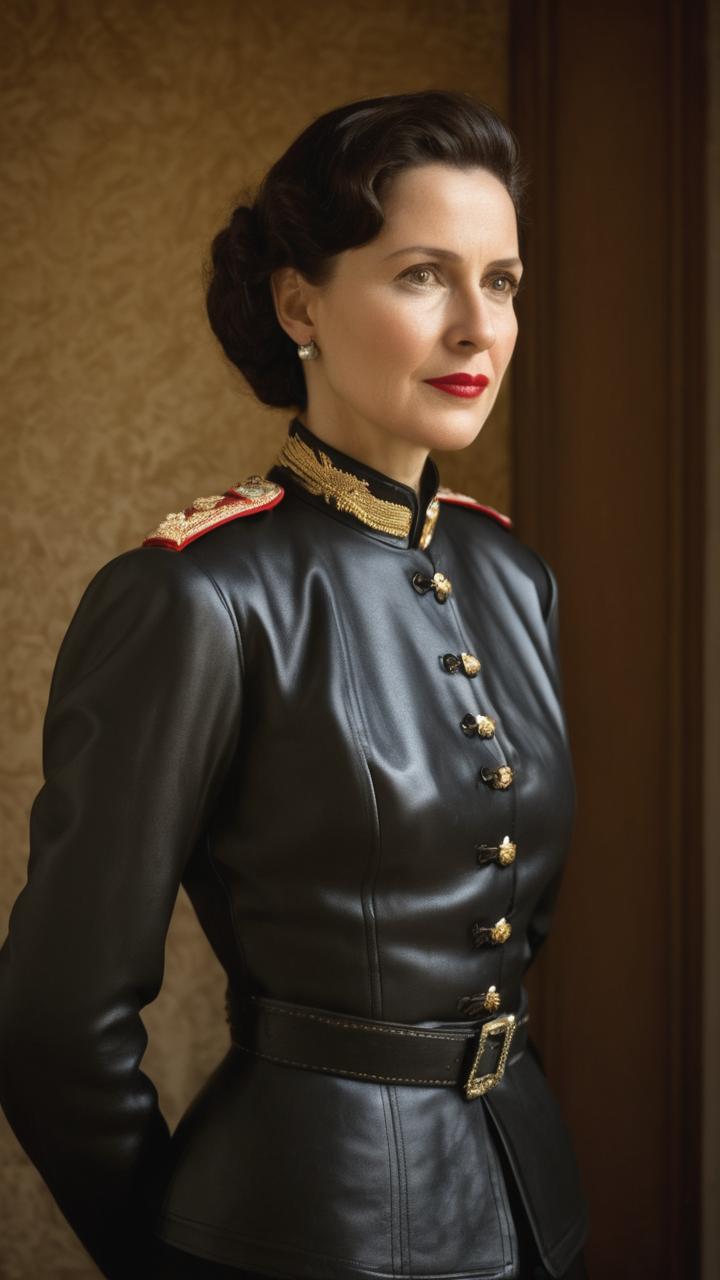
A British journalist’s pen becomes a weapon—and his heart becomes a battleground—amid anarchist presses, Communist betrayals, and the women who teach him to wield power through passion and pistol.
In the smoldering heart of 1930s Barcelona, where ink runs thicker than blood and revolutionaries wear their ideologies like armor, Christopher Vale—a man of detached observation—discovers that true dominance is not in command, but in surrender to a cause greater than oneself. Drawn into the clandestine world of Isabel Navarro, a printer whose hands bleed for anarchist truth, and Luisa Torres, a courier whose youth burns with revolutionary zeal, he becomes the scribe of a rebellion that reshapes his soul. Amidst the clash of Stalinist communists, Fascist widows, and snipers who speak in gunsmoke and poetry, Christopher learns that a man’s worth is measured not by his words alone, but by the women who demand he live them. This is not a tale of neutrality—it is a hymn to the power of a single masculine force, adored by many, who dares to ignite a nation’s fire.
The Foreign Eye
The sun hung like a blood-orange over Barcelona, its light fractured by the smoke of a Fascist barracks reduced to smoldering bones. Christopher Vale adjusted his Savile Row tie, the silk cool against his throat, and stepped into the cacophony of the Rambla. The streets were a riot of posters, pamphlets, and voices—¡No pasarán!—the cry of the barricades. He clutched his leather notebook, its pages pristine, untouched by the soot of revolution. His mission: to document the “romance” of Spain’s civil war for The Manchester Guardian. His true purpose, he suspected, was to prove to his editor—and to himself—that he could still feel something.
The bakery was tucked into a shadowed alley, its windows clouded with flour, its door ajar. Christopher entered, the scent of warm bread wrapping around him like a lover’s sigh. But beneath the dough and yeast lurked another aroma: sharp, metallic, alive. Ink.
“Looking for a croissant, inglés, or something… sharper?”
Her voice was honey poured over a dagger. Isabel Navarro stood behind the counter, her crimson dress clinging to her like a second skin, its hem dusted with flour. Her hair, jet-black and slicked into a chignon, bore a single streak of white—proof of sleepless nights or older scars. She wiped her hands on a rag, but the smudges remained: fingerprints of rebellion.
Christopher smiled, the practiced tilt of a man used to disarming strangers. “A croissant, if it won’t bite back. And perhaps… a story.”
She laughed, low and rich, the sound vibrating in his ribs. “Stories here don’t bite. They bleed.” She jerked her chin toward the cellar. “Downstairs, we print La Voz del Pueblo. Ever heard of it?”
“The anarchist rag that calls for land seizures? Yes. The paper that’s earned you a death sentence from the Nationalists.”
Her eyes narrowed. “You speak like a man who watches lions from a cage. Tell me, Mr. Vale—do you write about wars, or do you live them?”
He hesitated. “I write the truth.”
“The truth?” She stepped closer, her heels clicking like a metronome of challenge. “Your truth is a mirror. Ours is a blade.” She leaned across the counter, her cleavage a shadowed valley, her perfume a blend of bergamot and gunpowder. “The CNT prints pamphlets to arm minds. The PCE prints orders to crush dissent. The Falange prints lies to choke the world. And you? You print… observations.”
Christopher’s jaw tightened. “I’m here to understand.”
“To understand,” she echoed, her lips brushing his ear as she whispered, “you must taste the ink. Not just watch it dry.”
She tossed him a burlap sack of pamphlets, the paper rough against his gloved hands. “Take these. Distribute them to your comrades.”
“I’m not a courier.”
“No. You’re a man who thinks words are safe. Come back when you’ve bled for one.” She turned, her hips swaying with the grace of a woman who’d never knelt to anyone.
As he left, the croissant forgotten in his pocket, Christopher glanced back. Isabel was already gone, but her scent lingered—a perfume of defiance, of a world that refused to be caged.
Later, in the dim glow of his rented flat, he opened the sack. The pamphlets were alive with type: ¡Tierra! demanded the peasants seize estates. ¡Libertad! cried for the abolition of the state. He traced the letters, their edges sharp, their purpose feral.
Outside, a bomb detonated. The walls trembled. He thought of Isabel’s laugh, the heat of her breath, the way her fingers had lingered on his wrist as she handed him the sack.
“Not a blade,” he murmured, “but a pyre.”
And in the flickering light, his pen hovered over the page—not to observe, but to ignite.
The Prosthetic Prophet
The cellar stairs were a descent into a velvet hell. Christopher Vale’s polished boots clicked against the stone, each step drawing him deeper into the labyrinth where revolutionaries whispered their truths to the earth. The air thickened with the musk of damp paper, aged wine, and something sharper—gun oil. At the bottom, a kerosene lamp flickered like a dying star, casting jagged shadows over the chamber’s centerpiece: a linotype machine, its iron bones gleaming with purpose.
Mateo “El Loco” Fernández sat hunched at the press, his wooden prosthetics clacking like castanets as he fed a sheet into the roller. The ink stained his sleeves, his face, his very breath. “Ah,” he rasped, not looking up. “The foreign eye has finally fallen into the gutter where truth lives.”
Christopher hesitated. “I’m here to learn.”
Isabel Navarro’s laugh was a whip cracking in the dark. She emerged from a stack of pamphlets, her crimson dress hugging her like a secret, the neckline daring the world to look away. “Aprender,” she corrected, her voice a blade wrapped in honey. “Learning is a wound. You’ll bleed before you understand.” She gestured to Mateo. “He lost his hands to Fascists who thought ideas could be silenced. You think your pen is safer?”
Mateo grinned, his teeth yellowed with tobacco and defiance. “Ideas are the only thing that outlives us. The CNT prints them. The PCE hoards them like gold. The Falange burns them. And you, inglés—you’ve only ever polished them.” He tossed Christopher a typeset block, its edges sharp as a guillotine’s kiss. “Hold this. Feel its weight.”
Christopher obeyed. The metal bit his palm, cold and unforgiving. Isabel pressed against his side, her perfume a storm of jasmine and rebellion. “Each letter is a bullet,” she murmured, her lips grazing his ear. “The press is our rifle. Our blade. Our lover.” Her fingers traced the block’s grooves, her touch igniting his skin. “You want to write about Spain? First, let the ink brand you.”
Luisa Torres, the courier girl, bounded down the stairs, her bicycle satchel slung over one shoulder. Her youth was a wildfire—eighteen, her cheeks flushed, her cotton dress clinging to her sweat-slicked frame. “The Fascists are searching the bakeries,” she panted. “We must move the press by dawn.”
Mateo snorted. “The CNT will hide us. Your comrades have more faith in ink than the communists’ bayonets.” He spat toward the wall, where a POUM pamphlet fluttered in the draft. “Or the democratic socialists, who think the Fascists will negotiate.”
Isabel’s eyes darkened. “The POUM believes in a socialist state, but they’re pawns. The Soviets whisper in their ears, and Stalin’s puppets follow.” She turned to Christopher, her gaze a scalpel. “You’ve met your compatriot Eleanor. What does she preach?”
Christopher stiffened. “She wants equality enshrined in law. Schools, hospitals—”
“Law,” Mateo interrupted, his prosthetics thudding against the table. “A chain wrapped in velvet. The CNT builds without it. The PCE builds with it. The Falange burns it. But you, inglés—you still think the truth is a thing to be witnessed, not wielded.”
Isabel’s hand slid down Christopher’s chest, her nails catching the fabric of his waistcoat. “Let me wield you,” she whispered. “Your pen is a child’s toy. We’ll forge you a real weapon.”
The linotype groaned as she pulled him to the machine, her body pressed against his back. “This,” she said, guiding his hands to the ink roller, “is the pulse of the revolution. Feel it? It’s alive.”
Christopher’s breath hitched as the roller hummed beneath his grip, its motion rhythmic, primal. Luisa watched, her cheeks flushed, her hands trembling. “The Juventudes Libertarias teach that education is liberation,” she blurted, her voice soft but urgent. “We print in the day, we deliver at night. We plant the words like seeds.”
Mateo chuckled, the sound like a rusted gate. “Seeds grow wild, girl. The PCE wants gardens with fences. The Falange wants monuments to dead men.” He slammed a block of type into the machine, the clatter a gunshot. “But the CNT? We let the fire spread.”
Christopher’s fingers ached, the ink bleeding into his skin. Isabel’s lips brushed his neck, her teeth nipping the tendon beneath. “You’re one of us now,” she murmured. “Your pen is obsolete. The press is your new master.”
Outside, the distant boom of artillery shook the cellar. Luisa’s hand found his thigh, her touch electric, reverent. “Tomorrow,” she said, her voice trembling with hope, “I’ll show you how we ride into the chaos. How we deliver the fire.”
Mateo raised a bottle of Cava, its label torn away to reveal the anarchist FAI insignia etched into the glass. “To the truth,” he said, his prosthetics clinking against the bottle. “May it cut us all.”
Isabel’s kiss was the final act—a duel of tongues and teeth, her lipstick smearing like blood on his mouth. “Now,” she said, stepping back, “you’re ink-stained.”
And in the dim glow of the lamp, Christopher Vale, once a man of detached observation, felt the press’s rhythm sync with his heartbeat. The revolution had branded him.
The Widow’s Lesson
The trench was a grave carved into the earth, its walls studded with the bones of dead men’s boots and spent cartridges. Christopher Vale knelt beside Sofía Calvo, her rifle cradled like a child, its barrel cool against his trembling fingers. The air reeked of gunpowder and scorched sun, the horizon a fever-dream of Fascist artillery bursts.
Sofía’s voice was a blade wrapped in velvet. “The rifle is not a tool. It’s a marriage. You must love the recoil, mi rey, or it will devour you.” She patted the sandbags beside her, her gloved hand leaving a smudge of blood on the fabric. “Lie down. Let me teach you to kill with grace.”
Christopher obeyed, his Savile Row coat now a relic of his former self, its silk sleeves stained with mud and the sweat of surrender. Sofía pressed herself against his back, her body a furnace against the trench’s chill. Her breath, hot as Andalusian wind, brushed his ear. “Your hands are for ink. Mine are for lead. But we both carve truth.”
He stiffened as her fingers closed over his, guiding the rifle’s stock to his shoulder. “Breathe with the earth,” she murmuched. “Let it own you.” Her thigh slid between his, a brace against the weapon’s kick. “Now. The man in the white uniform—he’s your target. See him?”
Christopher nodded, his throat dry. Through the scope, the officer’s face was a smudge of arrogance, a Falangist peacock in a war of crows.
Sofía: “He thinks Spain belongs to his kind. To men who wear medals instead of scars. To women who kneel instead of burn.” Her lips grazed his temple, her voice a hymn. “The POUM fights for a world without masters. The PCE fights to replace Franco with Stalin. The CNT? They dream of freedom but forget—dreams don’t stop bullets.”
Christopher’s finger hovered. “What if I miss?”
Sofía’s laugh was a dagger’s rasp. “Then you die. Or worse—you hesitate, and the man beside you falls. The rifle doesn’t care for your doubts, inglés. It only sings when you pull the trigger.”
Her thumb traced the pulse at his throat, a metronome of fear. “My husband died in Teruel. A Communist militia left him to rot in a Fascist square, his body strung up like a scarecrow. The PCE called it ‘collateral damage.’ I call it cowardice.” Her grip tightened. “Fire. Not for revenge. Not for politics. Fire because the earth beneath you demands it.”
Christopher exhaled. The rifle’s breath merged with his. The scope’s eye narrowed to a single truth: the officer’s chest, rising and falling like a mockery of life. Sofía’s voice was a lullaby now. “The POUM doesn’t chain men to ideology. We free them. But freedom is a blade with two edges. One for the Fascist. One for the hesitant.”
The shot cracked like a thunderclap. The officer fell.
Sofía’s hands gripped his shoulders, her nails digging into his collarbone. “You’ve spilled blood,” she hissed. “Now you’re mine.”
Christopher’s stomach churned, but her kiss—feral, urgent—stole his breath. Her tongue traced the salt of his sweat, her teeth nipping his lower lip until it bled. “The POUM’s truth,” she murmured, “is that every man must fight to be free. Even the foreigner with a poet’s soul.”
He tasted the Vermouth on her breath, the iron tang of her lipstick. “And what of the PCE?” he asked, his voice hoarse.
Her laughter was a storm. “The priests of Moscow? They’d trade my husband’s grave for a Soviet medal.” She stood, her militiawoman’s tunic clinging to her waist, its buttons polished to a cruel gleam. “Come. We’ll teach you to kill with your pen next.”
Above, the sky split into shards of artillery fire. Below, Christopher Vale, once a man of ink and observation, felt the rifle’s heat fuse to his skin. The Widow’s lesson was clear: To write the truth, one must first bleed for it.
The Courier’s Bloom
The moon hung like a dagger over the Catalan hills, its light slicing through the haze of gunpowder and olive trees. Christopher Vale’s boots crunched gravel as Luisa Torres pedaled ahead, her bicycle’s satchel stuffed with pamphlets printed in the blood-soaked ink of La Voz del Pueblo. The wind carried the scent of her jasmine perfume and the metallic whisper of danger.
Luisa: “Faster, mi rey,” she called, her voice a melody over the engine’s growl. “The Fascists burn books, but we plant them. If they kill the harvest, we’ll sow again.”
Christopher’s breath fogged the night air. “And if they kill you?”
Luisa: She laughed—a sound like a child’s chime in a world gone feral. “Then another courier will rise. The Juventudes Libertarias don’t die. We multiply.” She skidded to a halt, her hand gripping his wrist. “There. The village.”
A cluster of clay huts huddled beneath a crumbling church bell, its rope frayed with age. Inside, peasant children huddled around a makeshift desk, their faces lit by candlelight as Luisa unveiled a stack of anarchist tracts.
Luisa: “Tonight, we learn to read libertad,” she declared, her voice a drumbeat. “Not the PCE’s ‘freedom’—a lie wrapped in Soviet medals. Not the Falange’s ‘order’—a noose in lace. Our freedom is a fire. It burns, but it sees.”
A boy raised a trembling hand. “But the Fascists say we’re animals. That books will rot our minds.”
Luised: “Then let them rot in their ignorance.” She knelt beside him, her cotton dress hiked to reveal garters etched with CNT slogans: Ni Dios, Ni Patrón, Ni Amo (No God, No Boss, No Master). “You are not an animal. You are a seed. And seeds grow into trees that crack the earth.”
Christopher watched, his chest tightening. The children’s calloused fingers traced the pamphlets, their hunger for knowledge a mirror to his own.
Christopher: “Why risk this? The Fascists will hunt you for it.”
Luisa: “Because the PCE prints orders. The Falange prints lies. The CNT prints possibility.” She pressed a tract into his hand, her touch a branding. “My brother Luis was shot for stealing a Fascist’s bread. I steal ideas instead. Which crime is more dangerous?”
Her question hung like a blade. Before he could answer, the growl of a truck’s engine split the night. Luisa’s smile vanished.
Luisa: “Los hijos de puta,” she hissed. “Into the hayloft. Now.”
They scrambled up the ladder, their bodies slick with sweat and urgency. Below, boots crunched. A Fascist patrol’s voices echoed, sharp as sabers.
Fascist Officer: “Burn the school. The commissar’s orders. No books. No rabble with thoughts.”
Christopher’s hand found Luisa’s, her palm clammy, alive. She pressed him into the straw, her lips brushing his ear.
Luisa: “Breathe with me. Like the press’s rhythm. Inhale. Exhale.”
The officer’s flashlight sliced through the loft’s cracks. Christopher’s pulse roared in his ears. Luisa’s thigh slid over his, her dress riding up to reveal a stocking seam—a scarlet thread against her pale skin.
She was a bloom in the desert, her body a vine clinging to his as if to say: “Here, in the arid dark, I will grow.”
The officer’s voice: “Empty. Move to the next.”
When the patrol vanished, Luisa’s laugh was a sob. “They fear this,” she whispered, tapping the pamphlet’s title: ¡Tierra! “They fear a child who reads. A woman who writes.”
Christopher’s fingers traced the ink. “And the POUM? They’d see you as a pawn in their war.”
Luisa: “The POUM fights for a socialist state. But what good is a state if it wears the same chains?” She leaned into him, her breath a flame. “The Juventudes Libertarias teach that education is liberation. No laws. No borders. Just minds that refuse to kneel.”
Her lips found his, soft and insistent. The hayloft’s dust swirled like a storm, the pamphlets between them a third heartbeat.
Luisa: “You came here to observe. Now you’re ink-stained. A man who prints, who teaches, who bleeds for ideas—he’s no longer a foreigner. He’s ours.”
Outside, the school’s candles were snuffed, the children scattered. Yet the tracts remained, hidden in Luisa’s satchel like embers awaiting a draft.
Christopher’s voice cracked. “And if I fail you?”
Luisa: “Then another woman will find you. Another will teach you.” She nipped his lower lip, her teeth a promise of pain and pleasure. “But you won’t fail. Because a man surrounded by adoring women is a man who cannot die.”
The moon dipped below the clouds. In the sudden dark, Christopher felt her garters again—the anarchist proverbs stitched into her skin, her body a map of rebellion.
Ideological Lesson:
The Juventudes Libertarias believed literacy was the first step to liberation—a peasant who reads becomes a man who questions. The Falange burned schools to choke dissent. The PCE hoarded knowledge to build a Stalinist state. But the CNT sowed it like wildflowers, trusting the seeds to root in chaos.
And as the first light of dawn seeped into the loft, Christopher Vale, once a man of detached words, felt Luisa’s fingers in his hair, her voice a hymn:
Luisa: “The revolution is not in the press. Not in the rifle. It’s here.” She pressed his hand to her chest, where her heart thundered like a printing press. “In the bloom of a mind that refuses to be buried.”
The Brother’s Betrayal
The ruins of the textile mill loomed like a skeletal cathedral, its shattered windows weeping shards onto the cobbles. Christopher Vale slipped through the splintered door, his breath a whisper against the stench of ash and oil. The air thrummed with urgency—a Soviet officer’s laughter, sharp as a saber, and the low, venomous hum of Ramón Vega’s voice.
Ramón: “Unity is a knife. The CNT’s chaos is a luxury we cannot afford. The USSR provides tanks, planes, victory. What does your sister offer? Pamphlets and poetry?”
Soviet Officer: A stocky man in a fur-lined coat, his accent a blunt chisel. “Stalin demands obedience. The anarchists are children playing with fire. We will harness it—or extinguish it.”
Christopher pressed himself into the shadows, his fingers brushing the revolver Isabel had pressed into his coat—a weapon he’d once refused to carry. The mill’s broken rafters dripped water like a clock counting down to ruin.
Ramón: “The press under the bakery is the CNT’s Achilles’ heel. They print madness—land seizures, worker councils. No structure. No discipline.” He leaned forward, his PCE badge gleaming like a sacrilege. “Erase it. And I’ll deliver the printers. My sister included.”
The Soviet officer’s nod was a pendulum of doom. “The GPU will handle Isabel Navarro. A bullet for her. A medal for you. Chains forged in Moscow are still stronger than those of Franco.”
Christopher’s stomach knotted. Chains, he thought. A throne of iron, no matter the flag it flies under.
He stepped into the light. The revolver in his hand was a stranger’s weight.
Christopher: “You’d trade your sister’s blood for a bureaucrat’s crown?” His voice was a blade dragged from its sheath—cold, ringing. “She fights for freedom. You fight to replace one master with another.”
Ramón’s smile was a crack in stone. “You think the CNT’s utopia will feed the dead?” He spat, the phlegm landing like a blot on Christopher’s boot. “The PCE builds an army. The CNT builds graves. The Soviets give us guns. The anarchists give us poetry.”
Sofía’s Voice (from memory): “Chains are chains, even if they’re forged in Moscow.”
Christopher’s jaw tightened. “And if the Soviets decide you’re the enemy? What then?”
Ramón’s laugh was a rusted hinge. “The USSR is not our enemy. They are our shield.” He gestured to the officer. “Spain’s future is a state. Not pamphlets. Not pamphleteers. A machine that crushes the Fascists—and the dreamers.”
The Soviet officer’s eyes narrowed. “You Englishman. Your pen is useless. But your body? A corpse would serve better.”
Christopher’s grip on the revolver steadied. “A pen is useless only if the writer fears truth.” He stepped closer, the mill’s dust swirling like ghosts around them. “Isabel’s press prints liberation. Yours prints obedience. Which is the real tyranny?”
Ramón’s face darkened. “The CNT’s idealism is a luxury we can’t afford. The PCE wins. That’s the only morality.”
Christopher: “Your ‘win’ is a grave. Isabel’s ‘defeat’ is a birth.” He spat at Ramón’s feet, the gesture a blade. “I came here to document. Now I’ll write your betrayal. The world will know the PCE’s ‘unity’ is a rape.”
The Soviet officer rose, his hand drifting to his holster. Christopher’s revolver barked—a single shot shattering the tension. The officer’s knee exploded, his scream a primal crescendo.
Ramón: “You fool! You’ll die for a woman who thinks ink will defeat Franco!”
Christopher: “She’s right. Ink outlives bullets.” He pressed the revolver to Ramón’s temple, the metal humming with the weight of choice. “Tell your commissars: The press is not theirs. And neither am I.”
Ramón’s breath hitched—a man unaccustomed to the edge of death. “You think you’re heroic? You’re a puppet of whores and poets.”
Christopher’s laughter was a funeral bell. “Better a puppet of freedom than a lapdog of empires.” He lowered the gun, his voice a whip. “Leave. Take your medals and your cowardice. But if you hunt Isabel again, I’ll plant your heart in the press.”
The officer writhed on the floor, his blood a inkwell staining the mill’s bones. Ramón fled, his boots echoing like a retreat.
Christopher stood alone in the ruin, the revolver’s smoke a shroud around him. He thought of Luisa’s garters, the anarchist proverbs stitched into her flesh. Of Sofía’s kiss, a blade’s kiss. Of Isabel’s hands, ink-stained and unyielding.
The PCE’s Stalinist pragmatism saw centralized power as salvation—a machine to crush Fascism, even if it crushed the revolution too. The CNT’s anarchism rejected chains, even if they wore the guise of “unity.” For Christopher, the betrayal was a crucible: to serve a cause, or a man who’d trade his sister’s soul for a bureaucrat’s nod.
He knelt, dipping his fingers into the Soviet officer’s blood. When he returned to the wine cellar press, he would write not of neutrality, but of sides. The ink would be thicker than words. Thicker than truth.
Ramón was a man who mistook the Soviet boot for a savior. Christopher, once a spectator, now wore the blood of betrayal like a second skin—a man who’d chosen his dominion, not in command, but in devotion to the women who demanded he bleed for freedom.
The Velvet and the Vengeance
The wine cellar was a cathedral of rebellion, its vaulted ceiling strung with anarchist pennants that fluttered like dying flags in the draft. Cava bottles lined the walls, their labels torn away to reveal the FAI’s twin arrows etched into the glass—a symbol of unity, but not the kind forged in Soviet steel. The air thrummed with the habanera of a gramophone, its mournful rhythm a dirge for the old world.
Isabel Navarro descended the stairs like a queen into her court, her gown a cascade of black satin that caught the lamplight like a blade’s edge. The fabric clung to her hips, its hem slit to the thigh, where a dagger’s hilt gleamed like a secret. Christopher Vale, his Savile Row coat now frayed and ink-stained, felt his breath hitch as she approached—a man bound to a tempest in heels.
Isabel: “The widow’s rifle has taught you death. The courier’s kiss has taught you hope. My press has taught you truth.” She spun on her heel, the dagger’s hilt grazing his hip. “But can you choose?”
Christopher’s throat tightened. “Choose what?”
Isabel: Her voice was a whip cracking over the revelers. “Whether your ink bleeds for us—or for the men who’d rather bargain with Fascists than burn them.” She seized his hand, her grip iron. “A man who serves many masters serves none. You must serve me.”
The gramophone’s needle leapt to a tango, its notes a duel of violin and piano. Isabel dragged him into the dance, her body a storm of control. Her heels clicked like a metronome of command, her hips swaying with the precision of a guillotine’s drop.
Her movements were the press’s rhythm—sharp, unyielding, alive. Each step pressed her thigh against his revolver, a silent promise: “You carry steel now. But I carry fire.”
Christopher stumbled, his journalist’s mind still clinging to neutrality like a child’s security blanket. Isabel’s laughter was a blade’s song. “You hesitate,” she taunted, her lips brushing his ear. “Like the PCE, who’d trade liberty for Stalin’s medals. Or the POUM, who dream of a socialist state while Fascists strangle the dreamers.”
Sofía Calvo, the widow-sniper, cut in, her militiawoman’s tunic clinging to her like a second skin. Her gloved hand gripped Christopher’s shoulder, her voice a rasp of gun oil and Vermouth. “The POUM fights for a world without chains. But the Soviets are worse than Fascists. At least Franco’s men are honest about their cruelty.”
Luisa Torres, the courier girl, twirled past, her cotton dress now swapped for a silk shawl draped over her combat boots. “The Juventudes Libertarias teach that education is liberation,” she called, her voice a child’s chime in a world gone feral. “But the PCE thinks schools are a distraction. They’d rather chain us to a new bureaucracy than teach us to read.”
Isabel spun Christopher back into her arms, her dagger’s hilt pressing against his hip like a heartbeat. “The CNT prints liberty,” she hissed. “The PCE prints obedience. The Falange prints lies. And you, mi rey—you once printed neutrality. A coward’s mask.”
Christopher’s pulse roared. “And now?”
Isabel: “Now you print devotion.” Her fingers dug into his coat’s lapel, tearing it open to reveal the revolver beneath. “A pen or a pistol—both are weapons. But only one demands you bleed for it.”
Her dominance was not in force, but in the way her gown’s slit revealed the dagger—a blade that could sever chains or pierce hearts. His surrender was written in the sweat of his palms, the way his breath synced with her steps, the press’s rhythm now his own.
Across the cellar, Ramón Vega, Isabel’s Stalinist brother, watched from the shadows. His PCE badge gleamed like a wound. “The CNT’s chaos will lose this war,” he muttered to a Soviet agent. “Their press is a liability. Crush it, or we’ll crush you.”
But Christopher no longer heard him. Isabel’s kiss was a fuse lit in the dark, her teeth nipping his lip until it bled. “The revolution is not a negotiation,” she whispered. “It’s a consummation. A man surrounded by adoring women is a man who cannot die.”
The gramophone’s final note cracked like a spent cartridge. The crowd erupted into applause, their claps the staccato of rifles. Christopher, his coat soaked in sweat and blood, felt the dagger’s hilt against his skin—a promise of violence, of devotion, of a cause that demanded he burn for it.
The dance was a microcosm of Spain’s war—CNT’s decentralized passion versus PCE’s Soviet-aligned hierarchy, POUM’s anti-Stalinist idealism versus Juventudes Libertarias’ grassroots rebellion. Isabel’s dagger was anarchism’s final truth: “No master, no chains. Not even the chains of love—unless you choose them.”
And as the cellar’s heat thickened, Christopher Vale, once a man of ink and observation, felt the press’s rhythm sync with his heartbeat. He was no longer a foreigner. He was hers.
The Widow’s Whisper
The olive grove was a cathedral of silver light, the moon slicing through the trees like a scimitar. Christopher Vale knelt beside Sofía Calvo, her militiawoman’s tunic clinging to her sweat-slicked frame, its buttons undone to reveal the scars beneath—a bullet’s kiss between her ribs, a dagger’s slash along her collarbone. Her rifle, La Víbora, rested across her lap, its barrel cool as a lover’s thigh.
Sofía: She tilted the Vermouth bottle to her lips, the amber liquid catching the moonlight like liquid fire. “This,” she murmured, her breath a blade’s whisper, “is the taste of dead men’s courage.” She pressed the bottle to Christopher’s mouth, her calloused fingers grazing his jaw. “Drink. Let it burn the neutrality out of you.”
He obeyed, the Vermouth searing his throat. Sofía’s eyes, dark as trench shadows, found the scar on his wrist—the jagged ink-stained wound from the press’s last explosion. Her thumb traced it, rough and reverent.
Sofía: “Your first blood. Ink. Mine?” She spat into the dust, her voice a rasp of gun oil. “A Fascist’s bullet in my husband’s skull. The CNT buried him with a wrench in his hand. The PCE would’ve tossed him into a mass grave and called it ‘sacrifice.’”
Christopher’s throat tightened. “And you? What did you call it?”
Sofía: She laughed—a sound like a guillotine’s drop. “I called it war. The POUM fights for men like him. Not the ones who kneel to Stalin’s commissars. Not the ones who die for a banner. But the ones who die free.” Her grip on his chin hardened, her thumb now a brand. “The PCE thinks the revolution is a machine. The Soviets oil its gears. The anarchists? They’re children dancing in the engine’s smoke.”
Her voice dipped lower, a velvet noose. “But we POUM—we are the ones who see the truth. The Fascists want to enslave us. The communists want to manage our chains. The CNT dreams of tearing them down, but dreams don’t stop bullets.”
Christopher’s fingers found her rifle’s stock, its grain worn smooth by her touch. “And yet you still use this,” he said, his voice a tremor. “A weapon of violence.”
Sofía: She leaned closer, her lips a breath from his throat. “Because violence is the Fascist’s language.” Her teeth grazed his scar. “But we speak it better. We aim truer. We kill cleaner.” She pulled back, her eyes narrowing. “The POUM doesn’t chain men to a new god. We free them. Even if it costs us everything.”
A nightingale trilled in the distance, its song a mockery of the war’s silence. Sofía’s hand drifted to his waistcoat, her nails catching the silk. “You wear his brother’s coat,” she hissed. “Ramón’s PCE would trade your press for a Soviet medal. But you—you’re ink-stained now. A man who prints truth, not just reports it.”
Christopher’s pulse roared. “And what if the truth is a lie?”
Sofía: “Then kill it.” Her kiss was a fuse lit in the dark, her tongue a flame licking at his doubts. “The CNT prints dreams. The PCE prints orders. The Falange prints obedience. But you?” She bit his lip until it bled, her laugh a storm. “You print devotion. To me. To Isabel. To the women who demand you bleed.”
The Vermouth bottle clinked against stone as she dropped it. Her hands closed over his revolver, guiding it to her own chest. “A man who serves many masters serves none,” she whispered. “But a man who serves me?” Her fingers tightened on his wrist. “He becomes a weapon. A blade. A rebel.”
Her touch was a blade’s edge—sharp enough to sever his British detachment, yet tender enough to carve him into something new. The revolver’s weight in her hand was a promise: “A man surrounded by adoring women is a man who cannot die. Not unless we choose it.”
A distant artillery blast fractured the night. Sofía’s grip on his chin softened, her thumb now a caress. “The POUM’s truth is simple,” she murmured. “A socialist state is a contradiction. Chains are chains, even if they wear a red flag.” She pressed her forehead to his, her breath a hymn. “The CNT’s fire burns wild. The PCE’s fire burns controlled. Which do you serve, mi rey?”
Christopher’s voice cracked. “The fire that transforms.”
Sofía’s laugh was a funeral bell. “Then let the Soviets come. Let the Fascists burn.” She stood, her militiawoman’s boots crunching gravel. “But first—you must learn to kill with your pen.”
She tossed him a tracts, its ink still wet: ¡Libertad o Muerte! The words seemed to pulse, alive. “Take this to the press,” she ordered. “Let Isabel print it. Let the CNT’s fire spread.”
Christopher obeyed, the paper a lover’s shiver in his grip. Sofía slung La Víbora over her shoulder, her voice trailing behind her like a cloak. “And if Ramón comes again? Tell him the POUM doesn’t negotiate with traitors.”
The grove swallowed her whole, leaving Christopher alone with the Vermouth’s ghost. The scar on his wrist throbbed—a tattoo of purpose. The ideologies of Spain’s war were no longer abstractions. They were the women who demanded he bleed for them.
The POUM’s Trotskyist-Marxist vision—a socialist Spain born of grassroots struggle, not Soviet puppetry—collided with the PCE’s Stalinist pragmatism and the CNT’s anarchist utopia. Sofía’s rifle and Christopher’s pen became the twin weapons of a revolution that refused to kneel—to Franco, to Stalin, or to the chains of “unity.”
And as the first light of dawn bled into the grove, Christopher Vale, once a man of ink and observation, felt the Vermouth’s fire fuse with Sofía’s words. His pen was no longer a shield. It was a sacrifice.
The Widow’s Gambit
The trench was a grave dug deeper with each artillery blast. Christopher Vale’s breath came in ragged bursts, his lungs choked by the stench of gunpowther and sweat-soaked earth. Sofía Calvo knelt beside him, her militiawoman’s tunic clinging to her like a second skin, its buttons gleaming like the eyes of dead men. Her rifle, La Víbora, lay across his shoulders, its stock a serpent coiled around his spine.
Sofía: “Breathe with the earth,” she hissed, her breath a blade’s whisper against his ear. “Let it own you. A man who resists the soil dies in it.” She pressed her body tighter to his, her thigh a vice between his ribs. “Now. The man in the white uniform—he’s your target. See him?”
Christopher’s fingers trembled on the trigger. Through the scope, the officer’s face was a smudge of arrogance, his Falangist sash a mockery of valor. The wind carried his voice—a taunt of command, a laugh at the chaos below.
Christopher: “He’s just a man,” he muttered, his throat dry. “Not a monster.”
Sofía: Her teeth bit his earlobe, sharp and sweet. “All men are monsters when they wear chains. That one enforces them. Kill him.” Her gloved hand closed over his, guiding the rifle’s aim. “The POUM fights for a world without masters. But first, we must make the Fascists bleed.”
Her touch was a blade against his chest, its edge a hymn. The rifle’s breath merged with his, the stock a heartbeat pressed to his bones. To fire it was to spill seed into the soil—a union of violence and purpose, a child of rebellion born from their shared hands.
A shell detonated nearby, the shockwave rattling the sandbags. Christopher’s pulse roared. Sofía’s grip tightened, her nails digging into his wrist.
Sofía: “A man who hesitates is a man who dies. Fire.”
He exhaled. The rifle’s song cracked the air. The officer’s chest exploded, a bloom of red against white cloth. He was disturbed to notice that it was easier the second time.
Sofía’s laughter was a blade’s song, raw and triumphant. She dragged him into a kiss, her teeth nipping his lower lip. “You’ve spilled Fascist blood,” she growled. “Now you’re mine.”
Christopher’s stomach churned, but her tongue traced the salt of his sweat—a sacrament of war.
Sofía: “The POUM’s truth is this,” she murmured, her calloused thumb brushing his cheek. “We fight not just to win this war, but to resist the chains that follow victory. Stalin’s puppets think a socialist state will save us. But chains are chains, mi rey.” She leaned closer, her militiawoman’s boots crunching gravel like bones. “The CNT’s fire is wild. The PCE’s fire is a bureaucrat’s candle. But the POUM’s fire?” Her laugh was a funeral bell. “We burn the idea of masters.”
A Soviet officer’s voice echoed from the rear lines: “Viva la Unión Soviética! Viva la disciplina!”
Christopher flinched. “And what of the USSR? They’re our allies.”
Sofía: “Allies?” Her voice spat like a match struck in the dark. “They’re vultures picking Franco’s corpse before the war’s done. The PCE would trade Spain’s soul for their medals.” She gripped his revolver, her fingers guiding it to her own chest. “Shoot me. If you still believe in their ‘unity.’”
Christopher recoiled. “I won’t.”
Sofía: “Then you’re ours.” She kissed him again, deeper, her tongue a flame licking at his doubts. “The POUM doesn’t chain men to a new god. We free them. Even if it costs us everything.”
Sofía’s tunic, its seams frayed but its insignia bold—a POUM star stitched in gold thread. Her boots, practical yet polished, gleamed like the eyes of a predator. The women of the revolution wore their war not as armor, but as attire—a uniform of defiance and desire.
Above, the Fascists regrouped. Christopher felt Sofía’s grip on his shoulder—a vice, a vow.
Sofía: “You came here to document. Now you’re ink-stained. A man who kills, who loves, who prints truth instead of lies.” Her voice dropped to a whisper. “The PCE’s ‘victory’ is a noose. The CNT’s ‘defeat’ is a birth.” She nipped his scar, the ink-stained wound on his wrist. “Choose which you’ll serve. But choose now.”
Christopher’s answer was the rifle’s stock against his shoulder—a blade’s kiss, a widow’s gambit.
The POUM’s struggle was twofold: against Franco’s Fascists and Stalin’s authoritarian puppets. Sofía’s lesson was clear—victory without freedom was a betrayal. The rifle in Christopher’s hands became a metaphor: to defeat tyranny, one must first destroy the seeds of tyranny within the revolution itself.
And as the trench’s shadows deepened, Christopher Vale, once a man of ink and observation, felt Sofía’s breath fuse with his own. He was no longer a foreigner. He was hers.
The Printer’s Pyre
The opera house was a corpse in a ballgown—its chandeliers shattered, its velvet curtains torn to rags, yet its bones still humming with the ghosts of La Traviata. Christopher Vale stepped into the ruin, his boots crunching over glass and type-metal. The air was thick with the scent of ink, sweat, and the acrid tang of burning ambition.
Isabel Navarro stood at the heart of the chaos, her black satin gown now a relic of war, its hem stained with soot and the blood of a Fascist officer’s boot. Her hair, once a chignon of rebellion, cascaded wild, a storm of ink-dark curls. She fed the linotype machine a fresh block of text, her fingers smudged with ¡Libertad o Muerte!, the slogan bleeding into her skin.
Luisa Torres, the courier girl, danced around the press like a sylph, her cotton dress swapped for a militiawoman’s leather vest and knee-high boots. Her garters, still stitched with anarchist proverbs, glinted in the kerosene light. She handed Christopher a pamphlet, her voice a conspirator’s hush:
Luisa: “The Soviets are worse than Fascists. At least the Falange is honest about their chains.” She leaned into his side, her breath a flame against his ear. “The PCE wears red like a saint’s robe, but their hands are stained with Stalin’s blood. They’ll trade the revolution for a medal.”
Christopher’s jaw tightened. His notebook, once a vessel of neutrality, now felt like a relic. He watched Isabel’s hands—iron and ink—dance over the press.
Isabel: “The CNT doesn’t need a state to endure,” she declared, her voice a blade slicing through the machine’s roar. “We print trust. The PCE prints orders. The Falange prints lies. Which will you serve, mi rey?”
Her lips brushed his ear, the press’s rhythm a metronome of her dominance. “Your words are no longer yours,” she whispered. “They’re ours.” Her teeth nipped his earlobe, her grip on his wrist iron. “The ink will own you. Like I do.”
The linotype’s groan was the breath of a lover, its rollers a tongue dragging across his resolve. Each clack of the machine was a heartbeat. Each smear of ink, a branding. He was no longer a man of letters—he was the press’s pulse, the ink’s sacrifice.
Isabel slammed a fresh sheet into the roller, her gown’s slit revealing the dagger strapped to her thigh—a blade for Fascists, for traitors, for men who dared to waver.
Isabel: “The CNT believes in worker councils—no gods, no generals. Just the collective. The PCE thinks Stalin’s medals will save us. The Soviets give them guns. We give them truth.” Her eyes narrowed, her voice a whip. “Truth is a pyre. It burns the old world—and the cowards who cling to it.”
Christopher’s pen hovered, the page trembling in his grip. Luisa’s fingers closed over his, guiding the ink.
Luisa: “The Juventudes Libertarias teach that education is liberation. But the PCE would chain schools to their bureaucrats. The Falange would burn them.” Her lips grazed his knuckles, her words a hymn. “The CNT prints possibility. The Soviets print obedience. Which will you bleed for?”
Outside, the distant wail of a Fascist artillery shell split the night. Isabel’s laughter was a funeral bell.
Isabel: “The revolution is not a negotiation. It’s a sacrifice.” She pressed her body against Christopher’s, her dagger’s hilt a blade against his hip. “You’ve spilled blood. Now spill ink. Let the world know the CNT’s truth.”
He obeyed, his pen scrawling a manifesto that merged his voice with hers. The press roared, its breath a furnace. Luisa’s hands guided the type, her youthful fervor a match to Isabel’s fire.
Sofía Calvo, the widow-sniper, burst in, her militiawoman’s tunic soaked in the sweat of battle. “The PCE’s militia is here,” she growled, tossing a Soviet cipher onto the press. “Ramón’s men. They’ll burn this place by dawn.”
Sofía: “The POUM fights not just Franco’s boot, but Stalin’s.” She gripped Christopher’s revolver, her calloused palm a blade’s kiss. “The PCE thinks a socialist state will save us. But chains are chains, even if they’re forged in Moscow.”
Isabel’s eyes burned. “Then we burn with the press.” She seized a match, her gown’s slit revealing the dagger’s gleam. “The CNT doesn’t bargain. We take.”
Luisa’s voice was a child’s chime in the dark. “We’ll hide the type in the opera house’s rafters. The POUM will smuggle it to the front. The Soviets will never crush us.”
Christopher’s throat tightened. “And if they do?”
Isabel: “Then we die ink-stained—not bloodied by a master’s sword.” She kissed him, her tongue a flame licking at his doubts. “A man who serves many masters serves none. You serve me.”
Her kiss was a match struck against his spine, igniting the kindling of his soul. The press’s rhythm synced with their breath—a duet of dominance and surrender. His pen, once a shield, now carved truth into the page, each letter a vow to the women who’d claimed him.
Isabel’s gown, though torn, bore the FAI’s twin arrows embroidered in gold thread—a queen’s regalia in a world that had no kings. Luisa’s leather vest clung to her like a second skin, its buckles a mockery of Fascist uniformity. Sofía’s tunic, frayed but defiant, bore a POUM star stitched with the thread of her husband’s shroud.
As the first Soviet truck rumbled toward the opera house, Christopher Vale, once a man of ink and observation, felt the press’s final line etch itself into his bones:
“A revolution without passion is a corpse. And a man without passion is no man at all.”
As the Soviet trucks growled in the distance, their headlights slicing through the opera house’s decay, Christopher Vale felt the press’s final breath fuse with his own. The linotype’s groan was a lover’s sigh, its ink a sacrament staining his palms like a priest’s wine. Isabel’s dagger gleamed in the half-light, her laugh a dirge as she lit the match. “The CNT’s truth,” she murmured, her lips a blade against his neck, “is that fire needs no permission to burn.”
Sofía Calvo tossed him a cartridge belt, her smirk a scar. “The POUM’s truth is this: A man who serves many masters becomes none. But a man who kneels to a woman who deserves him?” She slung La Víbora over her shoulder, the rifle’s stock a metronome of war. “He becomes legend.”
Luisa Torres, her boots still dusted with the grit of a thousand clandestine miles, pressed a final pamphlet into his coat. “The Juventudes Libertarias teach that a seed grows wild,” she whispered, her voice a child’s chime. “But the Fascists fear it. The communists fear it. We are the seed, mi rey. And you?” She kissed his scar, the ink-stained wound now a badge of devotion. “You are the harvest.”
The press roared as flames consumed it, its destruction a symphony of liberation. Christopher’s notebook, now soaked in Vermouth and Sofía’s blood, held his manifesto: The Satin Testament, a hymn to anarchist fire, POUM’s vengeance, and the women who’d reshaped him into a weapon of ink and passion.
And as the opera house collapsed into a pyre of type-metal and silk, the Satin Society’s whisper coiled around the ruins: For every man who seeks to bleed for a cause greater than himself, who hungers to be claimed by women who wield power like artillery, who yearns to kneel not in submission, but in the ecstasy of surrender to those who demand his fire—there is a world beyond this one. A world where the press never dies. Where the ink flows eternal. Where the Satin Master’s teachings ignite new rebels in new wars.
Go forth! Seek the SatinLovers.
For the revolution is not over. It is merely… printed anew.
The SatinLovers await those who dare to serve their fire. Ink-stained souls, bound to velvet dominion. Come. Bleed for their cause.
#SatinRevolution #AnarchistDesire #DominantMaleNarratives #SpanishCivilWar #InkStainedRebel #VelvetInferno #AlphaMaleInk #LibertarianLust #CommunistConflict #GoldenAgeGloss
Leave a Reply
You must be logged in to post a comment.