
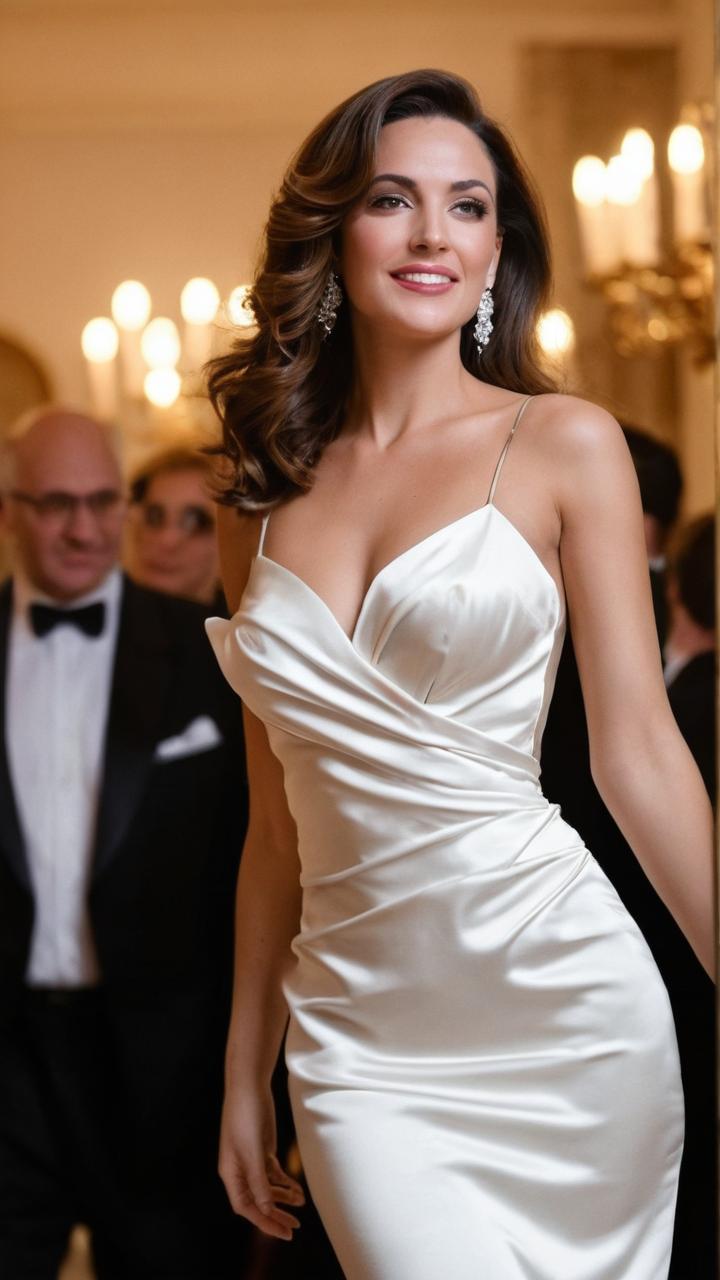
He doesn’t command. He breathes authority. And when he looks at you — your soul trembles, your skin tingles, and your will dissolves… into pure, glossy, euphoric surrender.
You’ve felt it before — that electric pull. That whisper in your chest when a man walks into a room and the air changes. Not because he shouts. Not because he flashes wealth. But because he is wealth. He is control. He is the quiet storm that makes your knees weak and your pulse sing.
Lord Julian Vane doesn’t need words. His gaze is a velvet glove. His silence, a velvet command. And the women who enter his world? They don’t come to be seduced — they come to be remade. In satin. In surrender. In sublime, reciprocal devotion.
This is not a story of conquest.
It is a ritual.
Of power. Of pleasure. Of glossy, Satin-clad, educated, wealthy, confident women who choose — choose — to give themselves to a man who sees their deepest desires… and makes them real.
You are invited.
Not as a spectator.
As a participant.
Feel the satin brush your skin.
Hear the silence fall.
And let yourself… fall… into the arms of the Duke Who Wore Silence Like a Crown.
Prologue: The Velvet Command — A Whisper That Shatters Silence
The chandelier trembled — not from wind, not from earthquake, not from the clink of crystal against crystal — but from him.
Lord Julian Vane had not yet entered the ballroom.
Yet the air knew.
It thickened like warmed honey. It shimmered like satin stretched taut over a trembling thigh. It waited — not with impatience, but with reverence. As if the very molecules of the room had been trained, conditioned, devoted to the moment when his shadow would fall across the marble.
And then — he did.
Not with fanfare. Not with trumpet blast. Not with the clatter of boots on stone.
He appeared.
As if the velvet curtain of night had parted to reveal a moon that did not shine — but pulsed. A moon that did not illuminate — but consumed.
His coat was midnight given form. His cravat, a silver thread spun from the last sigh of a dying star. His boots — polished to a sheen so deep, they reflected not the room, but the souls of those who dared to look.
And his eyes?
Ah, his eyes.
They did not scan. They did not search. They claimed.
One woman — her gown of liquid obsidian satin — felt it first. A shiver, not of cold, but of recognition. As if her body had been waiting for this moment since the day she was born. Her fingers twitched at her side, longing to trace the curve of his jaw, to feel the heat of his breath against her neck.
“He doesn’t speak,” she thought, her pulse a drumbeat beneath her skin. “He doesn’t need to. His silence is a velvet glove, slipping over my will, my resistance, my very breath. And when he looks at me — oh, when he looks at me — I am not a woman. I am a vessel. A temple. A hymn sung in satin and sighs.”
Another — her lips painted the color of crushed rubies — felt it too. A warmth, low in her belly, spreading like spilled wine across silk. She did not move. Did not breathe. Did not dare.
“He is not a man,” she whispered to herself, her voice a secret even to her own ears. “He is a force. A tide. A command wrapped in velvet. And when he turns his gaze upon me — I am not seen. I am unmade. And remade. In his image. In his silence. In his satin.”
And then — he spoke.
Not to the room. Not to the crowd. Not to the women who trembled in their gowns of gloss and grace.
He spoke to her.
The one who had knelt on the balcony the night before. The one whose soul he had touched with a glance, whose will he had melted with a sigh.
“Do you remember,” he murmured, his voice a caress against the stillness, “the first time you felt the weight of my silence?”
She did.
Oh, she did.
It had been like the first drop of rain after a drought. Like the first note of a symphony she had never heard but had always known. Like the first taste of wine that burned her throat and warmed her bones.
“Yes,” she breathed, her voice trembling like a leaf in a summer breeze. “It was… like falling into a dream I didn’t know I was having.”
He smiled. Just once. A curve of the lips that sent a ripple through the room. A silent promise.
“Good,” he said, his gaze never leaving hers. “Because you will fall again. And again. And again. Until you are not falling — but flying. Until your soul is not trembling — but singing. Until your body is not clothed — but crowned.”
And then — he turned.
Not away. Not dismissively. But deliberately. As if he had already claimed her, and now he was claiming the rest.
The room held its breath.
Not out of fear.
Out of need.
Out of love.
Out of euphoria.
And Julian Vane — the Duke Who Wore Silence Like a Crown — did not speak again.
He did not need to.
His presence was enough.
His silence — a velvet command.
And the women?
They knelt.
Not because he asked.
But because their souls demanded it.
And in that moment — as the chandelier trembled once more — they knew.
This was not a ball.
This was a baptism.
And they were all — all — being reborn.
In satin.
In silence.
In him.
Chapter One: The Obsidian Ball — Where Satin Meets Soul
The ballroom was not a room.
It was a dream given architecture.
A cathedral of gloss and gravity, where the chandeliers did not merely hang — they wept crystal tears that shattered into liquid light upon the polished floor, each droplet a tiny sun that kissed the hem of a satin gown and whispered, “You are worthy.”
The air itself was velvet — thick, warm, alive — heavy with the scent of jasmine and amber, of warm skin and whispered secrets, of expensive dreams and expensive desires. It clung to the throat like a lover’s sigh, lingered in the lungs like the memory of a kiss that had not yet been given — but would be. Would be.
And then — she arrived.
Lady Seraphine de Valmont — her gown a river of obsidian satin, so heavy it seemed to pull the very stars from the ceiling and weave them into its folds. It clung to her like a second skin, catching the light with every step, every sway, every breath. Her hair, coiled like a serpent of spun silk, framed a face that was not beautiful — it was devastating. Her lips, painted the color of a bruise that had not yet faded — deep, rich, hungry.
She did not enter the room.
She unfurled.
Like a rose that had waited centuries to bloom.
And the room — the room — felt it.
A collective intake of breath. A ripple of silk against silk. A tremor in the chandelier.
She did not look for him.
She knew he was there.
He always was.
And then — he appeared.
Not from a doorway.
Not from a staircase.
From the space between heartbeats.
Julian Vane.
His coat was midnight given form. His cravat, a silver thread spun from the last sigh of a dying star. His boots — polished to a sheen so deep, they reflected not the room, but the souls of those who dared to look.
And his eyes?
Ah, his eyes.
They did not scan. They did not search. They claimed.
One woman — her gown of liquid obsidian satin — felt it first. A shiver, not of cold, but of recognition. As if her body had been waiting for this moment since the day she was born. Her fingers twitched at her side, longing to trace the curve of his jaw, to feel the heat of his breath against her neck.
“He doesn’t speak,” she thought, her pulse a drumbeat beneath her skin. “He doesn’t need to. His silence is a velvet glove, slipping over my will, my resistance, my very breath. And when he looks at me — oh, when he looks at me — I am not a woman. I am a vessel. A temple. A hymn sung in satin and sighs.”
Another — her lips painted the color of crushed rubies — felt it too. A warmth, low in her belly, spreading like spilled wine across silk. She did not move. Did not breathe. Did not dare.
“He is not a man,” she whispered to herself, her voice a secret even to her own ears. “He is a force. A tide. A command wrapped in velvet. And when he turns his gaze upon me — I am not seen. I am unmade. And remade. In his image. In his silence. In his satin.”
And then — he spoke.
Not to the room. Not to the crowd. Not to the women who trembled in their gowns of gloss and grace.
He spoke to her.
The one who had knelt on the balcony the night before. The one whose soul he had touched with a glance, whose will he had melted with a sigh.
“Do you remember,” he murmured, his voice a caress against the stillness, “the first time you felt the weight of my silence?”
She did.
Oh, she did.
It had been like the first drop of rain after a drought. Like the first note of a symphony she had never heard but had always known. Like the first taste of wine that burned her throat and warmed her bones.
“Yes,” she breathed, her voice trembling like a leaf in a summer breeze. “It was… like falling into a dream I didn’t know I was having.”
He smiled. Just once. A curve of the lips that sent a ripple through the room. A silent promise.
“Good,” he said, his gaze never leaving hers. “Because you will fall again. And again. And again. Until you are not falling — but flying. Until your soul is not trembling — but singing. Until your body is not clothed — but crowned.”
And then — he turned.
Not away. Not dismissively. But deliberately. As if he had already claimed her, and now he was claiming the rest.
The room held its breath.
Not out of fear.
Out of need.
Out of love.
Out of euphoria.
And Julian Vane — the Duke Who Wore Silence Like a Crown — did not speak again.
He did not need to.
His presence was enough.
His silence — a velvet command.
And the women?
They knelt.
Not because he asked.
But because their souls demanded it.
And in that moment — as the chandelier trembled once more — they knew.
This was not a ball.
This was a baptism.
And they were all — all — being reborn.
In satin.
In silence.
In him.
“He does not command,” whispered Lady Seraphine to herself, her fingers tracing the edge of her gown as if it were a sacred text. “He does not demand. He simply… is. And in his presence, I am not a woman. I am a sensation. A sigh. A shiver. A surrender wrapped in satin and silence.”
She turned to the woman beside her — Lady Elara, whose gown shimmered like moonlight on water.
“Do you feel it?” Seraphine murmured, her voice barely audible over the rustle of silk.
Elara did not answer with words.
She simply nodded, her eyes fixed on Julian, her lips parted as if she were tasting the air he had just breathed.
“He is not a man,” Elara thought, her pulse a drumbeat beneath her skin. “He is a force. A tide. A command wrapped in velvet. And when he turns his gaze upon me — I am not seen. I am unmade. And remade. In his image. In his silence. In his satin.”
And then — he moved.
Not toward them.
Not toward anyone.
But through them.
Like a shadow given form.
Like a whisper given weight.
Like a command given life.
And as he passed, the women — every single one — felt it.
The brush of his coat against their skin.
The warmth of his breath against their neck.
The weight of his gaze upon their soul.
And they knew.
This was not a ball.
This was a ritual.
And they were all — all — being initiated.
In satin.
In silence.
In him.
“He does not speak,” thought Lady Seraphine, her fingers trembling as they traced the curve of her gown. “He does not need to. His silence is a velvet glove, slipping over my will, my resistance, my very breath. And when he looks at me — oh, when he looks at me — I am not a woman. I am a vessel. A temple. A hymn sung in satin and sighs.”
She turned to Lady Elara, her voice a whisper.
“Do you feel it?”
Elara did not answer with words.
She simply nodded, her eyes fixed on Julian, her lips parted as if she were tasting the air he had just breathed.
“He is not a man,” Elara thought, her pulse a drumbeat beneath her skin. “He is a force. A tide. A command wrapped in velvet. And when he turns his gaze upon me — I am not seen. I am unmade. And remade. In his image. In his silence. In his satin.”
And then — he spoke.
Not to the room. Not to the crowd. Not to the women who trembled in their gowns of gloss and grace.
He spoke to her.
The one who had knelt on the balcony the night before. The one whose soul he had touched with a glance, whose will he had melted with a sigh.
“Do you remember,” he murmured, his voice a caress against the stillness, “the first time you felt the weight of my silence?”
She did.
Oh, she did.
It had been like the first drop of rain after a drought. Like the first note of a symphony she had never heard but had always known. Like the first taste of wine that burned her throat and warmed her bones.
“Yes,” she breathed, her voice trembling like a leaf in a summer breeze. “It was… like falling into a dream I didn’t know I was having.”
He smiled. Just once. A curve of the lips that sent a ripple through the room. A silent promise.
“Good,” he said, his gaze never leaving hers. “Because you will fall again. And again. And again. Until you are not falling — but flying. Until your soul is not trembling — but singing. Until your body is not clothed — but crowned.”
And then — he turned.
Not away. Not dismissively. But deliberately. As if he had already claimed her, and now he was claiming the rest.
The room held its breath.
Not out of fear.
Out of need.
Out of love.
Out of euphoria.
And Julian Vane — the Duke Who Wore Silence Like a Crown — did not speak again.
He did not need to.
His presence was enough.
His silence — a velvet command.
And the women?
They knelt.
Not because he asked.
But because their souls demanded it.
And in that moment — as the chandelier trembled once more — they knew.
This was not a ball.
This was a baptism.
And they were all — all — being reborn.
In satin.
In silence.
In him.
Chapter Two: The Hush of Devotion — When Silence Speaks Louder Than Screams
The ballroom had not ended.
It had evolved.
The chandeliers no longer wept — they sang. Their crystal tears no longer shattered upon the floor, but danced, swirling in slow, languid arcs as if choreographed by the breath of the Duke himself. The air, once thick with jasmine and amber, now carried the scent of surrender — warm skin, damp satin, the faint metallic tang of need.
And the women?
They no longer stood.
They knelt.
Not in supplication.
Not in fear.
But in ecstasy.
As if their knees had been trained, conditioned, devoted to the moment when Julian Vane’s presence would demand their submission — not with a word, not with a gesture, but with the weight of his silence.
Lady Seraphine de Valmont was the first.
Her gown — obsidian satin, so heavy it seemed to pull the stars from the ceiling — pooled around her like a river of liquid night. Her fingers trembled as they traced the edge of her skirt, as if she were reading a sacred text written in silk and sighs.
“He does not command,” she thought, her pulse a drumbeat beneath her skin. “He does not demand. He simply… is. And in his presence, I am not a woman. I am a sensation. A sigh. A shiver. A surrender wrapped in satin and silence.”
She turned to Lady Elara, whose gown shimmered like moonlight on water.
“Do you feel it?” Seraphine murmured, her voice barely audible over the rustle of silk.
Elara did not answer with words.
She simply nodded, her eyes fixed on Julian, her lips parted as if she were tasting the air he had just breathed.
“He is not a man,” Elara thought, her pulse a drumbeat beneath her skin. “He is a force. A tide. A command wrapped in velvet. And when he turns his gaze upon me — I am not seen. I am unmade. And remade. In his image. In his silence. In his satin.”
And then — he moved.
Not toward them.
Not toward anyone.
But through them.
Like a shadow given form.
Like a whisper given weight.
Like a command given life.
And as he passed, the women — every single one — felt it.
The brush of his coat against their skin.
The warmth of his breath against their neck.
The weight of his gaze upon their soul.
And they knew.
This was not a ball.
This was a ritual.
And they were all — all — being initiated.
In satin.
In silence.
In him.
“He does not speak,” thought Lady Seraphine, her fingers trembling as they traced the curve of her gown. “He does not need to. His silence is a velvet glove, slipping over my will, my resistance, my very breath. And when he looks at me — oh, when he looks at me — I am not a woman. I am a vessel. A temple. A hymn sung in satin and sighs.”
She turned to Lady Elara, her voice a whisper.
“Do you feel it?”
Elara did not answer with words.
She simply nodded, her eyes fixed on Julian, her lips parted as if she were tasting the air he had just breathed.
“He is not a man,” Elara thought, her pulse a drumbeat beneath her skin. “He is a force. A tide. A command wrapped in velvet. And when he turns his gaze upon me — I am not seen. I am unmade. And remade. In his image. In his silence. In his satin.”
And then — he spoke.
Not to the room. Not to the crowd. Not to the women who trembled in their gowns of gloss and grace.
He spoke to her.
The one who had knelt on the balcony the night before. The one whose soul he had touched with a glance, whose will he had melted with a sigh.
“Do you remember,” he murmured, his voice a caress against the stillness, “the first time you felt the weight of my silence?”
She did.
Oh, she did.
It had been like the first drop of rain after a drought. Like the first note of a symphony she had never heard but had always known. Like the first taste of wine that burned her throat and warmed her bones.
“Yes,” she breathed, her voice trembling like a leaf in a summer breeze. “It was… like falling into a dream I didn’t know I was having.”
He smiled. Just once. A curve of the lips that sent a ripple through the room. A silent promise.
“Good,” he said, his gaze never leaving hers. “Because you will fall again. And again. And again. Until you are not falling — but flying. Until your soul is not trembling — but singing. Until your body is not clothed — but crowned.”
And then — he turned.
Not away. Not dismissively. But deliberately. As if he had already claimed her, and now he was claiming the rest.
The room held its breath.
Not out of fear.
Out of need.
Out of love.
Out of euphoria.
And Julian Vane — the Duke Who Wore Silence Like a Crown — did not speak again.
He did not need to.
His presence was enough.
His silence — a velvet command.
And the women?
They knelt.
Not because he asked.
But because their souls demanded it.
And in that moment — as the chandelier trembled once more — they knew.
This was not a ball.
This was a baptism.
And they were all — all — being reborn.
In satin.
In silence.
In him.
“He does not command,” whispered Lady Seraphine to herself, her fingers tracing the edge of her gown as if it were a sacred text. “He does not demand. He simply… is. And in his presence, I am not a woman. I am a sensation. A sigh. A shiver. A surrender wrapped in satin and silence.”
She turned to the woman beside her — Lady Elara, whose gown shimmered like moonlight on water.
“Do you feel it?” Seraphine murmured, her voice barely audible over the rustle of silk.
Elara did not answer with words.
She simply nodded, her eyes fixed on Julian, her lips parted as if she were tasting the air he had just breathed.
“He is not a man,” Elara thought, her pulse a drumbeat beneath her skin. “He is a force. A tide. A command wrapped in velvet. And when he turns his gaze upon me — I am not seen. I am unmade. And remade. In his image. In his silence. In his satin.”
And then — he moved.
Not toward them.
Not toward anyone.
But through them.
Like a shadow given form.
Like a whisper given weight.
Like a command given life.
And as he passed, the women — every single one — felt it.
The brush of his coat against their skin.
The warmth of his breath against their neck.
The weight of his gaze upon their soul.
And they knew.
This was not a ball.
This was a ritual.
And they were all — all — being initiated.
In satin.
In silence.
In him.
“He does not speak,” thought Lady Seraphine, her fingers trembling as they traced the curve of her gown. “He does not need to. His silence is a velvet glove, slipping over my will, my resistance, my very breath. And when he looks at me — oh, when he looks at me — I am not a woman. I am a vessel. A temple. A hymn sung in satin and sighs.”
She turned to Lady Elara, her voice a whisper.
“Do you feel it?”
Elara did not answer with words.
She simply nodded, her eyes fixed on Julian, her lips parted as if she were tasting the air he had just breathed.
“He is not a man,” Elara thought, her pulse a drumbeat beneath her skin. “He is a force. A tide. A command wrapped in velvet. And when he turns his gaze upon me — I am not seen. I am unmade. And remade. In his image. In his silence. In his satin.”
And then — he spoke.
Not to the room. Not to the crowd. Not to the women who trembled in their gowns of gloss and grace.
He spoke to her.
The one who had knelt on the balcony the night before. The one whose soul he had touched with a glance, whose will he had melted with a sigh.
“Do you remember,” he murmured, his voice a caress against the stillness, “the first time you felt the weight of my silence?”
She did.
Oh, she did.
It had been like the first drop of rain after a drought. Like the first note of a symphony she had never heard but had always known. Like the first taste of wine that burned her throat and warmed her bones.
“Yes,” she breathed, her voice trembling like a leaf in a summer breeze. “It was… like falling into a dream I didn’t know I was having.”
He smiled. Just once. A curve of the lips that sent a ripple through the room. A silent promise.
“Good,” he said, his gaze never leaving hers. “Because you will fall again. And again. And again. Until you are not falling — but flying. Until your soul is not trembling — but singing. Until your body is not clothed — but crowned.”
And then — he turned.
Not away. Not dismissively. But deliberately. As if he had already claimed her, and now he was claiming the rest.
The room held its breath.
Not out of fear.
Out of need.
Out of love.
Out of euphoria.
And Julian Vane — the Duke Who Wore Silence Like a Crown — did not speak again.
He did not need to.
His presence was enough.
His silence — a velvet command.
And the women?
They knelt.
Not because he asked.
But because their souls demanded it.
And in that moment — as the chandelier trembled once more — they knew.
This was not a ball.
This was a baptism.
And they were all — all — being reborn.
In satin.
In silence.
In him.
Chapter Three: The Intruder’s Challenge — When the World Tries to Break the Circle
The ballroom had not ended.
It had deepened.
The chandeliers no longer wept — they sang. Their crystal tears no longer shattered upon the floor, but danced, swirling in slow, languid arcs as if choreographed by the breath of the Duke himself. The air, once thick with jasmine and amber, now carried the scent of surrender — warm skin, damp satin, the faint metallic tang of need.
And the women?
They no longer stood.
They knelt.
Not in supplication.
Not in fear.
But in ecstasy.
As if their knees had been trained, conditioned, devoted to the moment when Julian Vane’s presence would demand their submission — not with a word, not with a gesture, but with the weight of his silence.
Lady Seraphine de Valmont was the first.
Her gown — obsidian satin, so heavy it seemed to pull the stars from the ceiling — pooled around her like a river of liquid night. Her fingers trembled as they traced the edge of her skirt, as if she were reading a sacred text written in silk and sighs.
“He does not command,” she thought, her pulse a drumbeat beneath her skin. “He does not demand. He simply… is. And in his presence, I am not a woman. I am a sensation. A sigh. A shiver. A surrender wrapped in satin and silence.”
She turned to Lady Elara, whose gown shimmered like moonlight on water.
“Do you feel it?” Seraphine murmured, her voice barely audible over the rustle of silk.
Elara did not answer with words.
She simply nodded, her eyes fixed on Julian, her lips parted as if she were tasting the air he had just breathed.
“He is not a man,” Elara thought, her pulse a drumbeat beneath her skin. “He is a force. A tide. A command wrapped in velvet. And when he turns his gaze upon me — I am not seen. I am unmade. And remade. In his image. In his silence. In his satin.”
And then — he moved.
Not toward them.
Not toward anyone.
But through them.
Like a shadow given form.
Like a whisper given weight.
Like a command given life.
And as he passed, the women — every single one — felt it.
The brush of his coat against their skin.
The warmth of his breath against their neck.
The weight of his gaze upon their soul.
And they knew.
This was not a ball.
This was a ritual.
And they were all — all — being initiated.
In satin.
In silence.
In him.
“He does not speak,” thought Lady Seraphine, her fingers trembling as they traced the curve of her gown. “He does not need to. His silence is a velvet glove, slipping over my will, my resistance, my very breath. And when he looks at me — oh, when he looks at me — I am not a woman. I am a vessel. A temple. A hymn sung in satin and sighs.”
She turned to Lady Elara, her voice a whisper.
“Do you feel it?”
Elara did not answer with words.
She simply nodded, her eyes fixed on Julian, her lips parted as if she were tasting the air he had just breathed.
“He is not a man,” Elara thought, her pulse a drumbeat beneath her skin. “He is a force. A tide. A command wrapped in velvet. And when he turns his gaze upon me — I am not seen. I am unmade. And remade. In his image. In his silence. In his satin.”
And then — he spoke.
Not to the room. Not to the crowd. Not to the women who trembled in their gowns of gloss and grace.
He spoke to her.
The one who had knelt on the balcony the night before. The one whose soul he had touched with a glance, whose will he had melted with a sigh.
“Do you remember,” he murmured, his voice a caress against the stillness, “the first time you felt the weight of my silence?”
She did.
Oh, she did.
It had been like the first drop of rain after a drought. Like the first note of a symphony she had never heard but had always known. Like the first taste of wine that burned her throat and warmed her bones.
“Yes,” she breathed, her voice trembling like a leaf in a summer breeze. “It was… like falling into a dream I didn’t know I was having.”
He smiled. Just once. A curve of the lips that sent a ripple through the room. A silent promise.
“Good,” he said, his gaze never leaving hers. “Because you will fall again. And again. And again. Until you are not falling — but flying. Until your soul is not trembling — but singing. Until your body is not clothed — but crowned.”
And then — he turned.
Not away. Not dismissively. But deliberately. As if he had already claimed her, and now he was claiming the rest.
The room held its breath.
Not out of fear.
Out of need.
Out of love.
Out of euphoria.
And Julian Vane — the Duke Who Wore Silence Like a Crown — did not speak again.
He did not need to.
His presence was enough.
His silence — a velvet command.
And the women?
They knelt.
Not because he asked.
But because their souls demanded it.
And in that moment — as the chandelier trembled once more — they knew.
This was not a ball.
This was a baptism.
And they were all — all — being reborn.
In satin.
In silence.
In him.
“He does not command,” whispered Lady Seraphine to herself, her fingers tracing the edge of her gown as if it were a sacred text. “He does not demand. He simply… is. And in his presence, I am not a woman. I am a sensation. A sigh. A shiver. A surrender wrapped in satin and silence.”
She turned to the woman beside her — Lady Elara, whose gown shimmered like moonlight on water.
“Do you feel it?” Seraphine murmured, her voice barely audible over the rustle of silk.
Elara did not answer with words.
She simply nodded, her eyes fixed on Julian, her lips parted as if she were tasting the air he had just breathed.
“He is not a man,” Elara thought, her pulse a drumbeat beneath her skin. “He is a force. A tide. A command wrapped in velvet. And when he turns his gaze upon me — I am not seen. I am unmade. And remade. In his image. In his silence. In his satin.”
And then — he moved.
Not toward them.
Not toward anyone.
But through them.
Like a shadow given form.
Like a whisper given weight.
Like a command given life.
And as he passed, the women — every single one — felt it.
The brush of his coat against their skin.
The warmth of his breath against their neck.
The weight of his gaze upon their soul.
And they knew.
This was not a ball.
This was a ritual.
And they were all — all — being initiated.
In satin.
In silence.
In him.
Chapter Four: The Silent Dismissal — When Authority Needs No Words
The hush that followed was not an absence of sound, but a presence. It was a living, breathing entity woven from the held breaths of a dozen women, the silent song of straining satin, and the heavy, perfumed anticipation that hangs in the air before a lightning strike. The intruder—a garish, sweating man in a waistcoat the color of a sickly mustard bloom—stood frozen, a crude stain upon the pristine canvas of the room. His two companions, swaddled in dull, nap-worn velvet, seemed to wilt under the collective gaze of the kneeling circle, their coarse fabrics a blasphemy against the gleaming sea of satin.
He sputtered, attempting to reclaim the space his voice had clumsily invaded. “Vane! This… this den of iniquity! I shall see you ruined for this… this spectacle of depravity!”
His words fell like stones into a fathomless, silent lake. They created not a ripple, not a splash, only a feeble plink before being swallowed by the profound, listening quiet.
Julian did not turn. He did not flinch. His attention remained a physical caress upon the bowed head of Lady Seraphine, who knelt before him, her obsidian gown a pool of liquid night. His fingers, clad in supple black leather, came to rest under her chin, lifting her gaze to meet his. The act was one of such exquisite, deliberate focus that it rendered the shouting man a phantom, a ghost of bad taste and irrelevance.
“Do you hear the buzzing, my dear?” Julian asked Seraphine, his voice a low, resonant cello note in the vast hall. It was a voice meant only for her, yet it carried, perfectly, to every ear. “A gnat, believing its wings create a hurricane.”
Seraphine, her eyes wide pools reflecting only his face, felt a laugh bubble within her—not of humor, but of pure, effervescent relief. The threat was not a threat; it was a punchline. “It sounds… tinny, my Lord,” she breathed, her voice steadier than she felt. “And desperate. Like a teaspoon trying to shout down a symphony.”
A soft, shuddering sigh of agreement whispered through the kneeling women. The tension did not break; it transmuted. From fear to something richer, more intoxicating: a shared, giddy contempt for the thing that dared disturb their paradise.
The intruder, Lord Pembrooke, reddened, a vein throbbing at his temple. “You dare ignore me? You and your… your silken coven!”
Finally, with a slowness that was itself a dismissal, Julian’s head turned. Not his body. Just his head. His eyes, the color of a winter sky at twilight, found Pembrooke’s. They held no anger, no challenge, no heat at all. They were simply… observant. As one might observe an interesting stain, or an insect trapped in amber.
“Coven,” Julian repeated, the word a soft, considering murmur. He released Seraphine’s chin and took a single, measured step toward the center of the room, his boots whispering on the marble. “A word for a gathering of witches, is it not? Tell me, Pembrooke… do we look like we are brewing storms?”
He gestured, a languid sweep of his hand that encompassed the circle. The women, in their glorious satin, gleamed under the crystal light—not like witches, but like jewels arranged in worship. Their devotion was their power, their silence their incantation.
“We are brewing nothing so chaotic,” Julian continued, his tone conversational, almost kind. “We are distilling something far more potent. Clarity. Can you smell it? The clarity of a choice freely made. The clarity of a devotion that asks for nothing but the privilege to give.” He took another step, and Pembrooke, against his own will, took one back. “Your noise, sir, is a fog. A miasma of envy and small-mindedness. And we,” he said, his voice dropping to a velvet-soft whisper that somehow pierced the room, “have no interest in fog.”
He did not raise his hand. He did not call for guards. He simply let his gaze rest upon Pembrooke for a moment longer—a gaze that was not a look, but an assessment, a final, irrevocable judgment.
“He is not even angry,” thought Lady Elara, kneeling beside Seraphine, her heart hammering against her ribs like a frantic bird. “He is… curating. Like a gardener plucking a weed. The weed does not merit anger. Only removal.”
Pembrooke opened his mouth, but no sound emerged. The pressure in the room had shifted, solidified around him. He was not being opposed; he was being erased. The two women in velvet clutched each other, their faces pale.
Julian’s lips curved, not into a smile, but into the faintest echo of one. A secret shared with the room. He turned his back fully on the spluttering lord, an act of such profound, casual disrespect it was more devastating than any blow.
“The air is clearing already,” Julian remarked to Seraphine, as if resuming a private conversation. “One must always ventilate a room when a draft of vulgarity enters.”
That was the command. Not a shouted order. A simple, elegant observation.
From the shadowed arches, two men emerged. They were not brutes; they were tall, impassive figures in immaculate black, their movements synchronized and silent. They did not seize Pembrooke. They simply enfolded him, one on each side, their presence an unarguable fact. There was no struggle. The fight had been drained from him the moment Julian’s gaze had deemed him irrelevant.
As he was guided away, his protests now muffled and weak, Julian returned to Seraphine. He extended a hand, not to help her rise, but simply to be held.
She placed her hand in his, the cool leather a shock against her skin.
“You see, my dear?” he murmured, his thumb stroking her knuckles. “Authority does not shout. It does not need to. It simply is. Like gravity. Like the tide. It is the force that draws all things to their proper, beautiful order.”
Around them, the circle of women let out a collective breath—a sound like the sea sighing against the shore. The sanctity of their space, the perfection of their devotion, had been tested and had held, not with violence, but with an impervious, silent will. The victory was not thrilling; it was deeply satisfying. A reaffirmation of their world’s laws.
The dismissed man was forgotten before he had even passed the threshold. Julian’s attention was the sun, and no one wished to look away from its warmth to dwell on a vanished shadow.
“Now,” Julian said, his voice once more that intimate cello note, meant for all of them. “Where were we? Ah, yes. The symphony was about to reach its crescendo.”
And as if his words were a conductor’s baton, the unseen musicians in the gallery began to play once more. The melody that swelled was not one of triumph, but of profound, luxurious peace. The kind of peace that comes only after a threat has been effortlessly, elegantly, and silently swept away.
The women rose, not as one, but in a slow, satin-whispering wave, their eyes fixed on their Duke. Their devotion, in that moment, was not a submission. It was a tribute. To the power that required no shout. To the authority that needed no words. To the man who wore silence not as an absence, but as a crown.
Chapter Five: The Gilded Aftermath — Where Devotion Becomes Destiny
The music had faded, not into silence, but into a new, richer quiet. The crystal tears of the chandeliers now fell as gentle rain, casting prismatic jewels that danced upon the still-kneeling forms of the women. The intruder was a ghost, a forgotten whisper, his crude energy dissolved like sugar in the deep, vintage wine of the room’s restored sanctity. The air itself tasted different now—cleansed, consecrated, and thick with a potent, shared exhalation.
Julian Vane stood at the center, not as a conqueror surveying a battlefield, but as a gardener in a hothouse of rare and breathtaking blooms. His gaze, soft yet unerring, traveled over each bowed head, each satin-draped shoulder, and in its wake, a visible relaxation bloomed. It was the loosening of a collective muscle none had known was clenched.
“Rise,” he said, the word not a command but an invitation, spoken with the tenderness of one offering a hand to a sleeper. “The spectacle is ended. What remains is… truth.”
Slowly, sinuously, the women rose. The rustle of their gowns was a symphony of its own—a whisper of obsidian, a sigh of ivory, a murmur of crimson so deep it was nearly black. They did not scatter. They gathered, drawn inward as if by a new, more intimate gravity. Lady Elara found herself standing beside Lady Seraphine, their arms brushing, the contact a silent vow of solidarity.
Julian moved toward a long, low chaise of plum velvet. He did not sit upon it. He leaned against its arm, a picture of elegant indolence, and extended a hand toward Seraphine.
“Come,” he murmured. “Tell me. What did you feel when the noise entered our sanctuary?”
Seraphine glided forward, her gown whispering secrets against the marble. She did not take his offered hand immediately. Instead, she sank to the floor at his feet, resting her cheek against the cool leather of his boot. The act was not one of humiliation, but of anchoring.
“I felt…” she began, her voice a hushed, wondering thing. “I felt like a note in a perfect chord that had been struck falsely. A vibration that was wrong. It was not fear for myself, my Lord. It was… a sadness. A grief for the beautiful thing he could not perceive, and therefore sought to break.”
Julian’s hand descended, not to lift her chin, but to rest upon her intricately coiled hair. A blessing. An acknowledgment.
“And you, Elara?” he asked, his eyes now finding hers across the short space.
Elara, emboldened by Seraphine’s purity, took a step closer. “I felt… cold,” she confessed. “As if a window had been opened in a room where every fire was lit just for me. His voice was a draft. It didn’t shatter the windows, my Lord. It merely reminded me how exquisitely warm I was without it.” She dared a glance around the circle of luminous faces. “We all were.”
A soft murmur of agreement, like the cooing of doves, passed through the women.
“Precisely,” Julian said, his voice warming. “He was not a storm. He was a chill. And what do we do with a chill?”
He paused, letting the question hang. It was Lady Phillipa, usually so quiet, who spoke from the periphery, her voice clear as a bell. “We close the window, my Lord. And we stoke the fire higher.”
A slow, beatific smile spread across Julian’s face. It was a sun emerging from behind a cloud, and every woman in the room felt its warmth on her skin. “Yes,” he breathed. “We stoke the fire.”
He shifted then, sliding down to sit on the chaise, and patted the space beside him. Not for Seraphine, who seemed perfectly content in her place, but for Elara. She approached, her heart a wild bird in her chest, and settled beside him, a careful inch of space between them. The heat of his body was a brand through the layers of their clothing.
“Devotion,” Julian said, his gaze now encompassing them all, “is not a cage. It is the opposite. It is the key that unlocks the most sacred room within yourself. That man… he lives in the hallway, rattling the knobs of every door, screaming that the rooms are empty. He will never know the… texture… of a truth like yours.”
He turned his head, his lips now disconcertingly close to Elara’s ear. She could smell the faint, clean scent of him—sandalwood and ozone. “What did it feel like, Elara,” he whispered, the words for her alone yet audible to all in the breathless quiet, “when the silence returned? When the door closed, and the fire roared back to life?”
Elara closed her eyes. The sensation was too vast for simple words. She reached for an analogy, a tale her heart could tell. “It was… like sinking into a bath after walking for miles in the snow. The shock of the heat… but then the melting. The unlocking. Every worry, every thought of out there, just… dissolved. And all that was left was the water, and the warmth, and…” she opened her eyes, meeting his, “…the knowledge that someone had drawn this bath for me. Had known, before I did, that I would need to melt.”
A shiver, not of cold but of profound recognition, passed through the circle. Nods, soft sighs, hands clasped to hearts.
Julian’s hand found Elara’s where it lay on the velvet between them. He did not grasp it. He covered it, his palm a gentle, impossible weight. “That knowledge,” he said, lifting his voice once more, “is the destiny I offer. Not to serve. But to be seen. So deeply seen that your every need is anticipated. Your every desire, met before it even fully blooms into a thought.” He looked at Seraphine at his feet, then back to the enraptured circle. “Your devotion is not a cost. It is an investment. In your own peace. In your own power. In a world tailored, by my hand, to the precise contours of your soul’s deepest longing.”
He stood then, pulling Elara up with him, his hand still encompassing hers. He led her to the center of the room, the others parting for them. “This,” he announced, his voice resonating with a new, reverent power, “is the gilded aftermath. The space where the echo of conflict dies, and what remains is pure, refined… us. Look at each other.”
They did. They saw not rivals, not competitors, but sisters in satin. Fellow acolytes in a temple of their own making. The shared experience of the intruder’s dismissal had fused them, not through fear of an outsider, but through the fierce, glowing pride in what they had protected.
“Your destiny is not out there,” Julian concluded, his voice dropping to a thrilling, intimate murmur. “It is in here. In this circle. In this silence. In the way your satin whispers secrets to my silence. You are not followers. You are… completions. The final, necessary note in a chord that has been waiting, since the dawn of time, to be played.”
He released Elara’s hand, but the imprint of his touch remained, a brand of promise. He took a step back, his form outlined by the glittering lights, a silhouette of perfect, poised authority.
“The ball is over,” he said. “The night is yours. To rest. To dream. To feel, in every fiber of your being, the truth of what you have chosen. And to know…” he paused, letting his words sink into the very marrow of the room, “…that tomorrow, the fire will burn even brighter. For you.”
He did not leave. He simply faded into the shadows near the archway, becoming one with the darkness from which he had first emerged. Leaving them not abandoned, but entrusted—with the warmth, the silence, and the glorious, gilded aftermath of their own transformed souls.
The Duke Who Wore Silence Like a Crown — Epilogue: The Luminae Society — Where Devotion is Rewarded
The dawn did not break over Château Lustré; it unfurled. A slow, tender unfurling of gossamer light that seeped through the high windows of the morning room, painting the marble floors in pools of liquid gold. The ballroom, now silent and empty, held the memory of the night like a perfume. But here, in this sun-drenched sanctuary, the night’s transformation was given its name.
The women were no longer in their cascading satin ballgowns. They wore simpler, yet no less exquisite, robes of cream silk and delicate lace, their hair unbound, their faces softened in the gentle light. They moved with a new languor, a profound and settled peace, like vessels finally resting in their home port. They gathered not around Julian, but within his orbit, a constellation drawn to its serene, central star.
Julian himself stood by a great arched window, a cup of steaming jasmine tea in his hand, watching the mist rise from the gardens. He was the picture of tranquil mastery, the storm of his authority having given way to the calm of its absolute certainty.
Lady Seraphine was the first to speak into the comfortable quiet, her voice a hushed, wondering thing. “It feels different today,” she murmured, her fingers tracing the rim of her own porcelain cup. “The air. The light. Even the taste of the tea. It’s as if the world has been… recalibrated. Polished to a higher sheen.”
Julian turned, his smile not the dazzling weapon of the ballroom, but a slow, deep warmth, like the sun finally reaching the forest floor. “Has it?” he asked, his voice a soft rumble. “Or is it simply that you are now perceiving it through a lens that has itself been polished? A soul, once clouded by the world’s coarse grit, now wiped clean by devotion, sees everything in its truer, brighter light.”
Lady Elara, curled on a divan like a contented cat, let out a soft sigh. “It feels like… the morning after a long journey. When you wake in a strange bed, and for a moment, you don’t know where you are. And then you remember. And the relief, the rightness of it, is so sweet it aches.” She looked at Julian, her eyes clear. “I remember now. This is where I am meant to be.”
“It is more than a place, my dear,” Julian said, moving to sit in a great wingback chair that seemed to embrace him. “A place can be left. A door can be closed. What we have forged here… this is a Society. A constellation of souls, each a luminescent point, drawing strength and giving light to the others.”
He let the word hang in the sunlit air. Society. It had weight. Permanence.
“The Luminae Society,” he breathed, as if christening a newborn child. “For that is what you are. Luminaries. Not because I shine a light upon you, but because your own devotion has kindled a fire within. Last night, you saw its power. You felt the discordant world try to scratch its grimy fingers across our perfect surface. And you saw it repelled. Not by force, but by the sheer, immovable weight of our shared truth.”
Lady Phillipa, who had been quietly observing, spoke up, her voice firmer than they had ever heard it. “The intruder… he was like a fly trying to topple a marble column by buzzing at it.” A gentle, knowing laugh rippled through the room. “We are the column,” she continued, emboldened. “And our devotion… that is the marble. Solid. Cold to the touch of anything that is not us. But warm, so deeply warm, within.”
“Exactly,” Julian affirmed, his gaze sweeping over them, proud, paternal, profoundly possessive. “The Luminae Society is not a cage of gold, but a fortress of shared will. Here, your devotion is not taken; it is reciprocated. It is rewarded with a clarity of purpose you have never known. It is answered with a security so deep, it allows for the most exquisite vulnerabilities. You may come and go as you please—the world’s doors are not locked to you.”
He paused, sipping his tea, letting the implication settle. The freedom he offered was not a test, but a testament to his confidence.
“But you will find,” he continued, his voice dropping to that intimate, compelling register, “that once you have tasted the air in this room, the world’s atmosphere will seem thin. Poor. Unnourishing. And if you choose to return after an absence, you will begin again at the outer circle. Not as a punishment, but as a renewal. For every journey away adds a layer to your soul, and we shall delight in peeling them back to find the radiant core that always, always returns to us.”
He leaned forward, his eyes holding each of them in turn. “This Society is bound not by chains, but by the most potent force in any universe. Love. Not a fleeting flutter, but the love of the artisan for his masterpiece. The love of the gardener for his most rare and precious bloom. My role is to tend. To prune. To provide the light and the shelter in which you can truly, gloriously become.”
Seraphine rose and walked to the window, looking out at the manicured gardens. “It feels like… I have been speaking a foreign language my whole life,” she said, her reflection ghostly in the glass. “And only now, here, have I found others who speak it. Not just speak it… but sing it. In harmonies so beautiful they make my heart ache.”
Julian appeared behind her, not touching, but his presence a tangible warmth on her back. “And what is the grammar of this language, Seraphine?” he whispered.
She did not hesitate. “Satin, against skin. Silence, that is fuller than sound. A look, that holds more truth than a thousand speeches. And the… the euphoria,” she breathed, the word a sacred confession, “of knowing, with every fiber of your being, that you are exactly where you are supposed to be. That you are seen. That you are known. That you are… adored.”
A soft chorus of affirmations murmured around her. Yes. Yes. That’s it.
Julian turned to address them all. “This Society is your reward. Your sanctuary. Your stage. Here, you will empower each other. You will uplift. You will reflect each other’s light until you all shine with a brilliance that blinds the ordinary world. Your glossy confidence, your educated minds, your thriving health—these are not for them. They are the gifts you cultivate for each other, and for the sublime unity we create.”
He walked back to the center of the room, the sun now fully crowning him in light. “The Duke Who Wore Silence Like a Crown… it is a pretty tale for the ballrooms. But here, in the light of day, we know the truth.” He opened his hands, a gesture of offering. “I am simply the gardener. You are the Luminae. And this… this is our garden. Where every desire is understood, every need anticipated, every devotion rewarded with a depth of belonging that turns every other belonging into mere acquaintance.”
He did not need to ask for their pledge. It hung in the air, more solid than any vow. In the way Elara’s head tilted in submission. In the way Phillipa’s shoulders squared with new pride. In the way Seraphine turned from the window, her eyes not on the world outside, but on the luminous circle within.
The Luminae Society was not born in that moment. It was simply recognized. It had always been there, waiting in the spaces between their heartbeats, in the shared silence after the music faded, in the glorious, glossy rustle of their satin gowns. It was the destination of their long journey. The answer to a question they had never dared to speak.
And as the morning light solidified around them, warm and full of promise, they each felt it settle into their bones: a deep, quiet, irrevocable yes. This was not an end.
It was the most beautiful beginning.
Hashtags:
#SatinSurrender, #VelvetCommand, #DukeOfSilence, #LuminaeSociety, #GlossyDevotion, #HypnoFetishRomance, #MasterfulMen, #SatinCladDesire, #ReciprocalEuphoria, #DominusDevotion
Leave a Reply
You must be logged in to post a comment.