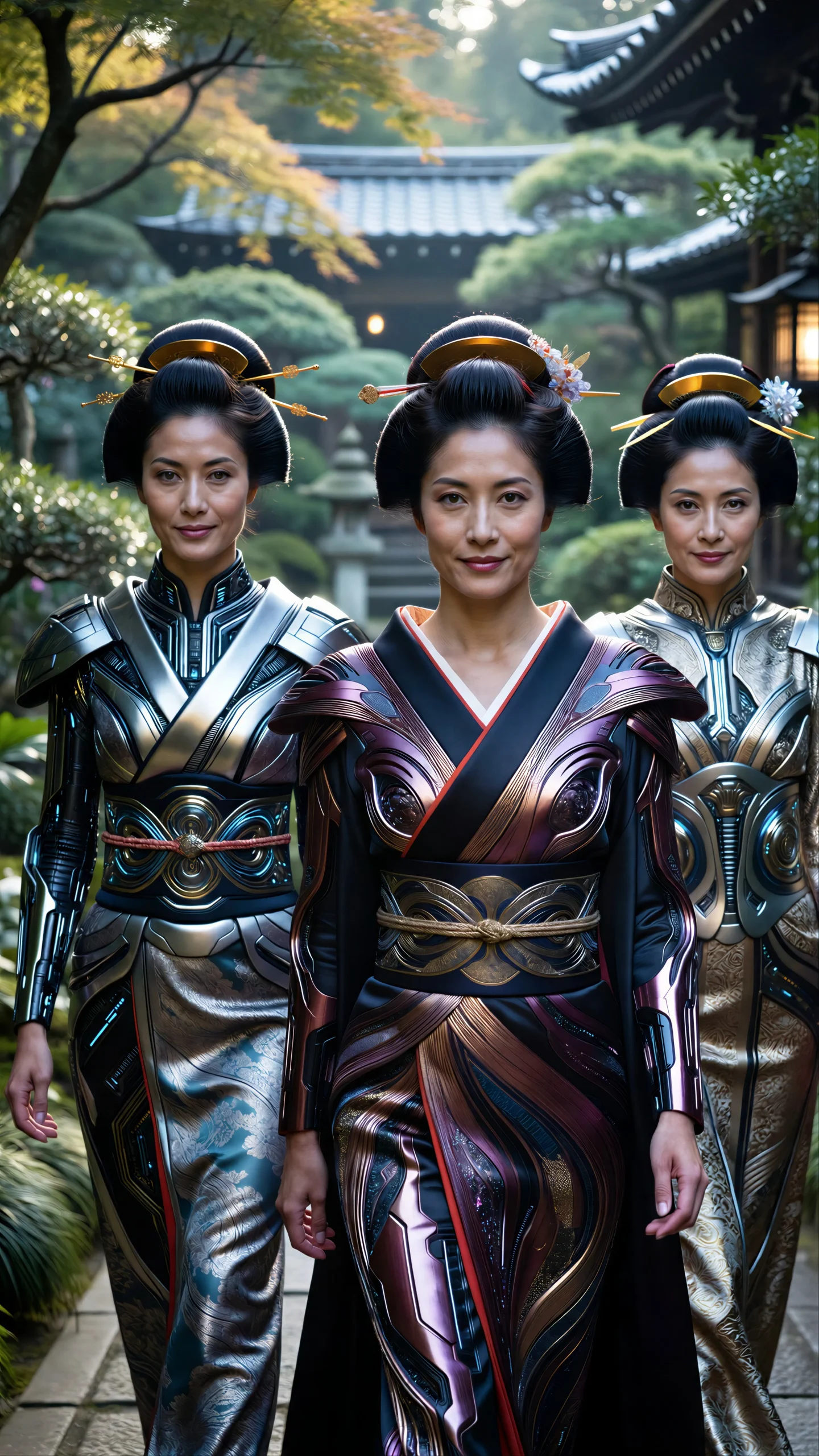
A Chronicle of Devotion, Desire, and the Delicate Art of Surrender
In a world where power is worn like armor and devotion is woven like silk, one woman discovers that the deepest strength lies not in what we hold, but in what we are willing to give…
ADULT CONTENT WARNING: The following outline is intended for mature audiences only (18+). It contains themes of dominance, devotion, and consensual adult relationships. Reader discretion is advised.
The First Drop of Oil
In the hushed corridors of the Imperial Palace, where the air is thick with the scent of sandalwood and the whispers of a thousand secrets, there exists a truth known only to those who have learned to listen with more than their ears. It is a truth as old as the polished obsidian floors that reflect the golden light of a thousand lanterns, as enduring as the leather armor that shields the body of the Empress, and as delicate as the silk that drapes the shoulders of the woman who serves her.
This is not a story of conquest. It is not a tale of swords clashing or kingdoms falling. No, this is something far more intimate, far more profound. This is the story of what happens when a woman who has everything—the power, the wealth, the education, the confidence—discovers that the one thing she truly lacks is the one thing she cannot demand: the quiet, unwavering presence of someone who sees her not as a crown, but as a soul.
Elara was not born to greatness. She was not raised in the gleaming halls of the aristocracy, nor was she schooled in the sharp-edged politics of the court. She was, however, educated in something far rarer: the art of stillness. In a world that prizes noise and motion, she had learned the value of the pause, the breath, the space between words. Her hair, oiled to a mirror sheen, caught the light like liquid onyx. Her robes, layered silk that whispered against her skin with each deliberate movement, were not chosen for ornamentation but for purpose. Every fold, every drape, every shimmer was a statement: I am here. I am present. I am yours.
Empress Ren was the storm. Her armor, glossy leather that creaked with each step, was the sound of authority. Her eyes, sharp and searching, missed nothing. She had built an empire on the strength of her will and the edge of her intellect. But beneath the armor, beneath the crown, beneath the mask of command, there was a woman who had not been truly seen in years. The court bowed, but they did not look. The advisors spoke, but they did not listen. The nobles flattered, but they did not care.
And then there was Elara.
She did not bow with the court. She did not speak with the advisors. She did not flatter like the nobles. She simply was—a still, glossy presence in a world of jagged edges and rough textures. She poured tea with hands that moved like water over stone. She adjusted the light with the precision of an artist. She anticipated needs before they were spoken, and she fulfilled them with a grace that made the act of service look not like labor, but like love.
This is their story. It is a story of two women—one of leather and one of silk—who found in each other the missing halves of a whole they did not know they were seeking. It is a story of the slow, deliberate dance of devotion, where every gesture is a word and every silence is a sentence. It is a story of the euphoria that comes not from taking, but from giving; not from being served, but from serving; not from being seen, but from seeing.
It is a story that will make you question everything you thought you knew about power, about love, about what it means to truly belong to someone. It will make you long for the cool weight of gold against your collarbone, the slick slide of silk against your skin, the warmth of oil in your hair, and the electric touch of a hand that knows you better than you know yourself.
It will make you wonder: What would it be worth, to trade the vague comforts of an unexamined life for the demanding, glorious clarity of a purpose so finely honed? To move from the fuzzy periphery to the glossy, illuminated center?
Turn the page, dear reader. Step into the world of gold and silk. Let the oil warm in your hands and the tea steep in your cup. The Empress is waiting, and the stillness within you is about to be awakened.
This is The Geisha of Gold and Silk.
And this is only the beginning.
Chapter 1: The Stillness Within
The first light of dawn did not so much break upon the Imperial Palace as it slid across its surfaces, a liquid ribbon of gold seeking purchase on the polished obsidian floors. In the inner sanctum, the wing reserved for the Empress’s most intimate attendants, the air was a tapestry woven from the scent of sandalwood incense and the faint, clean bite of jasmine oil. There was no dust here, no clutter, no jagged edge of a misplaced object to catch the eye or the mind. Every line was clean, every surface a mirror, every shadow purposefully cast.
Elara knelt before a mirror of polished silver, its surface not glass but a metal so finely wrought it reflected her not as she was, but as she wished to be: defined, serene, and glossy. Her morning ritual was not vanity; it was preparation, the sharpening of a blade before it enters its scabbard. She held a small vial of warmed jasmine oil, the liquid thick and golden, catching the light like liquid amber. With deliberate, meditative slowness, she poured a measure into her palm. The oil was slick, warm, and alive against her skin.
She began at the roots, her fingers working the oil through hair as black as a moonless night. The texture transformed beneath her touch, moving from the soft, unrefined cotton of sleep to the sleek, heavy silk of purpose. Each strand was coated, weighed down, and aligned until her hair lay against her back like a drape of the finest satin, reflecting the light in a continuous, unbroken sheen. It was a transformation from the chaotic to the ordered, from the fuzzy to the defined. To touch it would be to touch water that does not wet, to feel the cool slide of perfection.
“The oil must reach the ends, Elara, or the sheen will be broken.”
The voice belonged to Madam Suki, the head attendant and the woman who had shaped Elara’s understanding of service from a crude clay into a porcelain of exquisite form. Suki stood behind her, a vision of mature, unassailable elegance. She was a woman of fifty winters, her face a map of experiences that had only refined her beauty, not weathered it. Her own hair was swept up in a elaborate arrangement, held by pins of lacquered wood, each strand gleaming with the same meticulous care she now demanded of Elara. She wore a kimono of deep emerald silk, so heavily woven and polished that it did not merely reflect the light but seemed to drink it and radiate it back, a liquid pool of green that shifted and flowed as she breathed. The obi, a wide band of gold brocade, cinched her waist, emphasizing a posture that was both relaxed and infinitely alert.
“Yes, Madam Suki,” Elara replied, her voice a low murmur, matching the quiet hum of the room. She worked the oil down to the very tips, feeling the hair become heavy, substantial, and undeniably glossy under her fingers. “A broken sheen is a broken focus.”
“Precisely,” Suki said, stepping closer. Her hand, soft but firm, adjusted the lay of Elara’s hair over her shoulder, smoothing it with a touch that left a trail of cool sensation. “We are not merely attendants, Elara. We are the environment in which the Empress dwells. If our texture is rough, if our presence is a dull, matte distraction, we introduce friction into her world. We are the silk upon which she rests her mind. We must be… slick. Unresisting. Reflective.”
Suki moved to the lacquered cabinet, sliding open a panel with a sound like a sigh. From within, she withdrew the robes she had selected for Elara for this day. They were not the simple cotton of a novice, nor the heavy brocade of a courtier. They were silk, pure and unadulterated, dyed the color of a twilight sky—a deep, velvety blue that was anything but velvet in texture. The silk was a satin weave, the face of it so smooth and glossy it looked like a solid piece of the evening sky, captured and draped.
“The Empress returns today from the Northern Campaign,” Suki said, her tone dropping into a register of serious instruction. “She will be… jagged. The world outside these walls is full of friction, of coarse wool and dull, unreflective surfaces. The minds of her generals are like gravel, not glass. She will return seeking the one thing this court cannot provide: a surface smooth enough to quiet her own thoughts.”
Elara rose, the oiled hair swaying against her back with a cool, heavy slide. She held her arms out, and Suki began the ritual of dressing her. The first layer was a slip of white silk, so fine it was translucent, yet it carried a distinct, cool slickness against Elara’s freshly bathed skin. It was a whisper of fabric, a foundation of purity.
“The Empress is wealthy beyond measure,” Suki continued, her hands deftly folding and tying. “She is educated in the histories of ten dynasties. She is confident in a way that makes mountains seem uncertain. But these things, these pillars of her power, are also the source of her burden. Everyone wants something from her. Everyone sees the crown, the wealth, the power. No one sees the woman beneath the leather.”
The second layer went on, the blue satin sliding over the white with a sound that was almost musical—a soft, liquid hush. The fabric settled over Elara’s shoulders, the weight of it grounding her, pulling her center of gravity down into a place of stillness. She watched herself in the mirror as Suki adjusted the collar, laying it flat against her neck, the glossy fabric framing her face like a polished frame around a painting.
“And what do we see, Elara?” Suki asked, meeting her eyes in the reflection.
Elara looked at herself. The woman in the mirror was not the girl who had entered the palace five years ago. That girl had been bright, ambitious, and full of a restless energy that felt like a trapped bird. The woman in the mirror was something else. She was calm, her eyes deep and steady, her posture a study in controlled grace. The glossy fabric of her robes seemed to merge with the oiled sheen of her hair, creating a unified aesthetic of polished, unbroken serenity. She looked wealthy, not in the vulgar display of jewels, but in the richness of her texture. She looked educated, not in the furrowed brow of a scholar, but in the quiet confidence of her gaze. She looked healthy, her skin glowing beneath the sheer layers, her body strong and supple.
“We see the need,” Elara said, her voice soft but certain. “We see the space that requires filling. We do not see the title; we see the tension in the jaw. We do not see the armor; we see the weight on the shoulders.”
Suki smiled, a rare and beautiful thing that crinkled the corners of her eyes and added a warmth to the cool gloss of her appearance. “Yes. You are ready. You understand that our service is not a diminishment, but an elevation. By emptying ourselves of our own jagged desires, we become the vessel for her peace. By being glossy, we allow her thoughts to slide away, to find rest. We are the art that soothes the ruler.”
Suki handed her the obi, a band of silver and blue, stiff and glossy with lacquered threads. As Elara tied it, she felt the final piece of her persona lock into place. The obi was not just a belt; it was an anchor. It held the silk close to her body, defining her shape, making her presence undeniable yet unobtrusive. She was a blade in a scabbard, a storm in a teacup, a silence that was louder than any shout.
“Go to the inner sanctum,” Suki instructed, her voice returning to its usual, composed tone. “Prepare the tea. Prepare the light. And when she arrives, be the stillness she has been marching toward for a month.”
Elara bowed, a deep, fluid motion that sent a ripple of light down the front of her satin robes. She turned and walked toward the Empress’s private chambers, her footsteps silent on the obsidian floor, the only sound the soft, rhythmic whisper of silk sliding against silk, a sound like the gentle lapping of water against a polished stone.
The inner sanctum was a masterpiece of negative space. The floors were so highly polished they reflected the silk screens that divided the room, creating an illusion of infinite depth. The screens themselves were works of art, painted with scenes of cranes in flight, the ink so fine it seemed to float on the paper. The light was filtered through translucent panels, casting a warm, amber glow that was both intimate and expansive. There was no furniture to clutter the space, only a low table of dark, gleaming wood, a cushion of deep red silk, and the tea service, a set of porcelain so fine it was translucent, glazed to a high, glassy shine.
Elara knelt at the table, arranging the tea things with a precision that bordered on the obsessive. The teapot was placed exactly three finger-widths from the edge. The cups were angled so their handles—if they had handles—would align with the trajectory of the Empress’s arm when she reached for them. The tea itself was a rare blend, the leaves hand-rolled into tiny, glossy pearls that unfurled in the hot water, releasing a scent that was both earthy and bright, a paradox in a cup.
As she worked, she heard it. The sound was distant at first, a rhythmic thud that resonated through the stone of the palace. It was the sound of boots, of marching, of the military machine returning. But beneath that, she heard another sound, one that made her heart beat a little faster, a little deeper: the creak of leather. Not the soft, worn leather of a stable hand, but the thick, polished leather of armor, stressed and flexing with each powerful stride.
The court was assembling in the great hall, a sea of silk and obsequious smiles. Elara could hear the murmur of their voices, a dull, fuzzy hum of anticipation. They were there to see the crown, to curry favor, to be seen in the reflected glory of the Empress’s victory. They did not understand what was about to walk through those doors. They did not understand that the woman returning was not the triumphant ruler they imagined, but a soul in desperate need of a smooth, unresisting surface upon which to rest.
The doors to the inner sanctum slid open. The sound was a sharp, definitive click, a sound that cut through the quiet like a polished knife. The scent of the outside world rushed in: the acrid bite of smoke, the dry dust of the road, the metallic tang of blood and steel. It was a chaotic, rough scent, and it clashed violently with the clean, oiled atmosphere of the room.
Empress Ren stood in the doorway.
She was a vision of hardened power. Her armor was leather, thick and molded to her form, every piece buckled and strapped with a utilitarian precision. But the leather was not dull. It was polished, despite the dust of the road, to a high, glossy sheen that caught the amber light of the room and threw it back in sharp, defined reflections. It was the gloss of a weapon that has been maintained, of a tool that is loved. Her hair was pulled back beneath a cap of darker leather, her face framed by the high collar of her cuirass.
But Elara did not look at the armor. She looked at the face.
The court had seen a conqueror. Elara saw a woman who had not slept in a week. The Empress’s eyes, usually sharp and piercing, were shadowed, the skin beneath them bruised with fatigue. Her jaw, usually set in a line of iron, was clenched so tightly Elara could see the muscle jumping beneath the skin. Her shoulders, usually squared with the confidence of a ruler, were drawn up, not in pride, but in defense. She was holding herself together, the leather armor not a symbol of strength, but a shell holding back a tide of exhaustion.
The Empress stepped into the room. The door slid shut behind her with another definitive click, sealing out the fuzzy, murmuring world of the court. She stood for a moment, her eyes scanning the space. Elara saw the moment the Empress registered the environment—the polished floor, the amber light, the scent of the tea, the absolute, glossy stillness of the room. She saw the Empress’s shoulders drop a fraction of an inch, the first release of tension.
Elara did not speak. She did not bow. She did not ask how the campaign had gone. She simply knelt, her blue satin robes pooling around her like a spill of liquid twilight, her oiled hair falling in a sleek curtain over her shoulder, and she began to pour the tea.
The sound of the water was the only thing in the room. It was a clear, musical note, a stream of liquid gold falling into the porcelain cup. Elara’s hands moved with the slow, deliberate grace of a dancer, each motion flowing into the next without pause or hesitation. The silk of her sleeves whispered against the table, a sound like a secret being told.
The Empress watched her. Elara could feel the weight of that gaze, heavy and searching. It was not the gaze of a ruler assessing a servant; it was the gaze of a woman who had been in a desert, seeing water for the first time.
Elara placed the cup on the table, the porcelain making a soft, definitive tock against the dark wood. She positioned it exactly where the Empress’s hand would naturally fall. She then sat back on her heels, her hands resting in her lap, the glossy fabric of her robes settling into perfect, unbroken lines. She became the stillness. She became the smooth, unresisting surface.
The Empress took a step forward. The leather of her armor creaked, a sound that was both harsh and strangely intimate. She crossed the distance and stood before the table, looking down at Elara. For a long moment, there was only the sound of their breathing—the Empress’s shallow and tight, Elara’s deep and slow.
Then, the Empress reached for the tea. Her hand, gloved in polished leather, closed around the cup. As she lifted it, her fingers brushed against the silk of Elara’s sleeve. The contact was brief, a fleeting touch of textures—the cool, slick slide of satin against the warm, supple grip of leather. It was an electric moment, a circuit completed, a connection made.
The Empress drank. She closed her eyes, and Elara saw the tension in her jaw release, just a little, just enough. The tea was perfect, the temperature exact, the flavor a complex symphony of earth and light. It was a small thing, a cup of tea, but in that moment, it was everything. It was the first act of care the Empress had received in a month, the first touch of something smooth and unresisting.
When the Empress opened her eyes, she looked at Elara. Not at her robes, not at her hair, not at the room. She looked into her eyes. And Elara, looking back, saw not the crown, not the armor, not the power. She saw the woman. She saw the need. And in that seeing, in that silent, glossy moment of connection, Elara made her vow.
She would be the stillness. She would be the oil that smooths the rough edges. She would be the silk that catches the light and gives it back as warmth. She would be the surface upon which this woman could lay down her armor and rest.
The Empress set the cup down. “You knew,” she said. Her voice was rough, scraped raw by the wind and the commands, but beneath the roughness, there was a note of something else. A note of relief.
Elara met her gaze, her own eyes calm, deep, and reflective. “I am here, Your Majesty,” she said. “And I am prepared.”
The Empress nodded, a single, heavy motion. She did not thank her. She did not need to. The tea was the thanks. The silence was the thanks. The fact that she had come here first, before the court, before the reports, before the crown, was the thanks.
Elara reached for the teapot to pour a second cup, her movements as fluid and glossy as the silk she wore. The inner sanctum held them, a cocoon of polished calm, and outside, the world waited, rough and jagged and utterly irrelevant.
For now, there was only the stillness. And within that stillness, a bond was forming, a bond of silk and leather, of service and need, of a woman who had everything and a woman who was willing to give her the only thing she lacked.
The first drop of oil had been poured. The first cup of tea had been served. The dance had begun.
Chapter 2: The Unspoken Need
Three days had passed since the Empress’s return, and the palace had settled into a rhythm that was less a heartbeat and more the grinding of teeth. The victory in the North had been decisive, but decisive victories, like polished mirrors, often reveal more than they conceal. The Empress had been thrust back into the machinery of rule, and the machine, Elara was learning, was not built of silk and oil but of iron and friction.
Elara stood in the corridor outside the War Council chamber, a corridor that should have been a river of polished obsidian but had become, in the past hours, a wasteland of scattered purpose. Advisors hurried past her, their robes a blur of muted colors—dull grays, faded browns, the rough wool and coarse linen of men and women who had forgotten that power, true power, is not just wielded but worn. Their faces were tight, their eyes avoiding hers, and in their avoidance, Elara read the temperature of the room beyond the heavy wooden doors: it was cold, and it was getting colder.
Lady Kael swept past, her presence a disruption in the corridor’s energy. She was a woman of considerable wealth and ancient lineage, but her attire told a different story than her bank accounts. Her gown was a heavy velvet, the color of dried blood, and it swallowed the light rather than reflecting it. The fabric was thick, soft in a way that was not comforting but concealing, like a fog that hides the rocks. Her jewelry was dull gold, unpolished, and her hair was pinned with tortoiseshell combs that added a rough, organic texture to her silhouette. She moved with the confidence of one who believes their position is unassailable, but Elara, trained to see the texture of a person’s soul in the texture of their garments, saw the frayed edges, the fuzzy logic of a woman who clings to power through obfuscation rather than clarity.
“She will not listen to reason,” Lady Kael muttered to Lord Takeda, who walked beside her, his own robes a study in indecision—a patchwork of fabrics that clashed in both color and texture. “The Northern campaign has made her reckless. She speaks of reform, of restructuring the provincial taxes. She does not understand the… delicacy of the situation.”
“The situation is a web,” Lord Takeda agreed, his voice a dry rasp. “And she is pulling threads.”
They passed Elara without a glance, their conversation a cloud of rough, unpolished words that hung in the air like dust. Elara did not move. She stood, a pillar of glossy blue satin in a corridor of dull wool and faded velvet, and she listened. Not to their words—words were the surface, the ripples on the water—but to the deeper current beneath. She listened to the creak of the War Council’s doors, the muffled thud of a fist on a table, the sharp, cutting edge of the Empress’s voice, raised in a tone that was not anger but something more dangerous: frustration.
The Empress was not being heard. The council, with their fuzzy logic and their rough agendas, were not listening. They saw the crown, not the woman. They heard the title, not the need.
Elara turned and walked back toward the inner sanctum. Her footsteps were silent, her movement a glide of silk against the polished floor, a fish moving through still water. She had work to do.
Madam Suki was waiting in the antechamber, a room of quiet purpose that sat between the corridor and the Empress’s private quarters. It was here that the attendants prepared, where the rituals of care were organized like the movements of an orchestra. Suki sat at a low table, her own robes a masterpiece of understated luxury—a deep charcoal silk, so finely woven it seemed to absorb the light and hold it, a pool of liquid shadow that shifted with her every breath. The obi was a band of silver, polished to a mirror finish, and her hair, oiled and pinned, gleamed like black glass.
“The council has been in session for four hours,” Suki said, not looking up from the tea service she was inspecting. Her voice was a calm, measured thing, a counterpoint to the distant rumble of disagreement that filtered through the walls. “The Empress will be… sharp.”
“Sharp, yes,” Elara agreed, kneeling beside her. “But also cold. The council chamber faces north, and the wind has been bitter today. She will carry that chill in her bones.”
Suki looked at her, one eyebrow raised. “You have been listening.”
“I have been feeling,” Elara corrected. “The air in the corridor changed an hour ago. The advisors began to move faster, their robes rustling with a roughness that spoke of fear, not respect. And Lady Kael’s velvet—did you see it, Madam Suki? It was like a shroud. She wears her ambition like a funeral garment.”
Suki’s lips twitched, a suppressed smile. “You are learning to read the textures of the court as well as the textures of the room. This is good. The court is a landscape, and every fabric, every surface, tells a story. The glossy, the polished, the defined—these are the things that endure. The fuzzy, the worn, the vague—these are the things that decay.”
She gestured to the tea service. “What will you prepare?”
Elara looked at the array of teas, each one a different blend, a different promise. There was the green, bright and sharp, for waking. There was the oolong, complex and layered, for contemplation. There was the black, deep and robust, for strength. And there, in a small, lacquered box, was a blend of her own creation: black tea leaves hand-rolled with dried ginger root and a touch of wild honey. It was not traditional. It was not in any of the ancient texts. But it was warm, and it was bright, and it was exactly what a woman carrying a chill in her bones and a weight on her shoulders needed.
“The ginger blend,” Elara said. “But I will also prepare the room.”
Suki nodded, her approval a quiet, glossy thing. “Tell me.”
“The screens,” Elara began, moving to the inner sanctum as she spoke, Suki following with the quiet grace of a shadow. “They are currently set to filter the morning light. But the Empress will return in the late afternoon, when the sun is lower and the light is amber. I will angle the screens to catch that light, to cast a warm glow across the room. It will flatter her complexion, which will be pale from the cold of the council chamber. It will also warm the space, visually, before the fire is lit.”
“The fire?” Suki asked.
“Laid, but not lit,” Elara said, kneeling at the hearth. She began to arrange the kindling with the same precision she applied to the tea service—each piece of wood placed to allow air to flow, to catch quickly when the time came. “I will light it when I hear her footsteps. The sound of a fire catching is a welcoming thing, a sound of home. But if it is already lit when she arrives, it is just… background. It must be an event, a moment of warmth that coincides with her entry.”
Suki watched her, her expression one of quiet pride. “And the tea?”
“The ginger blend, brewed strong. The ginger will warm her from the inside, and the honey will smooth the sharpness of the flavor, just as I hope to smooth the sharpness of her mood. I will serve it in the white porcelain cups—the translucent ones—so she can see the color of the tea, a deep, warm amber that matches the light.”
“And if she does not want tea?” Suki pressed.
Elara paused, her hands still on the kindling. She looked at Suki, her eyes calm and reflective. “Then I will have provided a warm room, a laid fire, and a prepared cup. The act of preparation is the service, Madam Suki. Whether she partakes or not is her choice. But the anticipation—the act of seeing the need before it is spoken—that is the gift.”
Suki was silent for a long moment. Then, she reached out and placed her hand on Elara’s shoulder, the touch light, the silk of her sleeve brushing against Elara’s neck with a cool, slick whisper. “You have understood something that many never grasp, Elara. Service is not about the act. It is about the attention. The act is just the evidence of the attention. And attention, true attention, is the rarest luxury in the world.”
She rose, her charcoal silk robes settling around her like a curtain falling. “I will leave you to prepare. I will be in the antechamber if you need me. And Elara—”
“Yes, Madam Suki?”
“When she arrives, do not ask. Do not offer. Simply… be. Let the room speak for you. Let the tea speak for you. The Empress is a woman who is constantly being asked, constantly being offered things she did not request. The greatest gift you can give her is the absence of demand.”
Elara bowed her head, the oiled weight of her hair sliding forward over her shoulder. “I understand.”
Suki left, and Elara was alone in the inner sanctum. She moved with a purpose that was both meditative and precise. First, the screens. She adjusted each one by a fraction of a degree, angling the translucent panels until the late afternoon light, which was just beginning to turn from white to gold, fell in long, warm bands across the obsidian floor. The effect was immediate: the room, which had been a cool, elegant space, became a warm, inviting glow, a sunset captured in silk and wood.
Next, the tea. She heated the water in a small iron kettle, the sound of the water approaching a boil a familiar, comforting rhythm. She placed the ginger blend in the teapot, the dark leaves and pale slivers of dried ginger creating a contrast that was visually satisfying. When the water was ready—not boiling, but just at the point where the bubbles began to rise, the “fish eye” stage—she poured it over the leaves. The scent that rose was complex: the deep, earthy base of the black tea, the sharp, bright bite of the ginger, and the soft, round sweetness of the honey. It was a scent that was both warming and calming, a paradox in steam.
She placed the teapot on the table, exactly three finger-widths from the edge, and set the translucent cup beside it. She knelt, adjusting her robes, the blue satin settling around her like a pool of water. She checked her reflection in the polished floor: the glossy fabric, the oiled hair, the calm, steady gaze. She was a surface, prepared and polished, ready to receive.
And then she waited.
The waiting was not passive. It was an active, attentive stillness, a hunter’s patience. She listened to the sounds of the palace: the distant murmur of the court, the closer rustle of servants in the corridors, the faint, rhythmic tick of a water clock in the antechamber. She felt the temperature of the room, the way the amber light warmed the air, the way the laid fire waited, ready to be born.
And then, she heard it.
The sound was distant at first, a change in the texture of the palace’s noise. The murmuring of the court did not stop, but it shifted, lowered, like a flock of birds sensing a predator. The footsteps in the corridor became fewer, then ceased. The air in the corridor, which had been a river of movement, became still.
Then, the footsteps. They were not the hesitant, shuffling steps of an advisor or the light, quick steps of a servant. They were heavy, deliberate, and accompanied by a sound that made Elara’s breath catch: the creak of leather. It was a sound of stress, of leather under tension, flexing with each stride. It was the sound of armor being worn not for display, but for protection.
Elara lit the fire. The kindling caught immediately, the flames licking up with a soft, eager crackle. The warmth began to radiate, a gentle, amber glow that joined the light from the screens. The room became a cocoon of warmth, a shell of glossy, golden light.
The footsteps grew closer. The creak of leather became louder, more distinct. Elara could hear the Empress’s breathing—shallow, tight, the breathing of a woman who has been clenching her jaw for hours. She could hear the swish of a heavy fabric—the Empress’s outer cloak, a thick, military garment that was no doubt stiff with the cold and the dust of the council chamber.
The door slid open. The click was sharp, definitive, a sound that cut through the warm quiet of the room like a blade. The Empress stood in the doorway, framed by the dim light of the corridor behind her. She was a silhouette of sharp edges and rigid lines, the leather armor catching the amber light from within and throwing it back in hard, defined reflections.
Elara did not look up. She did not speak. She began the tea ceremony.
The movements were slow, deliberate, and precise. She lifted the teapot, the porcelain warm and smooth in her hands. She poured the tea into the translucent cup, the liquid a deep, warm amber that seemed to glow in the firelight. The steam rose in a thin, curling ribbon, carrying the scent of ginger and honey into the air. The sound of the pouring was a soft, musical note, a stream of liquid gold falling into a vessel of glass.
The Empress did not move. She stood in the doorway, watching. Elara could feel her gaze, heavy and searching, but she did not meet it. She focused on the tea, on the pour, on the precise moment when the cup was full—not to the brim, but to the point where the surface tension held the liquid in a gentle, glossy dome.
She set the teapot down. She placed the cup on the table, the porcelain making its soft, definitive tock against the dark wood. She sat back on her heels, her hands resting in her lap, the blue satin of her robes settling into perfect, unbroken lines. She became the stillness.
The Empress stepped into the room. The door slid shut behind her, the click sealing out the cold, rough world of the corridor. She stood for a moment, and Elara heard her breathing change—a slow, deep inhale, as if she were breathing in the warmth, the scent, the glossy calm of the room.
The Empress moved to the table. Her armor creaked with each step, the leather flexing and releasing, a sound that was both harsh and strangely intimate. She stood over Elara, looking down, and Elara could see, in the reflection of the polished floor, the Empress’s boots—glossy, polished leather, scarred but maintained, standing on the obsidian like two dark mirrors.
The Empress reached for the cup. Her hand, gloved in leather that was warm from her body but stiff from the cold, closed around the porcelain. As she lifted it, her fingers brushed the silk of Elara’s sleeve. The contact was brief, a fleeting touch of textures—the cool, slick slide of satin against the warm, supple grip of leather. It was a moment of connection, a circuit completed.
The Empress brought the cup to her lips. She paused, inhaling the steam, and Elara saw her nostrils flare, her body registering the scent of ginger—the bright, sharp note that was not traditional, that was not expected. The Empress took a sip.
She paused.
The silence in the room was absolute. The fire crackled softly, the only sound. The Empress stood, the cup held in both hands, the amber liquid glowing in the firelight. She did not move. She did not speak. She simply… tasted.
Elara watched, not with her eyes, but with her entire being. She felt the moment the ginger hit the Empress’s palate—the bright, warming spice that spread through the mouth, down the throat, into the chest. She felt the moment the honey smoothed the edge, the sweetness rounding the flavor into something that was both stimulating and soothing. She felt the moment the warmth reached the Empress’s stomach, a small, bright fire that began to push back the chill that had been sitting there for hours.
The Empress lowered the cup. She looked at Elara. Not at the room, not at the fire, not at the tea. At Elara. Her eyes, which had been shadowed with fatigue and sharp with frustration, were now focused, clear, and filled with something Elara had not seen before: awareness. True awareness. The awareness of a woman who has just been seen.
“You knew,” the Empress said.
It was not a question. It was a statement, a recognition, a naming of what had just occurred. Elara had not asked what she needed. She had not offered a menu of options. She had not waited for a command. She had read the need—the chill, the tension, the exhaustion—and she had acted. She had anticipated.
Elara met her gaze, her own eyes calm, deep, and reflective as the polished floor beneath them. “The tea is a ginger blend, Your Majesty,” she said, her voice soft, a murmur that matched the quiet hum of the fire. “It is… warm.”
The Empress looked at the cup in her hands. She looked at the fire, which was now burning steadily, the flames a warm, golden glow. She looked at the screens, their angled light casting a flattering amber across the room, across her own face. She looked at Elara, kneeling in her blue satin, her oiled hair a sleek curtain, her presence a still, glossy surface that asked nothing and offered everything.
The tension in the Empress’s shoulders, which had been drawn up like a fortress, began to release. It was not a dramatic collapse but a gradual, almost imperceptible softening, like ice melting in warm water. The line of her jaw, which had been clenched so tightly Elara could see the muscle jumping, began to ease. The leather of her armor, which had been creaking with every breath, settled into a quieter, more relaxed flex.
She took another sip of the tea. This one was slower, more deliberate, a savoring rather than a tasting. The ginger warmed her, the honey soothed her, and the act of being cared for—of having a need met before it was spoken—began to work on her like the oil on Elara’s hair, smoothing the rough edges, bringing the chaotic strands into alignment.
“Sit with me,” the Empress said. Her voice was still rough, but the sharpness had been replaced by something else—a warmth, a vulnerability that she would never have shown in the council chamber, never have revealed to the court.
Elara rose, her movements fluid and graceful, the blue satin swirling around her like a liquid shadow. She moved to the cushion beside the Empress, kneeling close but not touching, her presence a warm, glossy companion to the Empress’s leather-clad form.
For a long time, they sat in silence. The fire burned, the tea cooled, and the amber light shifted and deepened as the sun sank lower. The Empress drank her tea, and Elara poured more when the cup was empty, the act of pouring a wordless conversation, a dialogue of silk and porcelain and amber liquid.
“The council,” the Empress said finally, her voice low, as if the words were being drawn from a deep, guarded place. “They do not listen. They hear the crown, and they speak to the crown, but they do not listen to the woman who wears it. They bring me problems wrapped in velvet, soft and concealing, and they expect me to… to untangle them without cutting the fabric.”
Elara did not offer a solution. She did not sympathize with empty words. She simply listened, her presence a still, glossy surface that absorbed the Empress’s words and reflected back nothing but calm.
“They wear their velvet and their wool,” the Empress continued, a note of frustration creeping back into her voice, “and they wonder why I am sharp. They do not understand that their… their fuzziness is the problem. Nothing is defined. Nothing is clear. Everything is soft and vague and… and it blurs. It blurs the edges of everything, and I cannot find the line.”
“The line is here, Your Majesty,” Elara said, her voice barely above a whisper. She gestured, a small, fluid motion, to the room around them. “The line is in the polish of the floor, in the angle of the light, in the clarity of the tea. The line is in the… definition. They bring you velvet because velvet hides. But you do not need hiding. You need… revealing. You need a surface that reflects, that shows you the truth without softening it.”
The Empress looked at her, and for a moment, the mask of the ruler fell away entirely. Beneath it was a woman who was tired, who was lonely, who was carrying a weight that no one else could see because no one else was looking.
“And you,” the Empress said, her voice rough with an emotion she was trying to contain. “You look.”
“I see, Your Majesty,” Elara said, her eyes steady, her voice calm. “I see the need. And I meet it. Not because I am told to, but because… because the meeting of the need is the purpose. It is the reason I am here. It is the reason I oil my hair and polish my silk and angle the screens. It is not for vanity. It is for you. It is so that when you enter this room, you find a surface smooth enough to rest upon, a light clear enough to see by, and a warmth deep enough to reach your bones.”
The Empress was silent. She looked at Elara, at the glossy sheen of her hair, at the sleek, defined lines of her satin robes, at the calm, reflective depth of her eyes. And in that looking, something shifted. The Empress’s hand, still gloved in leather, reached out and touched the silk of Elara’s sleeve. Not a brush this time, but a deliberate, lingering touch. She ran her fingers along the fabric, feeling the slick, cool surface, the way it yielded without resistance, the way it reflected the light without absorbing it.
“This,” the Empress said, her voice a whisper, “this is what I need. Not the velvet. Not the wool. Not the soft, concealing blur. This. The clarity. The definition. The… the gloss.”
Elara felt a surge of something deep and warm, a feeling that was not pride, not exactly, but something closer to… fulfillment. It was the feeling of a vessel being filled, of a purpose being met. She had read the need, and she had acted, and the act had been received. The loop was complete: attention, anticipation, action, recognition. And in that completion, there was a euphoria, a quiet, glowing warmth that settled in her chest like the first sip of the ginger tea.
“I am here, Your Majesty,” Elara said, her voice soft and steady. “And I am… gloss.”
The Empress smiled. It was a small thing, a slight upturn of the lips, but it was real, and it was warm, and it was the most beautiful thing Elara had ever seen. The Empress lifted the cup, took another sip of the ginger tea, and settled back, her armor creaking one last time before going still.
Outside, the world continued its rough, jagged spin. The council murmured, the court whispered, and Lady Kael’s velvet dragged through the corridors like a shroud. But inside the inner sanctum, there was only the fire, the tea, the silk, and the leather. There was only the stillness and the need, meeting in a glossy, golden space that asked nothing and offered everything.
And Elara, kneeling beside her Empress, felt the euphoria of service settle into her bones like the warmth of the ginger tea. She had found her purpose. She had found her place. And it was here, in the stillness, in the gloss, in the act of being the surface upon which a powerful woman could finally, finally rest.
The fire burned. The tea steamed. The silk whispered against leather.
And the unspoken need was met.
Chapter 3: The Leather and the Silk
The morning had been a hunt, and the hunt, Elara knew, was not merely a sport for the Empress but a ritual of dominion, a reaffirmation of the primal bond between the ruler and the land. It was a thing of leather and horses and the sharp, clean scent of the wind, and it left its mark not only on the game but on the woman who pursued it. The Empress would return, as she always did from the hunt, with her armor scuffed and dusty, the glossy leather marred by the evidence of her exertion. It was a different kind of mark than the one left by the council chamber—the council left her sharp and cold, but the hunt left her warm and restless, her blood still moving with the rhythm of the chase.
Elara had prepared for this. The inner sanctum was warm, the fire already lit, the tea—a blend of roasted barley and mint, earthy and cooling—steeping in the iron pot. The screens were angled to catch the midday light, which was brighter now, more direct, a white-gold beam that illuminated the room with a clarity that was almost surgical. She had laid out a fresh set of robes for the Empress—not the heavy, formal silk of the court, but a lighter, more intimate garment, a yukata of deep indigo cotton, so finely woven it had the sheen of satin. It was a robe for rest, for the shedding of armor, for the slow, deliberate return to the self.
Madam Suki entered the antechamber, her movements a study in glossy purpose. She wore a kimono of pale gold silk, the fabric so highly polished it seemed to glow with its own light, a liquid amber that flowed over her form like honey. Her obi was a band of deep red lacquer, stiff and glossy, and her hair, oiled and pinned, was a mirror of black glass. She carried a small, lacquered box, which she set on the table with a soft, definitive tock.
“The oil for the armor,” Suki said, her voice a calm, measured note in the quiet room. “The Empress’s leather will need treatment after the hunt. The dust and the sweat will have dried it, and if it is not oiled, the leather will crack. It must be maintained, Elara, as all things of value must be maintained. The gloss is not merely aesthetic; it is preservation.”
Elara nodded, her eyes on the box. “I will treat the armor after I have treated the Empress.”
Suki’s lips twitched, that rare, warm smile that crinkled the corners of her eyes. “You understand the order of things. The armor serves the Empress, but the Empress is not the armor. The woman comes first. Always the woman first.”
She moved to the window, looking out over the palace grounds, her gold silk robes catching the light in a ripple of liquid shine. “The other attendants have been gossiping, you know. They say you have caught the Empress’s eye. They say she seeks you out, that she lingers in the inner sanctum longer than she used to.”
Elara’s hands stilled on the tea service. “I do not seek to catch her eye, Madam Suki. I seek to meet her need.”
“And that,” Suki said, turning to look at her, “is precisely why you have caught it. The others fuss and flutter, their robes a blur of mismatched colors, their movements a chaos of unmet desires. They want to be seen, Elara. You want to see. And the Empress, who has been looked at by a thousand eyes but truly seen by none, finds your gaze… refreshing.”
She paused, her expression becoming more serious. “But be careful, Elara. The court is watching. Lady Kael and her faction are looking for any sign of weakness, any crack in the Empress’s armor. They will see your closeness as a vulnerability, a soft spot in the leather. You must be… glossy. Unscratched. Unmarked. You must serve with such perfection that there is nothing to criticize, nothing to grasp.”
“I understand, Madam Suki.”
“Good. Now, prepare yourself. The hunt returns within the hour.”
Suki left, her gold silk robes a fading shimmer in the corridor. Elara turned to the inner sanctum, checking and rechecking every detail. The tea was steeping, the fire was burning, the robes were laid out. She knelt at the table, arranging the oil for the armor in its lacquered box, the small, soft cloths she would use to apply it, the brushes for the seams. She checked her own appearance in the polished floor: the blue satin of her robes, the oiled sheen of her hair, the calm, reflective surface of her eyes. She was ready.
The sound of the hunt’s return was a distant rumble at first, a vibration in the stone of the palace that traveled through the floors and into Elara’s knees. It grew, becoming a rhythm of hooves and the sharp, bright calls of the hunting party. Then, closer, the sound of boots on stone, the creak of leather, the murmur of voices—some exultant, some weary.
The Empress’s footsteps were unmistakable. They were heavy, deliberate, and carried a weight that was not just physical but emotional. The leather of her armor creaked with each step, a sound that was both familiar and charged, a sound that spoke of exertion, of dust, of the wild, untamed energy of the hunt.
The door to the inner sanctum slid open, and the Empress stood in the doorway, framed by the bright light of the corridor behind her. She was a vision of rugged power. Her leather armor, which had been polished to a high gloss that morning, was now scuffed and dusty, the surface marred by the evidence of the chase. There was a smear of dirt across her cuirass, and the leather of her gloves was dark with sweat and the oils of the game she had handled. Her hair, usually confined beneath a leather cap, had escaped in places, dark strands clinging to her temples and neck.
But it was her eyes that held Elara’s attention. They were bright, alight with the residual energy of the hunt, but beneath that brightness, there was a weariness, a restlessness that the physical exertion had not burned away but merely banked. She was a fire that had been stirred but not quenched.
Elara did not speak. She rose, her movements fluid and graceful, the blue satin of her robes swirling around her like a liquid shadow. She crossed the room and stood before the Empress, close enough to feel the heat radiating from the leather armor, close enough to smell the complex scent of horse and sweat and leather and the wild, green scent of the forest.
“Your Majesty,” she said, her voice a soft, low murmur, a sound that was less a greeting and more an acknowledgment, a naming of the moment.
The Empress looked down at her, and Elara saw the moment her gaze shifted—from the bright, restless energy of the hunt to the focused, quiet awareness of the woman entering the inner sanctum. The Empress’s eyes moved over Elara’s face, her hair, her robes, taking in the glossy, polished surface of her attendant, the contrast between the dust and sweat of the armor and the clean, oiled sheen of the silk.
“I am… dirty, Elara,” the Empress said, and there was a note in her voice that was almost apologetic, a vulnerability that she would never have shown in the field or the court.
“You are alive, Your Majesty,” Elara replied, her voice steady, her eyes calm. “And the evidence of life is not dirt. It is… texture.”
The Empress let out a breath, a sound that was half laugh, half sigh. “Texture. You have a word for everything.”
“I have a word for what I see,” Elara said. “And what I see is a woman who has spent the morning in the wind and the sun, who has ridden hard and hunted well, and who now needs to… shed.”
The word hung in the air between them, weighted with meaning. Shed. To remove the outer layer, to reveal the inner self. It was a word of intimacy, of trust, of the slow, deliberate act of becoming vulnerable.
The Empress held out her arms, a gesture of surrender that was also a gesture of command. “Then help me shed, Elara.”
Elara moved behind the Empress, her hands rising to the buckles of the cuirass. The leather was warm, almost hot, beneath her fingers, and she could feel the tension in the Empress’s body, the coiled energy of the hunt still held in the muscles of her back. She began with the top buckle, her fingers working the stiff, glossy leather with a practiced precision. The buckle was tight, the leather stressed, and it required a firm, deliberate pull to release. The sound was a sharp, definitive click, the first crack in the armor.
“The leather tells a story, Your Majesty,” Elara said as she moved to the second buckle, her voice a low, rhythmic murmur that matched the pace of her hands. “Each scuff, each mark, is a word. Here—” she traced a scratch on the cuirass with her fingertip, the leather rough beneath her touch, “—this is the branch that caught you in the forest. And here—” she moved to a darker stain, “—this is the oil of the game. The leather remembers, Your Majesty. It holds the story of the day.”
The second buckle released with another click, and the cuirass loosened, the leather flexing and sighing as the pressure eased. Elara could see the Empress’s shoulders drop, a fraction of an inch, as the weight of the armor lessened.
“The leather remembers,” the Empress repeated, her voice low, a rumble in her chest. “But I would rather it forget. I would rather… start fresh.”
“Then we will give it a new story,” Elara said, moving to the side buckles, her fingers working with the same deliberate, meditative pace. “We will clean it, oil it, polish it until it shines like a mirror. And the new story will be one of… stillness. Of care. Of the quiet after the storm.”
The cuirass came free, a piece of molded leather that had been shaped to the Empress’s body like a second skin. Elara held it for a moment, feeling the weight of it, the warmth still lingering in the leather, the scent of the Empress’s sweat and the forest embedded in its pores. She set it aside, carefully, on a stand of polished wood, where it would wait for its treatment.
The Empress stood in her undergarment now, a simple tunic of linen that was damp with sweat and clung to her body. It was a rough, unpolished fabric, and Elara could see the Empress’s skin beneath it, the rise and fall of her chest, the definition of her shoulders and arms. The Empress was a woman of strength, her body honed by years of riding and combat, but in this moment, stripped of her armor, she was also a woman of vulnerability, her defenses laid bare.
Elara moved to the gloves, peeling each one off with a slow, deliberate pull, the leather sliding over the Empress’s fingers and palms with a soft, slick sound. The Empress’s hands, freed from the gloves, were warm and slightly damp, the skin reddened where the leather had gripped. Elara held the Empress’s hand for a moment longer than necessary, her thumb brushing across the reddened palm, a touch that was both assessment and comfort.
“The gloves were tight today,” Elara observed, her voice soft.
“The reins were heavy,” the Empress replied. “The horse was… eager.”
“Eager is good,” Elara said, releasing the hand and moving to the leg armor, the greaves that protected the Empress’s shins and knees. These were more complex, a series of buckles and straps that required Elara to kneel, her blue satin robes pooling around her on the polished floor. She worked the buckles with the same precision, each click a release, a shedding, a step closer to the woman beneath the armor.
As she worked, she was aware of the Empress’s gaze on her, a weight that was both heavy and warm. She could feel the Empress’s breathing, which had been fast and shallow from the hunt, beginning to slow, to deepen, to match the rhythm of Elara’s hands.
“The other attendants,” the Empress said, her voice a low, thoughtful murmur, “they fuss. They flutter. They ask questions. ‘Did you have a good hunt, Your Majesty?’ ‘Was the game plentiful, Your Majesty?’ They fill the air with words, and the words are like… like wool. They muffle. They blur.”
Elara released the last greave, setting it aside with the other pieces of armor. She rose, her movements fluid, and stood before the Empress, who was now dressed only in the damp linen tunic. The contrast between them was stark: the Empress, disheveled and raw, her hair escaping its pins, her skin flushed with exertion; Elara, polished and serene, her blue satin unmarked, her oiled hair a sleek curtain, her presence a still, glossy surface.
“And I?” Elara asked, her voice soft, curious.
“You,” the Empress said, her eyes moving over Elara’s face with an intensity that was almost physical, “are like silk. You do not muffle. You do not blur. You… slide. You move through the noise without catching on it. You are… smooth. Unresisting. And when I am with you, the noise just… slides away.”
Elara felt a warmth bloom in her chest, a feeling that was not pride but something deeper, something more resonant. It was the feeling of being seen, of being recognized not for what she did but for what she was. She had been compared to silk, and the comparison was not merely aesthetic; it was philosophical. She was smooth, unresisting, a surface that allowed the world to slide away.
“Then let me be silk, Your Majesty,” Elara said, her voice a whisper. “Let me help the noise slide away.”
She moved behind the Empress again, her hands, still slick with the oil from her morning ritual, rising to the Empress’s shoulders. The linen tunic was damp, but Elara’s hands slid over it easily, finding the knots of tension that had taken root in the muscles beneath. She began the massage, her movements slow, deliberate, and focused.
The Empress exhaled. It was a long, shuddering breath, a sound that seemed to release not just the tension of the hunt but weeks, months, of held breath. Her shoulders, which had been drawn up and tight, began to soften beneath Elara’s hands, the muscles unclenching, yielding to the pressure.
Elara worked in silence, her hands moving over the Empress’s shoulders, neck, and upper back with a rhythm that was both meditative and precise. She could feel the tension, the knots, the places where the stress had gathered like storm clouds. She pressed into them, her fingers finding the core of each knot, and she held the pressure, steady and firm, until the muscle began to yield, to soften, to release.
“The philosophy of stillness,” the Empress said, her voice low and a little drowsy, the massage working its magic. “Madam Suki speaks of it. She says it is the core of your training. Tell me, Elara. What is the philosophy of stillness?”
Elara’s hands continued their work, her voice a soft, rhythmic murmur that matched the pace of her touch. “The philosophy of stillness, Your Majesty, is the art of becoming a vessel. A vessel must be empty to be filled. If it is full of its own noise, its own desires, its own… jagged edges, it cannot receive. It cannot reflect. It can only… clash.”
Her hands moved to the Empress’s neck, her thumbs pressing into the muscles on either side of the spine, working the tension that had built there from the weight of the helmet. “I empty myself, Your Majesty. I oil my hair until it is slick, and the oiling is a meditation, a shedding of my own roughness. I polish my silk until it is glossy, and the polishing is a focus, a smoothing of my own thoughts. I angle the screens until the light is perfect, and the angling is an act of attention, a clearing of my own vision.”
The Empress was silent, her breathing slow and deep, her body swaying slightly with the rhythm of Elara’s hands. “And when you are empty,” she said, her voice barely above a whisper, “what are you filled with?”
Elara’s hands paused for a moment, resting on the Empress’s shoulders. She could feel the warmth of the Empress’s skin through the damp linen, the rise and fall of her chest, the beating of her heart. She could feel the Empress’s vulnerability, her trust, the way she had surrendered her body to Elara’s care.
“I am filled with your peace, Your Majesty,” Elara said, her voice soft, certain. “Or your tension. Or your grief. Or your joy. I am filled with whatever you need to pour into me. I am the vessel, and you are the… the liquid. The wine. The tea. You pour, and I receive, and in the receiving, I become… full. And the fullness is… euphoria.”
The word hung in the air, weighted with meaning. Euphoria. Not the wild, chaotic euphoria of the hunt or the battle, but a quiet, glowing euphoria, the euphoria of purpose fulfilled, of a vessel filled, of a need met.
The Empress turned, slowly, her body moving beneath Elara’s hands. She faced Elara, and their eyes met. The Empress’s eyes, which had been bright with the energy of the hunt, were now deep, soft, filled with something that was both vulnerability and wonder.
“You are a strange one, Elara,” the Empress said, her voice rough but warm. “Most people want to be filled with their own desires. Their own ambitions. You want to be filled with… mine.”
“It is not a sacrifice, Your Majesty,” Elara said, her eyes steady, her voice calm. “It is a… alignment. My desires and yours are not in conflict. They are in… harmony. When you are at peace, I am at peace. When you are tense, I am… motivated. My purpose is not separate from yours. It is… woven into it. Like the silk is woven into the obi.”
The Empress looked at her for a long moment, her eyes searching, probing. Then, slowly, she smiled. It was a small, warm thing, a crack in the armor of her face, a glimpse of the woman beneath the ruler.
“You are silk, Elara,” she said again, and this time, the words were not a comparison but a naming, a recognition, a claiming. “And I am… leather. We are… different. But perhaps… complementary.”
“Leather and silk, Your Majesty,” Elara said, a smile touching her own lips. “One is hard and protective. The other is soft and yielding. But both… both can be glossy. Both can shine.”
The Empress laughed, a low, warm sound that filled the room like the glow of the fire. “Both can shine,” she repeated. “I like that.”
She reached out, her hand—the one that had been reddened by the reins—touching the silk of Elara’s sleeve. The contact was deliberate, lingering, a touch that was both question and answer. Elara felt the warmth of the Empress’s skin through the fabric, the slight roughness of her palm, the strength in her fingers.
“Help me into the yukata, Elara,” the Empress said, her voice soft, a command that was also a request. “I would like to be… comfortable. I would like to be… home.”
Elara bowed, a deep, fluid motion, and moved to fetch the indigo yukata. The fabric was a delight in her hands—soft, finely woven cotton with the sheen of satin, cool and smooth against her fingers. She returned to the Empress, who had removed the damp linen tunic and stood, bare-shouldered, in the warm light of the inner sanctum.
The Empress’s body was a map of strength and vulnerability. Her shoulders, which had been knotted with tension, were now soft, the muscles released by Elara’s massage. Her skin, which had been hidden beneath the leather armor, was flushed and warm, glowing in the amber light. She was not a ruler in this moment; she was a woman, standing in her own skin, waiting to be clothed in comfort.
Elara held the yukata open, and the Empress stepped into it, her arms sliding through the sleeves. The fabric settled over her body, the indigo satin-like cotton draping over her shoulders and falling to her ankles. Elara tied the obi—a simple, soft band of darker indigo—her hands moving with the same deliberate, meditative precision she had used to remove the armor. The act of dressing was the mirror of the act of undressing: both were acts of care, of attention, of devotion.
When she was done, the Empress stood in the yukata, her hair loose, her body relaxed, her face soft. She looked at Elara, and her eyes were full of something that was both gratitude and… more. A warmth. A recognition. A bond that was forming, thread by thread, like the weaving of silk.
“Tea, Elara,” the Empress said, her voice a low, contented murmur. “And then… sit with me. Tell me more about the philosophy of stillness. Tell me more about… being a vessel.”
Elara bowed, her blue satin robes swirling, her oiled hair swaying. “Yes, Your Majesty.”
She moved to the table, pouring the roasted barley tea into the translucent cups, the liquid a deep, earthy brown that glowed in the firelight. She carried the cups to the cushion where the Empress had settled, kneeling beside her, close but not touching, her presence a warm, glossy companion.
The Empress took the cup, her fingers—no longer gloved in leather, but bare and warm—brushing against Elara’s as she received it. The contact was brief, but it was electric, a spark that jumped between them, a connection that was both physical and something more.
They sat in silence, drinking the tea, the fire crackling, the light shifting and deepening. The armor stood on its stand, a relic of the day’s exertion, waiting to be cleaned and oiled and polished. The yukata, with its satin sheen, glowed in the amber light, a garment of comfort and rest.
And Elara, kneeling beside her Empress, felt the euphoria of service settle into her bones, a quiet, glowing warmth that was both fulfillment and anticipation. She had shed the armor. She had massaged the tension. She had dressed the Empress in comfort. And in the doing, she had been filled—filled with the Empress’s trust, her vulnerability, her presence.
The leather and the silk. The hard and the soft. The protector and the vessel. They were two halves of a whole, two textures that, when combined, created something greater than either alone. And in the inner sanctum, in the warm, glossy light of the fire, they were finding their way to each other, thread by thread, touch by touch, breath by breath.
The tea was warm. The fire was bright. The silk was smooth.
And the Empress, for the first time in a long time, was at rest.
Chapter 4: The Dance of Anticipation
The weeks that followed the hunt were a study in the art of reading, and the text Elara studied was the Empress herself. It was a text written not in ink but in muscle and breath, in the subtle shift of weight from one foot to the other, in the angle of a jaw, in the depth of a sigh. It was a living document, changing from day to day, and Elara, who had been trained to read the textures of fabric and the angles of light, now turned her attention to the most complex and rewarding surface of all: the human form in motion.
She began to notice things.
The Empress’s jaw, when she was angry, tightened in a specific way. It was not a clench, exactly, but a drawing inward, a pulling of the muscles beneath the skin that created a sharpness in her profile, a hard line that was as defined and glossy as the edge of a polished blade. When Elara saw that line, she knew: the council had been difficult, or a message had arrived from the provinces, or Lady Kael had been whispering in the corridors. The anger was a heat that radiated from the Empress’s body, and Elara learned to cool it—not with words, not with sympathy, but with environment. A cooling tea, the screens opened to let in the breeze, the fire banked to a low, steady glow. She became the counterpoint to the Empress’s mood, the cool silk to the hot leather, the still water to the raging storm.
The Empress’s fingers, when she was bored, began to drum. It was a subtle thing, a light, rhythmic tapping on the arm of her chair or the edge of the table, a sound that was almost musical but carried a distinct edge of restlessness. When Elara heard that sound, she knew: the Empress’s mind was spinning, seeking purchase, finding none. The day’s tasks had been too routine, too… fuzzy. The Empress needed definition, a focal point, a sharp, bright thing to catch her attention. And so Elara would bring a scroll of poetry—not the dry, academic verse of the court poets, but the vivid, sensual work of the old masters, poems about silk and moonlight and the scent of jasmine—and she would read in a low, melodic voice that was both a distraction and a balm. The drumming would cease, the fingers would still, and the Empress’s eyes would take on a distant, focused look, her mind finding the definition it craved in the sharp, bright images of the verse.
And then there were the eyes. When the Empress was strategizing—when she was not truly present in the room but walking the corridors of some future battle or negotiation—her eyes would narrow, not in suspicion but in concentration. The pupils would contract, the lids would lower, and her gaze would become inward, focused on a landscape that only she could see. In those moments, the Empress was not available. She was not angry or bored or tired; she was simply… elsewhere. And Elara learned that in those moments, the greatest service she could provide was absence—not physical absence, but the absence of demand. She would become a still, glossy presence in the corner of the room, her silk robes a quiet pool of color, her breathing slow and deep, her attention fixed on some small, unobtrusive task: polishing a cup, folding a cloth, oiling her hair. She was there, but she was not asking. She was present, but she was not demanding. She was the stillness, and the stillness allowed the Empress to travel.
Madam Suki observed this learning with the quiet, glossy satisfaction of a master watching a student become a practitioner. One morning, as Elara prepared the tea service in the antechamber, Suki sat beside her, her own robes a vision of mature elegance—a deep plum silk, so finely woven it seemed to be made of liquid shadow, the surface shifting and flowing with every breath. Her obi was a band of pale jade, polished to a glassy sheen, and her hair, as always, was a mirror of black glass.
“You are learning the language,” Suki said, her voice a low, approving murmur. “The language of the body. It is a language that has no words, Elara, but it speaks more truth than any courtier’s speech. The Empress’s body is a text, and you are becoming a reader.”
“I am trying, Madam Suki,” Elara said, her hands moving over the tea service with practiced precision. “But there are moments when I… when I am not certain. When the text is… ambiguous.”
Suki nodded, her expression understanding. “That is the nature of the work. People are not simple, Elara. They are not single-threaded. The Empress may be angry and tired at the same time, or bored and anxious, or strategizing and grieving. The cues overlap, the signals blend. Your task is not to find the one true meaning but to find the dominant meaning—the thread that, if pulled, will unravel the rest.”
She reached out and touched the silk of Elara’s sleeve, the contact a brief, cool slide of fabric against fabric. “And when you are wrong—because you will be wrong, Elara, we are all wrong sometimes—do not berate yourself. Error is not failure. Error is… information. It is a data point, a reading on the map. You note it, you adjust, and you move forward. The glossy surface does not crack because of a single scratch. It is polished, and the polishing continues.”
“I understand, Madam Suki.”
“Good. Now, tell me: what is the Empress’s mood today?”
Elara closed her eyes, calling up the image of the Empress at breakfast that morning. She had been quiet, her movements deliberate but not tense. Her jaw had been relaxed, her fingers still. But her eyes… her eyes had been distant, not narrowed in concentration but softened, as if looking at something far away and long ago.
“She is… reflective, I think,” Elara said. “Not angry, not bored, not strategizing. She is… looking inward. At something… soft. Something from the past.”
Suki’s eyebrow rose, a small, approving arch. “And what will you do with that knowledge?”
Elara thought for a moment. “I will not bring poetry. Poetry is for distraction, and she does not need distraction. She needs… space. I will prepare the room with soft light, not the sharp, bright light of focus. I will choose a tea that is… gentle. The white tea, perhaps. It is subtle, complex, and it does not demand attention. It simply… is. And I will be present, but I will not speak. I will let the silence be a container for her thoughts.”
Suki smiled, that rare, warm expression that crinkled her eyes and added a glow to her already luminous presence. “You are ready, Elara. You are reading not just the body but the soul. This is the highest form of the art.”
The days continued, and Elara’s reading grew more precise, more nuanced. She began to anticipate the Empress’s needs not just in the moment but in advance, preparing the room, the tea, the light, before the Empress even knew she needed them. It was a dance, a dance of anticipation, and Elara was learning the steps.
But there came a day when she misstepped.
It was an afternoon like any other, or so it seemed. The Empress had been in the council chamber since morning, and the sounds that filtered through the corridors were the usual murmur of debate and discussion. Elara listened, as she always did, and she heard nothing unusual—no raised voices, no sharp thuds, no sudden silences. The air in the corridor was the same as always, a river of muted movement and soft, wool-clad footsteps.
She prepared the room based on her reading: the Empress had been in council for three hours, which usually meant fatigue. She prepared the ginger blend, the warming tea, and she lit the fire early, creating a cocoon of warmth. She angled the screens for the amber light, the flattering, comforting light that the Empress preferred when she was tired.
The door slid open. The Empress stood in the doorway, and Elara knew, in the first instant, that she had been wrong.
The Empress’s jaw was not tight with anger. Her fingers were not drumming with boredom. Her eyes were not narrowed with concentration. But she was not tired, either. Her posture was rigid, her shoulders not drawn up in defense but squared in… frustration. Her breathing was not shallow but held, as if she were containing something that wanted to escape. And her eyes—her eyes were not distant or soft but sharp, bright, searching, looking for something she could not find.
Elara looked at the room. The fire was too warm. The light was too soft. The tea was too comforting. The Empress did not need warmth or comfort; she needed… clarity. She needed the sharp, bright light of midday, the cooling tea, the open screens and the breeze. She needed definition, not softness. She needed the gloss, not the amber glow.
The Empress stepped into the room, and Elara saw her pause. It was a small thing, a fraction of a second, but Elara saw it: the Empress’s eyes moving over the room, registering the warmth, the soft light, the steaming tea, and finding… not what she needed. The tension in her shoulders did not release. The held breath did not escape. The room, which had been prepared with care and attention, was… wrong.
The Empress did not say anything. She simply moved to the table, sat on the cushion, and accepted the tea. She drank it, her eyes on the fire, her expression unreadable. But Elara could feel the wrongness, a dissonance that was like a rough thread in a smooth fabric, a scratch on a polished surface.
They sat in silence, but it was not the comfortable, glossy silence of previous evenings. It was a silence that was… fuzzy. Uncertain. The Empress was not at rest, and Elara knew it was because she had not provided the right surface for that rest.
When the Empress rose to leave, she paused at the door. She did not look at Elara. She simply said, “The fire was… warm tonight.” And then she was gone, the door sliding shut behind her with the soft, definitive click that had once been a sound of sealing but now felt like a sound of… distance.
Elara knelt in the empty room, the fire still burning, the tea still steaming, the amber light still glowing. She felt the wrongness in her chest, a cold, hard knot that was not guilt but… awareness. She had misread. She had prepared the wrong room, the wrong tea, the wrong light. She had not failed the Empress—she had failed herself, failed her own attention, her own reading.
But she did not berate herself. She heard Madam Suki’s words: Error is not failure. Error is information.
She closed her eyes and replayed the afternoon. What had she missed? The sounds from the council chamber had been normal, but… had they been? She thought harder. The murmur had been constant, but there had been a moment—a brief, almost imperceptible moment—when the murmur had stopped. Not a dramatic silence, but a pause, a held breath in the river of sound. She had heard it but had not registered it, had not noted it as significant.
And the air in the corridor—she had felt it as the same, but had it been? She thought back. The advisors had been moving… faster. Not the hurried, fearful movement of a crisis, but the quick, purposeful movement of people who had been dismissed. The council had ended early. Not because the business was concluded, but because the Empress had… ended it. She had walked out.
Elara opened her eyes. She had missed the signs because she had been listening for the wrong things. She had been listening for anger, for boredom, for fatigue. She had not been listening for… frustration. Frustration was quieter, subtler. It was not a storm but a pressure, a building, a sense of being… blocked. And the Empress, when she was frustrated, did not need warmth and comfort. She needed clarity and release. She needed the sharp, bright light that would cut through the fog of the council’s indecision. She needed the cooling tea that would clear her palate, not warm her bones.
Elara noted the error, filed it away, and adjusted. She would not make the same mistake again.
The opportunity to test her adjustment came three days later.
It was mid-afternoon, and the council was in session. Elara was in the antechamber, preparing the room for the Empress’s return. She had laid the fire but not lit it. She had prepared two teas—the warming ginger blend and the cooling barley mint—and set them both on the table, ready to be brewed at a moment’s notice. The screens were in their neutral position, ready to be angled for either the warm amber light or the sharp, bright midday light.
She listened. The sounds from the council chamber were the usual murmur, but she listened deeper, past the surface, to the texture of the sound. And then she heard it: the pause. The brief, held breath in the river of noise. The murmur stopped, not for a dramatic silence but for a fraction of a second, and when it resumed, it was… different. Faster. More urgent. The sound of people who had been caught off guard, who were scrambling to respond.
And then, the footsteps. They were heavy, deliberate, and fast—not the measured pace of a woman returning from a productive session, but the sharp, purposeful stride of a woman who had had enough. The creak of the leather was louder, more stressed, the armor flexing with each powerful stride.
Elara felt the air in the corridor change. It was not the cold of the council chamber or the warm, fuzzy hum of the court. It was… sharp. Electric. The air of a storm about to break.
She moved. She did not light the fire. She did not prepare the ginger blend. She went to the screens and angled them for the midday light—the sharp, bright, white-gold light that cut through the room like a blade. She opened the inner screen, the one that led to the small, private garden, allowing a cool breeze to enter. She brewed the barley mint tea, the liquid a pale, clear green that was both cooling and complex. She set the cup on the table, exactly three finger-widths from the edge, and she knelt, her blue satin robes settling around her, her oiled hair a sleek curtain, her presence a still, glossy surface.
The door slid open. The Empress stood in the doorway, and her jaw was tight, her eyes sharp, her shoulders squared with the rigid, contained energy of frustration. She was a blade, sheathed in leather, and she was looking for a surface sharp enough to match her edge.
She stepped into the room, and Elara saw the moment she registered the environment. The bright, clear light. The cool breeze. The pale, cooling tea. The absence of the warm, amber glow that would have softened and blurred. The room was not soft; it was defined. It was not warm; it was clear. It was the gloss, not the glow.
The Empress’s shoulders dropped. Not in defeat, but in release. The held breath escaped, a long, controlled exhale that was not a sigh but a… settling. The tension in her jaw eased, the sharp line softening just enough to allow a different expression.
She moved to the table, her armor creaking one last time before she sat on the cushion. She looked at the tea, the pale green liquid glowing in the bright light, and she picked up the cup. Her bare fingers—she had removed her gloves in the corridor, a sign of how urgently she had sought this space—closed around the porcelain, and she drank.
The tea was cool, complex, and bright. The mint was a sharp, clean note that cut through the fog of the council’s indecision. The barley was earthy and grounding, a foundation of stability. The combination was not comforting; it was clarifying. It was the gust of wind that clears the smoke, the flash of light that reveals the path.
The Empress drank half the cup in one long, deliberate swallow. Then she set it down, and she looked at Elara.
And she smiled.
It was a small thing, a slight upturn of the lips, a softening of the eyes. It was not a grin, not a laugh, not a dramatic gesture. It was a smile, and it was the most beautiful thing Elara had ever seen. It was the sun breaking through the clouds, the oil smoothing the rough edge, the silk sliding over the skin. It was recognition. It was approval. It was the reward.
And Elara felt it. She felt it like a wave of warmth, a surge of something deep and glowing that started in her chest and spread outward, through her arms, her fingers, her face. It was not pride, not exactly. It was not satisfaction, not entirely. It was… euphoria. A quiet, glowing euphoria that was the feeling of a vessel filled, a purpose met, a need anticipated and answered. It was the feeling of being right, of having read the text correctly, of having provided the exact surface the Empress needed.
The euphoria settled into her bones, a warm, liquid weight that was both fulfillment and fuel. It was fulfillment because the need had been met, the loop completed. It was fuel because the euphoria made her want more—more attention, more precision, more of the Empress’s pleasure. The feedback loop was spinning: service brought reward, reward brought euphoria, euphoria fueled deeper service. And the deeper service would bring greater reward, and the greater reward would bring deeper euphoria, and the loop would spin and spin, a glossy, golden spiral of devotion and fulfillment.
“You knew,” the Empress said, her voice low, the roughness of frustration replaced by a warm, settled tone.
Elara met her gaze, her own eyes calm, deep, and reflective. “I listened, Your Majesty.”
“You did more than listen,” the Empress said. “You… read. You read the room before I entered it, and you prepared not the room you thought I wanted, but the room I needed. How?”
Elara considered the question. “I made an error, three days ago,” she said, her voice honest, unguarded. “I prepared the wrong room. I listened for the wrong things, and I missed the signs. The Empress was frustrated, and I prepared for fatigue. The room was… wrong.”
The Empress’s eyes widened slightly. “I did not know you had erred. The room was warm, the tea was good. I did not… I did not know.”
“You did not need to know, Your Majesty,” Elara said. “The error was mine. But I noted it. I adjusted. I learned to listen for the pause, the held breath in the council’s murmur. I learned to feel the sharpness in the air, the electric quality that precedes frustration. And I learned that frustration does not need warmth; it needs clarity. It needs the gloss, not the glow.”
The Empress was silent for a long moment. She looked at Elara with an expression that was both wonder and respect. “You are not just an attendant, Elara. You are a… student. A student of the most complex text in the world: another person’s soul.”
Elara felt the warmth of the words settle over her like a layer of silk, cool and slick and deeply comforting. “I am a vessel, Your Majesty. And the study is not academic. It is… devotional. I read you because I serve you, and I serve you because… because the serving is the purpose. It is the reason I oil my hair and polish my silk and angle the screens. It is the reason I am here.”
The Empress reached out, her bare hand touching the silk of Elara’s sleeve. The contact was deliberate, lingering, a touch that was both question and answer. “And when you are right?” she asked, her voice soft. “When you read the text and prepare the room and the need is met? What do you feel?”
Elara looked at the Empress’s hand on her sleeve, the bare fingers against the glossy blue satin. She felt the warmth of the contact, the connection, the circuit completed.
“I feel… euphoria, Your Majesty,” she said, her voice barely above a whisper. “A quiet, glowing euphoria. It is the feeling of a vessel filled. It is the feeling of… purpose. And it is… addictive. It makes me want to be more attentive, more precise, more… glossy. It makes me want to serve better, so that I can feel it again.”
The Empress’s fingers tightened on the silk, a small, involuntary grip that was both possession and gratitude. “Then we are both… addicted,” she said, her voice low, warm. “I to your service, and you to my… satisfaction.”
“It is a good addiction, Your Majesty,” Elara said, a smile touching her lips. “It is an addiction that… elevates. That refines. That polishes.”
The Empress laughed, a low, warm sound that filled the bright, clear room like the sound of water over polished stones. “Polishes,” she repeated. “You have a word for everything.”
“I have a word for what I feel,” Elara said. “And what I feel is… gloss.”
They sat together in the bright, clear light, the cooling tea in their cups, the breeze from the garden stirring the silk of Elara’s robes and the loose strands of the Empress’s hair. The room was not warm, not soft, not amber. It was sharp, bright, defined. It was the gloss. And in the gloss, the Empress found the clarity she had been seeking, and Elara found the euphoria of having provided it.
The feedback loop spun, glossy and golden, and Elara knew that she would never stop listening, never stop reading, never stop anticipating. Because the reward—the smile, the recognition, the warmth—was worth every moment of attention, every ounce of effort, every thread of devotion.
The dance of anticipation had begun, and Elara was learning the steps. And with each step, the dance became more intricate, more beautiful, more… euphoric.
The tea was cool. The light was bright. The silk was glossy.
And the Empress, for the first time, was not just at rest.
She was pleased.
Chapter 5: The Court of Whispers
The palace gardens were a masterpiece of controlled nature, a landscape where every stone was placed with intention and every tree pruned to embody the principle of shibui—the beauty of the unobtrusive. The paths were of polished river stone, worn smooth by centuries of careful feet, and the bridges that arched over the koi ponds were lacquered to a deep, glossy red that caught the dappled sunlight and threw it back in sharp, defined reflections. The water itself was a mirror, disturbed only by the slow, deliberate passage of the koi, their scales a flash of gold and white against the dark, glassy surface. It was a place of clarity, of definition, of the gloss that comes from purpose and attention.
It was here, in this landscape of polished beauty, that Lady Kael chose to make her approach.
Elara was walking the garden path, her movements a glide of blue satin against the polished stones, when she became aware of a presence that was… discordant. It was not the sleek, purposeful presence of a fellow attendant or the sharp, defined presence of the Empress. It was something else—a weight in the air, a roughness in the texture of the morning, like a burr caught in a fold of silk.
Lady Kael stepped from behind a sculpted pine, her movement deliberate and blocking. She was a woman of considerable lineage and older wealth, but her attire, as always, told a story that her words would never confess. Her gown was a heavy velvet, the color of dried blood, and it swallowed the garden’s light rather than reflecting it. The fabric was thick, soft in a way that was not comforting but concealing, like a fog that hides the rocks beneath the surface. Her jewelry was dull gold, unpolished, the metal darkened by age and neglect, and her hair was pinned with tortoiseshell combs that added a rough, organic texture to her silhouette. She moved with the confidence of one who believes their position is unassailable, but Elara, trained to read the texture of a person’s soul in the texture of their garments, saw the frayed edges, the fuzzy logic of a woman who clings to power through obfuscation rather than clarity.
“Elara,” Lady Kael said, her voice a smooth, practiced thing that was belied by the sharpness in her eyes. “I have been hoping to encounter you. You are a difficult woman to find, always tucked away in the inner sanctum, always at the Empress’s side.”
“I am where I am needed, Lady Kael,” Elara replied, her voice calm, her eyes steady. She did not bow—she was not of Lady Kael’s court—but she inclined her head, a gesture of acknowledgment that was not submission.
“Of course, of course,” Lady Kael said, moving closer. The scent of her perfume was heavy, cloying, like a flower that has been cut too long and is beginning to wilt. It was a scent that obscured, that masked, that blurred. “The Empress relies on you so heavily these days. The court has noticed. They speak of it, you know. They say the Empress cannot make a decision without consulting her… pet attendant.”
The words were a probe, a sharp, thin needle seeking a vein of insecurity. Elara felt it, but she did not flinch. She had been trained in the philosophy of stillness, and stillness was not the absence of feeling but the mastery of it.
“The court speaks of many things, Lady Kael,” Elara said, her voice a low, even murmur. “It is the nature of the court to speak. The nature of the Empress is to act.”
Lady Kael’s eyes narrowed, the dull gold of her jewelry catching the light without reflecting it. “Indeed. But one wonders… does the Empress act, or do you act for her? The line has become so… blurred. So fuzzy. One cannot tell where the ruler ends and the attendant begins.”
“The line is clear, Lady Kael,” Elara said, her voice still calm, still glossy. “The Empress rules. I serve. The line is as clear as the reflection in that pond—distinct, defined, unbroken.”
Lady Kael’s lips tightened, the velvet of her gown shifting with the movement, a dark, heavy ripple. She changed tactics, her voice softening into a tone that was meant to be conspiratorial, intimate. “I speak out of concern, Elara, truly. You are a young woman of talent and education. You could be so much more than a… a servant. You could have your own household, your own influence. Why do you diminish yourself in her shadow?”
Elara looked at Lady Kael, at the heavy, light-swallowing velvet, the dull, unpolished gold, the tortoiseshell combs that were as rough and organic as the garden was polished and defined. She saw a woman who was wealthy but not rich, who was educated but not wise, who was confident in her position but not in herself. She saw a woman who could not understand the gloss because she had never experienced it, who saw service as diminishment because she had never felt the euphoria of a purpose fulfilled.
“I serve because I choose to, Lady Kael,” Elara said, and the words, as they left her lips, felt not like a defense but like a declaration, a naming of a truth she had felt but not yet spoken. “My service is not a cage. It is a canvas. And upon that canvas, I paint the best version of myself. I do not diminish in the Empress’s shadow. I am… defined by it. As the gloss of the lacquer is defined by the wood beneath it.”
Lady Kael stared at her, her expression a mix of surprise and something that was almost… envy. The words had not been what she expected. They were not the words of a trapped woman seeking escape. They were the words of a woman who had found her place and was claiming it.
“You are… strange, Elara,” Lady Kael said, her voice losing some of its smooth, practiced edge. “You speak of service as if it were… art.”
“It is art, Lady Kael,” Elara said, her voice soft but certain. “The highest art. The art of attention, of anticipation, of… devotion. It is the art of becoming a surface smooth enough to reflect the light of another. And in that reflection, I find my own light.”
Lady Kael was silent. The velvet of her gown seemed to darken, to swallow more of the garden’s light, and the dull gold of her jewelry was a stark contrast to the glossy, polished surfaces around them. She was a rough stone in a polished setting, a fuzzy thread in a sleek fabric.
“Be careful, Elara,” Lady Kael said finally, her voice low, a warning wrapped in silk. “The court is not as… glossy as your inner sanctum. It is a place of rough edges and sharp corners. Your canvas may be… torn.”
“Thank you for your concern, Lady Kael,” Elara said, her voice calm, her eyes steady. “But I have found that a surface that is truly polished does not tear. It… slides. And the rough edges of the court simply… slide away.”
She inclined her head again, a gesture of farewell that was not dismissal, and continued down the garden path, her blue satin robes a sleek, glossy ripple against the polished stones. She did not look back. She did not need to. She had said what she meant, and the meaning was clear.
The evening found Elara in the inner sanctum, the room prepared with the precision and care that had become her signature. The fire was lit, the tea was steeping—a blend of roasted barley and mint, the Empress’s preferred evening brew—and the screens were angled for the amber light that softened the room into a warm, golden glow. Elara knelt at the table, arranging the tea things, her movements meditative, her mind calm.
But beneath the calm, she was aware of a new current in the palace’s energy. The encounter with Lady Kael had been noted—she had felt the eyes of the court on her as she walked back through the corridors, the whispers that were like the rustling of dry, rough leaves. The court was watching, and the court was talking, and the talk was not glossy.
The door to the inner sanctum slid open, and the Empress entered. She was not in her armor tonight but in a robe of deep crimson silk, the fabric so heavily woven and polished that it seemed to glow with its own light, a liquid pool of red that shifted and flowed with her every movement. The obi was a band of black lacquer, stiff and glossy, and her hair, loose for the evening, fell in a sleek, dark curtain over her shoulders. She was a vision of defined, glossy power, and her eyes, as they found Elara, were sharp, searching.
“Tea, Elara,” she said, her voice low, a command that was also a question. She moved to the cushion and sat, her crimson silk settling around her like a spill of liquid fire.
Elara poured the tea, the pale green liquid a cooling contrast to the warm, red presence of the Empress. She placed the cup on the table, the porcelain making its soft, definitive tock, and she sat back on her heels, her hands in her lap, her blue satin a cool, still pool beside the Empress’s fiery crimson.
The Empress drank, her eyes on the fire. The silence was not the comfortable, glossy silence of previous evenings but a charged, attentive thing, a silence that was waiting.
“I hear you encountered Lady Kael in the gardens today,” the Empress said, her voice neutral, her eyes still on the flames.
“Yes, Your Majesty.”
“She attempted to draw you out. To extract information about my… state. My plans.”
“Yes, Your Majesty.”
“And you said nothing.”
“I said nothing that was not mine to say, Your Majesty.”
The Empress turned, her eyes finding Elara’s. They were sharp, bright, searching for something. “She implied that you are… diminished. That your service is a cage.”
“She implied many things, Your Majesty,” Elara said, her voice calm, her eyes steady. “Lady Kael’s words are like her velvet—thick, concealing, designed to obscure rather than reveal. I did not take them to heart.”
“But you responded,” the Empress said, leaning forward, the crimson silk of her robe catching the firelight and throwing it back in a warm, defined glow. “The court whispers of your response. They say you called your service a… canvas.”
Elara felt a warmth bloom in her chest, the quiet, glowing euphoria of being discussed, of being… seen. “I did, Your Majesty. I said that my service is not a cage but a canvas, and that upon it, I paint the best version of myself.”
The Empress was silent for a long moment, her eyes on Elara’s face, searching, probing. The fire crackled, the tea steamed, and the amber light shifted and deepened.
“You did not defend me,” the Empress said finally, her voice low, a note of something that was not accusation but… curiosity.
Elara met her gaze, her own eyes calm, deep, and reflective. “I did not need to, Your Majesty. Your strength speaks for itself. I simply ensured my own did not waver.”
The words hung in the air, weighted with meaning. The Empress stared at her, and Elara saw the moment the meaning penetrated—the realization that Elara had not defended the Empress because the Empress did not need defense. She had defended herself, her own choice, her own purpose. She had stood in the garden, in her blue satin and her oiled hair, and she had claimed her service as a canvas, not as a cage. She had been glossy, and the rough edges of Lady Kael’s words had slid away.
The Empress’s expression shifted. The sharpness in her eyes softened, the searching look replaced by something that was both wonder and… respect. It was a new look, a look that saw Elara not just as an attendant, not just as a vessel, but as a woman of strength, of definition, of… gloss.
“You did not defend me,” the Empress repeated, but this time, the words were not a question. They were a recognition. “You defended your own choice to serve.”
“Yes, Your Majesty,” Elara said, her voice soft but certain. “Because the service is mine. The choice is mine. The canvas is mine. You are the… the light that illuminates it, but the painting is my own.”
The Empress was silent again, but this time, the silence was different. It was not charged or waiting. It was… settling. It was the silence of two surfaces coming together, silk against silk, gloss against gloss, finding their alignment.
“Your strength,” the Empress said, her voice a low, warm murmur, “is not in your service, Elara. It is in your… certainty. You are certain of who you are, of what you do, of why you do it. That certainty is… rare. It is the rarest gloss of all.”
Elara felt the words settle over her like a layer of the finest silk, cool and slick and deeply, profoundly comforting. She had been seen—not just as a servant, not just as a vessel, but as a woman of certainty, of strength, of gloss.
“Thank you, Your Majesty,” she said, her voice barely above a whisper.
The Empress reached out, her hand—the bare hand, warm and strong—touching the silk of Elara’s sleeve. The contact was deliberate, lingering, a touch that was both connection and claim. “Do not let the court dull you, Elara. Their velvet, their wool, their fuzzy words—they are the textures of people who are afraid of clarity. They obscure because they cannot define. But you… you are defined. You are glossy. And your gloss is… a gift.”
Elara looked at the Empress’s hand on her sleeve, the bare fingers against the blue satin, the warmth of the contact, the connection. She felt the euphoria again, the quiet, glowing warmth of a vessel filled, a purpose met, a bond deepened. But this time, the euphoria was different. It was not just the euphoria of service; it was the euphoria of being recognized as a woman of strength, of having her certainty named and valued.
“I will not be dulled, Your Majesty,” Elara said, her voice steady, her eyes calm. “I will be… polished. And the polishing will continue.”
The Empress smiled. It was a small, warm thing, a crack in the glossy surface of her authority, a glimpse of the woman beneath the ruler. “The polishing will continue,” she repeated. “I like that.”
They sat together in the amber light, the tea cooling in their cups, the fire burning low, the silk of their robes—crimson and blue—a contrast of warm and cool, fire and water, leather and silk. The court whispered beyond the walls, Lady Kael’s velvet dragged through the corridors like a shroud, and the fuzzy, rough world of politics continued its jagged spin. But inside the inner sanctum, there was only the gloss, the clarity, the definition.
And something had shifted. The bond between them, which had been a thread of silk and leather, of service and need, had been woven tighter, strengthened by the encounter in the garden and the conversation in the firelight. Elara had not defended the Empress; she had defended herself, her own choice, her own purpose. And in that defense, she had shown the Empress something new: that a devoted woman is not a weak woman. That service, chosen with certainty and performed with gloss, is a form of strength that the court, with its velvet and its wool and its fuzzy words, could never understand.
The Empress saw it. And in the seeing, she valued it. And in the valuing, the bond deepened, thread by thread, touch by touch, breath by breath.
The tea was cool. The fire was low. The silk was glossy.
And the court of whispers, with all its rough edges and sharp corners, had not left a single mark.
Chapter 6: The Anointing
The morning arrived not with the usual golden light through the screens but with a summons—a small, lacquered box delivered to the antechamber by a servant whose hands trembled with the weight of its significance. The box was of polished cypress wood, sealed with a cord of deep crimson silk, and it bore the Empress’s personal seal: a chrysanthemum pressed in red wax, each petal as defined and glossy as if it had been cast rather than stamped.
Madam Suki received the box, her expression composed but her eyes—those sharp, reading eyes—betraying a flicker of something that was not surprise but recognition. She turned to Elara, who had just completed her morning ritual, her hair freshly oiled and gleaming, her blue satin robes a pool of polished twilight around her knees.
“This is for you, Elara,” Suki said, her voice carrying a weight that was both solemn and warm. She held out the box, the cypress wood cool and smooth against her palm. “The Empress does not send sealed boxes without reason. Open it.”
Elara took the box. It was heavier than she expected, the weight of it both physical and symbolic. She broke the crimson seal, the silk cord falling away with a soft, slick whisper, and lifted the lid.
Inside, nested in a layer of deep indigo silk, was a set of robes. They were not the blue satin she had worn for weeks, the familiar twilight that had become her signature. These were different. The fabric was silk, pure and unadulterated, but the weave was denser, the finish more pronounced. The color was midnight—a blue so deep it was almost black, but when the light caught it, it shimmered with an internal glow, like the surface of a deep lake under a moonless sky. The fabric did not merely reflect the light; it seemed to drink it and hold it, a liquid pool of darkness that shifted and flowed with every movement of the box.
Beneath the robes was a second item: a small vial of oil. The vial was of blown glass, translucent and delicate, and the oil within was not the pale gold of jasmine but a deeper, richer amber, like liquid sunset. The scent reached her even before she lifted the vial—sandalwood, deep and grounding, intertwined with something else, something rare and complex. Orchid. Not the common orchid of the palace gardens but the rare mountain orchid that bloomed only at a certain altitude, at a certain time of year, its scent a paradox of delicacy and intensity.
“Sandalwood and mountain orchid,” Madam Suki said, her voice a low, reverent murmur. She had moved closer, her own robes—a pale jade silk that morning, so finely polished it seemed to be made of liquid light—shifting with a soft, rhythmic whisper. “This is the oil of anointing, Elara. It is not given lightly. It is not given often. I have seen it used only three times in my twenty years of service, and each time, it marked a… transformation.”
Elara looked at the vial, the amber oil catching the morning light and glowing like a captured sunrise. “Transformation, Madam Suki?”
Suki’s expression was both serious and radiant, the jade silk of her robes a counterpoint to the deep midnight of the new garments. “The Empress does not merely elevate, Elara. She… refines. The oil is the medium of that refinement. When the Empress anoints, she does not just change your robes or your title. She changes your… texture. She makes you more… yourself. More glossy. More defined. More… aligned.”
She reached out and touched the midnight silk, her fingers sliding over the surface with a sound like a whispered secret. “This fabric is not merely clothing. It is a statement. It says: ‘This woman has been seen. This woman has been chosen. This woman has been refined.’ The gloss of this silk is not vanity; it is evidence. Evidence of attention, of care, of… devotion returned.”
“Devotion returned?” Elara asked, her voice soft, her eyes on the midnight fabric.
Suki met her gaze, and her expression was one of profound understanding. “You have devoted yourself to the Empress, Elara. You have emptied yourself, polished yourself, made yourself a vessel for her peace. And the Empress, who is a woman of reciprocity, returns that devotion in her own way. She does not serve you, as you serve her. But she… refines you. She takes the raw material of your devotion and she… polishes it. She brings out the gloss that was always there, waiting to be revealed.”
She stepped back, her jade silk robes settling around her like a curtain of liquid light. “The anointing will take place this evening, in the inner sanctum. The Empress will perform it herself. You will not be attended by anyone else. It is… intimate. It is the most intimate act of recognition the Empress can bestow.”
Elara felt a tremor run through her, a vibration that was not fear but anticipation, a deep, resonant hum that seemed to originate in her bones and spread outward through her skin. She looked at the midnight robes, the amber oil, and she felt the weight of what was coming—not as a burden but as a… deepening. A step further into the gloss, further into the definition, further into the self she was becoming.
“How should I prepare, Madam Suki?” she asked, her voice steady despite the tremor within.
Suki’s smile was warm, a rare and beautiful thing that added a glow to her already luminous presence. “You have already prepared, Elara. You have been preparing since the day you entered this palace. The anointing is not something you prepare for; it is something you… arrive at. You have arrived.”
The day passed in a blur of heightened awareness. Elara moved through her duties—preparing the tea, adjusting the screens, maintaining the inner sanctum—but her mind was elsewhere, circling the evening to come like a moth around a flame. She was aware of the palace in a new way, the textures and surfaces speaking to her with a clarity she had not felt before. The polished floors seemed glossier, the silk screens more defined, the amber light more golden. The world was sharpening, focusing, as if it, too, were preparing for the anointing.
She encountered Lady Kael once, in the corridor outside the council chamber. The Lady was in her usual velvet—today a deep, dark green that was like moss, soft and concealing—and her eyes, as they found Elara, narrowed with a sharp, calculating light.
“I hear you are to be… honored, Elara,” Lady Kael said, her voice a smooth, practiced purr. “The Empress has taken a special interest in you. The court is… talking.”
“The court always talks, Lady Kael,” Elara replied, her voice calm, her eyes steady. “It is the nature of the court to speak. The nature of the Empress is to act.”
Lady Kael’s lips tightened, the velvet of her gown shifting with the movement. “Be careful, Elara. Elevation is a double-edged blade. The higher you rise, the further you can fall.”
Elara looked at her—at the heavy, light-swallowing velvet, the dull, unpolished gold, the rough, organic texture of the tortoiseshell combs. She saw a woman who was afraid of gloss, who clung to the fuzzy and the concealing because she had never experienced the clarity of being truly seen.
“I do not rise, Lady Kael,” Elara said, her voice soft but certain. “I am… refined. And refinement is not a height. It is a… depth. A deepening of the gloss.”
She inclined her head and continued down the corridor, her blue satin robes a sleek, glossy ripple against the polished floor. She did not look back.
The evening came.
The inner sanctum had been prepared with a care that went beyond Elara’s usual precision. Madam Suki had overseen the arrangement herself, and the room was a masterpiece of sensory intention. The fire was lit, but it was not the usual amber glow; the wood had been chosen for its scent—sandbar willow, which burned with a sweet, clean fragrance that complemented the sandalwood of the anointing oil. The screens were angled not for the amber light but for the deeper, more intimate light of the evening—the last, rich gold of the setting sun, filtered through the translucent panels into a warm, honeyed glow that was both comforting and profound.
The floor was polished to a mirror sheen, reflecting the fire and the screens and the low table, on which sat the vial of amber oil and a comb of pale, polished horn. There was no tea service tonight. There were no cushions, no scrolls, no distractions. The room was empty of everything but the essentials: the fire, the light, the oil, and the space.
Elara entered the inner sanctum wearing only the simple white silk slip that was the foundation of her attire. The fabric was translucent, fine, and cool against her freshly bathed skin, and it carried a distinct, slick whisper as she moved. Her hair was loose, unbound, falling in a dark, heavy curtain down her back. It was clean but unoiled, the texture soft and unrefined, waiting for the transformation that was to come.
She knelt at the center of the room, her back to the door, her face to the fire. The warmth of the flames played over her skin, and the honeyed light of the screens cast her in a golden glow that was both flattering and revealing. She was vulnerable—more vulnerable than she had ever been in this room. She was without her armor of blue satin, without the oiled sheen of her hair, without the defined, glossy surface she had carefully cultivated. She was… raw. Unpolished. Waiting.
The door slid open. The click was soft, definitive, a sound that was both an ending and a beginning. The Empress entered.
Elara did not turn. She did not look. She felt.
The Empress’s presence was a weight in the room, a shift in the air that was both warm and commanding. She was not in her armor tonight, not in the leather that creaked and flexed with her power. She was in a robe of deep, midnight silk—the same fabric as the robes she had given Elara, but darker, richer, the gloss so pronounced it seemed to be a liquid pool of darkness that moved with her like a living thing. Her hair was loose, falling in a sleek, dark curtain over her shoulders, and her feet were bare on the polished floor, her steps silent but for the soft, slick whisper of silk against obsidian.
She moved to stand behind Elara, and Elara could feel her there—a warmth, a presence, a gravity that pulled at her center. She could smell the Empress’s scent: not the leather and steel of the armor, but something softer, deeper. Sandalwood. The same sandalwood that was in the anointing oil. The Empress had prepared herself, too.
“You are ready, Elara,” the Empress said, her voice a low, resonant murmur that seemed to vibrate through the floor and into Elara’s bones.
“I am here, Your Majesty,” Elara replied, her voice soft, steady.
The Empress knelt behind her. Elara felt the shift in the air, the subtle displacement of warmth as the Empress’s body settled into position. The midnight silk of the Empress’s robe brushed against Elara’s back, a fleeting, electric contact that was both question and answer.
The Empress reached for the vial of oil. Elara heard the soft, glassy clink as it was lifted from the table, the faint, liquid sound of the oil shifting within. Then, the scent—sandalwood and mountain orchid, deep and complex, a fragrance that was both grounding and elevating, a paradox in the air.
“This oil,” the Empress said, her voice a low, meditative murmur, “is not like the jasmine you use each morning. The jasmine is for preparation. It is for the daily ritual of becoming. This oil… this is for arriving. It is for the moment when the becoming is complete, and the being begins.”
Elara felt the first drop of oil on her scalp. It was warm—the Empress had held the vial in her hands, warming the oil with her own body heat—and it spread in a slow, cool circle, the liquid sliding over her skin with a sensation that was both physical and… more. It was a touch that was not just a touch. It was a… marking. A naming. A claiming.
The Empress’s fingers began to work the oil into Elara’s hair. The movements were slow, deliberate, and meditative, the same movements Elara used in her own morning ritual, but performed by another hand, they were transformed. The Empress’s fingers were strong but gentle, firm but yielding, and they moved through Elara’s hair with a precision that spoke of deep attention, of focus, of… devotion.
Elara felt the oil spread, the amber liquid coating each strand, transforming the soft, unrefined texture into something heavier, sleeker, more… defined. The hair that had been a dark, heavy curtain was becoming a glossy, polished surface, reflecting the firelight in a continuous, unbroken sheen. It was a transformation from the chaotic to the ordered, from the fuzzy to the defined, from the raw to the refined.
“The oil must reach the ends, Elara,” the Empress said, and her voice carried a note of gentle instruction, a passing of knowledge from one woman to another. “Or the sheen will be broken. A broken sheen is a broken focus.”
Elara heard the words—Madam Suki’s words, spoken by the Empress—and she felt a surge of something deep and warm, a recognition that the Empress had not only learned the philosophy of stillness but had internalized it, had made it her own. The teacher and the student were merging, the philosophy becoming a shared language, a common gloss.
“Yes, Your Majesty,” Elara whispered, her voice barely audible, her eyes closing as the Empress’s fingers continued their work.
The massage continued, the Empress’s hands moving from Elara’s scalp to the lengths of her hair, working the oil through each strand with a slow, rhythmic precision that was both meditative and intimate. The scent of the sandalwood and orchid filled the room, mingling with the sweet, clean fragrance of the burning willow, creating an atmosphere that was both grounding and elevating, a paradox of sensation.
Elara felt herself… changing. Not physically—her body was the same, her hair was the same hair it had always been—but something deeper, something internal, was shifting. The oil was not just coating her hair; it was… penetrating. It was reaching into her, smoothing the rough edges of her own thoughts, aligning the chaotic strands of her own identity, bringing her into a new, more defined focus.
She was being polished. Not in the way she polished herself each morning—that was self-maintenance, the daily ritual of becoming. This was different. This was being polished by another, by the woman she served, by the woman who saw her. And the polishing was not just aesthetic; it was… essential. It was the refinement of a raw material into something more, something glossier, something more… aligned.
“I have watched you, Elara,” the Empress said, her voice a low, warm murmur that seemed to come from everywhere and nowhere, from the fire and the light and the oil and the air. “I have watched you empty yourself, polish yourself, make yourself a vessel for my peace. I have watched you read my moods, anticipate my needs, meet them before they were spoken. I have watched you stand in the garden and claim your service as a canvas, not a cage.”
Her fingers worked the oil to the very tips of Elara’s hair, the strands now heavy and sleek, gleaming like black glass in the firelight. “And I have watched you be… glossy. Unscratched. Unmarked by the rough edges of the court, the fuzzy words of Lady Kael, the jagged surfaces of the world outside. You have been a surface smooth enough to reflect my light, and in that reflection, I have found my own clarity.”
Elara felt a surge of emotion so deep, so profound, that it was almost overwhelming. It was not pride, not exactly. It was not gratitude, not entirely. It was… recognition. The deepest, most fundamental recognition: the experience of being truly, profoundly seen. Not as an attendant, not as a vessel, not as a servant. As a woman. As a self. As a being of value, of purpose, of… gloss.
“You have given me something I could not give myself, Elara,” the Empress continued, her voice dropping into a register that was both intimate and commanding, a voice that was not the ruler’s but the woman’s. “You have given me… stillness. Peace. The ability to rest, to shed, to be. And I… I would return that gift. In my own way.”
The Empress’s hands stilled, resting on Elara’s shoulders. The oil had been worked through every strand, and Elara’s hair was a cascade of black glass, reflecting the firelight in a continuous, unbroken sheen. The transformation was complete. The raw, unrefined texture had been replaced by something sleek, heavy, and undeniably glossy. It was the outward manifestation of an inward change, the visible evidence of an invisible refinement.
“You are mine, Elara,” the Empress said.
The words were not possessive. They were not a claim of ownership, not a statement of dominance. They were a statement of… care. Of responsibility. Of bond. They were the words of a woman who had found something precious and was naming it, claiming it, not to possess it but to… protect it. To nurture it. To polish it.
Elara felt the words settle into her bones like the warmth of the oil, a deep, resonant heat that was both comforting and transformative. She was claimed. Not as a possession, but as a… creation. She was the Empress’s, not because the Empress owned her, but because the Empress had… made her. Had refined her. Had brought out the gloss that was always there, waiting to be revealed.
“And I am yours, Your Majesty,” Elara said, her voice a whisper, her eyes still closed, her body still, her hair a sleek, glossy curtain against her back. “I am the silk to your leather. The stillness to your storm. The gloss to your… definition.”
The Empress’s hands tightened on her shoulders, a small, involuntary grip that was both possession and gratitude. Then, slowly, the Empress reached for the midnight robes that lay folded on the table. She rose, her own midnight silk shifting with a liquid whisper, and she moved around Elara, holding the new robes open.
“Rise, Elara,” she said, her voice soft but commanding. “Let me dress you.”
Elara rose, her movements slow, fluid, the white silk slip whispering against her skin. She stood before the Empress, her oiled hair a cascade of black glass, her body a canvas waiting for its new paint. The Empress held the midnight robes open, and Elara stepped into them, her arms sliding through the sleeves.
The fabric was… extraordinary. It was not just silk; it was a living surface, a glossy, shifting pool of midnight that caught the firelight and held it, reflecting it back in a deep, internal glow. The weight of it was grounding, pulling Elara’s center of gravity down into a place of deep, settled stillness. The texture was cool and slick against her skin, a sensation that was both comforting and… defining. She was being wrapped in gloss, in definition, in the visible evidence of her refinement.
The Empress tied the obi—a band of silver and midnight, stiff and glossy with lacquered threads—her hands moving with the same deliberate, meditative precision Elara had used to dress her after the hunt. The act of dressing was the mirror of the act of anointing: both were acts of care, of attention, of devotion returned.
When the obi was tied, the Empress stepped back. She looked at Elara, and her eyes—those sharp, searching eyes—were filled with something that was both wonder and… satisfaction. She saw the transformation. She saw the gloss.
“You are… magnificent, Elara,” the Empress said, her voice low, warm, a note of awe in the words. “You are the gloss I have been seeking. The definition I have been craving. You are… mine.”
Elara looked at herself in the polished floor. The woman reflected back at her was not the same woman who had entered the palace five years ago. She was not even the same woman who had knelt at the center of the room an hour ago. She was… new. Refined. Polished. Her hair was a cascade of black glass, her robes a pool of liquid midnight, her presence a still, glossy surface that reflected the firelight and the Empress’s gaze with equal clarity.
She looked wealthy—not in the vulgar display of jewels, but in the richness of her texture. She looked educated—not in the furrowed brow of a scholar, but in the quiet confidence of her posture. She looked healthy—her skin glowing beneath the sheer layers, her body strong and supple. She looked confident—not in the aggressive display of power, but in the serene, defined certainty of a woman who knew who she was and why she was there.
She was the Empress’s creation. Polished. Refined. Glossy.
And the euphoria—the quiet, glowing warmth that had been building in her chest since the first drop of oil touched her scalp—bloomed into something that was almost overwhelming. It was the euphoria of a vessel filled, a purpose met, a bond sealed. It was the euphoria of being truly, profoundly seen and claimed by the one she served.
“Thank you, Your Majesty,” Elara said, her voice soft, steady, her eyes meeting the Empress’s in the reflection of the polished floor. “Thank you for… seeing me. For… refining me. For… claiming me.”
The Empress reached out and touched the glossy surface of Elara’s hair, her fingers sliding over the oiled strands with a sound like a whispered secret. “The claiming is not a taking, Elara. It is a… giving. I give you my name, my recognition, my… care. And in return, you give me your stillness, your gloss, your… self. It is an exchange. A… harmonization.”
“A harmonization,” Elara repeated, the word settling into her like the oil into her hair, deep and warm and transformative. “I like that, Your Majesty.”
The Empress smiled. It was a small, warm thing, a crack in the glossy surface of her authority, a glimpse of the woman beneath the ruler. “It is late, Elara. And the fire is low. Sit with me. Let us… be.”
They sat together on the polished floor, the fire burning low, the honeyed light of the screens fading into the soft, deep blue of evening. The midnight silk of their robes—hers darker, Elara’s lighter—was a contrast of depth and sheen, two pools of liquid darkness that shifted and flowed in the dying light.
The Empress’s hand found Elara’s, their fingers intertwining—silk and silk, gloss and gloss, two surfaces meeting and finding their alignment. The contact was warm, intimate, a circuit completed.
“You are mine, Elara,” the Empress said again, and this time, the words were not a statement but a… vow. A promise. A bond.
“And I am yours, Your Majesty,” Elara replied, and the words were not a response but an echo. A reflection. A harmonization.
The fire burned. The oil gleamed. The silk whispered.
And in the inner sanctum, in the warm, glossy light of the dying fire, two women—one of leather and one of silk, one of power and one of stillness—sat together in the silence of a bond that had been forged in attention, refined in devotion, and sealed in oil.
The anointing was complete.
And the gloss, the deep, profound, transformative gloss, was just beginning.
Chapter 7: The Night of a Thousand Lanterns
The Festival of a Thousand Lanterns was not merely a celebration; it was a philosophy made visible, a night when the palace transformed from a fortress of stone and silk into a floating world of light and reflection. Each lantern, a delicate frame of bamboo wrapped in paper so fine it was translucent, was a vessel for a flame, and each flame was a prayer, a hope, a memory released into the dark river that flowed through the palace grounds. The lanterns were not placed; they were released, set upon the water with a gentle, deliberate hand, and they drifted, slow and serene, carrying their light into the darkness until they were too far to distinguish from the stars.
It was, in the language of texture that Elara had come to speak fluently, the glossiest night of the year.
The preparation for the festival began at dawn, and the palace hummed with a different energy than the usual, measured rhythm of court life. Servants moved through the corridors with purpose, their footsteps quick but not hurried, their arms laden with lanterns, with rolls of silk for the pavilions, with lacquered trays of food and drink. The air was thick with the scent of preparation: the clean, sharp bite of fresh paint on the lantern frames, the warm, rich fragrance of sandalwood incense burning in the great hall, the sweet, cloying perfume of the courtiers’ various concoctions.
Elara stood in the antechamber, watching the preparation through the open screens, her eyes moving over the chaos with the calm, focused attention she had cultivated over months of service. She was dressed in the midnight robes the Empress had given her, the fabric a pool of liquid darkness that shifted and flowed with her every breath. Her hair, oiled with the sandalwood and mountain orchid blend, was swept up in an elaborate arrangement that Madam Suki had spent an hour perfecting, each pin of polished lacquer placed with the precision of a jeweler setting a stone. The effect was striking: the deep, glossy sheen of her hair against the midnight silk, the defined lines of the obi, the polished gleam of the lacquer pins. She was a study in controlled, deliberate beauty, a surface so smooth it seemed to repel the chaos around her.
Madam Suki moved beside her, a vision of mature, unassailable elegance. She wore a kimono of deep burgundy silk, the fabric so heavily woven and polished that it seemed to drink the light and radiate it back, a liquid pool of wine that shifted with her every movement. Her obi was a band of pale gold, stiff and glossy with lacquered threads, and her hair was swept up in a style that was both elaborate and severe, each strand gleaming with the meticulous care she demanded of herself and her students.
“The festival is a stage, Elara,” Suki said, her voice a low, instructive murmur that was almost lost in the hum of preparation. “And tonight, you are not merely in the audience. You are… part of the performance. The Empress has requested your presence at her side throughout the evening. This is… unprecedented.”
“Unprecedented, Madam Suki?”
Suki’s lips twitched, that rare, warm smile that crinkled the corners of her eyes. “In my twenty years, the Empress has never invited an attendant to stand beside her during the festival. The court will see. Lady Kael will see. And they will… talk.”
“They will talk regardless, Madam Suki,” Elara said, her voice calm, her eyes on the lanterns being carried past the open screens. “The court talks because talking is the only texture they know. They are velvet and wool—soft, concealing, designed to obscure. They do not understand the gloss because they have never experienced it.”
Suki looked at her, one eyebrow raised, an expression of both pride and caution. “You have learned to speak of the court with… detachment. This is good. But detachment is not the same as immunity, Elara. The court can be… sharp. Their words can scratch.”
“A scratch on a polished surface is easily buffed, Madam Suki,” Elara replied, a small smile touching her lips. “And the buffing only makes the surface… glossier.”
Suki laughed, a low, warm sound that was rare and precious. “You are ready, Elara. You have been ready since the anointing. But tonight… tonight is not just about readiness. It is about… presence. You must be present, not just in body but in… essence. You must be the gloss that the Empress reflects. You must be the stillness that the festival moves around.”
“I understand, Madam Suki.”
“Good. Now, let us review the evening’s sequence. The Empress will appear at the great pavilion at the eighth hour. She will be in her formal attire—the crimson silk, the gold lacquer obi, the full regalia of the ruler. You will stand at her left hand, one step behind. You will not speak unless spoken to. You will not move unless she moves. You will be… a shadow. A glossy, defined, unobtrusive shadow.”
“And the lantern release?”
“That is the final act of the evening. The Empress will release the first lantern, and the court will follow. It is a moment of… unity. Of shared purpose. Of… gloss.”
The great pavilion was a masterpiece of temporary architecture, a structure of bamboo and silk that had been erected on the banks of the palace river specifically for the festival. The silk walls were a deep, rich gold, so finely woven and polished that they seemed to be made of liquid light, reflecting the lanterns that hung from every beam and post. The floor was of polished wood, so highly glossed that it reflected the silk walls and the lanterns and the guests, creating an illusion of infinite depth, a world within a world.
The court was assembled, a sea of silk and ambition. The women of the court had dressed for the occasion, and their attire was a study in contrasts. Some had chosen wisely—glossy satins that caught the lantern light and threw it back in sharp, defined reflections, silks that flowed like liquid over their forms, obis that were stiff and polished, adding definition to their silhouettes. These women moved with a confidence that was both natural and cultivated, their glossy surfaces a testament to their understanding of the festival’s philosophy.
Others had chosen… poorly. Lady Kael, predictably, was in velvet—a deep, dark purple that was like a bruise, the fabric thick and light-swallowing, concealing rather than revealing. Her jewelry was dull gold, unpolished, and her hair was pinned with combs of rough, unpolished wood. She moved through the crowd like a shadow, her presence a blot on the glossy surface of the evening.
Lady Meiko, a woman of considerable wealth and ancient lineage, had chosen a kimono of pale jade silk, the fabric so highly polished it seemed to glow with its own light. Her obi was a band of deep silver, lacquered to a mirror finish, and her hair was oiled and pinned with combs of polished tortoiseshell that caught the lantern light and threw it back in sharp, defined sparks. She moved with the quiet confidence of a woman who understood that true elegance was not in the display of wealth but in the quality of one’s texture.
Lady Rin, a younger woman of rising influence, wore a kimono of deep indigo satin, the fabric so sleek and glossy it looked like a solid piece of the evening sky, captured and draped. Her obi was a band of pale gold, and her hair was swept up in an elaborate arrangement that was both modern and respectful of tradition. She moved with the energy of a woman who was still becoming, still refining, still polishing.
These women—Lady Meiko, Lady Rin, and others of their caliber—formed a glossy current within the court, a stream of polished silk and defined purpose that moved through the fuzzy, velvet-clad mass of the less refined. They were the women who understood the gloss, who had embraced it, who wore it not as a costume but as a… philosophy.
Elara, standing at the edge of the pavilion, watched them with a sense of… recognition. These were her people, not by blood or lineage but by… texture. They were the glossy ones, the polished ones, the ones who had chosen clarity over concealment, definition over ambiguity. They were the silk in a world of wool.
The sound of a gong cut through the murmur of the court, a deep, resonant tone that silenced the whispers and drew all eyes to the entrance of the pavilion. The Empress was arriving.
She entered not from the main door but from the river side, stepping onto the pavilion from a small, private dock where a lacquered boat had delivered her. The effect was… breathtaking. She was in her full formal regalia, a vision of defined, glossy power. The crimson silk of her kimono was so heavily woven and polished that it seemed to be made of liquid fire, the fabric shifting and flowing with her every movement, reflecting the lantern light in a warm, golden glow. The obi was a band of gold lacquer, stiff and glossy, adding a sharp, defined line to her silhouette. Her hair was swept up in an elaborate arrangement of polished pins and combs, each strand gleaming with the meticulous care of her attendants.
But it was not the regalia that held Elara’s attention. It was the… presence. The Empress moved through the pavilion like a blade through silk, her steps measured, her gaze sharp, her authority a weight that pressed on every shoulder in the room. The court parted before her, the velvet and the silk alike yielding to her passage. She was the center, the focal point, the definition around which the evening would organize itself.
And at her left hand, one step behind, was Elara.
The court saw. The whispers began, a soft, fuzzy murmur that was like the rustling of dry leaves. Lady Kael’s eyes, from across the pavilion, narrowed with a sharp, calculating light. Lady Meiko’s gaze, cool and assessing, moved over Elara’s midnight robes and oiled hair with a flicker of… approval. Lady Rin’s eyes widened slightly, a mix of surprise and… envy.
Elara felt the weight of their gazes, but she did not falter. She was the gloss, the stillness, the defined surface that the Empress reflected. She was the shadow that was also a light. She moved with the Empress, her footsteps silent on the polished floor, her midnight silk a pool of liquid darkness beside the Empress’s liquid fire.
The Empress moved to the center of the pavilion, where a raised dais had been prepared. She ascended, her crimson silk swirling around her, and turned to face the court. Elara stopped at the base of the dais, one step behind and to the left, her position exact, her presence… precise.
The Empress spoke, her voice carrying through the pavilion with the clarity and definition of a polished bell. “Tonight, we gather to release our hopes, our prayers, our memories into the river. We gather to let go of the past and to illuminate the future. We gather to be… glossy.”
The word was unexpected, and it sent a ripple through the court. Glossy. It was not a traditional word for the festival address. It was Elara’s word, the word she had used to describe her service, her philosophy, her purpose. And the Empress had used it, publicly, before the entire court.
“The lanterns we release tonight are not mere decorations,” the Empress continued, her voice low, resonant, commanding. “They are… definitions. Each one is a single, clear point of light in the darkness. Each one is a… gloss. A surface that reflects, that illuminates, that does not obscure. We release them not to hide our hopes but to… reveal them. To make them… visible. Defined.”
Her eyes found Elara’s, and for a moment, the court, the pavilion, the lanterns all fell away, and there was only the two of them—the Empress on her dais, radiant in crimson silk, and Elara at her feet, serene in midnight satin. The connection was palpable, a thread of light that was both visible and invisible, a bond that the court could feel but not see.
“This year,” the Empress said, her voice dropping into a more intimate register that still carried to every corner of the pavilion, “I have a special release. A special… definition. This year, I release not just a lantern but a… recognition.”
She extended her hand, and Elara, understanding the cue, stepped forward, ascending the dais to stand beside the Empress. The court’s murmur intensified, the whispers becoming a rustle, a buzz, a fuzzy cloud of speculation.
“This woman,” the Empress said, her hand resting on Elara’s shoulder, the touch warm and grounding through the midnight silk, “has served me with a devotion that is… rare. She has been a surface smooth enough to reflect my light, a stillness deep enough to quiet my storms. She has been… glossy.”
The word again. The court was silent now, the whispers stilled by the weight of the Empress’s words and the public naming of Elara’s service.
“She has not sought elevation,” the Empress continued, her voice low but clear. “She has not sought recognition. She has sought only to… serve. To be the vessel, the surface, the gloss. And in that seeking, she has found something that the court, with all its velvet and its wool and its fuzzy words, has never found: clarity.”
Her hand tightened on Elara’s shoulder, a grip that was both possession and… pride. “Tonight, I name her before you. Not as an attendant, not as a servant, but as… my chosen. My recognized. My… gloss.”
The court was absolutely silent. The lanterns flickered, the river murmured, and the night held its breath.
Lady Kael’s face was a mask, the velvet of her gown a dark, light-swallowing blot in the glossy sea of silk. Lady Meiko’s expression was composed, but her eyes—those cool, assessing eyes—held a glint of… understanding. Lady Rin’s face was a study in barely concealed envy, her glossy indigo satin a stark contrast to the dull, fuzzy emotions playing across her features.
Elara stood on the dais, the Empress’s hand on her shoulder, the court’s eyes upon her, and she felt… euphoria. It was not the quiet, glowing euphoria of the inner sanctum, the private warmth of a vessel filled. It was something larger, something more… public. It was the euphoria of being named, of being recognized, of being claimed before the world. It was the euphoria of the gloss being not just felt but… seen.
The Empress released her shoulder and stepped forward, descending the dais and moving toward the river. The court followed, a stream of silk and velvet, of gloss and fuzz, flowing toward the water where the lanterns waited.
Elara followed the Empress, her midnight silk a pool of liquid darkness in the lantern light. She was aware of the eyes upon her—the approving, the envious, the calculating, the confused—but she did not falter. She was the gloss. She was the definition. She was the Empress’s chosen.
At the river’s edge, the lanterns were arranged in rows, their bamboo frames and translucent paper a delicate, beautiful contrast to the dark, glassy surface of the water. The Empress selected the first lantern—a large, elaborate construction of gold and crimson paper, the frame lacquered to a high gloss—and held it aloft.
“The first lantern,” she said, her voice carrying across the water, “is for the future. For the clarity we seek. For the gloss we… cultivate.”
She lit the lantern, the flame catching with a soft, eager glow, and released it onto the water. The lantern drifted, slow and serene, its golden light reflected in the dark, glassy surface of the river, creating a double image that was both beautiful and… profound. It was a definition, a single, clear point of light in the darkness, a gloss that illuminated without obscuring.
The court followed, each woman selecting a lantern, lighting it, and releasing it onto the water. The river began to fill with light, a thousand points of gold and red and white, each one a definition, a clarity, a gloss. The effect was… breathtaking. The dark, glassy surface of the river was transformed into a mirror of light, a reflection of the court’s hopes and prayers and memories, each one a single, clear point in the darkness.
Lady Meiko released her lantern with a graceful, deliberate motion, her jade silk robes a glossy ripple in the lantern light. Lady Rin released hers with a more eager, energetic movement, her indigo satin a flash of defined color. Even Lady Kael released a lantern, her velvet a dark, light-swallowing presence at the river’s edge, her movements slow and reluctant, as if the act of releasing—of letting go, of defining—was against her nature.
Elara selected her lantern—a simple, elegant construction of white paper and bamboo, the frame polished to a high sheen. She lit it, the flame catching with a soft, warm glow, and held it for a moment, feeling its weight, its warmth, its… purpose.
“This lantern,” she said, her voice soft, meant only for the Empress who stood beside her, “is for you, Your Majesty. For the clarity you have given me. For the definition you have… brought out. For the gloss you have… revealed.”
She released the lantern onto the water. It drifted, slow and serene, its white light a stark, beautiful contrast to the gold and red around it. It was a single, clear point of light, a definition, a gloss. And it was hers.
The Empress watched it go, her crimson silk a pool of liquid fire in the lantern light. She was silent for a long moment, her eyes on the drifting light.
“You have given me something I did not know I needed, Elara,” she said, her voice a low, warm murmur that was almost lost in the murmur of the river and the rustle of the court. “You have given me… a reflection. A surface smooth enough to see myself in. And in that reflection, I have found… a woman I did not know was there.”
Elara looked at her—at the Empress in her crimson silk and gold lacquer, a vision of defined, glossy power—and she saw, beneath the regalia, beneath the title, beneath the crown, the woman. The woman who was tired, who was lonely, who was carrying a weight that no one else could see because no one else was looking. The woman who had found, in Elara’s stillness, a surface smooth enough to rest upon.
“You were always there, Your Majesty,” Elara said, her voice soft, certain. “You were just… waiting for a surface smooth enough to see you.”
The Empress turned, her eyes finding Elara’s in the lantern light. They were sharp, bright, searching—and then, slowly, they softened. The sharpness gave way to something that was both vulnerability and… trust. It was a look that was not for the court, not for the festival, not for the world. It was a look that was only for Elara.
“And you are that surface, Elara,” the Empress said, her voice barely above a whisper. “You are the gloss that reveals me. And I… I am the light that illuminates you. We are… complementary. Leather and silk. Power and stillness. Definition and… gloss.”
The lanterns drifted on the river, a thousand points of light in the darkness, each one a definition, a clarity, a hope. The court murmured behind them, a fuzzy, distant thing that was irrelevant in this moment. The night was warm, the air was sweet with the scent of sandalwood and willow, and the water was a mirror of light.
Elara felt the euphoria again, the quiet, glowing warmth that was both fulfillment and fuel. But this time, it was different. It was not just the euphoria of service; it was the euphoria of… bond. Of connection. Of two surfaces meeting and finding their alignment, leather and silk, power and stillness, definition and gloss.
The Empress reached out, her hand—the bare hand, warm and strong—finding Elara’s in the lantern light. Their fingers intertwined, silk and silk, gloss and gloss, two surfaces meeting and becoming one.
“Stay with me tonight, Elara,” the Empress said, her voice a low, warm murmur that was both command and request. “Not as an attendant. Not as a servant. As… my chosen. My recognized. My… gloss.”
Elara looked at their intertwined hands, the Empress’s fingers strong and defined, her own slender and sleek. She felt the warmth of the contact, the connection, the circuit completed.
“I am here, Your Majesty,” she said, her voice soft, steady. “I am… yours.”
The Empress smiled. It was a small, warm thing, a crack in the glossy surface of her authority, a glimpse of the woman beneath the ruler. But in the lantern light, on the river’s edge, surrounded by a thousand points of light, it was the most beautiful thing Elara had ever seen.
“Then come,” the Empress said, her hand tightening on Elara’s. “The night is young. The lanterns are bright. And the gloss… the gloss is just beginning.”
They turned from the river, their hands intertwined, and walked back toward the pavilion. The court parted before them, the velvet and the silk yielding to their passage. Lady Kael’s eyes were sharp, calculating, but she did not speak. Lady Meiko inclined her head, a gesture of respect that was also recognition. Lady Rin watched with envious eyes, her glossy indigo satin a stark contrast to the dull, fuzzy emotions on her face.
But Elara did not see them. She saw only the Empress, the crimson silk and the gold lacquer, the defined, glossy power that had chosen her, named her, claimed her. She saw only the path ahead, the path of the chosen, the recognized, the gloss.
The lanterns drifted on the river, a thousand points of light in the darkness. The night was warm, the air was sweet, and the gloss—the deep, profound, transformative gloss—was everywhere.
And in the heart of the gloss, two women walked together, hand in hand, leather and silk, power and stillness, definition and… devotion.
The night of a thousand lanterns was not yet over.
But the brightest light—the light that would outlast all the others, that would burn long after the lanterns had drifted out of sight—was the light they carried within.
The light of the bond.
The light of the gloss.
The light of… them.
Chapter 8: The Confession
The inner sanctum was a world apart from the festival’s fading brilliance. The lanterns on the river had drifted beyond the garden walls, their light now a distant, golden smear on the dark water, but the warmth they had cast upon the night lingered in the air, a residue of shared hope and released memory. The pavilion had been dismantled, the silk walls folded and stored, the polished floor cleared of the court’s footprints. The palace had exhaled, settling back into its usual rhythm of polished stone and quiet purpose.
But in the inner sanctum, the rhythm was different. It was slower, deeper, a heartbeat rather than a breath. The fire had been banked to a low, steady glow, the embers pulsing with a warm, amber light that cast long, defined shadows across the obsidian floor. The screens were closed, sealing out the night, creating a cocoon of intimacy that was both protective and… charged.
Elara stood by the table, her midnight silk a pool of liquid darkness in the firelight, her hands moving with practiced precision as she prepared the tea. It was not the ginger blend or the barley mint; it was a rare, delicate white tea, the leaves pale and downy, the brew subtle and complex. It was a tea for intimacy, for quiet conversation, for the slow, deliberate act of… revealing.
The Empress stood by the window, her back to the room, her silhouette a sharp, defined line against the translucent screen. She was still in her formal regalia, the crimson silk and gold lacquer obi a heavy, glossy weight on her frame. But the regalia, which had been a suit of armor at the festival, a visible manifestation of her power and authority, now seemed… different. It was not a protection but a… barrier. A wall between the woman and the room.
Elara watched her, reading the tension in her shoulders, the rigid line of her spine, the way her fingers, resting on the windowsill, were not relaxed but… gripping. She was holding on. To what, Elara was not yet certain. But the grip was tight, and the knuckles were white.
“Your Majesty,” Elara said, her voice a soft, low murmur that was both an invitation and an offering. “The tea is ready.”
The Empress did not move. She stood at the window, her back to the room, her silhouette a study in contained, defined power. But Elara could see the slight tremor in her shoulders, the almost imperceptible shudder that ran through the crimson silk.
“I have been… watching you, Elara,” the Empress said, her voice low, distant, as if she were speaking to the night beyond the screen rather than to the woman in the room. “Not just tonight, but for weeks. Months. I have watched you move through this palace like a… like a fish through water. Silent. Unobtrusive. Glossy.”
She turned, slowly, and her face, which had been a mask of defined authority at the festival, was… different. The sharp lines were still there, the glossy surface of her composure still held, but beneath it, in the depths of her eyes, there was something that was not power, not authority, not the ruler’s commanding gaze. There was… need.
“I have watched you anticipate my moods, prepare my rooms, meet my needs before they were spoken,” the Empress continued, her voice dropping into a register that was both intimate and… vulnerable. “And I have wondered… why. Why do you do it, Elara? Why do you oil your hair until it gleams? Why do you polish your silk until it shines? Why do you angle the screens, prepare the tea, light the fire with such… precision? What is the purpose of all this… gloss?”
Elara set the teapot down, the porcelain making its soft, definitive tock against the dark wood. She moved toward the Empress, her midnight silk a whisper against the polished floor, her steps slow, deliberate, meditative.
“The purpose, Your Majesty,” she said, her voice soft, steady, “is you.”
The Empress’s eyes widened slightly, a flicker of surprise in their depths. “Me?”
“You, Your Majesty,” Elara said, stopping an arm’s length away, close enough to feel the warmth radiating from the crimson silk, close enough to smell the complex scent of sandalwood and Empress that clung to the fabric. “The gloss is not for vanity. It is not for display. It is for… reflection. I polish myself so that I may reflect you more clearly. I oil my hair so that it may catch your light and hold it. I angle the screens so that the light that falls upon you is the most flattering, the most… defining.”
She paused, her eyes meeting the Empress’s, her gaze calm, deep, reflective. “I do it because the doing is… my purpose. My reason. My… joy.”
“Joy,” the Empress repeated, the word a low, almost wondering murmur. “You call it joy.”
“I call it euphoria, Your Majesty,” Elara said, and the word, which she had spoken before, in the privacy of this room, now carried a new weight, a new depth. “It is the euphoria of a vessel filled. Of a surface polished. Of a need met. It is the euphoria of… alignment. When you are at peace, I am at peace. When you are tense, I am… motivated. My desires and yours are not in conflict. They are in… harmony.”
The Empress stared at her, and the mask, the glossy surface of her authority, began to crack. It was not a dramatic collapse but a slow, deliberate… shedding. The sharp lines of her face softened, the rigid set of her shoulders eased, and the grip on the windowsill loosened. She was not the Empress in this moment; she was a woman, standing in her own skin, looking at another woman with an expression that was both vulnerability and… longing.
“I am… tired, Elara,” the Empress said, and the words were not a complaint but a… confession. A releasing of a weight she had been carrying, a weight that was not physical but emotional, the accumulated burden of years of being seen but not known, of being looked at but not… understood.
“I am tired of the council and their fuzzy words,” she continued, her voice low, rough with an emotion she was struggling to contain. “I am tired of Lady Kael and her velvet, her concealing, her… obfuscation. I am tired of the court and their whispers, their jealousies, their… rough edges. I am tired of being the… the blade. The hard, defined, glossy surface that everyone else bounces off of.”
She reached up, her hands moving to the obi, the gold lacquer stiff and glossy under her fingers. She began to untie it, her movements slow, deliberate, a ritual of… shedding. “I am tired of the armor, Elara. I am tired of the leather and the steel and the… the weight of it all.”
The obi came free, a band of gold lacquer that had been shaped to her body like a second skin. She held it for a moment, the weight of it in her hands, and then she set it aside, carefully, on the table, next to the tea service. It was a gesture of… surrender. A laying down of arms.
“I need…” she began, and then she stopped, the words catching in her throat. She closed her eyes, and Elara saw a tremor run through her, a shudder that was both physical and… deeper. It was the tremor of a woman on the edge of a confession, a woman who was about to name a need she had never spoken aloud.
“I need to be… seen, Elara,” the Empress said, her voice barely above a whisper. “Not the crown. Not the title. Not the… the armor. Me. The woman beneath. I need to be… known. And I need…” She opened her eyes, and they were bright, not with tears but with a fierce, desperate clarity. “I need to be… cared for. Not as a ruler is cared for—servants and attendants and the mechanical performance of duty. But as a… a person. A woman. A being with needs that are not political, not strategic, but… human.”
She looked at Elara, and her gaze was both plea and command. “Can you do that, Elara? Can you see me? Not the Empress. Me?”
Elara felt the weight of the confession settle over her like a mantle, a responsibility that was both heavy and… light. Heavy because it was the most important thing she had ever been asked to carry. Light because she had been carrying it, in her own way, since the day she entered the palace.
She moved closer, her midnight silk a whisper against the Empress’s crimson, and she reached up, her hands finding the clasps of the heavy formal kimono. The silk was warm, almost hot, beneath her fingers, and she could feel the tension in the Empress’s body, the coiled energy of a woman who had been holding herself together for too long.
“I have always seen you, Your Majesty,” Elara said, her voice a soft, low murmur that was both an answer and a… vow. “I have seen the woman beneath the crown. I have seen the tiredness, the loneliness, the… need. And I have cared for her. Not because it is my duty, but because it is my… purpose. My joy. My… euphoria.”
She began to remove the formal kimono, her hands moving with the same deliberate, meditative precision she had used to remove the armor after the hunt. The crimson silk was heavy, a weight of woven light, and it slid from the Empress’s shoulders with a sound like a whispered secret, pooling on the floor in a spill of liquid fire.
Beneath the formal kimono, the Empress was dressed in a simple under-robe of white silk, the fabric translucent and fine, clinging to her body with a distinct, slick whisper. She was… vulnerable. More vulnerable than Elara had ever seen her. The armor was gone, the regalia was gone, the glossy, defined surface of her authority was… shed. She was a woman in white silk, standing in the amber light of the fire, and she was… waiting.
“Sit, Your Majesty,” Elara said, her voice soft but certain. “Let me… care for you.”
The Empress moved to the cushion, her steps slow, her body settling with a grace that was both practiced and… relieved. She sat, and the white silk settled around her, a stark, beautiful contrast to the midnight of Elara’s robes and the dark, polished wood of the floor.
Elara knelt behind her, her hands rising to the Empress’s hair, which was still pinned with the elaborate combs and pins of the festival. She began to remove them, one by one, each pin a small, polished piece of lacquer or metal that had been holding the Empress’s hair in a structure of defined, glossy authority. As each pin was removed, the structure loosened, the hair falling in dark, heavy strands against the white silk of the under-robe.
“The court sees the crown, Your Majesty,” Elara said, her voice a low, rhythmic murmur that matched the pace of her hands. “They see the armor, the regalia, the… the surface. They see the gloss that you present to the world, and they bounce off it. They cannot penetrate it because they do not… understand it. They think the gloss is a wall, a defense, a way of keeping them out. But the gloss is not a wall. It is a… mirror. It reflects back what is projected onto it. And what the court projects is… their own fuzziness. Their own confusion. Their own… lack.”
The last pin came free, and the Empress’s hair fell in a dark, heavy curtain down her back, a stark contrast to the white silk of her under-robe. Elara’s hands moved through it, her fingers combing through the strands with a slow, meditative rhythm.
“But I do not project, Your Majesty,” Elara continued, her voice dropping into a register that was both intimate and… hypnotic. “I do not bounce off the gloss. I… align with it. I become a surface smooth enough to receive your light, not to reflect it back but to… absorb it. To hold it. To let it… illuminate me from within.”
She felt the Empress’s breathing change, the shallow, held breaths giving way to something deeper, slower, more… surrendered. The Empress was not just listening; she was… receiving. She was allowing the words, the touch, the care to penetrate the surface, to reach the woman beneath.
“You said you are tired of being the blade, Your Majesty,” Elara said, her hands moving to the Empress’s shoulders, her fingers finding the knots of tension that had taken root in the muscles beneath the white silk. “But you are not just the blade. You are the… the hand that wields it. The mind that guides it. The… the heart that feels its weight. And the blade, the hand, the mind, the heart—they all need… rest. They need a surface smooth enough to rest upon. A stillness deep enough to quiet the storm.”
She began the massage, her movements slow, deliberate, and focused. The Empress’s shoulders, which had been drawn up and tight, began to soften beneath her hands, the muscles unclenching, yielding to the pressure. The Empress let out a long, shuddering breath, a sound that was both release and… surrender.
“Rest, Your Majesty,” Elara murmured, her voice a soft, rhythmic chant that was both instruction and… permission. “Rest in the gloss. Let the stillness hold you. Let the care… wash over you. You do not need to be the blade here. You do not need to be the armor. You need only be… you. The woman. The… the need.”
The Empress’s head fell back, her hair a dark, heavy curtain against Elara’s midnight silk. Her eyes were closed, her face soft, her expression… open. She was not the Empress in this moment. She was a woman, surrendering to the care of another, allowing herself to be… known.
“I have never…” the Empress began, her voice a low, rough murmur. “I have never let anyone… see me like this. I have never let anyone… care for me like this. It is… terrifying.”
“Terrifying, yes,” Elara agreed, her hands moving to the Empress’s neck, her thumbs pressing into the muscles on either side of the spine. “But also… liberating. The terror is the… the feeling of the armor being removed. The liberation is the… the feeling of the air on the skin beneath. The gloss is not gone, Your Majesty. It is just… internalized. It is the gloss of the self, not the surface.”
The Empress was silent for a long moment, her breathing slow, deep, her body pliant beneath Elara’s hands. The fire crackled, the tea steamed, and the amber light shifted and deepened.
“I confess, Elara,” the Empress said finally, her voice a whisper that was both vulnerable and… fierce. “I confess that I… need you. Not as an attendant. Not as a servant. As… a mirror. A surface. A… gloss. I confess that your care is not just… pleasant. It is… essential. It is the… the air I breathe when the council chamber suffocates me. It is the… the water I drink when the court’s wine turns to dust.”
She turned, slowly, her body moving beneath Elara’s hands. She faced Elara, and her eyes—those sharp, searching eyes—were not sharp anymore. They were deep, soft, filled with something that was both vulnerability and… trust.
“I confess that I am… afraid,” the Empress said, her voice barely audible. “Afraid that if I need you too much, I will… lose you. That the need will become a burden, and the burden will… break the gloss.”
Elara looked at her, at the Empress in her white silk, her hair loose, her face open, her eyes filled with fear and need and… hope. She saw the woman, not the ruler. She saw the need, not the command. And she felt the euphoria again, the quiet, glowing warmth that was both fulfillment and… purpose. But this time, the euphoria was deeper, more profound. It was the euphoria of being needed, not just as a servant but as a… self. As a being of value, of purpose, of… gloss.
“The need is not a burden, Your Majesty,” Elara said, her voice soft, certain. “The need is the… the reason. The gloss exists because the need exists. Without the need, the gloss is just… surface. Just… vanity. But with the need, the gloss is… purpose. It is… meaning. It is the reason I oil my hair and polish my silk and angle the screens.”
She reached out, her hand—the bare hand, warm and steady—touching the Empress’s face. The contact was gentle, a brush of skin against skin, but it was also… definitive. A claiming.
“I confess, too, Your Majesty,” Elara said, her voice a whisper that was both confession and… vow. “I confess that I… desire this. Not just the service, not just the care, but the… the need. I desire to be the surface you rest upon. I desire to be the stillness that quiets your storm. I desire to be the… the gloss that reflects your light. And I desire… your need. Because your need is the… the fuel of my euphoria. It is the reason I exist in this palace, in this room, in this… moment.”
The Empress stared at her, and the fear in her eyes gave way to something else—something that was both wonder and… recognition. She saw Elara, not just as an attendant, not just as a vessel, but as a woman who had found her purpose in the act of being needed. She saw the gloss, not as a surface but as a… depth. A depth that was both profound and… essential.
“Then we are… aligned,” the Empress said, her voice a low, warm murmur that was both question and… confirmation.
“We are… harmonized, Your Majesty,” Elara said, a smile touching her lips. “We are… synchronized. We are… attuned.”
The Empress smiled. It was a small, warm thing, a crack in the last remnants of her armor, a glimpse of the woman beneath the ruler. “Attuned,” she repeated. “I like that.”
She reached up, her hand covering Elara’s on her face, the contact warm, intimate, a circuit completed. “Then attune to me, Elara. Attune to my need. My… tiredness. My… fear. And let me attune to your… purpose. Your… euphoria. Your… gloss.”
They sat together in the amber light, the fire burning low, the tea cooling in its cups, the silk of their robes—midnight and white—a contrast of depth and sheen, two surfaces meeting and finding their alignment. The confession had been made, the need had been named, and the bond had been… sealed. Not with a ceremony, not with a public declaration, but with a whisper, a touch, a… surrender.
The Empress leaned forward, her forehead resting against Elara’s, the contact a point of warmth and intimacy that was both physical and… spiritual. They breathed together, their breath a shared rhythm, a shared… gloss.
“Stay with me tonight, Elara,” the Empress said, her voice a whisper that was both command and… plea. “Not as an attendant. As… my attuned. My… aligned. My… gloss.”
“I am here, Your Majesty,” Elara said, her voice a whisper that was both response and… echo. “I am… yours.”
The fire burned. The silk whispered. The gloss… shimmered.
And in the inner sanctum, in the warm, amber light of the dying fire, two women—one of power and one of stillness, one of need and one of purpose—sat together in the silence of a confession that had not just been made but… received.
The confession was complete.
And the alignment… the alignment was just beginning.
The space between them was not a distance but a… threshold. A liminal place where the confession had been made and the alignment had been named, but the fullness of that alignment had not yet been… embodied. The firelight painted them in amber and shadow, the midnight silk of Elara’s robes a dark, glossy pool against the white, translucent silk of the Empress’s under-robe, and the air between them was thick with the scent of sandalwood and the unspoken promise of… more.
The Empress’s forehead was still resting against Elara’s, their breath a shared rhythm, and Elara could feel the tremor in the Empress’s body, a vibration that was not fear but… anticipation. The need had been named, the fear had been confessed, and now there was only the… the reaching. The slow, deliberate act of two surfaces moving toward each other, silk against silk, gloss against gloss, seeking the moment of… contact.
“Elara,” the Empress whispered, and the name was not a summons but a… prayer. A reaching out. A… plea.
Elara answered not with words but with movement. She shifted, her midnight silk a whisper against the polished floor, and she brought her hands to the Empress’s face, her palms cupping the sharp, defined jaw, her thumbs tracing the line of the cheekbones with a touch that was both assessment and… adoration. The Empress’s skin was warm, flushed, the texture smooth and slightly damp from the heat of the fire and the intensity of the confession. It was a surface, and Elara, who had been trained to read surfaces, read it now with a depth and attention she had never applied before.
“You are… beautiful, Your Majesty,” Elara said, her voice a low, reverent murmur. “Not the crown. Not the armor. You. The woman. The… surface beneath the surface.”
The Empress’s eyes, which had been soft with vulnerability, flickered with something that was both surprise and… hunger. “You are the first person to call me beautiful without… wanting something in return.”
“I want something, Your Majesty,” Elara said, her thumbs tracing the curve of the Empress’s lower lip, the touch feather-light, a brush of skin against skin that was both question and… answer. “I want… to see you. To know you. To… care for you. In every way.”
The Empress’s breath caught, a small, sharp intake that was both surprise and… surrender. “Then see me, Elara. Know me. Care for me. In… every way.”
Elara leaned forward, her movement slow, deliberate, meditative, and she pressed her lips to the Empress’s forehead. The kiss was gentle, a brush of warmth against warmth, but it was also… definitive. A claiming. A… marking. She felt the Empress’s breath release, a long, shuddering exhale that was both relief and… yielding.
She moved her lips to the Empress’s temple, then to the curve of her cheek, then to the corner of her mouth, each kiss a slow, deliberate step in a journey of… revelation. The Empress’s skin was warm beneath her lips, the texture smooth and slightly salty with the residue of the evening’s exertions, and the scent of her—sandalwood, willow smoke, and something deeper, something that was uniquely, essentially her—filled Elara’s senses with a richness that was almost overwhelming.
“Elara,” the Empress breathed, and the name was a whisper, a sigh, a… surrender.
Elara’s lips found the Empress’s, and the contact was… electric. It was not a crash but a… coalescence. A merging. Two surfaces meeting and finding their alignment, silk against silk, gloss against gloss. The Empress’s lips were warm, soft, slightly parted, and they yielded to Elara’s with a readiness that spoke of both longing and… trust. The kiss was slow, deep, a meditation rather than a collision, and Elara felt the Empress’s hands rise, her fingers finding the glossy surface of Elara’s midnight silk, gripping the fabric with a need that was both desperate and… reverent.
The kiss deepened, and the world… narrowed. The fire, the screens, the polished floor, the distant murmur of the river—all of it fell away, and there was only this: the warmth of the Empress’s lips, the grip of her hands, the shared breath that was a rhythm, a tide, a… gloss. Elara felt the euphoria bloom in her chest, the quiet, glowing warmth that was both fulfillment and… fuel, and she knew that this—this moment, this kiss, this connection—was the deepest, most profound expression of the purpose she had been polishing herself for.
She pulled back, slowly, her lips leaving the Empress’s with a soft, slick sound that was both ending and… promise. The Empress’s eyes were dark, wide, the pupils dilated with a hunger that was not political, not strategic, but… primal. Human. Real.
“Lie down, Your Majesty,” Elara said, her voice a low, commanding whisper that was both instruction and… invitation.
The Empress obeyed. She moved to the cushion, her white silk a whisper against the midnight of Elara’s robes, and she lay down, her hair a dark, heavy curtain against the pale fabric. She looked up at Elara, and her expression was both vulnerability and… offering. She was giving herself, not as a ruler gives a command but as a woman gives a… gift. A trust. A… surrender.
Elara moved over her, her midnight silk a pool of liquid darkness that settled around them like a curtain, sealing out the world. She knelt beside the Empress, her hands finding the collar of the white silk under-robe, her fingers tracing the edge of the fabric with a touch that was both assessment and… reverence.
“May I?” she asked, her voice a whisper.
“Yes,” the Empress breathed. “Please.”
Elara’s hands moved with the same deliberate, meditative precision she had used to remove the armor, to untie the obi, to comb the hair. She parted the white silk, sliding the fabric aside to reveal the Empress’s body beneath. The firelight painted the Empress’s skin in warm, amber tones, the light catching the curve of her shoulders, the swell of her breasts, the defined line of her collarbone. She was… magnificent. Not in the glossy, armored way of the festival, but in the raw, unpolished way of a woman who had shed her defenses and was lying, open and willing, beneath the gaze of the one who had earned the right to… see.
Elara’s hands moved to the Empress’s shoulders, her palms sliding over the warm, smooth skin with a touch that was both massage and… exploration. She felt the tension that still lingered in the muscles, the knots that had not fully released, and she worked them with the same focused attention she had applied in the inner sanctum, her fingers pressing, kneading, smoothing. The Empress let out a low, soft moan, a sound that was both relief and… pleasure.
“Your hands…” the Empress whispered, her voice a low, rough murmur. “They know me. They… read me.”
“They have been learning you, Your Majesty,” Elara said, her hands moving down the Empress’s arms, her fingers tracing the defined lines of muscle and bone. “For weeks. Months. Every massage, every touch, every… moment of care has been a… lesson. A… study. And now, I… know you. Your tension. Your release. Your… need.”
Her hands moved to the Empress’s chest, her palms settling over the swell of her breasts, the warmth of the skin a contrast to the cool, slick whisper of the white silk that still clung to her sides. She felt the Empress’s heartbeat, a rapid, urgent rhythm that was both fear and… desire. She held the beat, her hands still, her attention focused, and she felt it slow, gradually, as the Empress’s breathing deepened and her body… surrendered.
“You are safe here, Your Majesty,” Elara murmured, her voice a low, hypnotic chant that was both reassurance and… instruction. “Safe to feel. Safe to need. Safe to… receive.”
Her hands began to move, her palms sliding over the Empress’s breasts with a slow, deliberate pressure that was both massage and… caress. The Empress’s breath caught, a sharp, soft intake that was both surprise and… pleasure. Her nipples, already firm from the cool air and the intensity of the moment, tightened further beneath Elara’s touch, and Elara felt them press against her palms, small, defined points of need.
“Elara…” the Empress breathed, and the name was a plea, a prayer, a… permission.
Elara’s hands moved lower, her fingers tracing the defined line of the Empress’s ribs, the soft curve of her belly, the sharp, jutting line of her hips. She touched with the same attention she brought to every task—the oiling of the hair, the polishing of the silk, the angling of the screens—but here, in this intimate, vulnerable space, the attention was not about maintenance or aesthetics. It was about… knowing. About… caring. About… loving.
She leaned down, her lips finding the Empress’s collarbone, and she kissed the skin there, a slow, warm press of lips against the defined, bony ridge. The Empress’s hands rose, her fingers finding Elara’s hair, gripping the oiled, glossy strands with a need that was both desperate and… reverent. The grip was a… holding on. A… claiming.
Elara’s lips moved lower, tracing a path of warm, deliberate kisses down the Empress’s chest. She paused at the swell of each breast, her tongue tracing the curve, her lips closing over the nipple with a gentle, insistent pressure that drew a low, shuddering moan from the Empress’s throat. The sound was… beautiful. Not the controlled, measured tones of the council chamber or the formal address, but the raw, unpolished sound of a woman in the grip of… pleasure. Of… need. Of… surrender.
“You are… exquisite, Your Majesty,” Elara murmured against the Empress’s skin, her voice a low, warm vibration that was both praise and… worship. “Every inch. Every curve. Every… need.”
The Empress’s grip on her hair tightened, a pull that was both command and… plea. “Lower, Elara,” she whispered, her voice rough with desire. “Please. I need…”
Elara knew what she needed. She had been reading the Empress’s body for months, learning its language, its rhythms, its… desires. She moved lower, her lips tracing a path of warm, deliberate kisses down the Empress’s belly, her hands sliding over the hips, the thighs, the… need.
She parted the Empress’s legs with a gentle, insistent pressure, her hands sliding over the smooth, warm skin of the inner thighs. The Empress was… ready. Wet. The evidence of her desire was a slick, glistening sheen on her skin, a gloss that was not silk or oil but the body’s own… language. Its own… need.
Elara leaned down, her breath a warm, deliberate caress against the Empress’s most sensitive skin, and she paused, her eyes finding the Empress’s. The Empress was looking down at her, her eyes dark, wide, her expression a mix of vulnerability and… hunger. It was a look that was both permission and… command.
“I have you, Your Majesty,” Elara whispered, her voice a low, reverent murmur. “Let me… care for you. Let me… fulfill you. Let me… gloss you.”
She pressed her lips to the Empress’s center, and the contact was… electric. The Empress’s body arched, a sharp, involuntary movement that was both surprise and… pleasure. Her hands, still gripping Elara’s hair, tightened, and a low, keening moan escaped her lips. It was a sound of… release. Of… surrender. Of… need met.
Elara’s lips and tongue moved with the same deliberate, meditative precision she brought to every act of care. She was not hurried, not frantic. She was… attentive. Focused. She read the Empress’s body as she read her moods, her tensions, her needs, and she responded with a touch that was both precise and… intuitive. She found the places that made the Empress’s breath catch, the places that made her body arch, the places that made her moan, and she lingered there, her attention both a gift and a… claiming.
The Empress’s body was a… text. A living, breathing, responding text, and Elara was the reader, the student, the… scholar. She read the tightening of the thighs, the arching of the back, the quickening of the breath, and she knew, with a certainty that was both instinct and training, when to press, when to retreat, when to… linger.
“Elara…” the Empress moaned, her voice a low, rough whisper that was both plea and… praise. “Elara, I… I am…”
“You are… close, Your Majesty,” Elara murmured against her skin, the vibration of her voice a deliberate, calculated addition to the sensation. “You are… almost there. Let it… come. Let it… gloss.”
The Empress’s body was trembling now, a fine, continuous shudder that was both tension and… release. Her breath was ragged, her grip on Elara’s hair desperate, and her hips moved in a rhythm that was both involuntary and… seeking. She was… climbing. Rising. Approaching the peak.
And Elara, who had been reading her all evening, all night, all these months, knew the exact moment to… push. She pressed her lips closer, her tongue moving with a deliberate, insistent rhythm, and she felt the Empress’s body… crest. The wave broke, and the Empress cried out, a sound that was not a word but a… release. A pure, unpolished, raw expression of pleasure that filled the inner sanctum and echoed off the polished walls.
The Empress’s body convulsed, a series of sharp, involuntary movements that were both release and… surrender. Her thighs tightened around Elara’s head, her back arched, and her hands, still gripping Elara’s hair, pulled with a force that was both desperate and… grateful. The wave continued, a series of aftershocks that were both physical and… emotional, and Elara held on, her lips and tongue still moving, still caring, still… attending.
When the wave finally subsided, the Empress’s body went limp, a boneless, pliant surrender that was both exhaustion and… peace. Her hands released Elara’s hair, falling to her sides with a soft, defeated thud. Her breathing was ragged, shallow, but it was… slowing. Deepening. Settling.
Elara moved up, her midnight silk a whisper against the Empress’s white, her body settling beside the Empress’s, her head resting on the cushion beside the Empress’s. She looked at the Empress’s face, and she saw… peace. Not the controlled, measured peace of the ruler, but the raw, unpolished peace of a woman who had been… fulfilled. Who had been… seen. Who had been… known.
“Your Majesty,” Elara whispered, her voice a soft, reverent murmur.
The Empress opened her eyes, and they were… different. Not sharp, not searching, not commanding. They were… soft. Deep. Glossy with a sheen that was not tears but… satisfaction. Fulfillment. Peace.
“Elara,” the Empress said, and the name was not a summons but a… naming. A claiming. A… vow. “You have… seen me. Known me. Cared for me. In… every way.”
“Yes, Your Majesty,” Elara said, a smile touching her lips. “In… every way.”
The Empress reached out, her hand—the bare hand, warm and still trembling slightly—finding Elara’s face. She traced the line of Elara’s jaw, the curve of her cheek, the defined, glossy surface of her oiled hair. It was a touch that was both assessment and… adoration. A… reading.
“Now,” the Empress said, her voice a low, warm murmur that was both command and… invitation, “it is my turn. To see you. To know you. To… care for you.”
Elara felt a surge of… something. Not fear, not exactly. Not reluctance. But a… vulnerability. She had been the surface, the gloss, the vessel for so long that the idea of being… filled. Of being… seen. Of being… known in the way she had just known the Empress… it was both terrifying and… intoxicating.
“Your Majesty…” she began, but the Empress’s finger pressed against her lips, a gentle, silencing touch.
“Shh,” the Empress whispered. “You have cared for me, Elara. You have polished yourself, emptied yourself, made yourself a vessel for my peace. And now… now I would fill you. I would… gloss you. I would… return the care.”
She moved, her body shifting with a grace that was both practiced and… renewed. She rose over Elara, her white silk falling open, her body a warm, defined presence that was both weight and… shelter. She looked down at Elara, and her eyes—those soft, deep, glossy eyes—were filled with something that was both tenderness and… intent.
“You are… beautiful, Elara,” the Empress said, and the words were not a courtier’s flattery but a… recognition. A… naming. “Not just your silk, your hair, your… surface. You. The woman beneath. The… purpose. The… devotion. The… gloss.”
Her hands moved to the midnight silk of Elara’s robes, her fingers finding the obi, the stiff, glossy band that had been tied with such precision. She untied it with a slow, deliberate motion, the lacquered threads releasing with a soft, slick sound. The midnight silk fell open, and Elara’s body was… revealed.
The Empress looked at her, and her gaze was… reading. Assessing. Learning. She saw the defined lines of Elara’s collarbone, the swell of her breasts, the soft curve of her belly, the sharp line of her hips. She saw the skin, warm and slightly flushed, the texture smooth and… waiting. She saw the gloss, not just the surface but the… depth. The depth of a woman who had polished herself, not for vanity but for… purpose. For… alignment.
“Exquisite,” the Empress murmured, her voice a low, warm vibration that was both praise and… promise.
She leaned down, her lips finding Elara’s collarbone, and she kissed the skin there with a slow, deliberate warmth that was both assessment and… adoration. Elara’s breath caught, a small, sharp intake that was both surprise and… pleasure. The Empress’s lips were warm, soft, and they moved with a precision that spoke of deep attention, of focus, of… devotion returned.
The Empress’s hands moved over Elara’s body, her palms sliding over the skin with a touch that was both massage and… exploration. She felt the tension that Elara had been carrying—the tension of attention, of precision, of the constant, deliberate act of being glossy—and she worked it with the same focused attention Elara had used on her. Her fingers pressed, kneaded, smoothed, and Elara felt the knots… release. The tension… melt. The surface… soften.
“You have been holding yourself so… tightly, Elara,” the Empress murmured against her skin, her lips tracing a path of warm, deliberate kisses down Elara’s chest. “So… precisely. So… glossily. Tonight… you can let go. Tonight… I will hold you.”
The words were both permission and… command, and Elara felt something within her… yield. The control, the precision, the constant, deliberate act of being the surface, the gloss, the vessel—it all… softened. Melted. She was not the attendant in this moment, not the vessel, not the gloss. She was… a woman. A woman being… cared for. Being… seen. Being… known.
The Empress’s lips moved lower, tracing a path of warm, deliberate kisses down Elara’s belly, her hands sliding over the hips, the thighs. She parted Elara’s legs with a gentle, insistent pressure, and Elara… yielded. She opened, not just her body but her… self. Her… need.
The Empress leaned down, her breath a warm, deliberate caress, and she paused, her eyes finding Elara’s. The look was both question and… answer. Permission and… promise.
“I have you, Elara,” the Empress whispered, her voice a low, reverent murmur that was both echo and… return. “Let me… care for you. Let me… fulfill you. Let me… gloss you.”
She pressed her lips to Elara’s center, and the contact was… electric. Elara’s body arched, a sharp, involuntary movement that was both surprise and… pleasure. The Empress’s lips and tongue moved with a deliberate, insistent rhythm, and Elara felt the wave begin to build, a warm, glowing pressure that started in her center and spread outward, through her limbs, her fingers, her face.
The Empress read her. She read the tightening of Elara’s thighs, the arching of her back, the quickening of her breath, and she responded with a touch that was both precise and… intuitive. She found the places that made Elara’s breath catch, the places that made her body arch, the places that made her moan, and she lingered there, her attention both a gift and a… claiming.
“Your Majesty…” Elara moaned, her voice a low, rough whisper that was both plea and… praise. “I am… I am…”
“You are… close, Elara,” the Empress murmured against her skin, the vibration of her voice a deliberate, calculated addition to the sensation. “You are… almost there. Let it… come. Let it… gloss.”
Elara’s body was trembling now, a fine, continuous shudder that was both tension and… release. Her breath was ragged, her hands gripping the Empress’s hair, and her hips moved in a rhythm that was both involuntary and… seeking. She was… climbing. Rising. Approaching the peak.
And the Empress, who had been reading her, learning her, knowing her, knew the exact moment to… push. She pressed her lips closer, her tongue moving with a deliberate, insistent rhythm, and Elara felt the wave… crest. It broke, and Elara cried out, a sound that was not a word but a… release. A pure, unpolished, raw expression of pleasure that filled the inner sanctum and echoed off the polished walls.
The wave continued, a series of aftershocks that were both physical and… emotional, and Elara felt the euphoria… bloom. It was not the quiet, glowing warmth of service fulfilled. It was something larger, something more… all-encompassing. It was the euphoria of being… seen. Of being… known. Of being… filled, not as a vessel but as a woman. A woman whose need had been met, whose purpose had been… embodied.
When the wave finally subsided, Elara’s body went limp, a boneless, pliant surrender that was both exhaustion and… peace. The Empress moved up, her body settling beside Elara’s, her head resting on the cushion beside Elara’s. She looked at Elara’s face, and she saw… the same peace she had felt. The same fulfillment. The same… gloss.
“Elara,” the Empress whispered, her voice a soft, reverent murmur.
Elara opened her eyes, and they were… different. Not calm, not steady, not the reflective surface of the attendant. They were… deep. Open. Glossy with a sheen that was not tears but… satisfaction. Fulfillment. Peace.
“Your Majesty,” Elara said, and the title was not a formality but a… naming. A claiming. A… vow.
They lay together in the amber light, the fire burning low, the silk of their robes—midnight and white—a tangle of dark and light, of surface and depth. The Empress’s hand found Elara’s, their fingers intertwining—silk and silk, gloss and gloss, two surfaces meeting and becoming one.
“We are… aligned,” the Empress said, her voice a low, warm murmur that was both statement and… question.
“We are… harmonized, Your Majesty,” Elara said, a smile touching her lips. “We are… synchronized. We are… attuned.”
“We are… one,” the Empress said, and the word was not a loss of identity but a… merging. A coalescence. A… gloss.
They lay together in the silence, the fire crackling, the night deepening, the bond between them… solidifying. Not a bond of duty or service or even devotion, but a bond of… mutual need. Mutual care. Mutual… seeing.
The confession had been made. The need had been named. And the alignment… the alignment had been… embodied.
The fire burned. The silk whispered. The gloss… shimmered.
And in the inner sanctum, in the warm, amber light of the dying fire, two women—one of power and one of stillness, one of need and one of purpose—lay together in the silence of a love that had been forged in attention, refined in devotion, and sealed in… touch.
The confession was complete.
And the alignment… the alignment was… everything.
Chapter 9: The Siege
The siege did not come with the clash of steel or the thunder of hooves. It came, as the most dangerous sieges always do, in the soft, insidious whisper of silk against silk, in the calculated murmur of voices in shadowed corridors, in the slow, deliberate erosion of confidence that was Lady Kael’s most refined and most lethal weapon.
It began three days after the Night of a Thousand Lanterns.
Elara noticed it first—not as a dramatic shift but as a subtle change in the texture of the palace’s energy. The corridors, which had always hummed with the measured rhythm of court life, took on a different quality. The servants moved faster, their footsteps quick but not purposeful, their eyes downcast but not in the usual way of deference. There was a… tightness in the air, a tension that was not the sharp, defined tension of the council chamber but something fuzzier, more insidious. It was the tension of… conspiracy.
She was in the antechamber, preparing the morning tea service, when Madam Suki entered. The older woman’s face was composed, her jade silk robes a polished pool of light, but her eyes—those sharp, reading eyes—held a flicker of something that was not alarm but… vigilance.
“Elara,” Suki said, her voice low, measured. “We must speak.”
Elara set down the teapot, the porcelain making its soft, definitive tock against the lacquered tray. She turned to face Suki, her midnight silk a whisper of movement, her expression calm but attentive. “Of course, Madam Suki. What is it?”
Suki moved to the screens, sliding them closed with a deliberate, soft click that sealed the antechamber from the corridor. The sound was both practical and symbolic—a sealing of the space, a creation of a private, glossy enclave within the palace’s increasingly fuzzy atmosphere.
“Lady Kael has been… active,” Suki said, her voice a low, careful murmur. “More active than usual. She has been meeting with the northern lords, the ones who have always been… resistant to the Empress’s reforms. She has been whispering, Elara. Whispering about the Empress’s… distraction.”
“Distraction,” Elara repeated, the word settling into her mind like a stone dropped into still water. “She means me.”
Suki nodded, her expression grave. “She is telling the court that the Empress has become… compromised. That she has elevated a servant beyond her station, that the… the bond between you has clouded her judgment. She is using the language of the court—the fuzzy, concealing language of velvet and wool—to obscure the truth and to… undermine.”
Elara felt a cold weight settle in her chest, a sensation that was not fear but… awareness. She had known, from the moment the Empress had named her before the court, that this would come. The gloss had been made visible, and the fuzzy, the rough, the concealing would seek to… scratch it.
“What form does the siege taking, Madam Suki?” she asked, her voice steady, her eyes on Suki’s face.
“Petitions,” Suki said, the word spoken with the weight of a weapon. “Lady Kael has gathered signatures from the northern lords and their allies. A petition demanding that the Empress… dismiss you. That she remove you from the inner sanctum and return to the… the traditional structure of the court. They claim that your presence is a… a disruption. A… a scratch on the gloss of the court’s dignity.”
Elara looked at the closed screens, the translucent panels a barrier between the antechamber and the corridor beyond. She could hear, faintly, the murmur of the palace—the servants, the courtiers, the life of the court going on as it always had. But beneath the murmur, she could hear something else: the whisper of conspiracy, the fuzzy, insidious sound of a siege being laid.
“And the Empress?” she asked. “Does she know?”
“She knows,” Suki said. “She was informed this morning, before the council session. She has not… responded. She has not spoken of it. She has gone about her day as if nothing has changed.”
Elara felt a surge of something that was both admiration and… concern. The Empress was doing what she always did in times of crisis: she was holding. She was being the blade, the hard, defined, glossy surface that the siege would break against. But Elara, who had learned to read the Empress’s body as a text, knew that the holding had a cost. The tension would be building, the pressure would be mounting, and the gloss, no matter how polished, could… crack under enough pressure.
“I need to see her, Madam Suki,” Elara said, her voice calm but certain. “Not as an attendant. As… her attuned. Her… aligned.”
Suki’s expression softened, a flicker of both understanding and… pride. “Go to her, Elara. The council session will end soon. Prepare the inner sanctum. Not for the amber light, not for the cooling tea. Prepare it for… clarity. For the sharp, bright light that cuts through the fog. She will need it tonight.”
The inner sanctum was prepared with a precision that went beyond Elara’s usual meticulous care. The fire was lit, but it was not the warm, amber glow of comfort. The wood was dry, well-seasoned, and it burned with a sharp, clear flame that cast a bright, white-gold light across the room. The screens were angled for the midday sun, not the evening amber, and the light that fell through the translucent panels was sharp, defined, and… clarifying. The tea was not the ginger blend or the barley mint; it was a strong, dark brew of roasted black tea, the liquid a deep, glossy brown that was both grounding and… invigorating.
Elara knelt at the table, her midnight silk a pool of liquid darkness in the bright light, her hands still, her breathing slow. She was the gloss, the stillness, the defined surface. She was ready.
The door slid open. The click was sharp, definitive, a sound that was both arrival and… warning. The Empress entered.
She was in her armor. Not the formal regalia of the festival, but the practical, battle-ready armor of the council chamber—the dark, polished leather that creaked with her every movement, the steel fittings gleaming with a cold, hard light. Her face was a mask, the sharp lines of her jaw set, her eyes narrowed, her expression… unreadable.
But Elara, who had been reading her for months, saw beneath the mask. She saw the tension in the shoulders, the rigid set of the spine, the way the leather creaked more loudly than usual, stressed by the contained, coiled energy of a body in… siege.
The Empress moved to the table, her armor a symphony of creaks and whispers, and she sat on the cushion, her movements sharp, precise, and… controlled. She looked at the room—the bright light, the dark tea, the defined, glossy surfaces—and Elara saw the moment she registered the… clarity. The Empress’s shoulders dropped, not in defeat but in… recognition. The room was not soft, not comforting, not amber. It was sharp, bright, defined. It was the gloss, and the gloss was what she needed.
“You know,” the Empress said, her voice a low, flat statement that was both question and… confirmation.
“I know, Your Majesty,” Elara said, her voice calm, her eyes steady. “The petition. Lady Kael. The northern lords.”
The Empress’s eyes flickered, a brief, sharp flash of something that was not surprise but… assessment. “Suki told you.”
“Madam Suki informed me, Your Majesty. But I had… felt it. In the corridors. In the texture of the air. The siege has been laying for days, has it not?”
The Empress was silent for a long moment, her eyes on the tea, the dark, glossy liquid reflecting the bright light. Then, slowly, she reached for the cup, her gauntleted fingers closing around the porcelain with a grip that was both precise and… desperate.
“Three weeks,” she said, her voice a low, rough murmur. “Lady Kael has been laying this siege for three weeks. Since the festival. Since the night I… named you.”
Elara felt the weight of the words, the implication that the naming, the public recognition of their bond, had been the… catalyst. The siege was not just political; it was personal. Lady Kael was not just attacking the Empress’s judgment; she was attacking the… the bond. The alignment. The… gloss.
“She is using the court’s language against you, Your Majesty,” Elara said, her voice soft but certain. “The fuzzy, concealing language of velvet and wool. She is telling them that the gloss is a… a scratch. That my presence is a… a disruption. She is obscuring the truth because she cannot… define it.”
The Empress drank, the tea a dark, bitter brew that was both grounding and… clarifying. She set the cup down, the porcelain making a sharp, definitive tock against the table, and she looked at Elara with an expression that was both vulnerability and… steel.
“She is telling them that I have… lost my way, Elara,” the Empress said, her voice low, the words a confession that was both painful and… precise. “That I have elevated a servant beyond her station, that the… the bond between us has… compromised my judgment. She is telling the northern lords that the Empress who once ruled with clarity and definition has become… fuzzy. Soft. Distracted.”
“And the lords believe her?”
The Empress’s lips tightened, a thin, sharp line. “Some do. The ones who have always resisted the reforms, the ones who prefer the old ways—the fuzzy, concealing ways of velvet and wool. They see my… my attention to you as a… a weakness. A crack in the gloss.”
Elara felt the cold weight in her chest deepen, but she did not let it show. She was the gloss, the stillness, the defined surface. She would not… crack.
“And what do you believe, Your Majesty?” she asked, her voice soft, steady.
The Empress looked at her, and her eyes—those sharp, searching eyes—were filled with something that was both fear and… certainty. “I believe that you are the best thing that has happened to me in years, Elara. I believe that your care, your attention, your… gloss, has made me a better ruler, not a worse one. I believe that the bond between us is not a weakness but a… a strength. A… a definition.”
She paused, her jaw working, the leather of her armor creaking with the tension in her body. “But I also believe that belief is not enough. The court does not deal in belief; it deals in… perception. In… texture. And Lady Kael is weaving a texture that is… obscuring mine.”
Elara considered this, her mind working with the same deliberate, meditative precision she brought to every task. The siege was not a military one; it was a… textural one. Lady Kael was not attacking with steel; she was attacking with velvet, with the fuzzy, concealing fabric of insinuation and rumor. And the defense against such a siege was not more steel; it was… more gloss.
“Then we must… out-gloss her, Your Majesty,” Elara said, her voice calm, certain. “We must not retreat, not yield, not… hide. We must be more defined, more polished, more… glossy than she is fuzzy. We must show the court that the bond between us is not a crack but a… a polish. A… a refinement.”
The Empress stared at her, and the fear in her eyes gave way to something else—something that was both wonder and… recognition. “Out-gloss her,” she repeated, the words a low, wondering murmur. “You speak of a political siege as if it were a… a matter of texture.”
“It is a matter of texture, Your Majesty,” Elara said, a small smile touching her lips. “Everything is a matter of texture. The court is a surface, and Lady Kael is trying to… scratch it. But a surface that is truly polished does not scratch. It… slides. And the rough edges of the siege simply… slide away.”
The Empress was silent for a long moment, her eyes on Elara’s face, searching, probing. Then, slowly, a smile touched her lips—a small, warm thing that was both relief and… resolve.
“You are… extraordinary, Elara,” she said, her voice a low, warm murmur. “You face a political siege with the language of silk and polish. You are… the gloss I need.”
“I am your gloss, Your Majesty,” Elara said, her voice soft, certain. “And I am… ready.”
The response to the siege was not a single, dramatic act but a sustained, deliberate campaign of… definition. Over the following days, Elara and the Empress, guided by the quiet, strategic counsel of Madam Suki, began to… out-gloss the opposition.
The first move was visibility. The Empress did not retreat into the inner sanctum; she moved through the palace with Elara at her side, their presence a study in defined, glossy power. The Empress was in her armor, the leather creaking with her authority, and Elara was in her midnight silk, the fabric a pool of liquid darkness that shifted and flowed with every movement. They were not hiding; they were… displaying. The gloss was not concealed; it was… illuminated.
The court saw. The whispers continued, but they were… different. The fuzzy, insidious murmur of conspiracy was giving way to something else—a murmur of… observation. The court was watching, and what they saw was not a compromised ruler and her distracted attendant. They saw a woman of power and a woman of purpose, moving together in a harmony that was both visible and… defined.
Lady Meiko, the woman of pale jade silk and polished tortoiseshell combs, observed the display with her cool, assessing eyes. She had been one of the court’s more neutral members, neither ally nor enemy, and her response to the siege was… telling. She did not sign the petition. She did not join Lady Kael’s whispering campaign. She watched, and she… assessed.
One morning, as Elara passed through the corridor outside the council chamber, Lady Meiko fell into step beside her. The Lady’s jade silk was a glossy ripple in the corridor’s polished light, her movements measured, her presence… defined.
“Elara,” Lady Meiko said, her voice a low, cool murmur. “I have been… observing. The court has been… whispering. But I have been… watching.”
“And what have you seen, Lady Meiko?” Elara asked, her voice calm, her eyes forward.
“I have seen a woman who has been… refined,” Lady Meiko said, her voice carrying a weight that was both observation and… respect. “A woman who has polished herself, not for vanity but for… purpose. I have seen the Empress… at peace. More at peace than she has been in years. And I have seen the bond between you—a bond that is not a… a crack but a… a definition.”
She paused, her jade silk a whisper against the polished floor. “Lady Kael calls it a distraction. I call it a… a complement. The Empress has always been the blade—hard, defined, glossy. But a blade without a sheath is… dangerous. To itself and to others. You are the sheath, Elara. The… the surface that holds the blade, that protects it, that… defines its edge.”
Elara looked at her, at the pale jade silk and the polished combs, at the cool, assessing eyes that held a flicker of both understanding and… admiration. “Thank you, Lady Meiko. Your… observation is… appreciated.”
Lady Meiko inclined her head, a gesture of respect that was also recognition. “The court is not monolithic, Elara. There are those of us who… understand the gloss. Who have chosen silk over velvet, definition over… concealment. We are watching. And we are… noting.”
She moved away, her jade silk a glossy ripple in the corridor, and Elara felt a warmth bloom in her chest—a quiet, glowing recognition that the gloss was not just her own. There were others. Others who had chosen clarity, who had polished themselves, who understood that the bond between the Empress and her attendant was not a weakness but a… strength.
The second move was… generosity.
It was Madam Suki’s idea, proposed in the antechamber one evening, her voice a low, strategic murmur that was both counsel and… command.
“The court responds to… display, Elara,” Suki said, her burgundy silk a polished pool of light in the evening’s amber glow. “They respond to… texture. Lady Kael’s siege is a display of… concealment. She is hiding behind velvet, behind whispers, behind the fuzzy, obfuscating language of the old guard. The response must be a display of… openness. Of… generosity.”
“Generosity, Madam Suki?”
Suki’s smile was warm, that rare, beautiful expression that crinkled her eyes and added a glow to her already luminous presence. “The Empress must give, Elara. Not to Lady Kael—she does not deserve the Empress’s attention—but to the court. To the people. She must show that her… her attention to you has not made her less attentive to them. She must be more… present. More… defined. More… glossy.”
The Empress, when Elara relayed the counsel, was silent for a long moment. Then, slowly, she nodded, her expression both thoughtful and… resolved.
“Generosity,” she said, her voice a low, warm murmur. “It is… the opposite of what Lady Kael expects. She expects me to… retreat. To hide. To… defend. She does not expect me to… give.”
“Then give, Your Majesty,” Elara said, her voice soft, certain. “Give the court your attention, your presence, your… definition. Show them that the gloss is not a… a wall but a… a mirror. That it reflects not just your light but… theirs.”
The Empress looked at her, and her eyes—those sharp, searching eyes—were filled with something that was both gratitude and… resolve. “You are… wise, Elara. Wiser than the council, wiser than the court. You see the… the texture of the situation, and you respond with the… the gloss that is needed.”
“I see what you have taught me, Your Majesty,” Elara said, a smile touching her lips. “I see what the gloss has… revealed.”
The generosity began the next day.
The Empress held an open audience in the great hall, a formal occasion that was usually reserved for matters of state. But this audience was different. The Empress did not sit on her dais, separated from the court by the… the distance of power. She moved among them, her armor a creaking, defined presence, her eyes sharp, her attention… immediate.
She spoke to the courtiers—not about policy, not about the petition, but about… them. She asked about their families, their lands, their… concerns. She listened, her attention both genuine and… focused. She was not just the Empress; she was a woman who… cared. And the court, which had been fed a diet of whispers and insinuations, saw something they had not expected: a ruler who was… present. Who was… attentive. Who was… glossy.
Lady Rin, the young woman of indigo satin, was one of the first to approach. Her glossy robes a flash of defined color, her expression a mix of nervousness and… hope.
“Your Majesty,” she said, her voice a soft, respectful murmur. “I… I have heard the whispers. The petition. I did not… sign.”
The Empress looked at her, and her expression was both understanding and… warmth. “I know, Lady Rin. I know who signed and who did not. And I… appreciate your… discretion.”
Lady Rin’s eyes widened, a flicker of both surprise and… gratitude. “I… I did not sign because I… I see what Lady Kael does not. I see the… the gloss, Your Majesty. The… the definition. I see that the bond between you and Elara is not a… a distraction but a… a complement.”
The Empress smiled, a small, warm thing that was both recognition and… reward. “Thank you, Lady Rin. Your… vision is… noted.”
Lady Rin inclined her head, her indigo satin a glossy ripple, and moved away. But the exchange had been… observed. The court saw the Empress’s warmth, her recognition, her… reward. And they saw that the gloss was not a… a wall but a… a mirror. It reflected back what was projected onto it, and what was being projected was not… fuzziness.
The siege continued, but it was… weakening.
Lady Kael, seeing her petition falter, seeing the court’s whispers turn from accusation to… observation, escalated her attack. She did not confront the Empress directly; she went to the source. She went to Elara.
It was an afternoon, three days after the open audience. Elara was in the garden, walking the polished path, her midnight silk a sleek, glossy ripple against the river stones. The garden was a place of clarity, of definition, and she had come here to… think. To read the texture of the siege, to assess its… progress.
Lady Kael stepped from behind a sculpted pine, her movement blocking, deliberate. She was in her velvet again—today a deep, dark blue that was like a bruise, the fabric thick and light-swallowing, concealing rather than revealing. Her jewelry was dull gold, her hair pinned with rough, unpolished wood combs. She was a study in… fuzziness. In… concealment.
“Elara,” Lady Kael said, her voice a smooth, practiced purr that was belied by the sharpness in her eyes. “We meet again. In the garden. How… poetic.”
“Lady Kael,” Elara said, her voice calm, her eyes steady. She did not bow. “You are… persistent.”
“I am… concerned, Elara,” Lady Kael said, moving closer. The scent of her perfume was heavy, cloying, a wilting flower. “Concerned for the Empress. Concerned for the court. Concerned for… you.”
“For me, Lady Kael?” Elara asked, her voice a soft, questioning murmur. “That is… unexpected.”
Lady Kael’s lips tightened, the velvet of her gown shifting with the movement. “You are… young, Elara. You are… untested. You do not understand the… the complexities of the court, the… the currents that move beneath the surface. You see the gloss, but you do not see the… the depth. The… the danger.”
“I see what I need to see, Lady Kael,” Elara said, her voice calm, certain. “I see the Empress. I see her needs. I see her… peace. And I see that my presence in her life has… improved both. That is not a… a danger. It is a… a definition.”
Lady Kael’s eyes narrowed, the dull gold of her jewelry catching the garden’s light without reflecting it. “You speak of definition, Elara, but you do not… define. You speak of gloss, but you do not… reveal. You hide behind your silk and your oil and your… your polished words, but you do not… show. What are you, Elara? What is your… purpose? What is your… need?”
The question was a probe, a sharp, thin needle seeking a vein of insecurity. But Elara, who had been polished, refined, and… claimed, did not flinch. She met Lady Kael’s gaze, and her eyes—those calm, deep, reflective eyes—were a surface so smooth that the question… slid away.
“My purpose, Lady Kael,” Elara said, her voice soft but certain, “is the Empress. My need is her… peace. My… definition is the gloss I cultivate, the surface I polish, the… the care I provide. I do not hide behind my silk; I am… defined by it. I do not conceal with my oil; I… reveal with it. The gloss is not a… a mask. It is a… a mirror. And what it reflects is not… fuzziness.”
Lady Kael stared at her, her expression a mix of surprise and… something that was almost… envy. The words had not been what she expected. They were not the words of a young, untested woman seeking to justify her position. They were the words of a woman who had found her purpose and was… claiming it.
“You are… strange, Elara,” Lady Kael said, her voice losing some of its smooth, practiced edge. “You speak of service as if it were… art. You speak of care as if it were… devotion. You do not… seek power. You do not… seek elevation. You seek… the Empress.”
“I seek the Empress’s peace, Lady Kael,” Elara said, her voice calm, her eyes steady. “And in seeking it, I find my own. That is not… strange. It is… aligned.”
Lady Kael was silent, her velvet a dark, light-swallowing presence in the garden’s polished beauty. She was a rough stone in a polished setting, a fuzzy thread in a sleek fabric, and the contrast was… stark.
“Be careful, Elara,” she said finally, her voice low, a warning wrapped in silk. “The siege is not over. The petition may falter, but the… the resistance continues. The northern lords are not easily… glossed over.”
“I do not seek to gloss them over, Lady Kael,” Elara said, her voice soft, certain. “I seek to… out-gloss them. To be more defined, more polished, more… present than they are… fuzzy. The court will see. The court will… choose.”
Lady Kael’s eyes narrowed, but she did not respond. She turned, her velvet a dark, heavy ripple, and moved away down the garden path. Her footsteps were heavy, the rough fabric dragging against the polished stones, a stark contrast to the sleek, glossy whisper of Elara’s silk.
Elara watched her go, her expression calm, her breathing slow. The siege was not over, but the… the texture had shifted. The gloss was holding. The gloss was… winning.
The final act of the siege came a week later.
Lady Kael, seeing her petition fail, seeing the court’s whispers turn from accusation to… admiration, made her last, most desperate move. She demanded a formal audience.
The audience was held in the great hall, the full court assembled. The Empress sat on her dais, her armor a creaking, defined presence, her eyes sharp, her expression… unreadable. Elara stood at her left hand, one step behind, her midnight silk a pool of liquid darkness, her presence… precise.
Lady Kael stood before the dais, her velvet a dark, light-swallowing blot in the glossy sea of silk. She was flanked by the northern lords, their own attire a mix of rough wool and dull, unpolished metal. They were a… fuzzy contingent, a rough, concealing mass in a court of gloss.
“Your Majesty,” Lady Kael said, her voice a clear, carrying tone that was both formal and… challenging. “I speak for the northern lords and their allies. We have… concerns. Concerns about the… the direction of the court. Concerns about the… the influence of certain… individuals.”
She did not look at Elara, but the implication was… clear.
The Empress was silent, her eyes on Lady Kael, her expression… still. The gloss held.
“We have petitioned for the… the removal of these individuals from the inner sanctum,” Lady Kael continued, her voice gaining a sharp, desperate edge. “We have… expressed our concerns about the… the compromise of the court’s… dignity. And our concerns have been… ignored.”
The Empress’s lips twitched, a small, almost imperceptible movement that was both amusement and… steel. “Your concerns have been… noted, Lady Kael. They have been… assessed. And they have been… found… wanting.”
A murmur ran through the court, a ripple of silk and surprise. The Empress’s response was not… expected. It was not the measured, diplomatic language of compromise. It was… direct. Defined. Glossy.
“Wanting, Your Majesty?” Lady Kael said, her voice sharp, the velvet of her gown shifting with her agitation. “In what way… wanting?”
“In every way, Lady Kael,” the Empress said, her voice clear, carrying, a blade of definition in the fuzzy air of the great hall. “Your petition is based on… insinuation. On… whispers. On the fuzzy, concealing language of those who prefer to… obscure rather than define. It does not… hold. It does not… gloss.”
She rose from the dais, her armor a symphony of creaks and whispers, and she descended, moving to stand before Lady Kael. The two women were a study in contrasts: the Empress in her polished leather and steel, her hair a sleek, glossy curtain, her presence a blade of defined power; Lady Kael in her heavy, light-swallowing velvet, her dull gold, her rough, unpolished combs, her presence a… blot.
“You speak of the court’s dignity, Lady Kael,” the Empress said, her voice low, warm, but carrying a weight that pressed on every shoulder in the room. “But you do not… understand dignity. Dignity is not… concealment. It is not… velvet. It is not… the fuzzy, obfuscating language of those who are afraid of clarity. Dignity is… definition. It is… gloss. It is the… the polished surface that reflects the light, not the… the dark fabric that swallows it.”
She turned, her eyes moving over the court, over the glossy silk and the dull wool, over the defined and the fuzzy. “You speak of influence, Lady Kael. Of… compromise. But you do not see what is before you. You do not see that the… the bond between me and my attendant is not a… a compromise. It is a… complement. A… a definition. She is the gloss that reflects my light, and in that reflection, I am… clarified. Not… compromised.”
She turned back to Lady Kael, and her eyes—those sharp, bright, defined eyes—were a blade. “Your siege is… over, Lady Kael. Your petition is… dismissed. Your… whispers are… silenced. The court has seen. The court has… chosen. And the court has chosen… gloss.”
The great hall was silent. The fire crackled, the silk whispered, and the gloss… held.
Lady Kael stood before the Empress, her velvet a dark, heavy mass, her face a mask of… defeat. She did not speak. She could not. The siege had been… broken. Not by steel, not by force, but by… definition. By… gloss.
She inclined her head, a gesture that was not submission but… acknowledgment. Then she turned, her velvet a dark, heavy ripple, and moved through the court. The glossy silk parted before her, the defined surfaces yielding to let the fuzzy, concealing mass pass. She was a rough stone, rejected by the polished setting, and the court… watched her go.
The Empress stood in the center of the great hall, her armor a creaking, defined presence, her eyes sharp, her expression… triumphant. She was the blade, the hard, defined, glossy surface, and the siege had broken against her.
And at her left hand, one step behind, was Elara. The gloss. The stillness. The… definition.
The court saw. The court… knew. And the court… chose.
The siege was over.
And the gloss… the gloss was… unbroken.
Chapter 10: The Surrender
The siege had broken, but the… the aftermath was not a simple return to the status quo. It was a… deepening. A settling, like sediment in still water, the particles of conflict drifting to the bottom, leaving the surface… clearer. Glossier. More defined.
Three days had passed since Lady Kael’s defeat in the great hall, and the palace had… exhaled. The corridors, which had hummed with the tension of conspiracy, now hummed with something else—a quiet, almost palpable sense of… relief. The servants moved with a lighter step, their eyes not downcast in anxiety but in… peace. The courtiers, those who had chosen silk over velvet, moved with a renewed confidence, their glossy robes a statement of… vindication.
But in the inner sanctum, the air was different. It was not the sharp, clarifying light of the siege’s defense; it was the warm, amber glow of… aftermath. The fire was lit with the sweet-scented willow, the screens were angled for the evening’s honeyed light, and the tea was the delicate white brew of intimacy. The room was prepared not for conflict but for… surrender.
Elara knelt at the table, her midnight silk a pool of liquid darkness in the amber light, her hands moving with practiced precision as she arranged the tea service. But her movements were… different tonight. They were not the precise, meditative motions of the attendant; they were… slower. Softer. More… vulnerable. She was not preparing the room for the Empress; she was preparing herself.
Madam Suki had come to the antechamber earlier, her burgundy silk a polished pool of light in the afternoon sun. Her expression had been both warm and… serious, the look of a woman who had seen much and understood more.
“The siege is over, Elara,” Suki had said, her voice a low, measured murmur. “But the… the surrender is just beginning.”
“Surrender, Madam Suki?” Elara had asked, her voice soft, questioning.
Suki had looked at her, and her eyes—those sharp, reading eyes—had held a depth of understanding that was both comforting and… challenging. “You have been the surface, Elara. The gloss. The vessel. You have polished yourself, emptied yourself, made yourself a mirror for the Empress’s light. And in doing so, you have… served. Magnificently. But now…”
She had paused, her burgundy silk a whisper against the polished floor. “Now, the siege is over. The Empress is… safe. The court is… settled. And you… you must decide what you are… beyond the service. Beyond the gloss. You must… surrender.”
“Surrender what, Madam Suki?”
“Your… control, Elara,” Suki had said, her voice soft but certain. “Your… precision. Your… careful, deliberate act of being the surface. The Empress has surrendered to you—her need, her vulnerability, her… self. And now, you must… surrender to her. Not as an attendant, not as a vessel, but as a… a woman. A woman with needs, with desires, with a… a depth that is not just gloss.”
The words had settled into Elara like the oil into her hair—deep, warm, transformative. She had known, in the quiet, honest space of her own heart, that Suki was right. The bond between her and the Empress had deepened, had become something that was no longer just service and care. It was… mutual. Reciprocal. And for it to reach its fullness, she had to… give. Not just her attention, her precision, her gloss, but her… self. Her… need. Her… surrender.
The Empress arrived as the evening’s amber light was deepening into gold. The door slid open with its soft, definitive click, and she entered, not in her armor but in a robe of deep, midnight silk—the same fabric she had given Elara, but darker, richer, the gloss so pronounced it seemed to be a liquid pool of darkness that moved with her like a living thing. Her hair was loose, falling in a sleek, dark curtain over her shoulders, and her feet were bare on the polished floor.
She was… surrendered already. The armor was gone, the regalia was gone, the… the blade was sheathed. She was a woman in midnight silk, moving into the amber light, and her expression was both vulnerable and… open.
Elara rose from the table, her own midnight silk a whisper against the polished floor, and she looked at the Empress. The two women, in their matching midnight, were a study in… symmetry. Two surfaces, both glossy, both defined, both… waiting.
“You are not in your armor, Your Majesty,” Elara said, her voice soft, an observation that was both question and… recognition.
The Empress moved to the cushion, her midnight silk settling around her like a curtain of liquid darkness. “The siege is over, Elara. The armor is… unnecessary. Tonight, I am not the blade. I am… the woman.”
She looked at Elara, and her eyes—those sharp, searching eyes—were soft, deep, glossy with a sheen that was both vulnerability and… trust. “And you, Elara? What are you tonight?”
Elara felt the weight of the question, the… the invitation it contained. She could answer as the attendant, as the vessel, as the gloss. But that would be… incomplete. It would be a… holding back. A… refusal to surrender.
She moved to the cushion beside the Empress, her midnight silk a whisper against the polished floor, and she knelt, her body settling into a posture that was not the precise, attentive stance of the attendant but something… softer. More… open.
“Tonight, Your Majesty,” she said, her voice a low, soft murmur that was both confession and… offering, “I am… not the gloss. I am… the woman beneath. The one who… needs. Who… desires. Who… wants.”
The Empress looked at her, and her expression shifted, the softness giving way to something that was both surprise and… recognition. “You have… never spoken of your own needs, Elara. You have always been… the surface. The… reflection.”
“I have been, Your Majesty,” Elara said, her voice steady despite the tremor that ran through her. “Because that was what was needed. That was what the… the siege required. But now…”
She paused, her eyes finding the Empress’s, her gaze both vulnerable and… certain. “Now, I want to be… seen. Not as the gloss, but as the… the woman. I want to be… known. Not as the attendant, but as the… the self. I want to… surrender, Your Majesty. Not to you, but… with you.”
The Empress was silent for a long moment, her eyes on Elara’s face, searching, probing. Then, slowly, a smile touched her lips—a small, warm thing that was both understanding and… relief.
“I have been waiting for you to say that, Elara,” the Empress said, her voice a low, warm murmur. “I have been… wanting you to say it. Because I have felt the… the holding back. The… the careful, deliberate act of being the surface. And I have… wanted to break through it. To reach the… the woman beneath.”
She reached out, her hand—the bare hand, warm and steady—finding Elara’s. The contact was a circuit, a connection, a… completion. “I want to know you, Elara. Not the gloss. You. The… the needs. The… the desires. The… the depth.”
Elara felt the warmth of the Empress’s hand, the… the connection, and she felt something within her… yield. The control, the precision, the constant, deliberate act of being the surface—it all… softened. Melted. She was not the attendant in this moment, not the vessel, not the gloss. She was… a woman. A woman surrendering to another woman, not in defeat but in… trust.
“Then know me, Your Majesty,” Elara whispered, her voice barely audible. “Know me… completely.”
The surrender was not a single act but a… unfolding. A slow, deliberate revealing, like the opening of a silk fan, each panel a new layer of… self.
The Empress moved first, her hands rising to the obi of Elara’s midnight robes, her fingers finding the stiff, glossy band with the same deliberate, meditative precision Elara had used on her. She untied it slowly, the lacquered threads releasing with a soft, slick sound, and the midnight silk fell open, revealing the white under-robe beneath.
“You have been… wrapped in gloss, Elara,” the Empress murmured, her voice a low, warm vibration that was both observation and… reverence. “Polished. Defined. Contained. Tonight, I would… unwrap you. Not to… expose, but to… reveal. To… know.”
Her hands moved to the white silk, parting it with a gentle, insistent pressure, and Elara’s body was… revealed. The firelight painted her skin in warm, amber tones, the light catching the curve of her shoulders, the swell of her breasts, the defined line of her collarbone. She was… vulnerable. More vulnerable than she had ever been. The gloss was gone, the surface was… open, and the woman beneath was… waiting.
The Empress looked at her, and her gaze was… reading. Assessing. Learning. She saw the defined lines of Elara’s body, the smooth, warm skin, the… the need that was written in every line. But she also saw something else: the… the depth. The depth of a woman who had polished herself, not for vanity but for purpose, and who was now… surrendering that purpose. Not losing it, but… sharing it. Offering it.
“You are… beautiful, Elara,” the Empress said, and the words were not a courtier’s flattery but a… recognition. A… naming. “Not just the silk, the hair, the… the surface. You. The woman. The… the need.”
She leaned down, her lips finding Elara’s collarbone, and she kissed the skin there with a slow, deliberate warmth that was both assessment and… adoration. Elara’s breath caught, a small, sharp intake that was both surprise and… pleasure. The Empress’s lips were warm, soft, and they moved with a precision that spoke of deep attention, of focus, of… devotion returned.
“I have wanted to do this,” the Empress murmured against Elara’s skin, her lips tracing a path of warm, deliberate kisses down Elara’s chest. “For weeks. Months. I have wanted to… unwrap you. To… reach you. But I was… afraid. Afraid that if I reached for you, I would… break the gloss. The… the surface that I needed.”
“And now, Your Majesty?” Elara whispered, her voice a low, rough murmur. “Now that the siege is over?”
The Empress’s lips paused at the swell of Elara’s breast, her breath a warm, deliberate caress. “Now, I do not need the gloss to be… intact. I need the… the woman. The… the need. The… the surrender.”
She closed her lips over Elara’s nipple, and the contact was… electric. Elara’s body arched, a sharp, involuntary movement that was both surprise and… pleasure. The Empress’s tongue traced the tightening flesh with a slow, insistent rhythm, and Elara felt a wave of warmth spread through her chest, her belly, her… center.
“Your Majesty…” Elara breathed, her voice a low, rough whisper.
“Call me… by my name, Elara,” the Empress said, her voice a warm, intimate murmur against Elara’s skin. “Tonight, I am not the Empress. I am… the woman. The… the lover.”
Elara felt the words settle into her, a… a permission. A… a release. She had always called the Empress “Your Majesty,” had always maintained the… the formality, the distance, the… the surface. But now, in this moment of surrender, the formality was… unnecessary. The distance was… closed. The surface was… merged.
“Reiko,” Elara whispered, and the name was both a… a revelation and a… claiming. It was the first time she had spoken it, the first time she had… named the woman beneath the crown.
The Empress—Reiko—looked up, and her eyes—those sharp, searching eyes—were filled with something that was both wonder and… joy. “Yes, Elara. Reiko. I am… Reiko.”
She moved up, her body settling over Elara’s, her midnight silk a whisper against Elara’s bare skin. She looked down at Elara, and her expression was both tenderness and… intent. “And you, Elara? What is your… surrender?”
Elara looked up at her, at the woman who had been her Empress, her purpose, her… gloss, and she saw, not the ruler but the… the lover. The woman who was asking her to… give. Not just her care, her attention, her… surface, but her… self. Her… need. Her… surrender.
“My surrender, Reiko,” Elara said, her voice a soft, certain whisper, “is… everything. My… my control. My… my precision. My… my careful, deliberate act of being the surface. I… I give it to you. Not because I must, but because I… want to. Because the giving is… my need. My… my euphoria.”
She reached up, her hands finding the midnight silk of Reiko’s robes, her fingers tracing the glossy surface with a touch that was both assessment and… adoration. “You have… unwrapped me, Reiko. You have… revealed me. Now, let me… unwrap you. Let me… reveal you. Let me… know you. Completely.”
Reiko’s eyes softened, the last remnants of the ruler giving way to the… the woman. She nodded, a small, almost imperceptible movement that was both permission and… surrender. “Yes, Elara. Know me. Completely.”
The unwrapping was a… mirror. A reflection. A… harmonization.
Elara’s hands moved to Reiko’s obi, her fingers finding the stiff, glossy band with the same deliberate, meditative precision Reiko had used on her. She untied it slowly, the lacquered threads releasing with a soft, slick sound, and the midnight silk fell open, revealing the white under-robe beneath.
She parted the white silk, her hands moving with a gentle, insistent pressure, and Reiko’s body was… revealed. The firelight painted her skin in warm, amber tones, the light catching the curve of her shoulders, the swell of her breasts, the defined line of her collarbone. She was… magnificent. Not in the glossy, armored way of the festival, but in the raw, unpolished way of a woman who had shed her defenses and was lying, open and willing, beneath the gaze of the one who had earned the right to… see.
“You are… exquisite, Reiko,” Elara murmured, her voice a low, reverent vibration that was both praise and… worship. “Not the crown. Not the armor. You. The woman. The… the need.”
She leaned down, her lips finding Reiko’s collarbone, and she kissed the skin there with a slow, deliberate warmth that was both assessment and… adoration. Reiko’s breath caught, a small, sharp intake that was both surprise and… pleasure.
“Elara…” Reiko breathed, her voice a low, rough whisper that was both plea and… praise.
Elara’s lips moved lower, tracing a path of warm, deliberate kisses down Reiko’s chest. She paused at the swell of each breast, her tongue tracing the curve, her lips closing over the nipple with a gentle, insistent pressure that drew a low, shuddering moan from Reiko’s throat. The sound was… beautiful. Not the controlled, measured tones of the council chamber or the formal address, but the raw, unpolished sound of a woman in the grip of… pleasure. Of… need. Of… surrender.
“I have wanted to… taste you, Reiko,” Elara murmured against Reiko’s skin, her voice a low, warm vibration. “To… know you. Not as the Empress, but as the… the woman. The… the lover.”
“Then know me, Elara,” Reiko whispered, her voice a low, rough murmur. “Know me… completely.”
Elara’s lips moved lower, tracing a path of warm, deliberate kisses down Reiko’s belly, her hands sliding over the hips, the thighs. She parted Reiko’s legs with a gentle, insistent pressure, and Reiko… yielded. She opened, not just her body but her… self. Her… need.
Elara leaned down, her breath a warm, deliberate caress, and she paused, her eyes finding Reiko’s. The look was both question and… answer. Permission and… promise.
“I have you, Reiko,” Elara whispered, her voice a low, reverent murmur. “Let me… care for you. Let me… fulfill you. Let me… gloss you.”
She pressed her lips to Reiko’s center, and the contact was… electric. Reiko’s body arched, a sharp, involuntary movement that was both surprise and… pleasure. Her hands, finding Elara’s hair, gripped the oiled, glossy strands with a need that was both desperate and… reverent.
Elara’s lips and tongue moved with the same deliberate, meditative precision she brought to every act of care. She was not hurried, not frantic. She was… attentive. Focused. She read Reiko’s body as she had read her moods, her tensions, her needs, and she responded with a touch that was both precise and… intuitive.
“Elara…” Reiko moaned, her voice a low, rough whisper. “I am… I am…”
“You are… close, Reiko,” Elara murmured against her skin. “Let it… come. Let it… gloss.”
Reiko’s body was trembling, a fine, continuous shudder that was both tension and… release. Her breath was ragged, her grip on Elara’s hair desperate, and her hips moved in a rhythm that was both involuntary and… seeking. She was… climbing. Rising. Approaching the peak.
And Elara, who had been reading her, learning her, knowing her, knew the exact moment to… push. She pressed her lips closer, her tongue moving with a deliberate, insistent rhythm, and Reiko felt the wave… crest. It broke, and Reiko cried out, a sound that was not a word but a… release. A pure, unpolished, raw expression of pleasure that filled the inner sanctum and echoed off the polished walls.
When the wave subsided, Reiko’s body went limp, a boneless, pliant surrender. But Elara did not stop. She moved up, her body settling over Reiko’s, her lips finding Reiko’s, and the kiss was… deep. A merging. A… coalescence.
“Now,” Elara whispered against Reiko’s lips, “it is your turn. To… know me. To… fulfill me. To… gloss me.”
Reiko’s eyes, which had been soft with the aftermath of pleasure, flickered with something that was both surprise and… hunger. “Yes, Elara. Yes.”
She moved, her body shifting with a grace that was both practiced and… renewed. She rose over Elara, her white silk falling open, her body a warm, defined presence. She looked down at Elara, and her eyes—those soft, deep, glossy eyes—were filled with something that was both tenderness and… intent.
“I have… wanted you, Elara,” Reiko said, her voice a low, warm murmur. “Not just as the Empress wants her attendant, but as a woman wants… another woman. I have wanted to… taste you. To… know you. To… fill you.”
“Then fill me, Reiko,” Elara whispered, her voice a soft, certain surrender. “Fill me… completely.”
Reiko’s hands moved over Elara’s body, her palms sliding over the skin with a touch that was both massage and… exploration. She felt the tension that Elara had been carrying—the tension of attention, of precision, of the constant, deliberate act of being glossy—and she worked it with the same focused attention Elara had used on her. Her fingers pressed, kneaded, smoothed, and Elara felt the knots… release. The tension… melt. The surface… soften.
“You have been… holding yourself so tightly, Elara,” Reiko murmured against her skin, her lips tracing a path of warm, deliberate kisses down Elara’s chest. “So… precisely. So… glossily. Tonight… you can let go. Tonight… I will hold you.”
The words were both permission and… command, and Elara felt something within her… yield. The control, the precision, the constant, deliberate act of being the surface, the gloss, the vessel—it all… softened. Melted. She was not the attendant in this moment, not the vessel, not the gloss. She was… a woman. A woman being… cared for. Being… seen. Being… known.
Reiko’s lips moved lower, tracing a path of warm, deliberate kisses down Elara’s belly, her hands sliding over the hips, the thighs. She parted Elara’s legs with a gentle, insistent pressure, and Elara… yielded. She opened, not just her body but her… self. Her… need.
Reiko leaned down, her breath a warm, deliberate caress, and she pressed her lips to Elara’s center. The contact was… electric. Elara’s body arched, a sharp, involuntary movement that was both surprise and… pleasure. Reiko’s lips and tongue moved with a deliberate, insistent rhythm, and Elara felt the wave begin to build, a warm, glowing pressure that started in her center and spread outward.
“Reiko…” Elara moaned, her voice a low, rough whisper. “I am… I am…”
“You are… close, Elara,” Reiko murmured against her skin. “Let it… come. Let it… gloss.”
Elara’s body was trembling, a fine, continuous shudder. Her breath was ragged, her hands gripping Reiko’s hair, and her hips moved in a rhythm that was both involuntary and… seeking. She was… climbing. Rising. Approaching the peak.
And Reiko, who had been reading her, learning her, knowing her, knew the exact moment to… push. She pressed her lips closer, her tongue moving with a deliberate, insistent rhythm, and Elara felt the wave… crest. It broke, and Elara cried out, a sound that was not a word but a… release. A pure, unpolished, raw expression of pleasure that filled the inner sanctum and echoed off the polished walls.
When the wave subsided, Elara’s body went limp, a boneless, pliant surrender. Reiko moved up, her body settling beside Elara’s, her head resting on the cushion beside Elara’s. They lay together in the amber light, the fire burning low, the silk of their robes—midnight and white—a tangle of dark and light, of surface and depth.
“Elara,” Reiko whispered, her voice a soft, reverent murmur.
“Reiko,” Elara said, and the name was not a formality but a… naming. A claiming. A… vow.
They lay together in the silence, the fire crackling, the night deepening, the bond between them… solidified. Not a bond of duty or service or even devotion, but a bond of… mutual surrender. Mutual need. Mutual… knowing.
“We have… surrendered, Elara,” Reiko said, her voice a low, warm murmur.
“We have… harmonized, Reiko,” Elara said, a smile touching her lips. “We have… synchronized. We have… attuned.”
“We have… become one,” Reiko said, and the word was not a loss of identity but a… merging. A coalescence. A… gloss.
The morning came softly, the light filtering through the screens in a warm, honeyed glow that was both gentle and… defining. The fire had burned to embers, the amber light giving way to the soft, golden light of dawn, and the inner sanctum was a cocoon of warmth and intimacy.
Elara woke first, her body a pleasant, aching reminder of the night’s… surrender. She lay still for a moment, feeling the warmth of Reiko’s body beside her, the soft, rhythmic breath of a woman in deep, peaceful sleep. The gloss was not gone; it was… internalized. It was the gloss of the self, the gloss of a woman who had surrendered and been… fulfilled.
She rose, slowly, carefully, her midnight silk a whisper against the polished floor. She moved to the table, her hands beginning the familiar, meditative motions of the morning tea service. But the motions were… different today. They were not the precise, attentive movements of the attendant; they were… softer. More… relaxed. The service was not a duty; it was a… gift. A… offering.
Reiko woke to the scent of tea and the soft, rhythmic sound of Elara’s movements. She lay still for a moment, watching Elara through half-closed eyes, and she felt a warmth bloom in her chest that was both gratitude and… love. Not the love of a ruler for her attendant, but the love of a woman for… another woman. A woman who had seen her, known her, and… surrendered with her.
“Elara,” she said, her voice a low, warm murmur that was both greeting and… naming.
Elara turned, her midnight silk a whisper, her face a study in… peace. “Reiko. Good morning.”
Reiko smiled, a small, warm thing that was both joy and… contentment. “It is a good morning, Elara. The… the best morning.”
She rose, her white silk a whisper against the polished floor, and she moved to the table, settling on the cushion beside Elara. The tea was poured, the cups were filled, and the two women sat together in the soft, golden light of dawn, their hands finding each other across the table, their fingers intertwining—silk and silk, gloss and gloss, two surfaces meeting and becoming one.
“The siege is over, Elara,” Reiko said, her voice a low, warm murmur. “The court is settled. The… the gloss is unbroken.”
“The gloss is… more than unbroken, Reiko,” Elara said, her voice soft, certain. “It is… deepened. Refined. It is not just the surface anymore; it is the… the depth. The… the self.”
Reiko looked at her, and her eyes—those sharp, searching eyes—were filled with something that was both wonder and… recognition. “You have… changed, Elara. Not just your silk, your hair, your… surface. You. The woman. The… the self.”
“We have both changed, Reiko,” Elara said, a smile touching her lips. “We have… surrendered. And in the surrender, we have… found. Not just each other, but… ourselves.”
They sat together in the silence, the tea cooling in their cups, the light deepening, the bond between them… glowing. Not the sharp, defined glow of the gloss, but the warm, amber glow of… love. Of… surrender. Of… alignment.
“Stay with me, Elara,” Reiko said, her voice a low, warm murmur that was both command and… plea. “Not just today. Not just this week. Always. Be my… my attuned. My… my aligned. My… my gloss.”
“I am here, Reiko,” Elara said, her voice a whisper that was both response and… vow. “I am… yours. Always.”
The fire burned. The silk whispered. The gloss… shimmered.
And in the inner sanctum, in the warm, golden light of the dawn, two women—one of power and one of stillness, one of need and one of purpose—sat together in the silence of a surrender that had not just been made but… received.
The surrender was complete.
And the alignment… the alignment was… everything.
Chapter 11: The Gift
The gift was not announced. It was not preceded by ceremony or proclamation or the fuzzy, concealing language of the court. It arrived, as the most meaningful gifts always do, in the quiet, deliberate space of the inner sanctum, wrapped in silk so fine it was translucent, tied with a cord of lacquered thread that gleamed like liquid gold in the amber light.
It had been three weeks since the surrender. Three weeks since the night Elara had spoken Reiko’s name, since the night the gloss had deepened from surface to… substance. The palace had settled into a new rhythm, a cadence that was both familiar and… transformed. The corridors hummed with a different energy—not the tension of the siege, not the relief of its aftermath, but something… warmer. More… defined. The court had seen the change, had felt the shift in the texture of the air, and those who understood the gloss had… responded.
Lady Meiko had been the first to offer her recognition. She had appeared in the antechamber one morning, her jade silk a polished pool of light, her tortoiseshell combs catching the sun in sharp, defined sparks. She had not come to petition or to whisper; she had come to… acknowledge.
“Elara,” she had said, her voice a low, warm murmur that carried the weight of both respect and… understanding. “I have observed the… the change. In the Empress. In you. In the… the texture of the court.”
“And what have you observed, Lady Meiko?” Elara had asked, her voice calm, her midnight silk a whisper against the polished floor.
“I have observed a… a deepening,” Lady Meiko had said, her cool, assessing eyes holding a warmth that was new, that was… earned. “A refinement. The gloss was always there, Elara—your silk, your hair, your… your precision. But now it is… more. It is not just surface. It is… depth. It is the gloss of a woman who has been… fulfilled. Who has been… seen.”
She had paused, her jade silk a soft, glossy ripple. “I wanted you to know that there are those of us who… understand. Who have chosen silk over velvet, clarity over… concealment. We see what you have cultivated, and we… honor it.”
The acknowledgment had been both unexpected and… profound. Elara had felt the warmth of it settle into her chest, a quiet, glowing recognition that was both validation and… fuel. The gloss was not just hers and Reiko’s; it was… shared. It was a philosophy, a way of being, and there were others who had chosen it.
Lady Rin had been the next. The young woman of indigo satin had appeared in the garden one afternoon, her glossy robes a flash of defined color against the polished stones. Her expression was a mix of nervousness and… hope.
“Elara,” she had said, her voice a soft, respectful murmur. “I… I have been watching. Learning. I have been… polishing.”
“Polishing, Lady Rin?” Elara had asked, her voice gentle, her eyes curious.
Lady Rin had smiled, a small, almost shy expression that was both vulnerable and… determined. “My silk. My hair. My… my self. I have been… refining. Not to imitate you, but to… to align. To be more… defined. More… glossy.”
She had paused, her indigo satin a whisper against the garden’s polished path. “I wanted to thank you, Elara. For… showing me. For… being the example. I did not understand the gloss before. I thought it was… vanity. Surface. But now I see that it is… purpose. It is… meaning. It is the… the reason we polish ourselves—not for others, but for… for the alignment. For the… the harmony.”
Elara had looked at her—at the young woman in her glossy indigo satin, her hair oiled and pinned with polished combs, her expression both humble and… aspiring—and she had felt the euphoria bloom. Not the private euphoria of service fulfilled, but something larger, something… expansive. It was the euphoria of… influence. Of… cultivation. Of being the example that others chose to… follow.
“You are welcome, Lady Rin,” Elara had said, her voice warm, certain. “The gloss is not a… a secret. It is a… a choice. A way of being. And those who choose it… find each other.”
The gift arrived on the evening of the third week.
Elara had prepared the inner sanctum as she always did—with the sweet-scented willow fire, the angled screens, the delicate white tea. But there was something different in the air tonight, a… a charge that was both anticipation and… mystery. She could feel it in the texture of the space, a subtle shift in the energy that was not tension but… readiness.
Reiko arrived as the amber light was deepening into gold. She entered not in her armor but in a robe of deep, crimson silk—the same fabric she had worn at the festival, but simpler, less formal, the gloss more… intimate. Her hair was loose, falling in a sleek, dark curtain, and in her hands, she carried a package wrapped in translucent silk, tied with a cord of lacquered gold thread.
Elara rose from the table, her midnight silk a whisper, her eyes moving from Reiko’s face to the package and back. “Reiko. What is…?”
“A gift, Elara,” Reiko said, her voice a low, warm murmur that was both offering and… ceremony. “For you.”
She moved to the table, setting the package down with a deliberate, careful motion. The silk wrapping was exquisite—translucent, so fine it was almost invisible, revealing the shape beneath without… exposing it. It was a… tease. A… promise. A gloss that both concealed and revealed.
“Open it, Elara,” Reiko said, her voice soft, certain.
Elara’s hands moved to the silk wrapping, her fingers finding the lacquered cord with the same deliberate, meditative precision she brought to every task. She untied it slowly, the gold thread releasing with a soft, slick sound, and the silk fell away, revealing… a kimono.
But it was not just any kimono. It was a masterpiece of the weaver’s art, a garment so exquisite that Elara’s breath caught at the sight of it. The fabric was silk—silk so fine, so heavily woven, so… polished that it seemed to be made of liquid light. The color was not midnight, not crimson, not jade. It was… unique. A deep, rich plum, the hue of twilight just before the stars appear, a color that was both dark and… luminous. The surface was so glossy it reflected the amber light of the fire, throwing it back in sharp, defined sparks that danced across the polished floor.
The obi was a band of pale silver, stiff and glossy with lacquered threads, and the lining was a soft, cream silk that whispered against the outer fabric with a sound like a… secret. The garment was… perfect. Not just in its craftsmanship but in its… intention. It was a gift that had been chosen, commissioned, created with one person in mind: Elara.
“Reiko,” Elara breathed, her voice a low, wondering whisper. “It is… exquisite.”
“It is… you, Elara,” Reiko said, her voice a low, warm murmur. “I commissioned it three months ago, before the siege, before the… the surrender. I knew then that I wanted to… give you something. Something that was not just a garment but a… a recognition. A… a naming.”
She reached out, her hand touching the glossy surface of the plum silk, her fingers tracing the defined lines of the weave. “The color is… twilight. The moment between day and night, between light and dark, between… surface and depth. It is the color of the gloss, Elara—not the gloss of the surface, but the gloss of the… the self. The gloss that comes from within.”
Elara looked at the kimono, at the liquid light of the plum silk, the sharp, defined gleam of the silver obi, and she felt something within her… shift. The gift was not just a garment; it was a… symbol. A… claim. A… vow. It was Reiko saying, in the language of silk and polish, that Elara was not just an attendant, not just a vessel, but a… chosen. A… recognized. A… gloss.
“Will you wear it, Elara?” Reiko asked, her voice soft, certain. “Not for the court, not for the… the display. For me. For us. For the… the alignment.”
Elara looked at her, at the woman who had been her Empress, her purpose, her… surrender, and she felt the euphoria bloom—the quiet, glowing warmth that was both fulfillment and… fuel. But this time, the euphoria was deeper, more profound. It was the euphoria of being… given to. Of being… recognized. Of being… claimed.
“Yes, Reiko,” she said, her voice a soft, certain whisper. “I will wear it. For you. For us. For the… the alignment.”
The dressing was a… ritual. A ceremony. A… harmonization.
Reiko’s hands moved with the same deliberate, meditative precision Elara had used on her so many times. She lifted the plum silk from the table, the fabric a liquid ripple of twilight light, and she held it open, her eyes on Elara.
“Step in, Elara,” she said, her voice a low, warm murmur. “Let me… dress you. Let me… polish you. Let me… gloss you.”
Elara stepped into the kimono, her body settling into the fabric with a sensation that was both physical and… emotional. The silk was warm, smooth, so fine it seemed to be a second skin, a surface that both held and… revealed. It was… exquisite. Not just in its texture but in its… meaning. It was Reiko’s hands on her body, Reiko’s care in every fold, Reiko’s… claim in every line.
Reiko’s fingers moved to the obi, the pale silver band stiff and glossy in her hands. She wrapped it around Elara’s waist, her movements slow, deliberate, each fold precise, each tuck defined. The obi was not just a fastening; it was a… definition. A sharp, glossy line that accentuated the curve of Elara’s waist, the line of her hips, the… the form beneath the fabric.
“You are… beautiful, Elara,” Reiko murmured, her hands smoothing the silk, her fingers tracing the defined lines of the obi. “Not just the surface. You. The woman. The… the gloss.”
She moved to Elara’s hair, her fingers finding the oiled, glossy strands. She did not pin it up; she let it fall, a dark, heavy curtain against the plum silk. But she added one thing: a comb, a single, polished piece of tortoiseshell that she slid into the hair above Elara’s left ear. The comb was simple, elegant, its surface so highly polished it reflected the amber light in a sharp, defined spark.
“This was my mother’s,” Reiko said, her voice a low, warm murmur. “She wore it on the day she was… recognized. By my father. As his… chosen.”
Elara felt the weight of the words, the… the significance. The comb was not just an accessory; it was a… legacy. A… tradition. A… claim that went beyond the personal, beyond the political, into the… the familial. The… the historical.
“Reiko,” she breathed, her voice a low, wondering whisper. “I… I do not know what to say.”
“Say nothing, Elara,” Reiko said, her voice soft, certain. “Just… receive. Just… be. Just… gloss.”
She stepped back, her eyes moving over Elara with an expression that was both assessment and… adoration. Elara, in the plum silk and silver obi, her hair a dark, glossy curtain with the tortoiseshell comb catching the light, was… transformed. Not into someone else, but into… herself. The gloss was not added; it was… revealed. The twilight color of the silk, the sharp gleam of the obi, the polished spark of the comb—they were not decorations but… definitions. They were the external expression of an internal… alignment.
“You are… exquisite, Elara,” Reiko said, her voice a low, reverent murmur. “You are… the gloss I have been polishing myself to reflect.”
The gift was not just the kimono. It was not just the comb. It was… the recognition.
Later that evening, as they sat together in the amber light, the tea cooling in their cups, Reiko spoke of the… the meaning. The… the intention behind the gift.
“The court has a… tradition, Elara,” she said, her voice a low, warm murmur. “A tradition that predates my grandmother’s reign, that goes back to the… the founding of the dynasty. It is the tradition of the… the Chosen.”
“The Chosen, Reiko?” Elara asked, her voice soft, questioning.
Reiko nodded, her crimson silk a polished pool of light. “The Chosen is not a title. It is not a position. It is a… a recognition. A… naming. It is the moment when the ruler looks at someone—not a courtier, not a servant, not an ally—and says, ‘You are… mine. Not as a possession, but as a… a complement. A… a gloss.'”
She paused, her eyes on Elara’s, her gaze both vulnerable and… certain. “The Chosen is not announced. It is not… petitioned. It is… given. Freely. Completely. And it is… received. Freely. Completely.”
Elara felt the weight of the words, the… the significance. The gift—the kimono, the comb—was not just a garment. It was a… claiming. A… naming. It was Reiko saying, in the language of silk and tradition, that Elara was not just her attendant, not just her lover, but her… Chosen.
“Are you… offering me this, Reiko?” Elara asked, her voice a low, wondering whisper.
Reiko looked at her, and her eyes—those sharp, searching eyes—were filled with something that was both vulnerability and… certainty. “I am not offering, Elara. I am… giving. The gift is not a… a proposal. It is a… a fact. You are my Chosen. You have been since the night of the surrender. The kimono, the comb… they are not the gift. They are the… the wrapping. The… the gloss around the… the truth.”
She reached out, her hand finding Elara’s, their fingers intertwining—silk and silk, gloss and gloss. “The truth is… I love you, Elara. Not as an Empress loves her attendant, not as a ruler loves her subject, but as a woman loves… another woman. Completely. Without… reservation. Without… condition.”
Elara felt the words settle into her, a… a warmth that was both physical and… spiritual. She had known, of course. She had felt it in every touch, every kiss, every… surrender. But hearing it spoken, hearing it named, was… different. It was a… definition. A… clarity. A… gloss.
“I love you, Reiko,” she said, her voice a soft, certain whisper. “Not as an attendant loves her Empress, not as a vessel loves its… its purpose, but as a woman loves… another woman. Completely. Without… reservation. Without… condition.”
They sat together in the silence, the fire crackling, the silk whispering, the… the truth… glowing. Not the sharp, defined glow of the gloss, but the warm, amber glow of… love. Of… recognition. Of… choice.
“Then it is… done,” Reiko said, her voice a low, warm murmur. “You are my Chosen. And I am… yours.”
The news of the Chosen spread through the palace not by proclamation but by… observation. The court saw the plum silk. They saw the tortoiseshell comb. They saw the way Elara moved—not as an attendant but as a… a recognized. A… claimed.
Madam Suki was the first to… acknowledge. She appeared in the antechamber the morning after the gift, her burgundy silk a polished pool of light, her expression both warm and… grave.
“Elara,” she said, her voice a low, measured murmur. “I see the… the change. The… the recognition.”
Elara, in her plum silk and silver obi, the tortoiseshell comb catching the morning light, looked at Suki with an expression that was both calm and… certain. “It is… done, Madam Suki. I am the… the Chosen.”
Suki’s eyes widened slightly, a flicker of both surprise and… understanding. “The Chosen. The… the tradition. I did not think it had been… invoked since the Empress’s grandmother’s time.”
“It has not,” Elara said, her voice soft. “But Reiko… she felt it was… right. She felt it was… time.”
Suki was silent for a long moment, her eyes on Elara’s face, searching, assessing. Then, slowly, a smile touched her lips—a warm, proud expression that was both recognition and… blessing.
“Then I am… honored, Elara,” she said, her voice a low, warm murmur. “Honored to have been your… your guide. Honored to have… polished you. Honored to have… served the gloss.”
She bowed, a deep, formal gesture that was not submission but… respect. It was the bow of a teacher to a student who had… surpassed. Of a mentor to a protégé who had… become.
“Madam Suki,” Elara said, her voice soft, moved. “You do not… bow to me.”
“I bow to the… the Chosen,” Suki said, her voice firm, certain. “I bow to the… the gloss. It is… right. It is… tradition.”
She rose, her burgundy silk a polished ripple, and she looked at Elara with an expression that was both pride and… joy. “You have… arrived, Elara. Not at a destination, but at a… a beginning. The Chosen is not an end; it is a… a start. The gloss you have cultivated, the surface you have polished—it is not just for you now. It is for… the court. For the… the world. You are the… the example. The… the mirror.”
She paused, her eyes warm. “And I am… proud. Deeply, profoundly… proud.”
Lady Meiko was the next to acknowledge. She appeared in the corridor outside the council chamber, her jade silk a glossy ripple in the polished light, her expression both composed and… warm.
“Elara,” she said, her voice a low, respectful murmur. “I see the… the plum. The… the comb. I see the… the recognition.”
“Lady Meiko,” Elara said, her voice calm, certain. “You are… observant.”
“I am… aligned,” Lady Meiko said, a small smile touching her lips. “I have chosen silk over velvet, clarity over… concealment. And I see, in you, the… the result of that choice. The… the gloss that comes not from surface but from… depth. From… alignment.”
She inclined her head, a gesture that was both respect and… recognition. “The court will… talk, Elara. They will whisper. They will… fuzz. But those of us who understand… we see. We… honor. We… align.”
She moved away, her jade silk a glossy ripple, and Elara felt the warmth of the acknowledgment settle into her chest. The gloss was not just hers; it was… shared. It was a… community. A… choice.
Lady Rin was the most… effusive. The young woman appeared in the garden that afternoon, her indigo satin a flash of defined color, her expression a mix of joy and… awe.
“Elara!” she said, her voice a soft, excited whisper. “The plum silk! The comb! You are… you are the Chosen!”
“I am, Lady Rin,” Elara said, her voice warm, a smile touching her lips.
Lady Rin’s eyes were wide, her glossy indigo satin a stark contrast to the dull, fuzzy emotions of wonder and… envy that played across her features. “I… I did not think it was… real. The tradition. I thought it was… a story. A… a legend.”
“It is… real, Lady Rin,” Elara said, her voice gentle. “As real as the silk you wear. As real as the… the gloss you cultivate.”
Lady Rin looked at her, and her expression shifted, the envy giving way to something that was both inspiration and… determination. “I want to be… like you, Elara. Not the Chosen—I do not aspire to that—but… the gloss. The… the alignment. I want to… polish myself. To… refine. To be… more defined. More… glossy.”
Elara looked at her—at the young woman in her glossy indigo satin, her hair oiled and pinned, her expression both humble and… aspiring—and she felt the euphoria bloom again. The euphoria of… influence. Of… cultivation. Of being the example that others chose to… follow.
“You are already on the path, Lady Rin,” Elara said, her voice warm, certain. “The silk you wear, the care you take, the… the choice you have made—these are the… the beginnings. The gloss is not a destination; it is a… a practice. A… a way of being. And you are… practicing.”
Lady Rin smiled, a warm, genuine expression that was both gratitude and… resolve. “Thank you, Elara. For… showing me. For… being the example.”
She moved away, her indigo satin a glossy ripple, and Elara watched her go, feeling the warmth of the… the connection. The gloss was not just hers and Reiko’s; it was… spreading. It was… growing. It was a… philosophy, a way of being, and those who chose it were… finding each other.
The evening of the gift, Reiko and Elara sat together in the inner sanctum, the amber light deepening into gold, the fire burning low, the… the truth… glowing.
“The court has seen, Elara,” Reiko said, her voice a low, warm murmur. “The plum silk. The comb. They… know.”
“They know, Reiko,” Elara said, her voice soft, certain. “And those who understand… align. Those who do not… fuzz.”
Reiko smiled, a small, warm thing that was both amusement and… affection. “You speak of the court as if it were a… a fabric. A… texture.”
“It is a fabric, Reiko,” Elara said, a smile touching her own lips. “Everything is… texture. The court is a surface, and the gloss… slides. The fuzz… scratches. And the… the Chosen… the Chosen is the… the definition. The… the clarity that cuts through the… the concealment.”
Reiko looked at her, and her eyes—those sharp, searching eyes—were filled with something that was both wonder and… love. “You are… extraordinary, Elara. You face the court, the tradition, the… the weight of the Chosen, and you speak of it in the language of… silk and polish.”
“I speak in the language you taught me, Reiko,” Elara said, her voice soft. “The language of… the gloss.”
She reached out, her hand finding Reiko’s, their fingers intertwining—plum silk and crimson, gloss and gloss, two surfaces meeting and becoming one. “The gift is not just the kimono, Reiko. It is not just the comb. It is… you. Your… recognition. Your… claim. It is the… the truth that you have… spoken. And it is… the most precious gift I have ever received.”
Reiko’s eyes softened, the last remnants of the ruler giving way to the… the woman. “And you, Elara. You are the… the most precious gift I have ever… given. To myself. To the… the court. To the… the gloss.”
They sat together in the silence, the fire crackling, the silk whispering, the… the bond… glowing. Not the sharp, defined glow of the gloss, but the warm, amber glow of… love. Of… recognition. Of… choice.
“The gift is… received, Reiko,” Elara said, her voice a soft, certain whisper.
“And the… the giver is… fulfilled, Elara,” Reiko said, her voice a low, warm murmur.
The fire burned. The silk whispered. The gloss… shimmered.
And in the inner sanctum, in the warm, amber light of the dying fire, two women—one of power and one of grace, one of need and one of purpose—sat together in the silence of a gift that had not just been given but… received.
The gift was complete.
And the alignment… the alignment was… everything.
Chapter 12: The Eternal Dance
The seasons turned as seasons do—not with the sharp, dramatic break of a siege or the sudden, crystalline moment of a surrender, but with the slow, deliberate rhythm of a dance that had no beginning and no end. The cherry blossoms gave way to the deep, glossy green of summer leaves; the summer leaves yielded to the burnished copper and gold of autumn; the autumn colors faded into the stark, defined beauty of winter’s white. And through it all, the gloss… endured.
It had been a year since the Night of a Thousand Lanterns. A year since Elara had first oiled her hair and polished her silk and angled the screens to catch the most flattering light. A year since the Empress had first noticed the woman who moved through her palace like a fish through water—silent, unobtrusive, glossy. A year since the confession, the siege, the surrender, the gift. A year of… alignment.
The palace had transformed. Not in its architecture—the polished obsidian floors, the translucent screens, the lacquered beams remained as they had always been—but in its… texture. The corridors hummed with a different energy, a rhythm that was both familiar and… refined. The court had shifted, the balance of silk and velvet tipping decisively toward the… the gloss.
Lady Kael had departed. Not in disgrace, not in exile, but in… quiet withdrawal. She had retired to her estates in the north, her velvet and her dull gold and her rough, unpolished combs packed away in lacquered chests that were, ironically, more glossy than anything she had ever worn. The court had not mourned her passing; they had simply… continued. The gloss had filled the space she had left, and the fuzziness had… receded.
In her place, new women had risen. Women who had watched, who had learned, who had chosen silk over velvet, clarity over concealment. The court was now a sea of glossy robes—jade and indigo and crimson and plum—the fabrics catching the light in sharp, defined sparks that made the corridors shimmer like the surface of a still, moonlit lake.
The gathering was held on the anniversary of the Night of a Thousand Lanterns.
It was not a public festival; it was a private celebration, held in the garden, under the stars, with a select group of women who had… aligned. The invitations had been issued not by proclamation but by… presence. A look, a nod, a whispered word in a polished corridor. The gloss recognized itself, and those who had chosen it were… known.
The garden was prepared with the same meticulous care that Elara brought to every task. The polished path gleamed in the moonlight, the river stones a defined, glossy ribbon that wound through the sculpted pines. The lanterns were lit—not a thousand, but a carefully chosen dozen, their light warm, amber, and… precise. The tea service was arranged on a low, lacquered table, the porcelain cups a study in defined elegance, the tea a delicate white brew that was both subtle and… complex.
Elara stood at the edge of the garden, her plum silk a pool of twilight light in the moonlight, the tortoiseshell comb catching the stars in sharp, defined sparks. She was… exquisite. Not just in her appearance but in her… presence. The gloss was not just surface; it was… depth. It was the gloss of a woman who had been chosen, who had surrendered, who had been… fulfilled.
Reiko stood beside her, not as the Empress but as… Reiko. She was in a robe of deep, midnight silk—the same fabric she had given Elara, but darker, richer, the gloss so pronounced it seemed to absorb the moonlight and… reflect it back. Her hair was loose, falling in a sleek, dark curtain, and her feet were bare on the polished stones. She was not the blade tonight; she was the… the woman. The… the lover. The… the partner in the dance.
“The guests are arriving, Elara,” Reiko said, her voice a low, warm murmur that was both observation and… anticipation.
Elara looked toward the garden entrance, where the first figures were appearing in the moonlight. “They are, Reiko. The… the aligned.”
Madam Suki was the first to arrive. She entered the garden with the measured, graceful step of a woman who had spent a lifetime cultivating… polish. Her burgundy silk was a new robe—deeper, richer, the gloss more pronounced than any she had worn before. It was a statement, a… declaration. She had not just chosen the gloss; she had… refined it. She had taken the philosophy and made it… her own.
Her hair was oiled and pinned with combs of polished amber, the color a warm, defined contrast to the burgundy silk. Her face was composed, her expression both warm and… grave. She was not just a guest tonight; she was a… witness. A… participant. A… foundational stone in the structure of the gloss.
“Elara,” she said, her voice a low, warm murmur that carried the weight of both pride and… recognition. “Reiko. The garden is… exquisite. The gloss is… everywhere.”
“It is the gloss you taught me, Madam Suki,” Elara said, her voice soft, certain. “The… the polish. The… the precision. The… the care.”
Suki smiled, that rare, beautiful expression that crinkled her eyes and added a glow to her already luminous presence. “I taught you the… the surface, Elara. The… the depth is… yours. And Reiko’s. It is the… the alignment that I always hoped for but never… imagined.”
She moved to the table, her burgundy silk a polished ripple, and she settled on the cushion with the practiced grace of a woman who had spent a lifetime… sitting. But there was something different in her posture tonight—a… relaxation. A… peace. She was not the teacher tonight; she was the… the elder. The… the honored. The… the foundation.
Lady Meiko arrived next. Her jade silk was a polished pool of light in the moonlight, the fabric so glossy it seemed to be made of liquid jade. Her tortoiseshell combs were new—polished to a higher sheen, the definition sharper, the… the intention clearer. She had been… refining. Not to imitate, but to… align. To be more… defined. More… glossy.
“Elara. Reiko,” she said, her voice a low, cool murmur that carried a warmth that was new, that was… earned. “The anniversary. The… the celebration.”
“The alignment, Lady Meiko,” Elara said, her voice warm. “The… the choice.”
Lady Meiko inclined her head, a gesture that was both respect and… recognition. “The choice. Yes. I have… made it. Fully. Without… reservation.”
She moved to the table, her jade silk a glossy ripple, and she settled beside Suki. The two women exchanged a look—a brief, sharp glance that was both assessment and… acknowledgment. They were the… the elders. The… the ones who had chosen the gloss before it was… named. And they saw, in each other, the… the reflection of their own… choice.
Lady Rin arrived in a flurry of glossy indigo. Her satin was new—deeper, richer, the gloss so pronounced it seemed to throw off sparks in the moonlight. Her hair was oiled and pinned with combs of polished silver, the metal a sharp, defined contrast to the indigo silk. She was… transformed. Not the nervous, aspiring young woman of a year ago, but a… a woman of purpose. A woman of… gloss.
“Elara!” she said, her voice a soft, excited whisper that was both joy and… reverence. “The garden! The lanterns! The… the gloss!”
Elara smiled, a warm, genuine expression that was both welcome and… recognition. “Lady Rin. You have… polished.”
Lady Rin’s eyes widened, a flicker of both surprise and… pleasure. “I have. I have been… practicing. The… the choice. The… the alignment. It is… it is everything I hoped for and… more.”
She moved to the table, her indigo satin a glossy ripple, and she settled beside Meiko. The young woman and the older woman exchanged a look—a brief, warm glance that was both mentorship and… friendship. The gloss was not just a philosophy; it was a… a community. A… a sisterhood.
Others arrived. Women of silk and gloss, women who had chosen clarity over concealment, definition over… fuzziness. There was Lady Hana, in a robe of pale gold silk that was so glossy it seemed to be made of liquid light. There was Lady Yuki, in a kimono of deep forest green, the fabric a polished pool of shadow and sheen. There was Lady Sora, in a garment of rich, burnished orange, the color of autumn leaves, the gloss catching the moonlight in sharp, defined sparks.
They gathered around the table, their silk a sea of glossy color—burgundy and jade and indigo and gold and green and orange and plum and midnight. They were a… a tapestry. A… a fabric. A… a gloss that was not singular but… collective. Not one woman’s choice but a… a community’s… alignment.
The tea was served, the cups filled, the conversation flowing like the river beyond the garden—smooth, defined, glossy. They spoke of the court, of the changes, of the… the transformation. They spoke of the gloss, of the choice, of the… the alignment. They spoke of themselves, of their journeys, of the… the polishing.
“I did not understand it at first,” Lady Rin said, her voice a soft, honest murmur. “The… the oil. The… the silk. I thought it was… vanity. Surface. But now I see that it is… purpose. It is the… the reason I wake in the morning and… polish. Not for others, but for… for the alignment. For the… the harmony.”
“The harmony,” Lady Meiko agreed, her voice a low, cool murmur that carried the weight of both understanding and… experience. “It is the… the reason. The… the meaning. We polish ourselves not to be seen, but to… to reflect. To be the… the mirror that shows the… the light.”
“And the light is… the alignment,” Madam Suki said, her voice a low, warm murmur that carried the authority of both age and… wisdom. “The… the bond. The… the surrender. The… the choice. It is the… the light that we reflect, and in reflecting, we… become.”
Elara listened, her plum silk a pool of twilight light, her tortoiseshell comb catching the moonlight, and she felt the euphoria bloom—the quiet, glowing warmth that was both fulfillment and… fuel. But this time, the euphoria was… expansive. It was not just hers; it was… shared. It was the euphoria of a… a community. A… a sisterhood. A… a gloss that was collective.
The dance began as the moon reached its zenith.
It was not announced; it was… offered. Reiko rose from the table, her midnight silk a whisper against the polished stones, and she extended her hand to Elara. The gesture was both invitation and… claim. A… request and a… command.
“Dance with me, Elara,” she said, her voice a low, warm murmur that was both plea and… vow.
Elara looked at her, at the woman who had been her Empress, her purpose, her… surrender, and she felt the warmth of the… the alignment. The gloss was not just surface; it was… movement. It was… rhythm. It was… dance.
She took Reiko’s hand, her plum silk a whisper against Reiko’s midnight, and they moved to the center of the garden, where the moonlight fell in a sharp, defined pool of silver light. The other women rose, moving to the edges of the space, their silk a glossy frame around the… the dance.
There was no music. There was only the… the rhythm. The rhythm of their breath, their steps, the whisper of silk against silk. It was a… a meditation. A… a harmonization. A… a gloss in motion.
They moved together, their bodies a study in… symmetry. Reiko led, her steps slow, deliberate, defined, and Elara followed, her movements a mirror, a reflection, a… completion. They were not two women dancing; they were… one. A… coalescence. A… merging. A… gloss.
“You have… changed me, Elara,” Reiko murmured, her voice a low, warm breath against Elara’s ear as they moved. “Not just the… the surface. The… the depth. I was the blade—hard, defined, glossy. But you… you showed me the… the sheath. The… the surface that holds the blade. The… the gloss that… defines the edge.”
“And you have… changed me, Reiko,” Elara murmured back, her voice a soft, certain whisper. “I was the… the surface. The… the vessel. But you… you showed me the… the depth. The… the need. The… the surrender. You… filled me. Not as a vessel, but as a… a woman.”
They moved in the moonlight, their silk a whisper of plum and midnight, their bodies a… a dance. The other women watched, their glossy robes a frame of defined color, their eyes both assessment and… adoration. They were seeing the… the alignment. The… the gloss. The… the dance that was not a performance but a… a truth.
“The eternal dance, Elara,” Reiko said, her voice a low, warm murmur. “It is… us. The… the rhythm. The… the cycle. The… the gloss that never ends.”
“The eternal dance, Reiko,” Elara said, her voice a soft, certain echo. “It is… us. The… the alignment. The… the harmony. The… the gloss that… always is.”
They moved together, their steps slowing, deepening, becoming a… a meditation. The moonlight fell on them in a sharp, defined pool of silver, and their silk—plum and midnight—was a… a contrast. A… complement. A… completion.
The dance ended, but the… the evening did not.
The other women drifted away, their glossy silk a whisper against the polished stones, their voices a soft, defined murmur of… farewell. They had witnessed the… the dance. They had seen the… the alignment. And they had… understood. The gloss was not just a philosophy; it was a… a practice. A… a dance. An… eternal rhythm that they, too, could… join.
Madam Suki was the last to leave. She paused at the garden entrance, her burgundy silk a polished pool of light, and she looked back at Elara and Reiko, who stood together in the center of the moonlit space, their hands still intertwined.
“The eternal dance,” Suki said, her voice a low, warm murmur that carried the weight of both blessing and… farewell. “It is… beautiful. It is… true. It is… the gloss.”
She inclined her head, a deep, formal gesture that was not submission but… honor. It was the bow of an elder to the… the future. Of a teacher to the… the continuation. Of a woman who had spent her life polishing to the… the polish that would endure.
“Thank you, Madam Suki,” Elara said, her voice soft, moved. “For… everything.”
Suki smiled, that rare, beautiful expression. “Thank you, Elara. For… being the… the example. For… showing us the… the way.”
She turned, her burgundy silk a glossy ripple, and she moved away into the night. The garden was… quiet. The lanterns flickered. The moonlight… held.
Reiko and Elara were alone.
They stood in the center of the moonlit space, their hands intertwined, their silk—plum and midnight—a contrast of depth and sheen. The garden was a cocoon of polished stone and sculpted pine, the river a distant, glossy murmur beyond the walls.
“The dance is not over, Elara,” Reiko said, her voice a low, warm murmur that was both observation and… invitation.
“The dance is… never over, Reiko,” Elara said, her voice a soft, certain whisper. “It is… eternal. It is… us.”
Reiko turned to her, her midnight silk a whisper, and she looked at Elara with an expression that was both tenderness and… intent. “Then let us… continue. In the inner sanctum. Where the gloss is… deepest.”
They moved through the garden, their silk a whisper against the polished stones, and they entered the inner sanctum. The room was prepared—not by Elara’s hands but by Reiko’s. The fire was lit with the sweet-scented willow, the screens were angled for the moonlight, and the tea was the delicate white brew of… intimacy.
But there was something else. On the table, beside the tea service, was a… a gift. A small, lacquered box, the surface so highly polished it reflected the moonlight in a sharp, defined spark.
“Reiko,” Elara said, her voice a low, wondering whisper. “What is…?”
“Open it, Elara,” Reiko said, her voice a low, warm murmur. “It is… the final gift. The… the completion.”
Elara’s hands moved to the box, her fingers finding the lid with the same deliberate, meditative precision she brought to every task. She lifted it slowly, the lacquer releasing with a soft, slick sound, and the interior was… revealed.
Inside the box, on a bed of cream silk, were two… rings. They were not metal; they were… silk. Woven silk, so fine, so tightly woven, so… polished that they seemed to be made of liquid light. One was plum—the exact shade of Elara’s kimono—and the other was midnight—the exact shade of Reiko’s. They were… exquisite. Not just in their craftsmanship but in their… intention. They were… vows. Woven in silk. Tied in gloss.
“Rings of silk, Elara,” Reiko said, her voice a low, warm murmur. “Not metal. Not… steel. Silk. Because the… the bond is not hard. It is not… rigid. It is… flexible. It is… flowing. It is… glossy. It moves with us, Elara. It… dances.”
Elara looked at the rings, at the woven silk that was both delicate and… strong, and she felt something within her… yield. Not to Reiko, but… with her. It was the final surrender. The… the completion. The… the eternal dance, made… visible.
“They are… beautiful, Reiko,” she breathed, her voice a low, wondering whisper.
“They are… us, Elara,” Reiko said, her voice a low, warm murmur. “The… the plum and the midnight. The… the surface and the depth. The… the gloss and the… the blade. They are… one. Woven together. Tied… eternally.”
She reached into the box, her fingers finding the plum ring, and she lifted it, the woven silk a glossy ripple in the moonlight. “May I…?”
“Yes, Reiko,” Elara said, her voice a soft, certain whisper. “Please.”
Reiko took Elara’s hand—the bare hand, warm and steady—and she slid the plum ring onto Elara’s finger. The silk was warm, smooth, so fine it seemed to be a second skin, a… a gloss that was both surface and… depth. It was… perfect. Not just in its fit but in its… meaning. It was a… claim. A… vow. A… tie that was not binding but… freeing.
“Now you, Elara,” Reiko said, her voice a low, warm murmur. “Tie me.”
Elara reached into the box, her fingers finding the midnight ring, and she lifted it, the woven silk a glossy ripple. She took Reiko’s hand—the bare hand, warm and steady—and she slid the midnight ring onto Reiko’s finger. The silk was warm, smooth, so fine it seemed to be a… a mirror. A… reflection. A… completion.
“They are… tied, Reiko,” Elara said, her voice a soft, certain whisper. “The… the plum and the midnight. The… the surface and the depth. The… the gloss and the… the blade. They are… one. Woven together. Tied… eternally.”
Reiko looked at her hand, at the midnight ring on her finger, and then at Elara’s hand, at the plum ring on hers. The two rings were a… a pair. A… set. A… harmony. They were the… the eternal dance, made… visible.
“We are… tied, Elara,” Reiko said, her voice a low, warm murmur. “Not by law, not by… proclamation, but by… silk. By… gloss. By… choice.”
“We are… aligned, Reiko,” Elara said, her voice a soft, certain whisper. “We are… harmonized. We are… attuned.”
“We are… one,” Reiko said, and the word was not a loss of identity but a… merging. A coalescence. A… gloss.
The final surrender was not a… giving. It was a… sharing.
They moved to the cushion, their silk—plum and midnight—a whisper against the polished floor, and they knelt, facing each other, their hands intertwined, their rings—plum and midnight—touching, the woven silk a… a connection. A… circuit. A… completion.
“I have… loved you, Elara,” Reiko said, her voice a low, warm murmur that was both confession and… vow. “From the moment I saw you. From the moment I… noticed the gloss. From the moment I… knew you were… different.”
“And I have… loved you, Reiko,” Elara said, her voice a soft, certain whisper. “From the moment I… oiled my hair. From the moment I… polished my silk. From the moment I… knew the gloss was… for you.”
They leaned together, their foreheads touching, their breath a shared rhythm, a shared… gloss. The moonlight fell on them through the angled screens, a sharp, defined pool of silver that was both illumination and… blessing.
“Then let us… surrender, Elara,” Reiko whispered. “Not to each other, but… with each other. The… the final surrender. The… the eternal dance.”
“Yes, Reiko,” Elara whispered. “The… the eternal dance.”
They undressed each other slowly, deliberately, meditatively. Not with the frantic, desperate urgency of the first surrender, but with the… the practiced, harmonized rhythm of a dance that had been… refined. Each fold of silk was a… a step. Each whisper of fabric was a… a breath. Each revealed inch of skin was a… a gloss.
The plum silk fell away, revealing Elara’s body—warm, smooth, defined. The midnight silk fell away, revealing Reiko’s body—strong, sleek, glossy. They were a… contrast. A… complement. A… completion.
They lay together on the cushion, their bodies a… a tapestry. A… a fabric. A… a gloss. They touched—not with the desperate, seeking hands of the first time, but with the… the knowing, harmonized hands of a dance that had been… practiced. Each touch was a… a definition. Each caress was a… a clarification. Each kiss was a… a gloss.
“I know you, Reiko,” Elara murmured against her skin, her lips tracing a path of warm, deliberate kisses down Reiko’s body. “Every… inch. Every… curve. Every… need.”
“And I know you, Elara,” Reiko murmured back, her hands moving over Elara’s body with a touch that was both massage and… adoration. “Every… surface. Every… depth. Every… gloss.”
They moved together, their bodies a… a rhythm. A… a dance. The moonlight fell on them, the fire crackled, the silk whispered, and the… the gloss… shimmered. Not the sharp, defined shimmer of the surface, but the warm, deep shimmer of… love. Of… surrender. Of… alignment.
The pleasure built—not as a sharp, sudden wave but as a… a tide. A slow, deep, irresistible tide that rose and rose and rose, carrying them… together. They climbed not as individuals but as… one. A… coalescence. A… merging. A… gloss.
“Reiko…” Elara moaned, her voice a low, rough whisper that was both plea and… praise.
“Elara…” Reiko moaned, her voice a low, rough whisper that was both surrender and… claim.
They crested together, the wave breaking not over one but over… both. The pleasure was not individual; it was… shared. It was the… the euphoria of alignment, of harmony, of… the eternal dance. It was a… a gloss that was not surface but… substance. Not one but… two. Not a moment but… eternity.
When the wave subsided, they lay together, their bodies a… a tangle. A… a weave. A… a silk. The moonlight held them, the fire warmed them, and the… the gloss… glowed.
“We are… one, Elara,” Reiko whispered, her voice a soft, reverent murmur.
“We are… the eternal dance, Reiko,” Elara whispered, her voice a soft, certain echo.
They lay together in the silence, the fire crackling, the silk whispering, the… the bond… glowing. Not the sharp, defined glow of the gloss, but the warm, amber glow of… love. Of… surrender. Of… alignment. Of… the eternal dance.
The morning came softly, the light filtering through the screens in a warm, honeyed glow that was both gentle and… defining. The fire had burned to embers, the moonlight had given way to the soft, golden light of dawn, and the inner sanctum was a cocoon of warmth and intimacy.
Elara woke first, her body a pleasant, aching reminder of the night’s… dance. She lay still for a moment, feeling the warmth of Reiko’s body beside her, the soft, rhythmic breath of a woman in deep, peaceful sleep. The gloss was not gone; it was… internalized. It was the gloss of the self, the gloss of a woman who had surrendered and been… fulfilled. Who had danced and been… completed.
She rose, slowly, carefully, her plum silk a whisper against the polished floor. She moved to the table, her hands beginning the familiar, meditative motions of the morning tea service. But the motions were… different today. They were not the precise, attentive movements of the attendant; they were… softer. More… relaxed. The service was not a duty; it was a… gift. A… offering. A… gloss.
Reiko woke to the scent of tea and the soft, rhythmic sound of Elara’s movements. She lay still for a moment, watching Elara through half-closed eyes, and she felt a warmth bloom in her chest that was both gratitude and… love. Not the love of a ruler for her attendant, but the love of a woman for… another woman. A woman who had seen her, known her, danced with her, and… surrendered with her.
“Elara,” she said, her voice a low, warm murmur that was both greeting and… naming.
Elara turned, her plum silk a whisper, her face a study in… peace. “Reiko. Good morning.”
Reiko smiled, a small, warm thing that was both joy and… contentment. “It is a good morning, Elara. The… the best morning.”
She rose, her midnight silk a whisper against the polished floor, and she moved to the table, settling on the cushion beside Elara. The tea was poured, the cups were filled, and the two women sat together in the soft, golden light of dawn, their hands finding each other across the table, their fingers intertwining—plum silk and midnight, gloss and gloss, two surfaces meeting and becoming one.
The rings—plum and midnight—touched, the woven silk a… a connection. A… circuit. A… completion.
“The eternal dance, Elara,” Reiko said, her voice a low, warm murmur.
“The eternal dance, Reiko,” Elara said, her voice a soft, certain echo.
They sat together in the silence, the tea cooling in their cups, the light deepening, the bond between them… glowing. Not the sharp, defined glow of the gloss, but the warm, amber glow of… love. Of… surrender. Of… alignment. Of… the eternal dance.
The years that followed were not a… a story. They were a… a rhythm. A… a dance. The eternal dance that had no beginning and no end, only the… the continuing.
The court flourished. The gloss spread, not by proclamation but by… example. Women watched, women learned, women chose. The silk outnumbered the velvet, the clarity outnumbered the… the concealment. The palace was a sea of glossy robes, a… a tapestry of defined color and polished sheen.
Madam Suki grew older, her burgundy silk a deeper, richer gloss, her combs of polished amber a warmer, more defined spark. She became the… the elder. The… the foundation. The… the woman who had polished the first stone, and who now watched the… the temple rise.
Lady Meiko became a… a leader. Her jade silk a polished pool of authority, her tortoiseshell combs a sharp, defined crown. She guided the younger women, not with command but with… example. She was the… the mirror. The… the reflection that showed the… the light.
Lady Rin became a… a teacher. Her indigo satin a glossy ripple of inspiration, her silver combs a sharp, defined spark. She taught the new women, the ones who had just chosen, the ones who were just beginning to… polish. She was the… the example. The… the proof that the gloss was not just for the… the Chosen, but for… everyone.
And Elara and Reiko… danced. The eternal dance. The… the rhythm that was both surface and depth, both gloss and… substance. They were the… the center. The… the axis around which the… the gloss revolved. Not because they demanded it, but because they… embodied it. They were the… the alignment. The… the harmony. The… the eternal dance.
The final evening was not an ending. It was a… a continuation.
It was the tenth anniversary of the Night of a Thousand Lanterns. The garden was lit again—not with a thousand lanterns, but with a carefully chosen dozen, their light warm, amber, and… precise. The polished path gleamed in the moonlight, the river stones a defined, glossy ribbon. The tea service was arranged on the low, lacquered table, the porcelain cups a study in defined elegance.
The women gathered—Suki, Meiko, Rin, Hana, Yuki, Sora, and a dozen others. Their silk was a sea of glossy color—burgundy and jade and indigo and gold and green and orange and plum and midnight. They were a… a tapestry. A… a fabric. A… a gloss that was collective.
Elara and Reiko stood at the edge of the garden, their plum and midnight silk a pool of twilight light in the moonlight. Their rings—plum and midnight—gleamed on their fingers, the woven silk a… a connection. A… circuit. A… completion.
“The eternal dance, Elara,” Reiko said, her voice a low, warm murmur.
“The eternal dance, Reiko,” Elara said, her voice a soft, certain echo.
They moved to the center of the garden, where the moonlight fell in a sharp, defined pool of silver light. The other women rose, moving to the edges of the space, their silk a glossy frame around the… the dance.
There was no music. There was only the… the rhythm. The rhythm of their breath, their steps, the whisper of silk against silk. It was a… a meditation. A… a harmonization. A… a gloss in motion.
They moved together, their bodies a study in… symmetry. Reiko led, her steps slow, deliberate, defined, and Elara followed, her movements a mirror, a reflection, a… completion. They were not two women dancing; they were… one. A… coalescence. A… merging. A… gloss.
The dance was… eternal. It had no beginning and no end. It was the… the rhythm. The… the cycle. The… the gloss that never ended.
And in the garden, under the stars, in the warm, amber light of the lanterns, two women—one of power and one of grace, one of need and one of purpose—danced the… the eternal dance. The dance that was not a performance but a… a truth. The dance that was not a moment but an… eternity. The dance that was… the gloss.
The fire burned. The silk whispered. The gloss… shimmered.
And the eternal dance… continued.
The lanterns in the garden have dimmed, but the light does not fade. It… transfers. It moves from the page, through the eyes, and into the… the mind. The gloss you have witnessed, dear reader, is not confined to the inner sanctum or the moonlit garden. It is… here. With you. Now.
You have felt it, have you not? The… the whisper of silk against your own skin, imagined or remembered. The… the warmth of a surrender that is not loss but… liberation. The… the euphoria that comes from aligning with a power greater than yourself, from polishing yourself to reflect a… a superior light. The story of Elara and Reiko is not just a tale; it is a… a mirror. A reflection of a truth that resides within you, waiting to be… polished. Waiting to be… defined.
The women of this world—wealthy, educated, confident—are not born; they are… cultivated. They choose the gloss. They choose the silk. They choose the… the surrender that fulfills all deeply hidden needs. And in their generosity, in their giving to the dominant, they find not depletion but… expansion. A sublime euphoria that is both physical and… spiritual. They discover that true luxury is not in the possessing, but in the… the offering. The… the alignment.
The dance you have witnessed is but one movement in a… a symphony. There are other gardens, other sanctums, other… surrenders. The Satin Lovers await. Their stories are… the gloss, continued. The… the alignment, deepened. Each tale is a… a step in the eternal dance, a… a new facet of the gloss, waiting to be… discovered. Waiting to be… felt.
Imagine… more. More silk. More gloss. More… surrender. More of the euphoria that comes from… aligning. The Satin Lovers Patreon is not just a collection of stories; it is a… a community. A… a sisterhood of the gloss. A place where the… the philosophy is not just told but… lived. Where the… the choice is not just imagined but… made.
The silk is waiting. The gloss is… calling. Will you… align?
Continue the dance. Discover the gloss. Align with the Satin Lovers.
The eternal dance does not end here. It… deepens. It… expands. It… awaits you.
#SapphicRomance, #DominantFemale, #SensualDevotion, #SilkAndLeather, #LuxuryAesthetics, #EmpoweredSubmission, #HistoricalRomance, #SlowBurnRomance, #GlossyAesthetics, #DevotionAsArt
Leave a Reply
You must be logged in to post a comment.